
Why Dirty Facades Reduce Retail Foot Traffic in South Florida
Learn how dirty facades can drive away customers and hurt sales in South Florida. Discover the impact of exterior cleanliness on foot traffic.
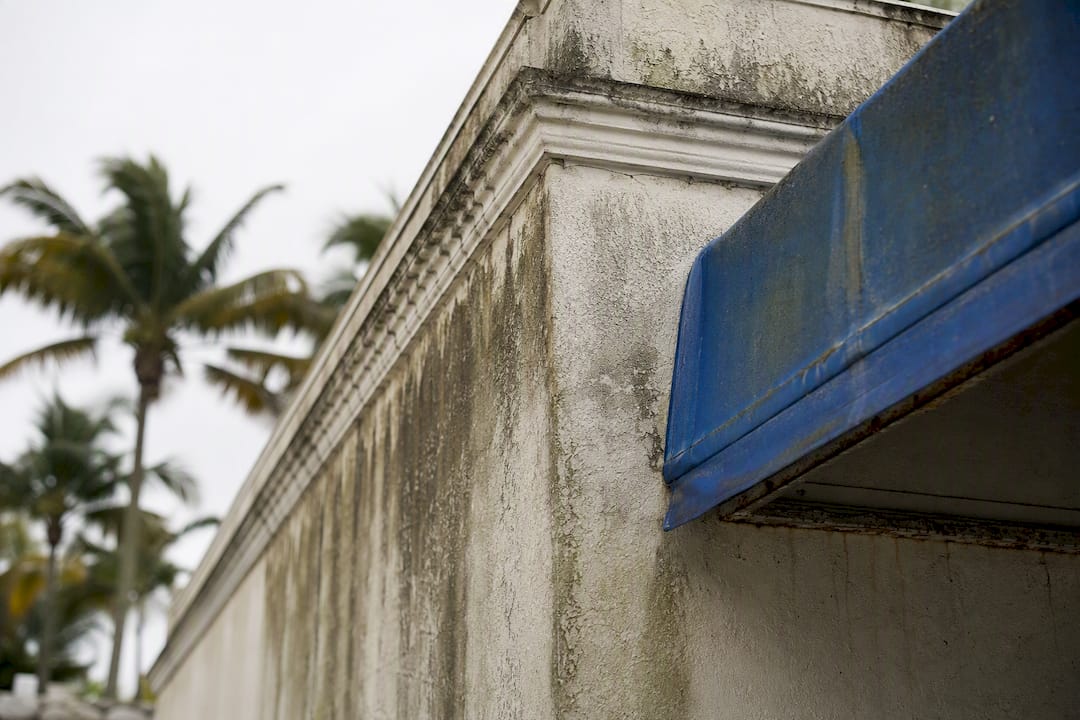
Dirty building exteriors repel customers before they ever reach the door, as explained in this ecommerce checkout page checklist for higher conversions that connects facade cleanliness to consumer behavior. More than half of shoppers, 52%, say they’ve avoided a business entirely because it looked dirty from the outside, and nearly all shoppers admit exterior appearance shapes where they choose to spend. For a Boca Raton strip mall or a Fort Lauderdale storefront on Las Olas, that statistic translates directly into lost visits, lower conversion, and weaker lease renewals for every retailer sharing that facade.
The takeaway for property managers is blunt: a grimy stucco wall or streaked storefront glass isn’t a cosmetic issue. It’s a revenue leak that shows up in foot-traffic counts before it ever shows up in a maintenance report. What follows is the evidence, the psychology behind it, and a practical fix list.
Key Takeaways
Dirty facades reduce retail foot traffic because exterior cleanliness functions as the primary trust filter shoppers apply before deciding whether to enter a store.
| Point | Details |
|---|---|
| Consumer avoidance is measurable | 52% of shoppers have skipped a business entirely because it looked dirty from outside. |
| Windows carry outsized weight | Streaked or opaque glass cuts visibility and increases shopper uncertainty, lowering entry rates. |
| Neighbor effect hits shopping centers | One neglected unit or vacant storefront can suppress traffic for every tenant sharing that facade. |
| Triage by urgency, not budget cycle | Fix lighting and graffiti immediately; schedule window and signage cleaning within the month. |
| Drone cleaning cuts disruption | Vistadronecleaning finishes most facade and window jobs in 1 to 3 days without scaffolding, permits, or parking closures. |
Table of Contents
- How Shoppers Form Rapid Judgments About a Storefront
- The Facade Problems That Send Customers Elsewhere
- What the Research Says About Facade Condition and Sales
- Setting a Realistic Cleaning Schedule and Budget
- A Fast Action Plan for Property Managers
- Why Drone Cleaning Is Changing the Math for Tall Facades
- Get a Fast, Insured Facade Cleanup Without the Disruption
- Sources
- FAQ
How Shoppers Form Rapid Judgments About a Storefront
Shoppers decide whether to walk into a retail space in the time it takes to cross a parking lot, and that decision leans almost entirely on what they see from the outside. Retail psychologists call this the halo effect: a clean, well-lit exterior signals competence and trustworthiness, while a soiled one signals neglect, and shoppers assume the neglect continues inside. It doesn’t matter how fresh the merchandise is behind the glass. The exterior sets the ceiling on perceived quality before anyone opens the door.
Window clarity plays a bigger role in this than most property managers realize. Research on exterior transparency shows that when shoppers can see clearly into a store, informativeness goes up and so does the likelihood they walk in. Streaked, filmy, or salt-hazed glass obscures that view and raises uncertainty, and uncertainty makes people choose the competitor next door instead.
This fits a well-documented behavioral pattern retailers call stimulus-organism-response: the exterior (stimulus) triggers an emotional state (organism), which drives the entry decision (response). A few things that shape that stimulus:
- Facade color and brightness, where neutral and warm, high-brightness surfaces increase pleasure and entry likelihood compared with dark or cool-toned walls.
- Window clarity, which functions as a trust signal independent of what’s actually for sale inside.
- Visible grime or biological staining, which reads as abandonment even on an occupied, fully staffed store.
A retailer can spend thousands refreshing a showroom, but if the exterior looks tired, most shoppers never see the improvement.
The Facade Problems That Send Customers Elsewhere
Not every exterior flaw carries equal weight. Some triage priorities, ranked by how much they typically suppress walk-in traffic:
- Visible grime and biological growth. Algae streaking, black mold lines under window ledges, and green staining on stucco read as “nobody maintains this place.” South Florida’s humidity accelerates this faster than almost anywhere else in the country.
- Opaque or heavily streaked windows. Salt film and hard-water spotting cut visibility into the store, killing the transparency effect that normally pulls shoppers inside.
- Graffiti or tagging. Even a small tag near a loading dock signals a property nobody is watching closely.
- Broken or dim exterior lighting. A dark storefront at dusk looks closed even when it isn’t.
- Faded or peeling signage. It suggests the business itself may be on its way out.
- A vacant or boarded look, even from just one neighboring unit, drags down perceived safety for the entire row of stores.
Pro Tip: Walk your property’s exterior at two different times of day, once at midday and once after sunset. Lighting failures and signage fade often only become obvious once the sun goes down.
What the Research Says About Facade Condition and Sales
Academic hedonic-pricing research on retail real estate has found that atmospheric and architectural curb-appeal dimensions correlate positively with sales prices, meaning a clean, well-maintained facade doesn’t just pull more shoppers, it supports higher asset valuations at resale or refinance.
The interpretation shifts depending on where a store sits. A few distinctions worth keeping in mind:
- Street-front retail in places like Coral Gables or downtown Delray Beach depends almost entirely on its own facade, since there’s no shared entrance funneling foot traffic regardless of appearance.
- Shopping-center tenants face a neighbor effect: a grimy anchor store or a boarded vacancy at one end of a Pompano Beach strip center can suppress traffic for every tenant in the row, even the ones with spotless storefronts.
- Enclosed mall tenants rely more on the property’s exterior and parking structure than on their own individual signage, since customers already committed to entering before reaching any single unit.
Setting a Realistic Cleaning Schedule and Budget
Cleaning frequency depends on substrate and exposure, not a fixed calendar. Commercial glass in a coastal corridor like Miami Beach or Hollywood typically needs washing every quarter to every six months, since salt air accelerates spotting faster than inland locations. Stucco and EIFS surfaces generally hold up for a year to two years between soft-wash treatments, though high-humidity zones near the Intracoastal often need to shorten that interval to control algae growth.
Several factors drive the actual cost of a project:
- Building height and whether scaffolding, lifts, or drone access is required
- Substrate type, since stucco, EIFS, metal, and glass all call for different chemistry
- Permits or road closures needed for traditional access equipment
- Degree of biological staining, which affects dwell time and chemical strength
A simple ROI framing helps justify the spend to ownership: multiply the estimated incremental visits a clean facade recovers by average ticket size and expected conversion rate, then compare that figure against the cleaning invoice. Most property managers find the payback period is measured in weeks, not years, once they run the numbers on even a modest quarterly deep clean, especially when using substrate-safe soft-wash chemistry instead of high-pressure methods that can etch stucco.
Pro Tip: Once you’re calling a vendor more than twice a year for emergency graffiti removal or lighting repairs, you’ve crossed from reactive maintenance into a scheduling problem. Lock in a recurring contract instead of reacting project by project.
A Fast Action Plan for Property Managers
Facade neglect rarely gets fixed all at once, so triage by urgency:
- Immediate (this week): Replace dead exterior bulbs, remove graffiti, and clear any boarded-up appearance at vacant units.
- Short term (this month): Wash windows and pressure-sensitive signage, and clear biological staining from entry-adjacent walls.
- Longer term (this quarter or budget cycle): Repaint faded signage, repair masonry cracks, and consider landscaping or window-display upgrades, since research on exterior atmospherics shows both boost patronage intent, especially for boutique retail.
When selecting a vendor, confirm proof of liability insurance, ask what cleaning method and chemistry they use for your specific substrate, and request references from comparable commercial properties. A competent vendor should offer before/after documentation and be transparent about site safety, including whether they need scaffolding, lifts, or road closures to complete the job, a detail that matters a great deal for a retail center that can’t afford to block customer parking during a facade cleaning project.
Why Drone Cleaning Is Changing the Math for Tall Facades
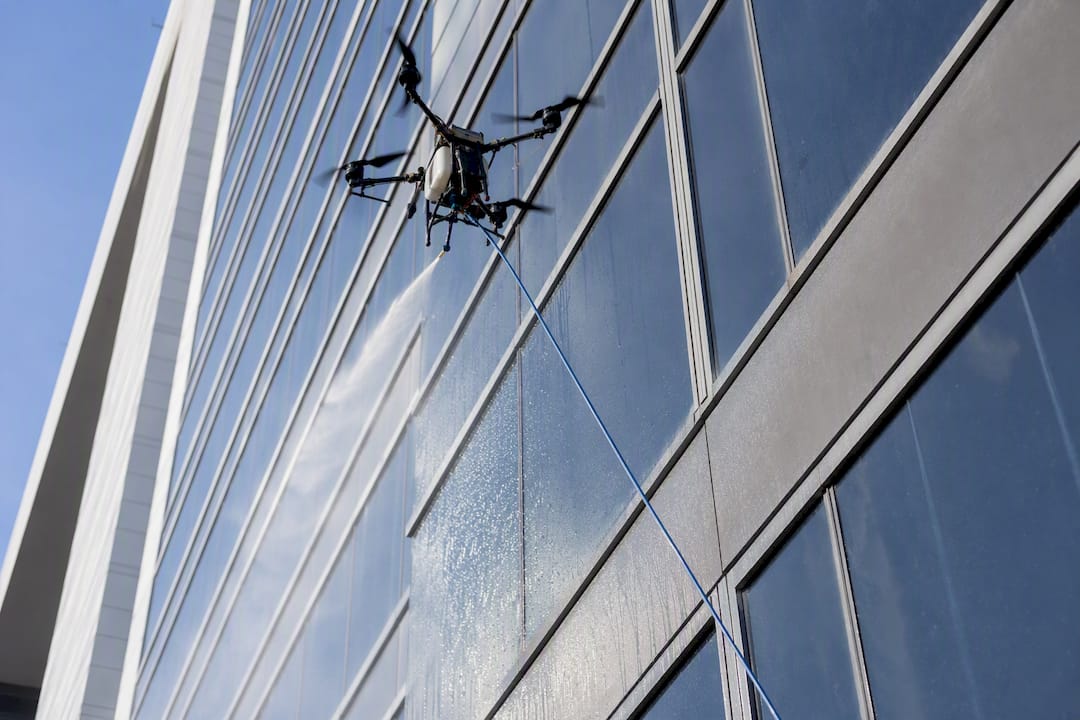
Traditional high-rise facade cleaning means scaffolding, boom lifts, rope access, permits, and often a partial road or parking closure, all of which disrupt the retail traffic you’re trying to protect. Tethered industrial drones fitted with pure-water rinse systems clean glass and soft-wash stucco or EIFS surfaces up to 200 feet without any of that ground infrastructure.
A few operational advantages worth noting:
- Crews stay on the ground the entire time, cutting the fall-risk exposure that traditional rope access or lift work carries.
- Most drone-cleaned projects finish in 1 to 3 days at 30% to 60% lower cost than scaffold or lift-based methods, based on Vistadronecleaning’s own project data.
- No permits or road closures are typically needed, which matters for a retail center that can’t block parking during business hours.
Drone cleaning isn’t the right tool for everything. Structural masonry repair, deep restoration work, or major paint failure still needs traditional contractors on-site. But for routine window washing, facade rinsing, and roof soft-wash on a mid-rise or high-rise retail building, it’s often the faster and cheaper path back to a clean exterior.
A Practitioner’s View on Facade Neglect
The most common mistake is waiting until a tenant complains before scheduling a wash, by then you’ve already lost months of foot traffic. Before/after photo documentation, paired with a quick tenant survey, turns a vague “the building looks better” into a number owners actually act on.
, Eliot
Get a Fast, Insured Facade Cleanup Without the Disruption
Vistadronecleaning is the alternative to scaffolding and lift rentals for South Florida retail properties: FAA Part 107-certified pilots run tethered industrial drones with streak-free, pure de-ionized water rinses, finishing most facade and window projects in 1 to 3 days without blocking parking or closing roads. That matters most for shopping centers and street-front retail in Miami, Fort Lauderdale, and Boca Raton, where every day of scaffolding is a day of lost customer access.
The company carries $2 million in liability coverage and documents every job with before-and-after photos, so property managers and asset owners have proof of the work when it’s time to report results to ownership or tenants. If your retail center’s facade is due for a wash, compare the drone cleaning approach against traditional window washing methods, or go straight to requesting a free quote and site review through Vistadronecleaning’s Miami high-rise window cleaning service page.
Sources
- Report: Consumers influenced by a retailer’s physical appearance
- Clear views, clear gains: Exterior transparency’s role in increasing consumer entry for retail environments
- The effect of shopping mall façade color on customers’ emotional responses and entry decisions
FAQ
Why do dirty facades reduce retail foot traffic?
Dirty exteriors act as a trust filter: shoppers judge a store’s quality by its outside appearance before ever seeing what’s inside, and 52% have skipped a business entirely over a dirty exterior.
What is the biggest issue facing retail right now?
Beyond broader economic pressures, one of the most overlooked and fixable issues is exterior neglect, since a soiled facade actively suppresses walk-in traffic regardless of what’s happening with pricing or inventory inside.
How can a retail property increase foot traffic?
Start with the exterior: clean windows and facades, fix broken lighting, remove graffiti, and refresh faded signage, since these low-cost fixes often deliver a faster return than interior renovations.
What is the biggest problem faced by retail stores today?
Many stores focus spending on interior upgrades while the exterior, the first thing every shopper sees, goes unmaintained, which caps how much of that interior investment customers ever notice.
How often should a retail facade be professionally cleaned?
Coastal glass in South Florida typically needs washing every three to six months due to salt exposure, while stucco and EIFS surfaces generally go one to two years between soft-wash treatments depending on humidity and biological staining.