
No Scaffolds: Concrete Facade Cleaning to 200 ft for South Florida
A preservation first guide for South Florida property managers. Learn test panel protocols, safe chemistries, PSI limits, waste control, and drone...
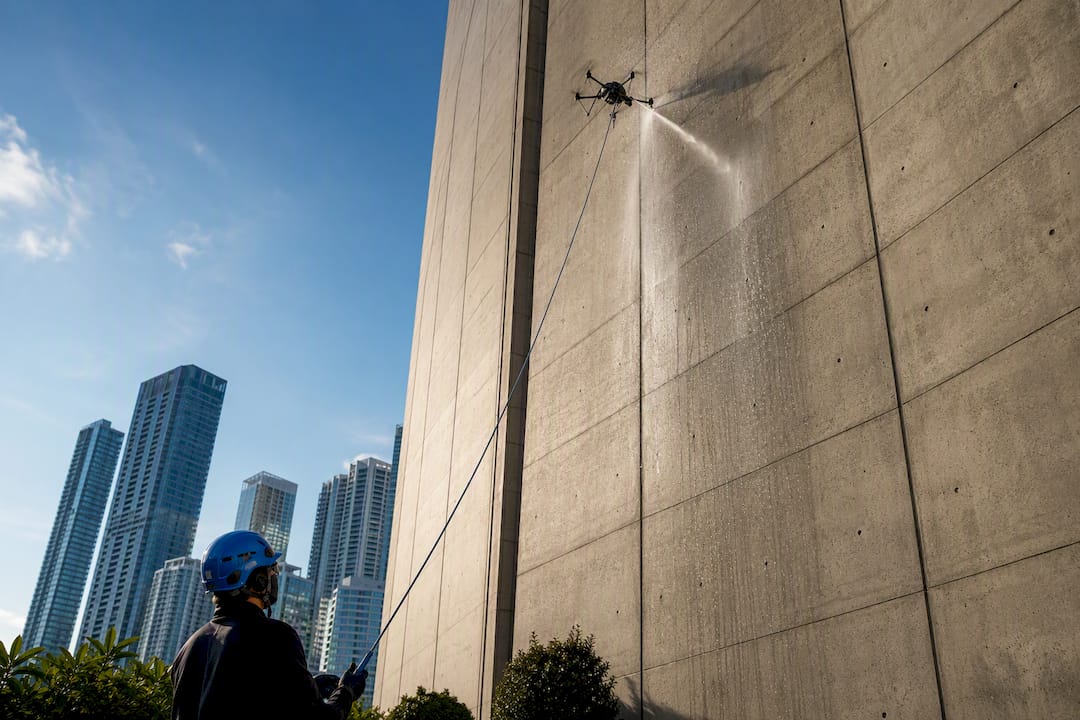
Identify the concrete type before you touch it, then run a test panel and choose the least aggressive method that gets the job done. That single rule, backed by CMHA technical guidance and National Park Service preservation standards, prevents most of the permanent facade damage seen across Miami-Dade and Broward high-rises. Inspect, test, select, document. Skip any of those four steps and you’re gambling with a building envelope that costs far more to repair than to clean correctly.
TL; DR:
- Run a thorough inspection and test panels before selecting any cleaning method to prevent permanent damage and ensure appropriate technique application.
- Match the stain type to the proper chemistry and avoid aggressive chemicals or high pressure that can harm sensitive architectural concrete or historic surfaces.
- Use conservative PSI levels based on substrate age and condition, with testing and documentation required to verify safe pressure limits for each facade.
- Apply acids, alkalis, and solvents carefully, always pre-wetting surfaces and neutralizing chemicals afterward to avoid long-term salt migration or discoloration.
- Favor drone-based cleaning for tall buildings to eliminate scaffolding delays, but require proper testing, safety protocols, and documentation for all methods.
Table of Contents
- What Is Concrete Facade Cleaning and Why Does Method Selection Matter?
- How Do You Classify the Stains Before Choosing a Treatment?
- Which Cleaning Method Fits Your Facade and Contamination Level?
- What PSI and Technique Prevent Pressure-Wash Damage?
- How Do You Apply Chemical Cleaners and Acids Safely?
- When Should You Use Abrasive or Waterless Cleaning Methods?
- What Should You Require for Testing, Safety, and Waste Control?
- How Often Should Facades Be Cleaned, and What Drives the Cost?
- Where Does Drone Cleaning Fit Into a Facade Preservation Plan?
- A Preservation-First Note on Procurement
- Get a Facade Cleaning Quote Without the Scaffolding Delay
- Where to Verify These Methods and Standards
- Sources
- FAQ
What Is Concrete Facade Cleaning and Why Does Method Selection Matter?
Concrete facade cleaning is the process of removing surface contamination from architectural or structural concrete without damaging the substrate, its patina, or any coating applied to it. That last part trips up more South Florida buildings than the actual dirt does.
Salt air, tropical humidity, and near-constant UV exposure make coastal concrete in Boca Raton, Fort Lauderdale, and Miami Beach behave differently than concrete inland. Porosity increases, efflorescence shows up faster, and biological growth (particularly algae and mildew) colonizes shaded, humid facade sections within months of a cleaning. That’s why a generic pressure-washing approach, the kind that works fine on a driveway, routinely spalls surfaces, opens hairline cracks to moisture, and pushes rebar corrosion forward by years on a commercial tower.
Here’s how to tell what you’re dealing with before any contractor shows up with equipment:
- Exposed architectural concrete has a uniform, often smooth or lightly textured finish poured to be seen. It’s the most sensitive to pressure and acid because any surface alteration is permanent and visible.
- Exposed aggregate shows embedded stone or gravel at the surface. It tolerates a bit more mechanical action but abrasive blasting can still strip the fines around each stone.
- CMU (concrete masonry unit) walls are block-built and more forgiving structurally, but mortar joints are the weak point and erode faster than the block face.
- Painted or sealed surfaces need a coatings check first. Cleaning through a sealer with the wrong chemistry can lift or discolor the entire finish, not just the stain.
A simple water-drop test tells you a lot: if water beads on the surface, it’s sealed; if it absorbs quickly, it’s bare concrete and handles rinsing differently. When the building has any historic designation or unusual finish, get a conservation specialist or a lab test before committing to a method, per NPS recommendations.
How Do You Classify the Stains Before Choosing a Treatment?
Not all facade discoloration comes from the same source, and treating the wrong stain with the wrong chemistry often sets it deeper instead of removing it. Matching contamination type to method is where most bid comparisons go wrong, because two contractors quoting “concrete facade cleaning” may be describing entirely different scopes.
- Efflorescence (white, powdery salt deposits) forms when moisture carries dissolved minerals to the surface and evaporates. Controlled acidic or alkaline washes can remove it, but addressing the moisture source is necessary to prevent recurrence.
- Biological growth (algae, mildew, lichen) thrives in in South Florida’s humidity, especially on north-facing or shaded elevations. Soft-wash cleaning solutions with a follow-up rinse handle this effectively in humid conditions without abrasive contact.
- Carbon and soot staining, common near parking structures and loading areas, typically responds to a controlled water soak paired with mild detergents rather than aggressive chemicals.
- Oil, grease, and rust need targeted treatment: degreasers for petroleum stains, poultices to draw contamination out of porous concrete, and oxalic acid specifically for rust, since it’s one of the few chemistries that won’t set iron stains permanently.
- Graffiti removal usually happens in stages, working from the outer paint layer inward, followed by an anti-graffiti coating to make the next incident easier to clean.
Getting this classification wrong before hiring a contractor is the single most common reason facade cleaning budgets run over.
Which Cleaning Method Fits Your Facade and Contamination Level?
The right approach is almost always the gentlest one that produces an acceptable result, escalating only when a milder method genuinely fails on a documented test panel. RestoreWorks guidance frames this as controlled hydration and precise application rather than brute force, and that framing should shape every scope of work you sign.
- Water soaking comes first for carbon deposits and light soiling. It works through controlled pore cycling, saturating the surface so contaminants loosen without chemical or mechanical stress, though it demands patience since drying times run longer than most schedules expect.
- Soft-wash with cleaning solution or mild detergent handles biological growth and general grime at low pressure, typically under 500 psi, with a chemical doing the actual work instead of water force.
- Controlled pressure washing steps in for stubborn atmospheric grime on durable CMU or sealed surfaces, but only within tested PSI limits for that specific substrate.
- Micro-abrasion removes coatings or heavy carbon buildup on surfaces that can tolerate light mechanical contact, never on architectural concrete meant to stay visually pristine.
- Vacuum blasting is the answer when water or chemical exposure is unacceptable, such as exposed architectural concrete where altering the patina isn’t an option, or active occupied sites where wastewater runoff creates a hazard, as Systeco’s commercial guidance notes.
Before locking in a method, run through this checklist: What’s the substrate sensitivity? What contamination type are you actually treating? Is moisture intrusion a risk given existing cracks? Does the building carry historic or landmark status that restricts chemical use?
Pro Tip: Require your contractor to photograph and label every test panel with the exact PSI, dilution ratio, and dwell time used. If the crew can’t produce that documentation, they’re not testing, they’re guessing on your building.
What PSI and Technique Prevent Pressure-Wash Damage?
Pressure washing concrete facades wrong is the fastest way to turn a maintenance job into a structural repair invoice. Practical pressure-washing guidance consistently points to one lesson: start lower than you think you need, and let dwell time or pre-treatment do more of the work than raw force.
Conservative ranges matter because concrete age, porosity, and prior sealing all change how much pressure a surface tolerates:
- Sealed or newer dense concrete generally handles 2,000 to 3,000 psi with a wide fan tip.
- Older, weathered, or architectural concrete should stay closer to 1,200 to 2,000 psi, and sometimes lower if a test panel shows any surface etching.
- Mortar joints on CMU are the weak point. Direct high pressure at a joint and you’ll erode it faster than the block face around it.
A test panel isn’t optional. It’s the only reliable way to know a specific facade’s pressure ceiling before you commit the whole elevation.
Technique matters as much as PSI. Keep the wand moving in a continuous, overlapping sweep rather than dwelling on one spot, hold a consistent 12 to 18 inch distance, and finish every section with a low-pressure rinse to clear residue before it dries into new streaking. Pre-treat oil or grease stains with a degreaser first. Driving petroleum contamination deeper into pores with straight pressure only makes poultice treatment necessary later. If a sealer is planned afterward, the surface needs to dry fully, often 24 to 48 hours in Florida humidity, before application.
How Do You Apply Chemical Cleaners and Acids Safely?
Chemistry selection depends entirely on what you’re removing: acidic cleaners break down mineral efflorescence and rust, alkaline solutions handle biological growth and organic staining, and solvents target petroleum-based contamination. Mismatching these categories is how a straightforward stain becomes a permanent discoloration.
Safety protocol isn’t a suggestion here. CMHA’s technical bulletin and NPS field guidance both lay out the same sequence:
- Pre-wet the surface thoroughly before any chemical application. Dry concrete absorbs chemistry unevenly and deep, creating blotchy results and long-term salt migration.
- Never apply acid under pressure. Acids work through controlled dwell time on a saturated surface, not force. Spraying acid through a pressure washer drives it into pores and cracks where it keeps reacting long after the visible cleaning is done.
- Neutralize every acidic or alkaline application, then rinse extensively. Skipping neutralization leaves residual salts that reappear as efflorescence weeks later.
- Validate every chemistry on a test panel first, checking for discoloration, etching, or unexpected reactions with existing coatings before treating the full elevation.
When Should You Use Abrasive or Waterless Cleaning Methods?
Abrasive and waterless methods solve a specific problem: contamination that water and chemistry can’t touch, or a site where moisture and runoff simply aren’t allowed. Media selection changes the outcome dramatically. Walnut shells and glass beads are softer and better suited to delicate architectural surfaces, while crushed slag and silica sand cut faster but carry a real risk of pitting concrete that isn’t dense enough to withstand them.
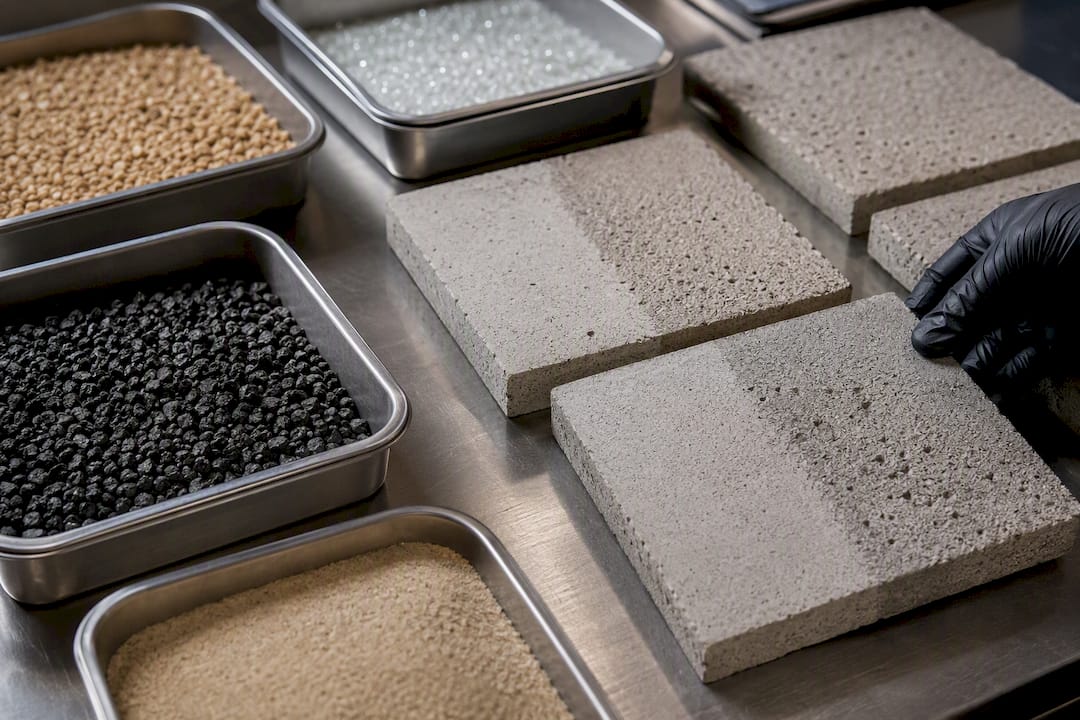
Vacuum blasting earns its place on exposed architectural concrete and active occupied sites, since it removes soiling without water or chemical exposure at all, according to Systeco’s commercial cleaning breakdown. It also avoids the wastewater capture headaches that come with wet methods on a busy Fort Lauderdale streetfront.
None of this works without a skilled operator. Media type, particle size, pressure, and distance all need tuning on test panels before the crew touches a full wall, since the difference between removing soiling and gouging the substrate often comes down to a few PSI and a few inches of standoff distance.
What Should You Require for Testing, Safety, and Waste Control?
A well-run test panel records four variables every time: dilution ratio, dwell time, applied pressure, and media type, each documented with before and after photos. That record becomes your evidence if a contractor’s method claim doesn’t match the result on the actual wall.
- Design the test panel in an inconspicuous section, at least 4 by 4 feet, using the exact method proposed for the full job.
- Set up containment to prevent runoff from entering storm drains, a real concern along coastal properties in Miami-Dade and Broward where wastewater regulations are enforced.
- Capture and dispose of wastewater according to local disposal rules rather than letting it run into landscaping or street drains.
- Confirm PPE, spill kits, and insurance certificates before work begins, not after.
Pro Tip: Ask for the contractor’s certificate of insurance naming your property as an additional insured, not just a general liability summary. It takes five minutes and saves you weeks of dispute if something goes wrong.
How Often Should Facades Be Cleaned, and What Drives the Cost?
Coastal-exposed facades in Miami Beach or along the Fort Lauderdale waterfront typically require inspection approximately annually and cleaning at intervals around every one and a half to two years due to salt air effects. Inland or sheltered elevations in Coral Springs or West Boca Raton generally allow longer intervals between inspections and cleanings.
Pricing swings on a few clear factors, and any bid that doesn’t account for them is incomplete:
- Facade area and elevation height set the baseline scope.
- Access method (scaffolding, lift, rope access, or drone) changes labor cost and project duration substantially.
- Contamination complexity (biological growth versus embedded rust or graffiti) drives chemistry and labor time.
- Historic or landmark status adds review requirements and restricts method choice.
Before signing, require test panel documentation, full photo records, written method restrictions, proof of insurance, and a workmanship warranty in the contract.
Where Does Drone Cleaning Fit Into a Facade Preservation Plan?
Drone-based facade cleaning solves the access problem without changing the preservation math. A service using tethered industrial drones delivers pure-water rinses and substrate-matched soft-wash chemistry to concrete, stucco, and EIFS facades up to 200 feet tall, without scaffolding or lifts blocking a sidewalk in Miami-Dade and Broward.
It fits best on tall towers where scaffolding permits and street closures would stretch a project into weeks, and on jobs where a fast, low-impact soft wash is the correct method for the contamination found. It has clear limits too: heavy abrasive restoration, deep graffiti removal, or structural repair work still needs hands-on crews on the wall.
Whatever vendor you choose, ask for the same things:
- Their test-panel protocol and how they document PSI, dilution, and dwell time.
- Before-and-after 4K documentation of the actual work performed.
- Insurance limits and a written safety plan for the specific site.
A Preservation-First Note on Procurement
The biggest risk to a concrete facade usually isn’t neglect. It’s an eager contractor with too much pressure and not enough patience. Conservative, test-first methods cost a little more upfront in scheduling, but they protect asset value that took decades to build.
If you remember one line from this whole guide, make it this: require test panels, require documentation, require a written safety plan. Everything else is negotiable.
, Eliot
Get a Facade Cleaning Quote Without the Scaffolding Delay
Traditional facade cleaning, in South Florida, usually means scaffolding permits, lane closures, and a crew working a tower for a week or more. Vistadronecleaning skips all of that. FAA Part 107 certified pilots run tethered industrial drones that deliver the same soft-wash, pure-water rinse results discussed throughout this guide, on buildings up to 200 feet tall, without rigging or road closures across Miami-Dade, Broward, and and Palm Beach counties.

If your property in Fort Lauderdale, Boca Raton, or Miami needs a preservation-minded cleaning plan built around the test-panel discipline covered above, compare the access methods and trade-offs directly, or request a free site review and quote within 24 hours through Vista Drone Cleaning’s Miami facade service.
Where to Verify These Methods and Standards
For writing test-panel protocols or contract language, lean on the sources that shaped this guide: CMHA TEK 08-04A for masonry cleaning standards, NPS’s historic masonry cleaning report for chemistry cautions, and the Dayton Superior concrete restoration specification guide for RFP-ready language. Property managers coordinating protective floor covering during a project can also reference this facility protection workflow guide.
Sources
- CMHA TEK 08-04A: Cleaning Concrete Masonry
- NPS: Keeping It Clean (excerpts on cleaning historic masonry)
- Restorative Masonry Cleaning: Methods & Best Practices
- Concrete cleaning: glossary for commercial decision makers (Systeco)
FAQ
How Do I Clean Exterior Concrete?
Identify the concrete type and contamination first, run a test panel with your chosen method, then start with the gentlest option, water soaking or soft-wash, before escalating to pressure washing or abrasive methods.
What Should You Never Clean Concrete With?
Never spray acid under pressure or use undiluted, unneutralized acidic cleaners, since both drive chemistry deep into pores and cause long-term salt damage and surface etching.
Will Dawn and Vinegar Clean Concrete?
Dish soap and vinegar can lift light surface grime on small areas, but vinegar is a mild acid and repeated use on porous or architectural concrete risks the same etching and salt issues as stronger acidic cleaners without professional dilution and neutralization control.
How Do Professionals Clean Concrete Facades?
Professionals identify the substrate, classify the stain, test the chosen method on a small panel, then apply the least aggressive process that works, ranging from water soaking and soft-wash chemistry to controlled pressure washing or vacuum blasting for sensitive surfaces. Some commercial facade cleaning services apply this same sequence using tethered drones and pure-water rinses for tall facades across South Florida.
How Often Should a Commercial Concrete Facade Be Cleaned?
Coastal-exposed buildings in areas like Miami Beach typically need cleaning every 18 to 24 months, while sheltered inland facades can often go longer between full cleanings.