What is a pressure washing drone and how does it work?+
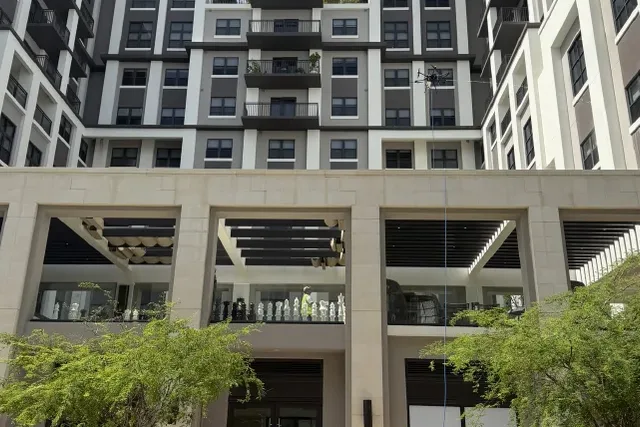
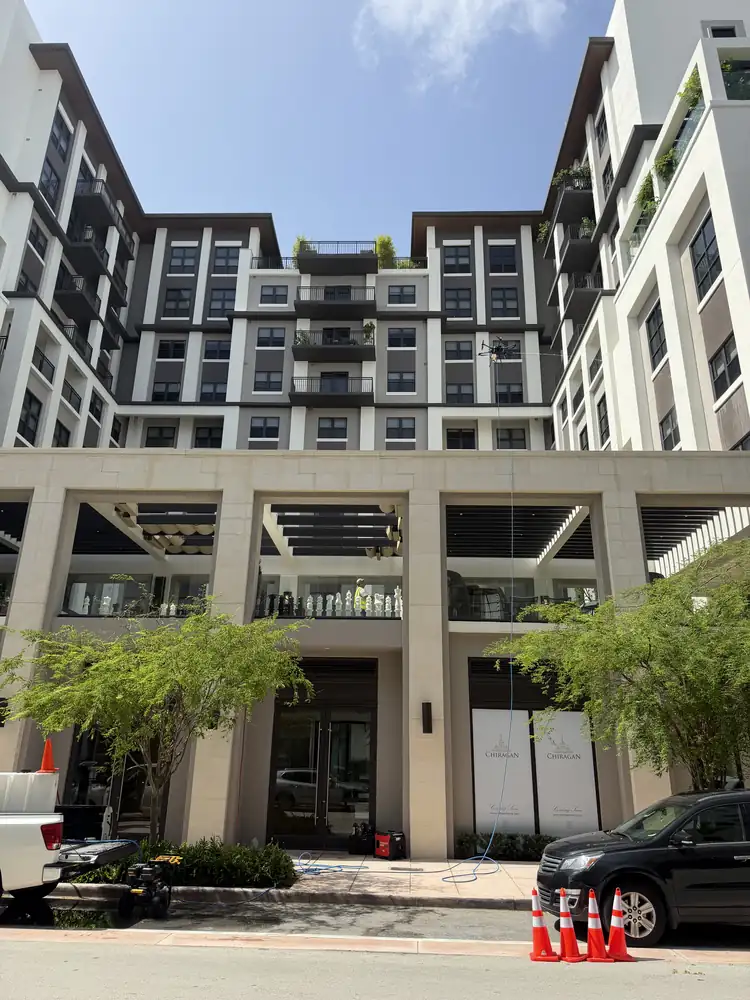
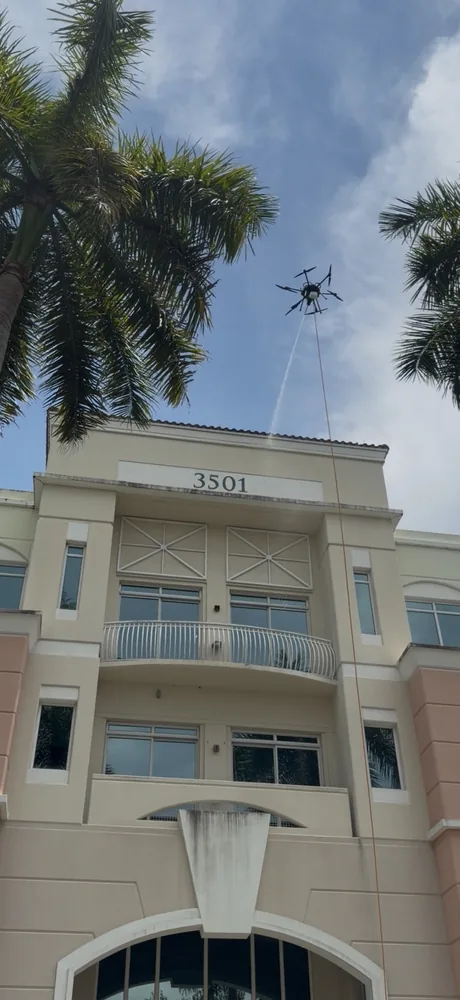
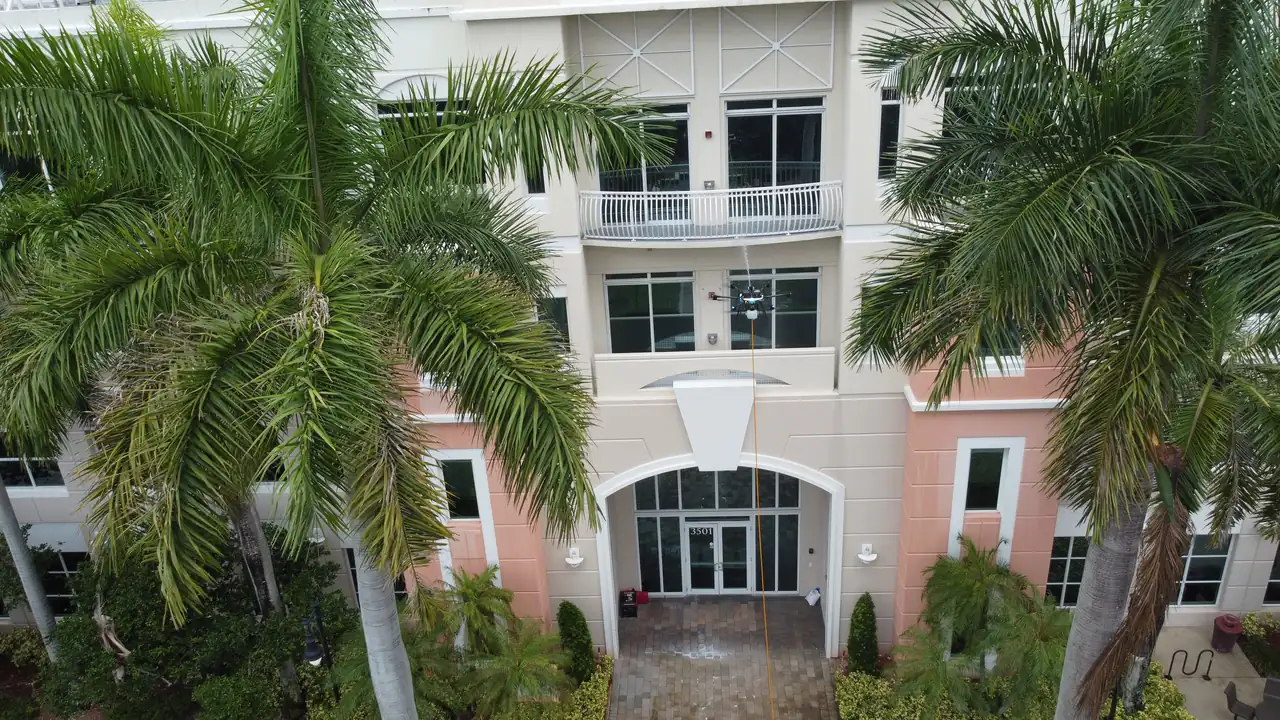
A pressure washing drone is a tethered industrial UAS that carries a soft-wash spray head fed by a ground-based pump. Detergent and pure water travel up the tether to the drone, which applies them panel-by-panel from the air. The pilot stays on the ground, no lifts, no scaffolding, no crew at height.
Is a drone pressure washer actually high-pressure?+
No, and that's the point. Traditional ground pressure washers blast 2,000–4,000 PSI, which strips paint, drives water behind panels, and damages sealants. Our drone power washing system uses low-pressure soft-wash chemistry (the cleaner does the work, not the pressure) plus a pure-water rinse. It cleans deeper without surface damage.
What surfaces can a drone pressure washer clean?+
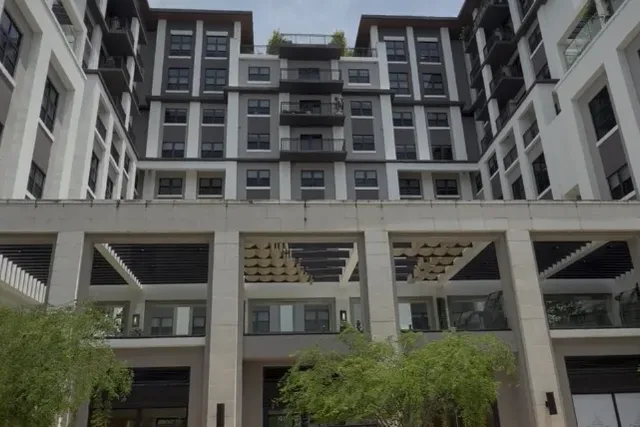
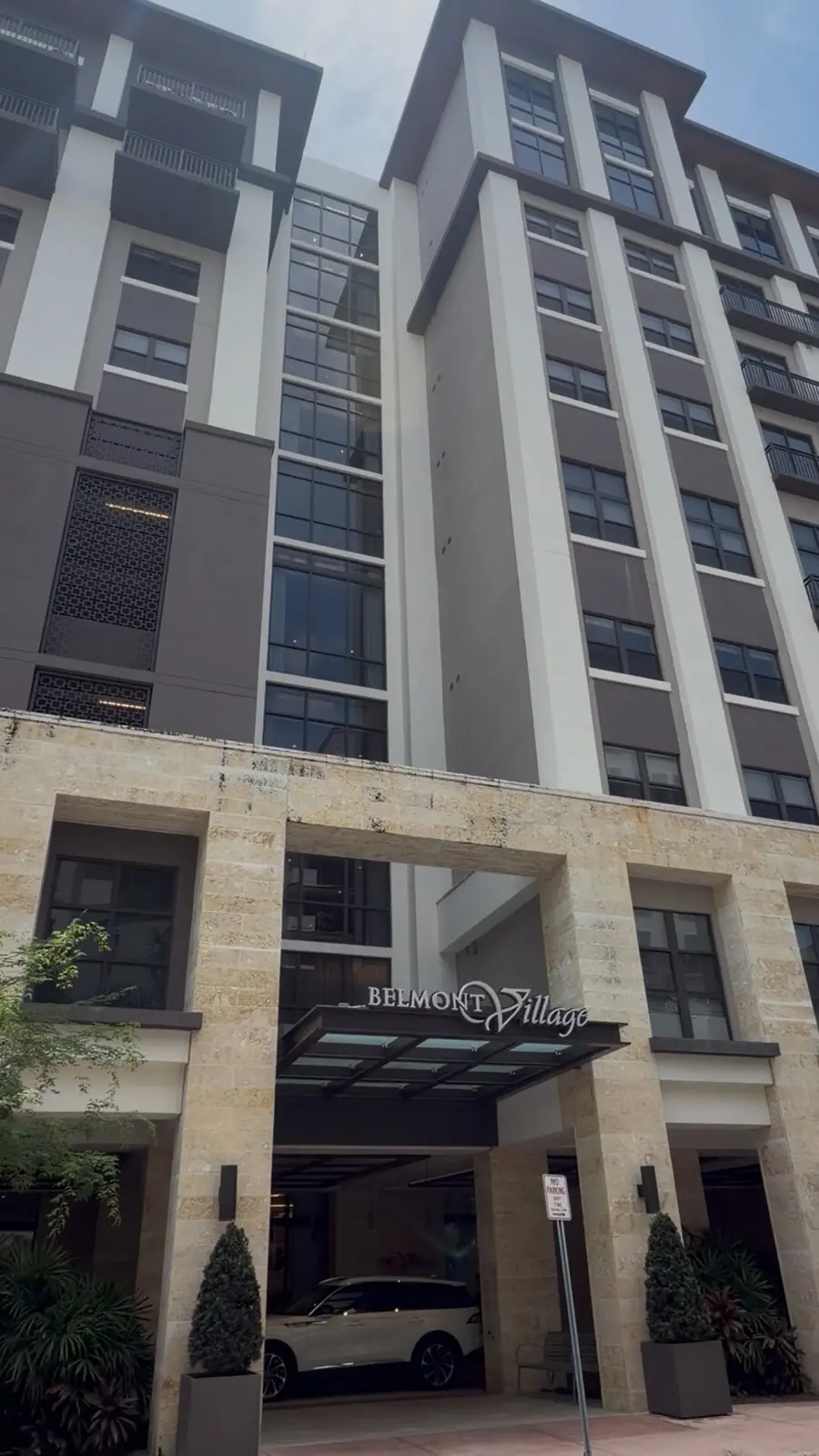
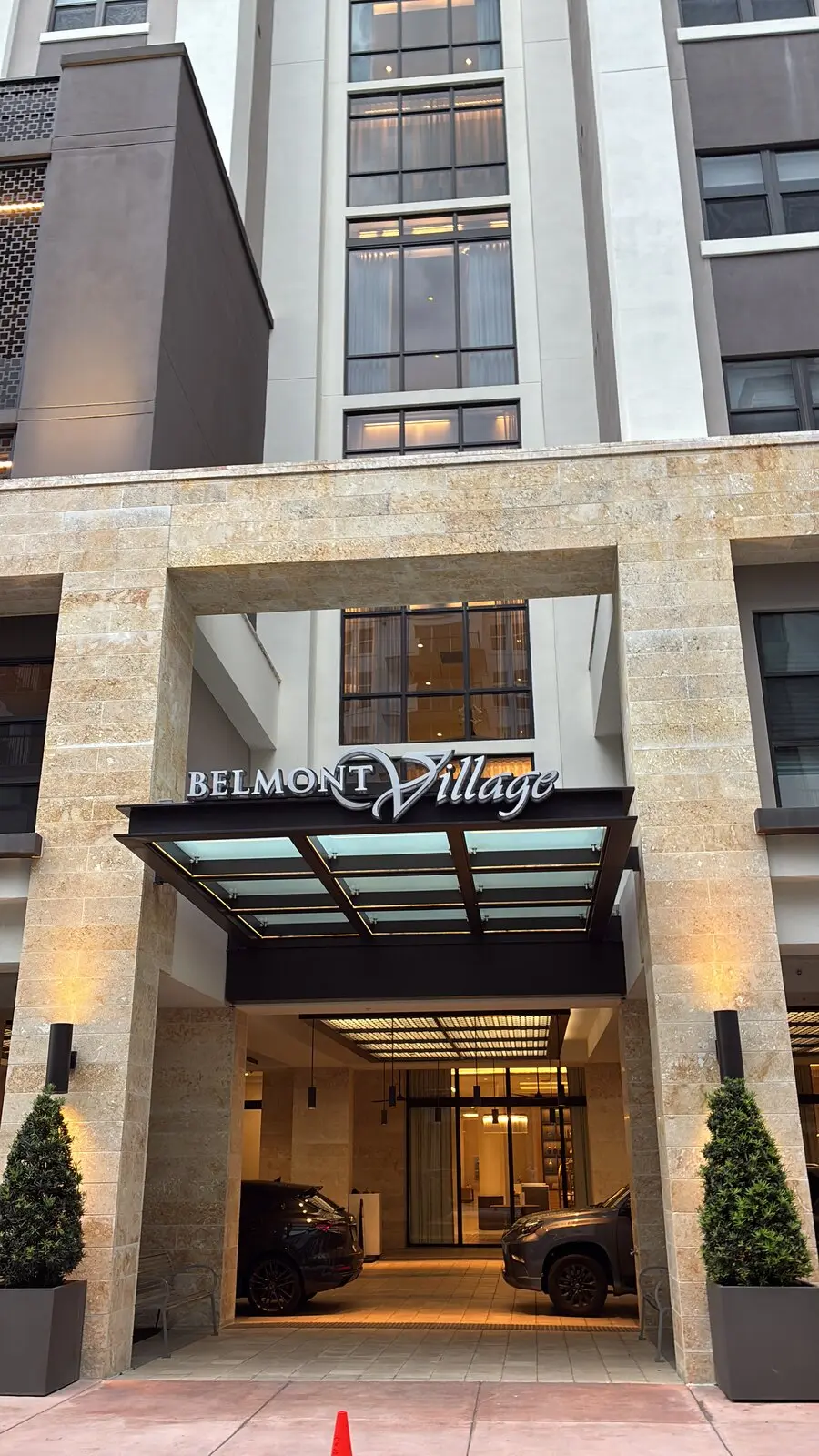
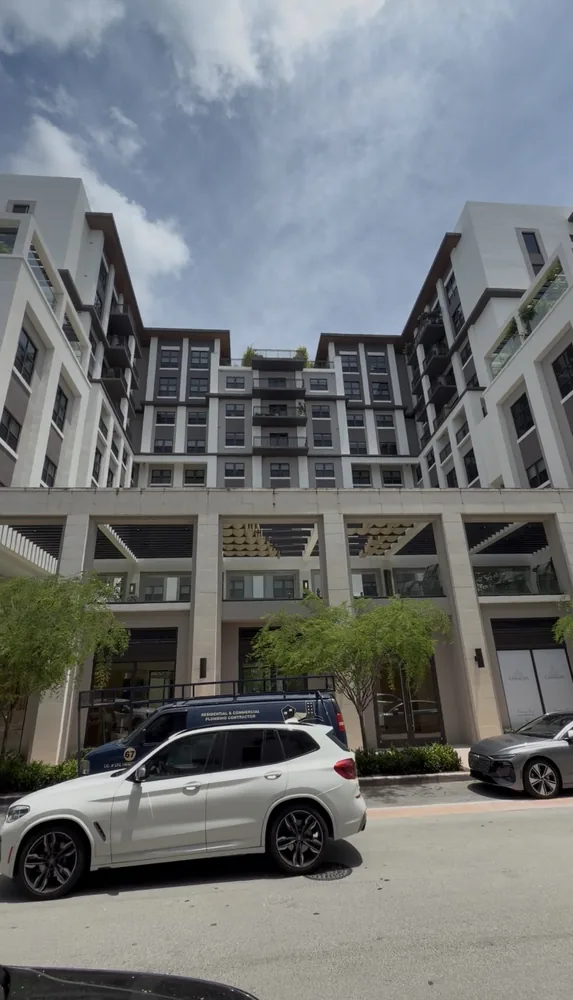
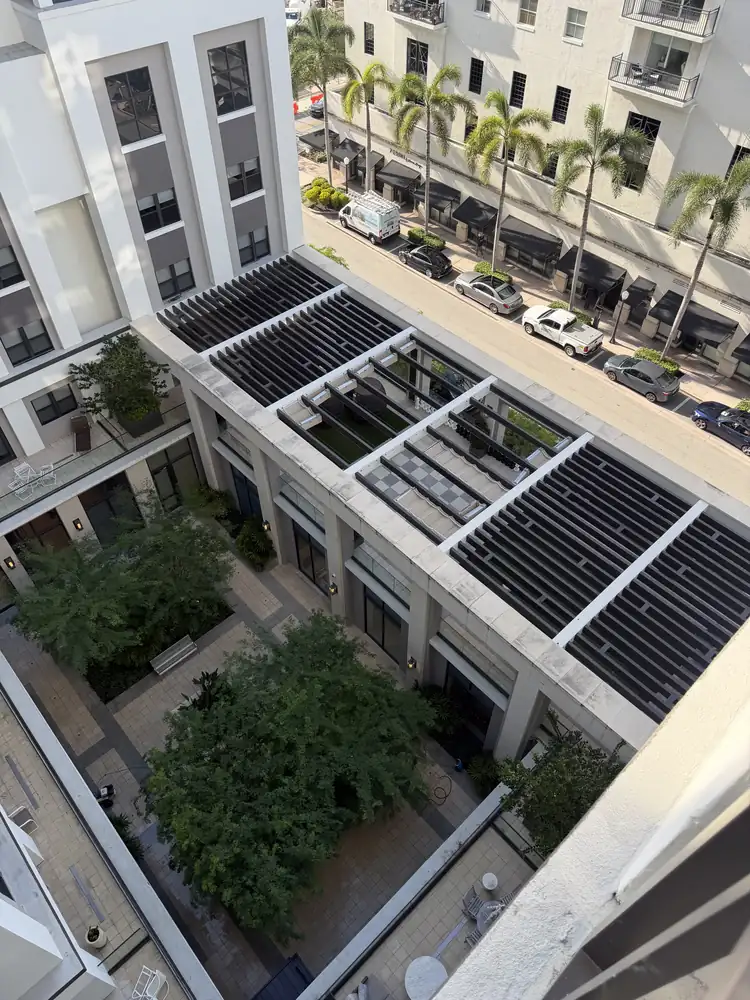
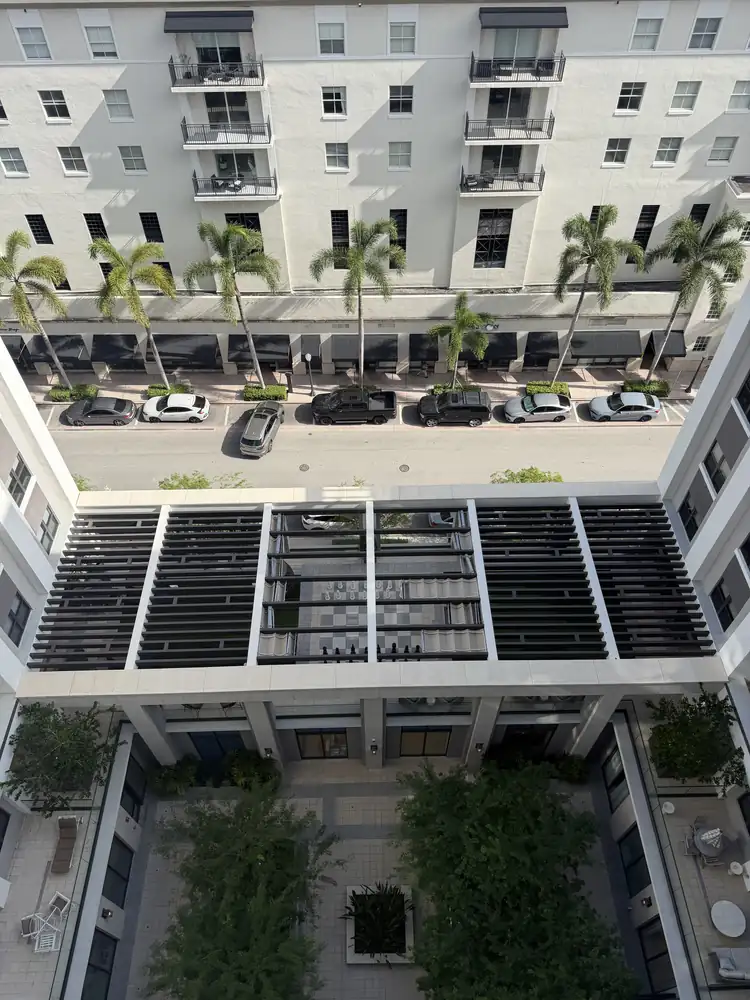
Stucco, EIFS, painted concrete, brick, metal cladding, glass curtain walls, tile and metal roofs, parking-garage facades, signage, and architectural features. Soft-wash chemistry is dialed in per substrate. What cleans algae off a tile roof is not what cleans pollution off painted EIFS.
How is drone power washing different from regular pressure washing?+
Three differences: (1) reach, drones cover full elevations including upper floors traditional ground crews can't safely touch; (2) pressure, low-pressure soft-wash protects sealants and coatings; (3) speed and cost, no lift rental, no scaffold permit, 30–60% lower total project cost.
Will a drone pressure washer damage stucco, EIFS, or painted surfaces?+
No. We deliberately use low-pressure soft-wash chemistry on these substrates because high-PSI ground washing routinely damages them. Sealants, coatings, and paint stay intact. We also avoid driving water behind cladding panels, which prevents the mold and rust problems that follow aggressive ground washing.
How much does drone pressure washing cost in Miami?+
Commercial drone pressure washing runs $0.12–$0.25 per square foot of facade or roof, fixed price after a free site survey, and bigger jobs get lower rates. As examples, a 20,000 sq ft facade runs $2,400–$4,500 and a 40,000 sq ft facade $4,800–$8,000. That's 30–60% less than scaffold-based or boom-lift cleaning on the same scope because there's no rigging, no lift rental, and no per-day crew cost.
Can a drone pressure washer reach a roof I can't walk on?+
Yes, and it's one of the most common use cases. Tile, metal, TPO, and aging shingle roofs that won't tolerate foot traffic get a full soft-wash and rinse from the air. Zero foot traffic means zero broken tiles, zero displaced fasteners, and zero warranty risk.
Do you need FAA permission to operate a pressure washing drone?+
Yes. Every flight is conducted under FAA Part 107 by a licensed commercial drone pilot. In controlled airspace near MIA, FLL, and PBI we file LAANC airspace authorizations before each operation. Documentation is carried on every job site.
What insurance covers a drone pressure washer operation?+
We carry $2M commercial general liability plus dedicated UAS (drone) liability and hull coverage, fully insured. Certificates of insurance naming the property owner and management are issued before mobilization on every project.
Does drone soft-wash kill algae, mildew, and mold?+
It removes them, not just the visible layer. Our biodegradable soft-wash detergent is engineered to remove organic growth down to the root, not just blast it off the surface. That's why soft-wash results last far longer than pressure-washing alone, which leaves spores behind and grows back quickly in South Florida humidity.
Can a drone pressure washer clean during tenant business hours?+
Yes. There's no scaffolding, no boom lift in the parking lot, no crew over the sidewalk. Tenants get a brief notification, the drone flies one elevation at a time, and occupancy continues. Pre-dawn or post-hours flights are also available.
How often should a Miami building be drone pressure washed?+
Oceanfront properties in Brickell, Miami Beach, Sunny Isles, and Hallandale Beach need a shorter cycle than inland Miami-Dade, Broward, and Palm Beach buildings, because salt and algae build faster at the waterline; a recurring maintenance schedule is set to the building's actual exposure. Roofs are the one surface with a published interval: every 12–24 months, sooner near the coast, to control algae streaking and granule loss.