Ground-Based Exterior Cleaning for South Florida High-Rises
Discover what ground-based exterior cleaning is and how it benefits South Florida high-rises. Modernize your building maintenance today!
TL; DR:
- Ground-based drone cleaning allows tall building facades, windows, and roofs to be cleaned safely from the ground without scaffolding. It offers faster project completion at lower costs while reducing environmental impact and safety risks. Drone technology ensures precise, eco-friendly cleaning suitable for South Florida’s high-rise buildings and climate conditions.
What is ground-based exterior cleaning, and why does it matter for your building?
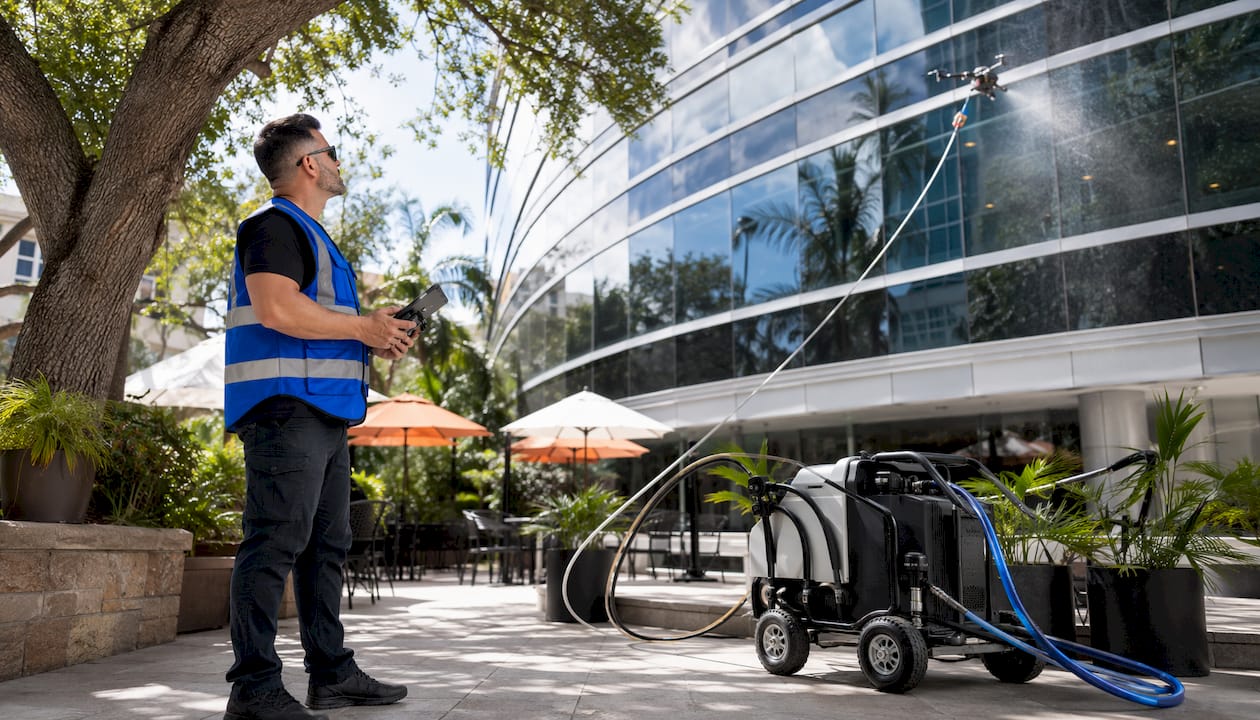
Ground-based exterior cleaning means cleaning a building’s facade, windows, roof, or solar panels while every crew member stays on the ground. No scaffolding. No boom lifts. No rope-access technicians dangling off the 20th floor. The cleaning head goes up; the people do not.
For commercial properties in Miami-Dade, Broward, and Palm Beach counties, that distinction carries real weight. South Florida’s high-rises, glass-curtain towers in Brickell, and oceanfront condos in Miami Beach all need regular exterior maintenance, yet traditional scaffold setups can take days just to erect before a single window gets touched.
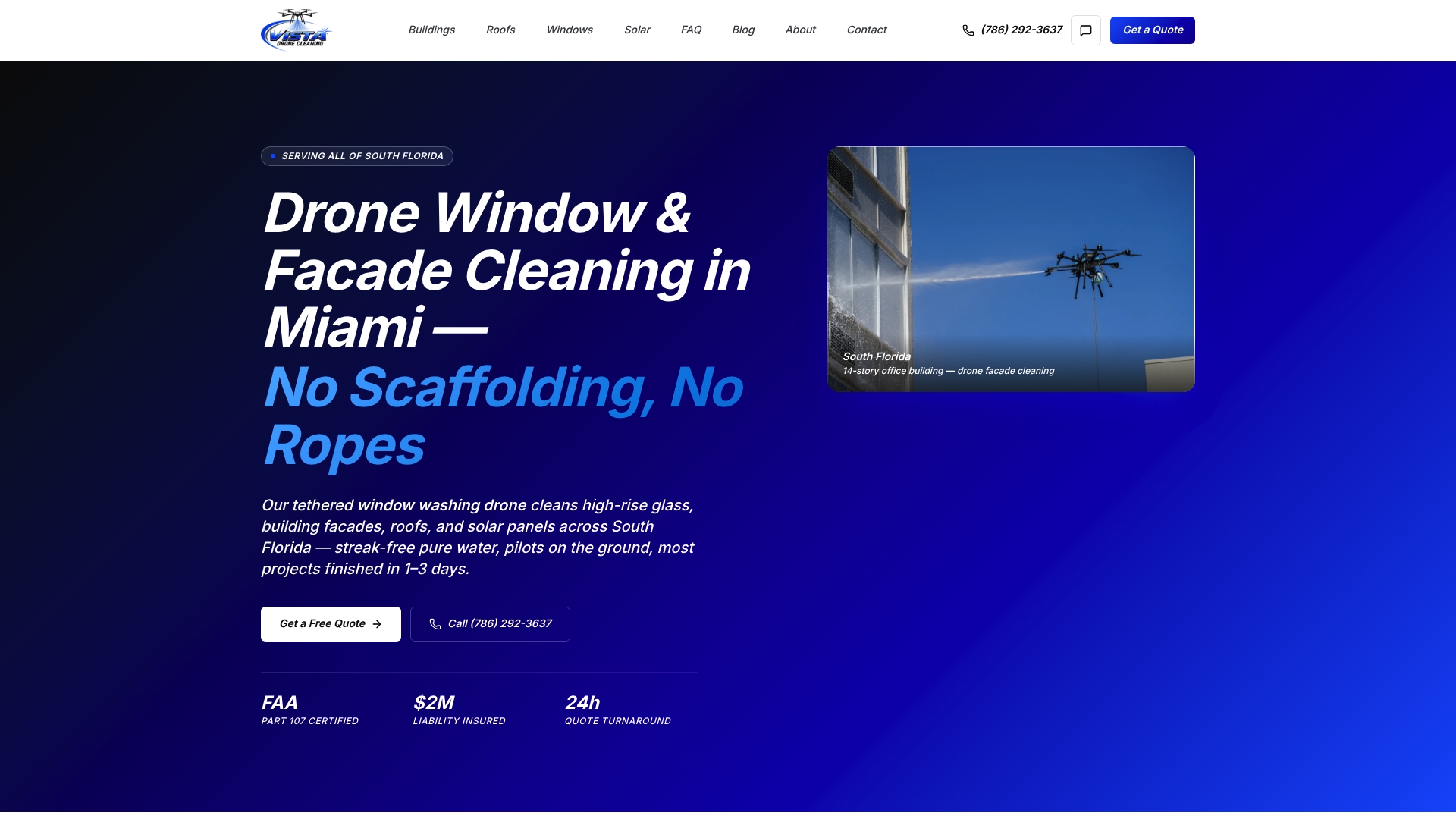
Drone-based ground cleaning is the modern answer. Vistadronecleaning uses the Lucid Bots Sherpa, a tethered industrial drone flown by FAA Part 107-certified pilots, to reach facades up to 200 feet tall. Key advantages at a glance:
- No scaffolding, boom lifts, or rope access required
- Projects typically finish in 1–3 days at 30–60% lower cost than scaffold methods
- Crews remain safely on the ground throughout every job
- $2M liability insurance coverage included
- No road closures or special permits needed for most South Florida sites
Table of Contents
- How drone technology keeps your building and crew safe
- What the actual cleaning process looks like
- Drone cleaning vs. traditional methods: the environmental difference
- Vistadronecleaning: ground-based cleaning built for South Florida high-rises
- Key Takeaways
- FAQ
How drone technology keeps your building and crew safe
The Lucid Bots Sherpa connects to a ground-based pump via a tethered hose. That tether does two things: it supplies a continuous, consistent flow of water and cleaning solution, and it eliminates the tank refills that slow untethered drones. The operator controls spray pressure and direction remotely while watching a live video feed from the drone’s onboard camera.
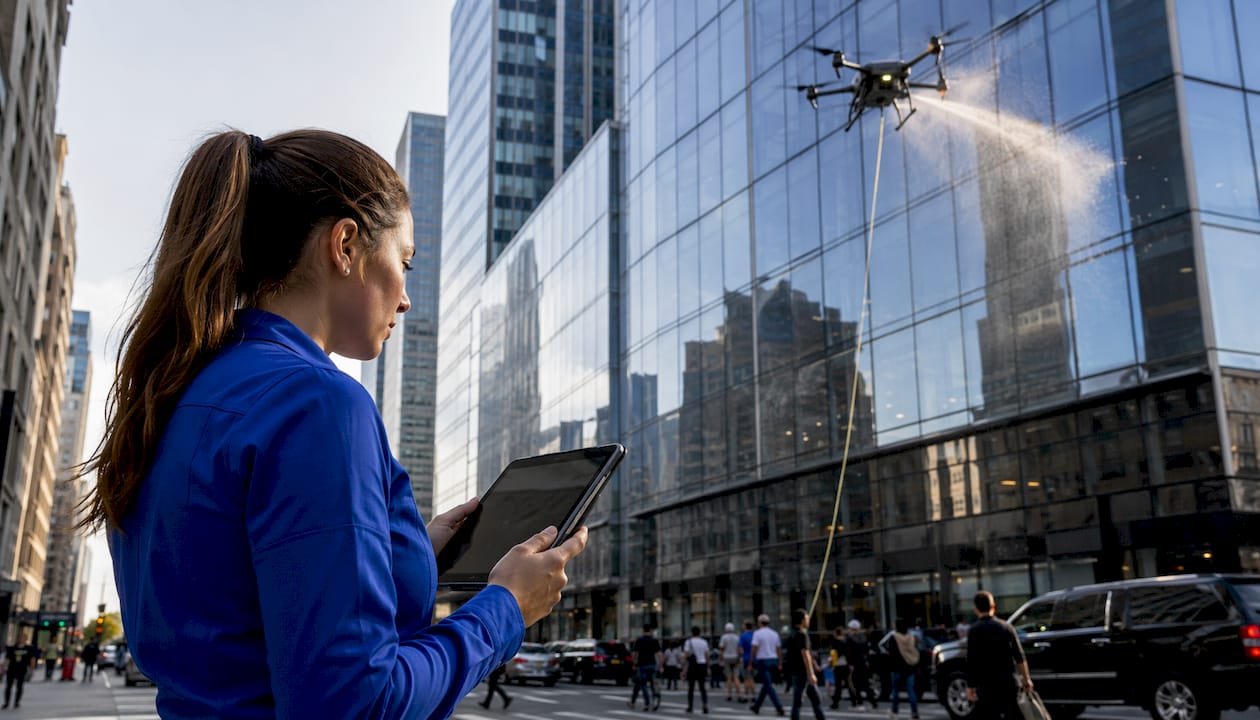
Precision positioning is handled by RTK (Real-Time Kinematic) GPS, which holds the drone at a precise standoff distance from the facade. Obstacle avoidance technology navigates window frames, ledges, and architectural details automatically, protecting the building surface from contact damage.
From a liability standpoint, keeping workers on the ground changes the insurance math entirely. Lift-based and rope-access cleaning carries elevated injury risk, and those premiums often exceed the visible service cost. Vistadronecleaning’s drone cleaning safety record reflects a fundamentally different risk profile. Setup typically takes under an hour, compared to the multi-day staging that scaffolding requires in dense urban areas like Fort Lauderdale or Coral Gables.
What the actual cleaning process looks like
The workflow is straightforward. A ground pump pressurizes water mixed with the appropriate cleaning chemistry. That solution travels up the tethered hose to the drone, which applies it directly to the building surface. The operator adjusts spray angle and pressure in real time based on the live camera feed.
Cleaning methods used:
- Soft washing for EIFS, stucco, painted metal panels, and other delicate South Florida facade materials. Low pressure lets the chemistry do the work, removing algae and mold at the root rather than blasting the surface.
- Pure de-ionized water rinse for glass and windows, leaving a streak-free finish without detergent residue.
- Selective pressure washing for concrete, pavers, and harder surfaces where higher pressure is appropriate.
South Florida’s humidity and salt air accelerate biological growth on facades. Vistadronecleaning uses eco-friendly soft-wash chemistry calibrated for local building materials, including the EIFS cladding common across Boca Raton office towers and the glass curtain walls of Brickell high-rises. For most commercial properties, a cleaning cycle every 6–12 months keeps facades in good condition given the region’s climate.
FAA Part 107 certification is required for commercial drone operations in Miami-Dade, Broward, and Palm Beach counties. Vistadronecleaning’s pilots hold that certification, and most projects proceed without additional local permits or road closures, which is a significant operational advantage over scaffold-based competitors.
A Brickell tower project completed in three days with 47% cost savings over the quoted scaffold alternative illustrates what ground-based drone cleaning delivers in practice.
Drone cleaning vs. traditional methods: the environmental difference
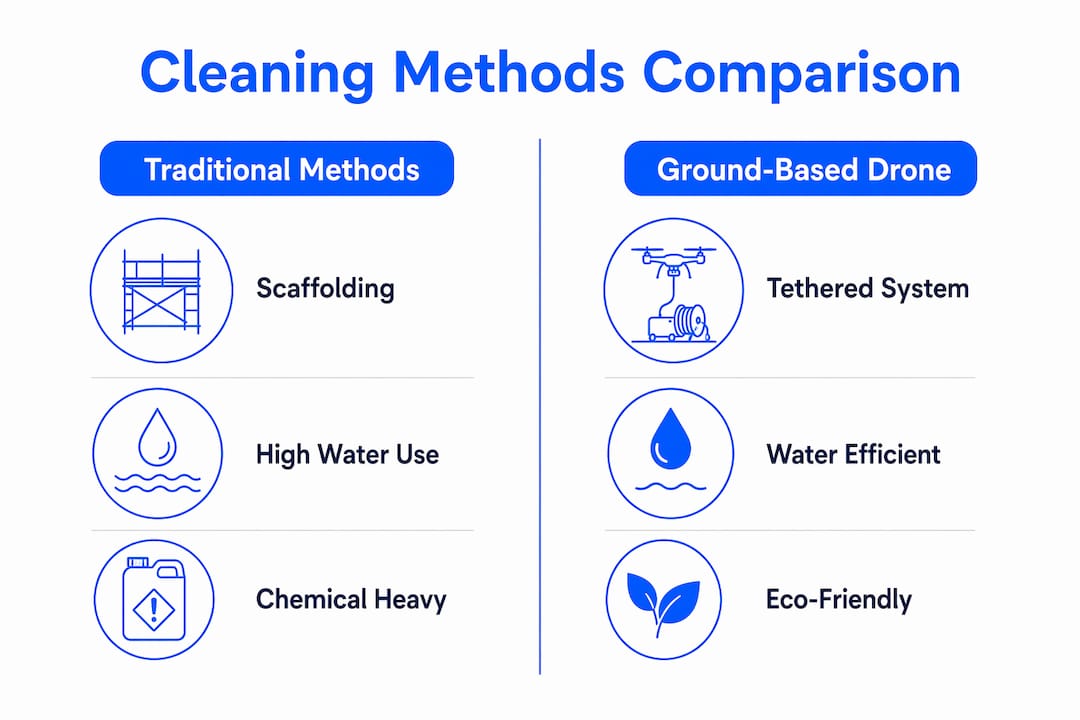
Traditional scaffold and lift cleaning tends to use higher water volumes, more aggressive chemical concentrations, and generates runoff that can carry pollutants into South Florida’s storm drains and coastal waterways. Pressure washing at high PSI also risks stripping protective coatings from facades, shortening their lifespan and creating more frequent maintenance cycles.
Drone cleaning uses significantly less water per square foot because the operator applies solution precisely where it is needed, monitored in real time. Soft-wash chemistry is biodegradable and applied at low pressure, reducing runoff volume and chemical load. For properties near Biscayne Bay or the Intracoastal Waterway, that matters beyond compliance. It is the kind of detail that shows up in a building’s sustainability reporting.
Vistadronecleaning: ground-based cleaning built for South Florida high-rises
South Florida commercial property owners spend more on traditional facade cleaning than they need to, thanks to solutions like QuoteLock for Cleaning Businesses that streamline scheduling and operational predictability. Vistadronecleaning cuts that cost by 30–60% while finishing faster and keeping every crew member on the ground.
The service covers window washing, facade cleaning, roof soft-wash, and solar panel cleaning across Miami-Dade and Broward counties. FAA Part 107 certified, $2M insured, and free quotes within 24 hours. See how drone cleaning compares to traditional window washing and request your quote today.
Key Takeaways
Ground-based drone cleaning lets commercial property owners in South Florida clean tall facades without scaffolding, at notably lower cost and faster time than traditional methods.
| Point | Details |
|---|---|
| Definition | Ground-based exterior cleaning cleans building surfaces while all crew members stay on the ground, using drones instead of lifts or scaffolding. |
| Cost and timeline | Most projects finish in 1–3 days at 30–60% lower cost than traditional scaffold or lift methods. |
| Safety advantage | Tethered drones with RTK GPS and obstacle avoidance eliminate worker fall risk and reduce liability insurance exposure. |
| Environmental benefit | Soft-wash chemistry and precise application reduce water use and chemical runoff compared to high-pressure traditional methods. |
| Vistadronecleaning | FAA Part 107-certified, $2M insured, and serving Miami-Dade and Broward counties with drone facade, window, roof, and solar panel cleaning. |
FAQ
What is ground-based exterior cleaning for high-rise buildings?
Ground-based exterior cleaning uses tethered drones or extended-reach systems to clean building facades, windows, and roofs while operators remain on the ground, eliminating the need for scaffolding or rope access.
How high can drone cleaning reach?
Vistadronecleaning’s Lucid Bots Sherpa system reaches commercial properties up to 200 feet tall using a tethered hose connected to a ground-based pump.
Is FAA certification required for drone cleaning in South Florida?
Yes. Commercial drone operations in Miami-Dade, Broward, and Palm Beach counties require FAA Part 107-certified pilots. Vistadronecleaning’s entire crew holds that certification.
How often should South Florida commercial buildings be cleaned?
Given the region’s humidity, salt air, and biological growth rates, most commercial facades benefit from cleaning every 6–12 months to prevent algae buildup and surface deterioration.
Does drone cleaning work on glass curtain-wall buildings?
Yes. Drones apply a pure de-ionized water rinse at safe pressure levels for glass, delivering a streak-free finish on curtain-wall facades without the risk of seal damage from high-pressure washing.