
Stucco Mold Removal in Miami: What the Black Streaks Are and How to Get Rid of Them
The black growth on a Miami stucco wall is rarely one thing. It is algae following the rainwater, mildew feeding on the damp film, and, in a few telltale spots, true mold marking where water is getting into the wall. This page explains how to tell them apart, why your building stains where it does, what makes it worse, and how to remove it without damaging the stucco or having it back in six months.
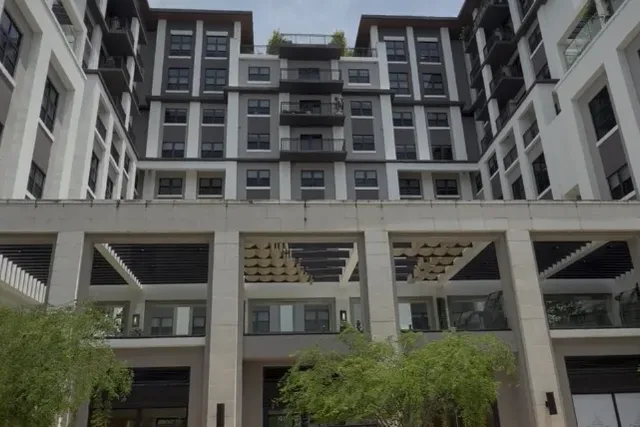 Before
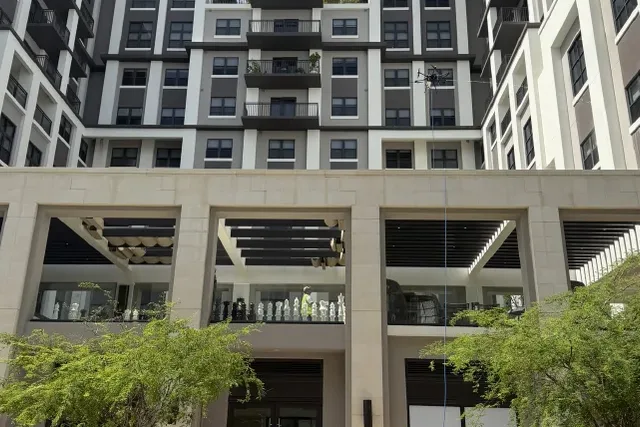 After
AfterWhat is the black mold on stucco in Miami, and how is it removed?
Most black staining on Miami stucco is Gloeocapsa magma algae plus surface mildew, fed by humidity, dew, airborne dust, and the calcium in the finish. Dense bands under sills, at joints, or behind downspouts can be true mold and usually mark a moisture problem. All of it is removed the same way: a soft-wash cleaning solution applied at low pressure, allowed to dwell, then rinsed with pure water, never pressure washed. Regrowth on a treated wall typically takes 18–36 months, longer once irrigation, downspouts, and vegetation are corrected.
- Usually is
- Algae + mildew, not mold
- True mold signals
- Moisture behind the finish
- Never
- Pressure wash or paint over it
- Removal
- Low-pressure soft wash, dwell, pure rinse
- Regrowth
- 18–36 months on treated stucco
- Service area
- All of Florida
Stucco stains for reasons the climate only partly explains
Humidity and rain set the stage, but the pattern of growth on a building is written by its own drainage, irrigation, shade, and sealant. Treating the symptom without reading the pattern is how the black comes back, and how a moisture problem hides in plain sight.
- Algae follows water: streaks below every sill, band, and parapet edge
- Mildew sits on the damp film and holds moisture against the finish
- True mold concentrates where water enters: failed sills, split joints
- North and east elevations never dry. They stain first and worst
- Irrigation, downspouts, and hedges put water on the wall nightly
- Pressure washing opens the wall and leaves the root layer alive
Diagnose the pattern, remove the growth, protect the wall
Our survey maps where the growth is and why it is there before anyone touches the facade. The drone then applies a soft-wash cleaning solution at low pressure across every elevation, parapets and soffits included, lets it dwell, and rinses with pure water so the wall is left clean, dead of growth, and free of residue. Patterns that point to water intrusion are documented and handed to your property manager, not washed over.
- 1
Drone survey: map growth by elevation, flag moisture-pattern bands
- 2
Low-pressure soft-wash cleaning from the ground, full facade height, timed dwell
- 3
Pure-water rinse, 4K before/after record, and a short list of what to fix so it stays clean
Why this works
Safer for crews, faster for tenants, cheaper for owners, and cleaner for the building.
Removes algae, mildew, and mold down to the root, not a surface strip
No pressure damage: no capillary intrusion, no torn elastomeric or acrylic finish
Full-height coverage from the ground: parapets, banding, soffits, balcony undersides
Moisture-pattern flags included in every survey, before cleaning
18–36 month clean interval on Miami stucco, longer with drainage fixes
4K aerial before/after for HOA boards, insurers, and recertification files
No scaffolding, lifts, or crew on ropes above tenants and residents
Chlorine-free option for landscape- and runoff-sensitive properties
Ways to get mold off stucco, compared
What each method does to the organism, to the wall, and to the calendar.
Removes the growth
Traditional
Pressure washing strips the visible layer only; the colony survives in the pores
Drone cleaning
Soft wash with timed dwell lifts algae, mildew, and mold through the film
Effect on stucco
Traditional
High pressure forces water in, opens cracks, can tear elastomeric coatings
Drone cleaning
Low pressure. The wall is never the target, the film is
Time until it returns
Traditional
Months, regrowth from surviving roots
Drone cleaning
18–36 months typical on treated Miami stucco
Upper elevations
Traditional
Lift, swing stage, or rope access to reach parapets and soffits
Drone cleaning
Drone reaches up to 200 ft per staging position, flown from the ground
Painting over it
Traditional
Coating fails early over living growth; stain telegraphs through
Drone cleaning
Clean, dead, dry substrate first, then a coating that lasts
Moisture problems
Traditional
Washed away with the stain, found again next season
Drone cleaning
Flagged in the survey and reported before cleaning
What to expect on a Miami stucco mold removal
Fixed price after a free site survey. Larger buildings land lower in the range.
Commercial / HOA rate
$0.12–$0.25 / sq ft
Per square foot of wall area. Fixed quote within 24 hours of survey.
Recurring schedule
20–30% lower
Per-visit pricing on a maintenance cycle versus a one-off cleaning.
Clean interval
18–36 months
Shorter oceanfront or under heavy shade; longer once irrigation and drainage are corrected.
Time on site
1–3 days
Mid-rise in a day; taller or multi-building properties in two to three.
Access equipment
None
No scaffolding, swing stages, or lifts. Entrances and parking stay open.
Deliverable
4K record
Before/after aerial documentation plus flagged moisture patterns.
Reading the stains: what a Miami stucco wall is telling you
Nobody searches for "cyanobacteria on my building." They search for mold, because that is what black growth on a wall looks like. The distinction is not academic. The three organisms that colonize stucco in South Florida behave differently, signal different things about the wall, and one of them is a reason to call an engineer before a cleaner.
Algae, mildew, mold. How to tell which one you have
Algae (Gloeocapsa magma) produces the classic streaking: dark gray-black runs that start below a horizontal edge (a sill, a band, a parapet cap) and fan downward with the flow of rainwater. It is uniform in color, follows drainage paths, and is heaviest on elevations that stay shaded into the afternoon. The colony darkens as it ages because it manufactures a pigmented sheath to protect itself from UV, which is why a two-year-old stain is nearly black and a six-month-old one is green-gray.
Mildew is the fuzzy, powdery layer that sits on top of the algae or on its own in damp corners. It is a surface fungus. Cladosporium and Alternaria are the usual South Florida residents, and it smears when rubbed with a wet finger, where algae does not. Mildew does not damage stucco directly but it holds moisture against the finish and feeds the next layer of growth.
Mold, in the sense a home inspector means it, needs a wall that stays wet. On an exterior stucco facade it shows up as a tight, dense, sometimes greenish-black band rather than a streak: under a window where the sill pan has failed, along a horizontal control joint whose sealant has split, in the shadow of a downspout that discharges against the wall, or in a strip along the ground where irrigation hits the same spot every night. That pattern is the visible end of a moisture path. Cleaning it will make it disappear for a season; fixing the water source is what stops it.
Why the same building stains unevenly
Walk around any stucco building in Miami-Dade and the growth is rarely symmetrical. The north elevation streaks first because it never gets direct afternoon sun to dry out. The east side follows, because dew forms overnight and the wall is still damp when the day's humidity arrives. South and west faces stay cleaner until something creates shade, a neighboring tower, a mature live oak, a covered walkway. Within an elevation, growth concentrates wherever water lingers: the underside of balcony slabs, the recess behind a decorative band, the bottom two feet of wall where irrigation overspray lands, and the strip beneath every window sill that drips.
The texture of the finish matters too. Heavy sand or dash finishes hold more film than a smooth trowel finish and stain faster. Elastomeric coatings resist water absorption but their slightly tacky surface grabs airborne dust, which is the substrate the first colonizers need. Light-colored walls are not cleaner; they just show the stain sooner.
What makes it worse, and what you can change this week
Most of the acceleration on a Miami facade comes from the property's own systems, not the climate. Rotor irrigation heads that arc onto the wall put water on stucco every night of the dry season. Downspouts that end at the wall face, rather than into a drain or a splash block, soak the same two square feet with every storm. Hedges planted tight against the building block airflow and hold humidity against the base of the wall. Trees that touch or overhang the facade drop organic debris that feeds growth and shade the wall that would otherwise dry. Failed sealant at windows, expansion joints, and penetrations lets water into the assembly and out again through the finish, creating the persistent bands that mimic true mold.
Redirecting irrigation, extending downspouts, trimming vegetation back a foot from the wall, and re-sealing open joints are maintenance items, not capital projects, and they have more effect on the regrowth interval than any cleaning chemistry does.
Removal that lasts: treat, dwell, rinse, never blast
Every organism on the list is removed the same way: a soft-wash cleaning solution applied at low pressure so it soaks into the film rather than bouncing off, left to dwell long enough to break down the cell walls, then rinsed away with pure water so no mineral residue is left to feed the next colony. The stucco itself is never the target. That is the whole difference between soft washing and pressure washing, and it is why a pressure washed wall re-stains in months while a soft washed wall holds for years. Our drones carry that treatment to the full height of the facade from the ground, so parapets, banding, and soffits. The places growth starts. Get the same dwell as the walls at eye level. For the equipment and chemistry detail, see the stucco cleaning service page; for buildings with a chlorine-sensitive landscape or runoff concerns, see bleach-free drone cleaning.
When a cleaning is the wrong answer
Three patterns get flagged in our survey and handed to the property manager before any washing happens. A dense band of growth that reappears in the same spot within weeks of cleaning, which means water is coming through the finish from behind. Staining paired with white crusting (efflorescence) or bubbling in the finish coat, which means water is migrating through the wall and carrying salts with it. And any growth pattern on a building approaching a Miami-Dade 40-year recertification or a Florida milestone inspection, where the engineer will want to know whether those bands are cosmetic or structural before they are washed away. Cleaning after the diagnosis is fine; cleaning instead of the diagnosis is how a small repair becomes a large one.
Frequently asked questions
Straight answers on process, safety, pricing, and scheduling, pulled from the questions South Florida property managers actually ask.
Is the black stuff on my stucco actually mold?+
Usually it is a mix. The dark, streaky staining that runs down Miami stucco is mostly Gloeocapsa magma, a cyanobacterium that darkens as it builds a UV-protective sheath, layered with mildew (surface fungi such as Cladosporium and Alternaria) that feed on the same damp, dusty film. True mold colonies do appear on stucco, but they concentrate where water is actually held: under sills, at failed sealant joints, behind downspouts, and around irrigation overspray. Telling the two apart matters, because a wall with fungal growth in a tight band usually has a water problem, not a cleaning problem.
Why does stucco in Miami grow mold so fast?+
Three things stack up. Stucco is porous and slightly rough, so it holds a film of moisture and airborne dust that organisms feed on. South Florida delivers that moisture almost every day: dew, humidity above 70%, and afternoon rain from May to October. And the calcium in a cementitious finish is a food source for cyanobacteria. A north- or east-facing elevation that never fully dries can go from clean to visibly streaked in under a year.
Can I pressure wash mold off stucco?+
You can strip the visible layer, and you will regret it. High pressure drives water into a porous wall, blows out hairline cracks, and can tear an elastomeric or acrylic finish coat off the base. It also leaves the organism's root layer alive, so the black comes back in months and the wall is now more absorbent than it was. Mold and algae on stucco are removed with chemistry and dwell time, then rinsed at low pressure, never blasted.
Is mold on the exterior stucco a health issue for residents?+
Exterior growth is mostly an appearance and maintenance issue, not an indoor air quality issue, because the organisms live on the outside face of the wall. The exception is when exterior staining marks a spot where water is getting into the assembly. Persistent dark bands under windows, at parapets, or along a floor line can be the visible end of moisture behind the finish, and that is when a facade inspection is worth more than a cleaning. We flag those patterns in our survey rather than washing over them.
Should I just paint over the mold?+
No. Paint applied over living growth fails early. The organism keeps metabolizing under the film, moisture stays trapped against it, and within a season the new coating peels or shows the stain through. Every coating manufacturer requires a clean, biologically dead, dry substrate before recoating. Removal first, then paint, is the only order that lasts.
How long after removal before the black streaks come back?+
On a properly soft-washed wall in Miami, expect 18 to 36 months before regrowth is visible, shorter on oceanfront or heavily shaded elevations. The variables you control are how much water the wall sees between rains: irrigation heads pointed at the building, downspouts that discharge onto the facade, trees touching the wall, and sealant joints that are leaking. Fix those and the interval stretches.
What does stucco mold removal cost in Miami?+
Commercial and HOA facade work is quoted at $0.12–$0.25 per square foot of wall area, fixed after a free site survey, with larger buildings landing lower in the range. Recurring maintenance schedules run 20–30% below one-off pricing. There is no scaffolding or lift line item, because the drone applies the treatment from the ground.
Do you need to test the mold before removing it?+
Not for exterior stucco. Lab identification is useful for indoor remediation, where species and spore counts drive the protocol. On an exterior facade the treatment is the same regardless of species (a soft-wash cleaning solution, adequate dwell, low-pressure rinse) so testing adds cost without changing the work. What we do assess on site is whether the growth pattern points to a moisture source that needs repair.
Our core services
- Drone Facade Cleaning MiamiStucco, EIFS, painted concrete, glass and metal panel, cleaned from the air.
- Drone Roof Cleaning MiamiSoft-wash for tile, metal, shingle and flat roofs with no foot traffic.
- Drone Window Cleaning MiamiPure-water drone glass cleaning for high-rise and commercial buildings.
- Parking Garage Cleaning MiamiDecks, drive lanes, walls and stairwells at a flat per-square-foot rate.
Keep exploring
Related services, pricing, and answers, all in one click.
Looking for alternatives to scaffolding?
See how commercial properties across Miami are cleaned without scaffolding, boom lifts, or rope access: safer, faster, and typically 30–60% below scaffold- or lift-based cleaning.
Get the black streaks off your stucco, and find out why they were there.
Free drone survey, moisture-pattern flags included, fixed-price proposal within 24 hours.