Sustainable Exterior Cleaning Best Practices for South Florida
Discover sustainable exterior cleaning best practices for South Florida. Ensure eco-friendly results while protecting coastal ecosystems and saving resources.
TL; DR:
- Sustainable exterior cleaning uses certified low-toxicity products, water-efficient methods, and documented protocols to reduce environmental harm. Drone technology offers a faster, cost-effective alternative to scaffolding, lowering emissions and chemical runoff. Verifying current certifications and proper wastewater management is essential for eco-friendly, compliant exterior maintenance.
Sustainable exterior cleaning best practices are defined as the integration of certified low-toxicity products, water-efficient application methods, and documented operational procedures that reduce environmental harm while maintaining building performance. For property managers, board members, and sustainability officers overseeing commercial and residential buildings across Miami-Dade, Broward, and Palm Beach counties, these practices carry real weight. South Florida’s coastal ecosystems, stormwater systems, and dense urban environments make chemical runoff and resource waste genuinely costly. The good news: advances in drone-based cleaning technology and recognized certifications like ISSA CIMS-GB and Green Seal GS-42 now make it easier than ever to clean buildings responsibly and affordably.
1. What certifications define sustainable exterior cleaning best practices?
Certifications are the clearest signal that a cleaning program is genuinely sustainable, not just marketed that way. ISSA CIMS-GB and Green Seal GS-42 audit full operational sustainability, including management systems, staff training, waste handling, and documented procedures. That scope matters because it rules out providers who simply swap one product for a greener label without changing how they work.
Green Seal’s GS-37 and GS-42, EPA Safer Choice, and EcoLogo certifications are accepted by LEED v5 and WELL v2 standards for commercial cleaning. That acceptance means your building’s sustainability documentation stays clean when you contract a certified provider. For property managers pursuing LEED credits, this is not optional paperwork. It is a compliance requirement.
Third-party certifications must be actively maintained. Expired certification documents can cause rejection of LEED credits and trigger compliance failures during audits. Always request current certificates with visible expiration dates before signing a service contract.
- ISSA CIMS-GB: audits management systems, training records, and environmental procedures
- Green Seal GS-42: covers cleaning services with third-party operational audits
- EPA Safer Choice: validates product ingredient safety and reduced toxic exposure
- EcoLogo: involves factory audits and scientific testing of product sustainability claims
Pro Tip: Ask every cleaning provider for their current certification number and verify it directly on the issuing body’s website. A certificate PDF alone is not proof of active status.
2. Which eco-friendly products work best on South Florida building exteriors?
The right product choice protects both the building surface and the surrounding environment. South Florida’s proximity to Biscayne Bay, the Everglades, and coastal waterways means chemical runoff from a Brickell high-rise or a Coral Gables condominium can reach sensitive ecosystems within hours. EPA Safer Choice, Green Seal GS-37, and EcoLogo certified products reduce toxic chemical exposure and limit plastic waste through concentrated formulas. Concentrated products also lower shipping emissions per cleaning cycle, which adds up across a full maintenance calendar.
Key product categories to specify in your service contracts:
- Biodegradable detergents: break down quickly in soil and water without leaving persistent residues
- Non-toxic surfactants: lift dirt and biofilm without chlorinated or petroleum-based compounds
- Phosphate-free formulas: prevent algae blooms in stormwater systems and coastal waters
- Concentrated formats with dilution systems: reduce packaging waste and transportation impact per use
Avoid products containing sodium lauryl sulfate in high concentrations, quaternary ammonium compounds, or bleach-based formulas near landscaped areas. These chemicals are particularly damaging to South Florida’s native palms, ficus hedges, and ornamental plantings common around Fort Lauderdale and Aventura properties.
3. How does drone-based cleaning transform sustainable exterior maintenance?
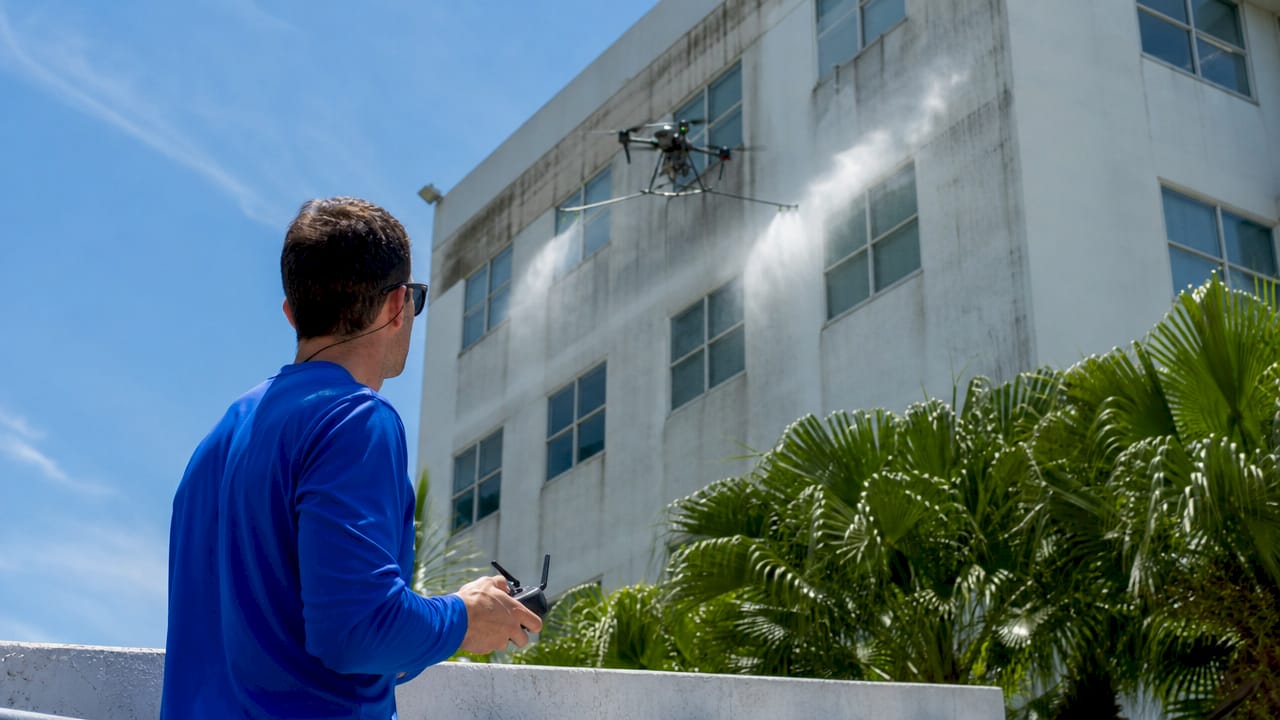
Drone cleaning is the most significant shift in sustainable building maintenance in the past decade. Traditional scaffold methods require days of setup, heavy vehicle logistics, road closures, and significant fuel consumption before a single window is touched. Drone systems can be operational in under five minutes, with remote-tiltable nozzles accessing facades up to 80 meters without any rigging or ground disruption.
The cost and efficiency numbers are concrete. Drone-based exterior cleaning reduces operating costs by 30–60% and increases cleaning efficiency by about 300% compared to traditional scaffold methods. Projects that previously required multiple days of scaffold assembly now complete in 1–3 days. That speed matters for occupied hotels in Miami Beach or active office towers in Boca Raton where downtime costs money.
Water conservation is another measurable benefit. Targeted low-pressure application delivers cleaning solution only where needed, and wastewater collection systems prevent chemical runoff from reaching stormwater drains. Facilities managers choose drone cleaning specifically to reduce carbon footprint from vehicle transport and scaffolding logistics as part of formal corporate sustainability commitments.
Vistadronecleaning operates FAA Part 107-certified pilots using tethered Lucid Bots Sherpa drones across Miami-Dade and Broward counties. Crews stay on the ground throughout every job, eliminating fall risk and reducing insurance liability for building owners.
Pro Tip: When evaluating drone cleaning providers, confirm FAA Part 107 certification and ask for proof of $2M liability insurance. Both are non-negotiable for commercial properties in South Florida.
| Method | Setup time | Height access | Environmental impact | Typical cost vs. scaffold |
|---|---|---|---|---|
| Drone cleaning | Under 5 minutes | Up to 80 meters | Low: targeted water use, no vehicle staging | 30–60% lower |
| Scaffold system | Multiple days | Unlimited with build-out | High: fuel, materials, road closures | Baseline |
| Boom lift | Hours | Up to ~40 meters | Moderate: fuel, ground compaction | Comparable to scaffold |
| Rope access | Hours | High-rise capable | Moderate: no vehicle staging, manual labor risk | Varies |
4. How to protect South Florida landscaping during exterior cleaning
Pre-soaking surrounding vegetation is a simple step that most cleaning crews skip, and the damage shows up weeks later. Pre-soaking plants and soil adjacent to cleaning zones with clean water before applying any chemical solution protects South Florida landscaping from chemical injury. Saturated soil and plant tissue absorb far less cleaning agent than dry material. This single step prevents the browning and die-back that property managers often misattribute to disease or drought.
Soft washing requires equally careful chemical management. Sodium hypochlorite dilution at approximately 20% with a 10-minute dwell time followed by gentle rinsing cleans mold and algae without damaging stucco, EIFS, or painted surfaces. Allowing the solution to dry before rinsing creates chemical residue that is much harder to remove and increases surface degradation over time.
Wastewater management is the third pillar of responsible exterior cleaning. Runoff from a high-rise facade in Pompano Beach or a condominium complex in Coral Springs carries surfactants, cleaning solutions, and particulates directly into stormwater systems. Portable berms, vacuum recovery systems, and pH neutralization before discharge are standard practice for certified providers. If your current contractor does not use any of these, that is a compliance gap worth addressing before your next maintenance cycle.
5. Additional green exterior cleaning tips for routine maintenance
Routine scheduling is one of the most underused tools in sustainable property maintenance. Cleaning building exteriors on a consistent annual or biannual schedule prevents heavy biofilm and algae buildup that requires stronger chemicals and more water to remove. Light, frequent cleaning is always more sustainable than reactive deep cleaning after years of neglect.
Practical steps that reduce environmental impact across any cleaning program:
- Schedule cleanings in the dry season (november through april in South Florida) to reduce chemical dilution from rain and lower runoff risk
- Use pH-neutral or mildly alkaline products on glass, aluminum, and painted surfaces to prevent etching and extend surface life
- Collect and filter wastewater on-site before it reaches drains, using portable containment systems
- Document chemical usage per project to track consumption trends and identify reduction opportunities over time
- Inspect surfaces before cleaning to identify areas needing spot treatment versus full-surface application, reducing overall chemical volume
Surface longevity is a sustainability metric that rarely appears in cleaning contracts but should. A facade cleaned with the wrong chemical at the wrong pressure requires repainting or recoating years earlier than one maintained correctly. That early replacement generates significant material waste and cost.
6. How to choose the right cleaning method for your South Florida building
Building type, height, surface material, and occupancy all determine which cleaning approach delivers the best balance of sustainability and results. A 40-story glass tower in Brickell has entirely different needs than a three-story stucco retail center in Plantation. Matching the method to the building prevents both under-cleaning and surface damage.
Comparing drone cleaning to traditional methods shows clear advantages for buildings above four stories, occupied properties, and sites where road closures or permit costs are prohibitive. Soft washing suits low-rise stucco, EIFS, and painted masonry where chemical dwell time matters more than height access. Pressure washing remains appropriate for concrete parking structures and hardscape, but carries the highest risk of surface damage and runoff if not managed carefully.
Checklist for evaluating any exterior cleaning provider in South Florida:
- Current ISSA CIMS-GB or Green Seal GS-42 certification (verify directly with the issuing body)
- EPA Safer Choice or EcoLogo certified products in their standard kit
- FAA Part 107 certification if drone services are offered
- Documented wastewater management protocol
- Proof of liability insurance at $1M minimum ($2M for high-rise commercial work)
- References from comparable South Florida properties (hotels, condominiums, office towers)
The eco-friendly facade cleaning options available in South Florida have expanded significantly. Property managers no longer have to choose between effective cleaning and responsible practice. The two are now the same thing when the right provider is selected.
Key takeaways
Sustainable exterior cleaning delivers the lowest environmental impact when certified green products, documented wastewater management, and advanced application methods like drone technology are combined in a single program.
| Point | Details |
|---|---|
| Certifications matter operationally | ISSA CIMS-GB and Green Seal GS-42 audit full operations, not just product labels. |
| Drone cleaning cuts costs and emissions | Drone methods reduce operating costs by 30–60% and eliminate scaffold logistics entirely. |
| Pre-soak landscaping before every job | Saturating soil and plants before chemical application prevents chemical uptake and damage. |
| Verify certifications before contracting | Expired certificates can void LEED credits and create compliance failures during audits. |
| Schedule routine maintenance proactively | Regular cleaning cycles reduce chemical volume needed and extend facade surface life. |
What I’ve learned from watching South Florida buildings get cleaned the wrong way
The most common mistake I see property managers make is treating exterior cleaning as a one-time expense rather than a maintenance system. A building in Hollywood gets pressure-washed hard every three years, the stucco degrades, the paint fades, and the board wonders why the facade looks older than the building’s age. The answer is always the same: wrong method, wrong chemical, no wastewater plan.
The second mistake is accepting “eco-friendly” as a self-reported claim. Vague green marketing on a cleaning company’s website means nothing without a current GS-42 or CIMS-GB certificate number you can verify. I have seen providers use the word “sustainable” while running sodium hypochlorite at full concentration into open drains adjacent to landscaping. That is not sustainable. That is a liability.
Drone technology changed my thinking on what sustainable exterior cleaning actually looks like at scale. When a Lucid Bots Sherpa unit cleans a 20-story facade in Aventura without a single vehicle blocking the entrance, without a scaffold permit, and without a crew working at height, the environmental and operational case is obvious. The building gets cleaned faster, the crew stays safe, and the chemical footprint is a fraction of a traditional job. That combination is rare in any industry.
My advice to sustainability officers: write certification requirements into your service contracts before you go to bid. Require current certificate numbers, not PDFs. Require a documented wastewater management protocol. And ask specifically how the provider handles chemical runoff near landscaping. Those three questions will eliminate most of the field immediately, and the providers who remain will be worth talking to.
, Eliot
Vistadronecleaning’s approach to sustainable exterior cleaning in South Florida
Vistadronecleaning serves commercial high-rises, condominiums, hotels, and office towers across Miami-Dade and Broward counties using FAA Part 107-certified pilots and tethered Lucid Bots Sherpa drones. Every job uses de-ionized pure water for streak-free results, with crews remaining on the ground throughout. No scaffolding, no road closures, no permits.
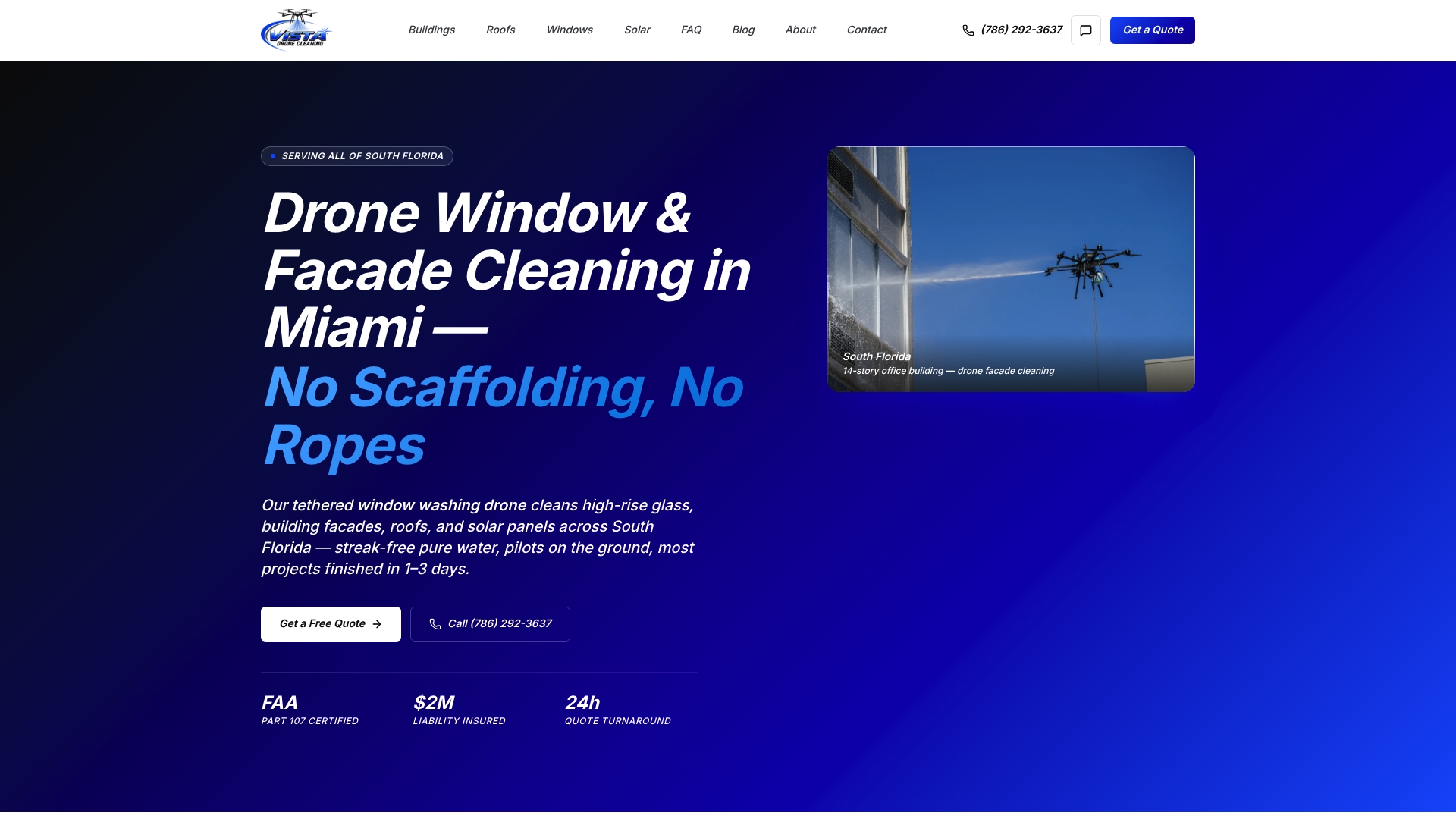
Projects typically complete in 1–3 days at 30–60% lower cost than scaffold or boom-lift alternatives. Vistadronecleaning carries $2M liability insurance and provides free quotes within 24 hours. For property managers and sustainability officers ready to move beyond traditional methods, the drone vs. traditional cleaning comparison shows exactly where the savings and environmental benefits come from. Contact Vistadronecleaning to schedule a site assessment for your South Florida property.
FAQ
What does sustainable exterior cleaning mean for commercial buildings?
Sustainable exterior cleaning uses certified low-toxicity products, water-efficient application methods, and documented wastewater management to reduce environmental harm. It applies to facades, windows, roofs, and solar panels on commercial and residential buildings.
What certifications should I require from an exterior cleaning provider?
Require current ISSA CIMS-GB or Green Seal GS-42 certification and verify the certificate number directly with the issuing body. EPA Safer Choice or EcoLogo product certification confirms the cleaning agents themselves meet third-party safety standards.
How does drone cleaning reduce environmental impact compared to scaffolding?
Drone cleaning eliminates scaffold logistics, vehicle staging, and road closures, which lowers fuel consumption and carbon output significantly. Targeted low-pressure water application also reduces total water use and chemical runoff compared to traditional pressure washing.
Is soft washing safe for South Florida’s native landscaping?
Soft washing is safe when sodium hypochlorite is properly diluted and surrounding vegetation is pre-soaked with clean water before application. Pre-soaking saturates plant tissue so it absorbs less cleaning chemical during the wash cycle.
How often should South Florida building exteriors be cleaned sustainably?
Annual or biannual cleaning cycles are the standard for most South Florida commercial properties. Regular scheduling prevents heavy biofilm buildup that requires stronger chemicals to remove, keeping both chemical use and surface wear lower over time.