
Smart exterior maintenance strategies for South Florida buildings
Discover best practices in commercial building exterior maintenance explained for South Florida. Protect your investment and enhance safety!
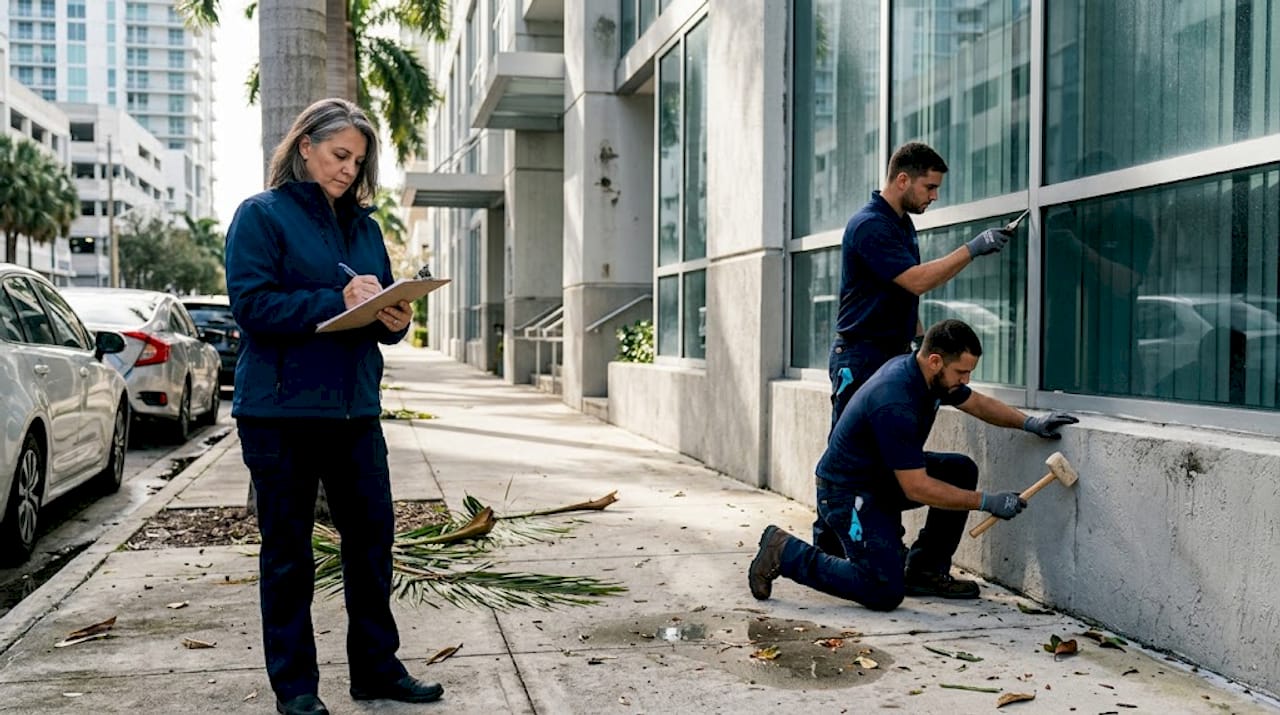
Exterior maintenance for South Florida commercial buildings is a structural, financial, and legal obligation. Salt air, high humidity, and hurricanes accelerate building envelope deterioration faster than in any other region. Whether you manage a Brickell high-rise or a Doral office campus, your maintenance decisions today dictate your future repair bills, compliance status, and property value.
Table of Contents
- Why exterior maintenance matters in South Florida
- Core components of a commercial exterior maintenance program
- Proactive vs reactive maintenance: Costs, risks, and ROI
- Annual exterior maintenance checklist for high-rise buildings
- Innovations in facade maintenance: Drones, coatings, and smarter materials
- The real reason maintenance plans fail (and how to fix it)
- Take the next step: Advanced exterior cleaning and inspection solutions
- Frequently asked questions
Key Takeaways
| Point | Details | |: --- |: --- | | Proactive beats reactive | Preventive maintenance reduces costs by 60-70% and avoids crisis repairs. | | Annual compliance is critical | South Florida buildings must meet strict facade inspection and safety recertification regulations. | | Modern tech streamlines work | Drones and advanced coatings make exterior care safer, faster, and more cost-effective. | | Maintenance preserves value | Consistent care protects building longevity, tenant satisfaction, and insurance rates. |
Why exterior maintenance matters in South Florida
South Florida's climate is hostile to building envelopes. Salt air, high humidity, and hurricane exposure relentlessly attack concrete, steel, sealants, and coatings. Salt particles carried by ocean breezes penetrate microscopic surface cracks, corroding embedded steel reinforcement. Humidity keeps surfaces wet, feeding mold and algae that degrade protective coatings.
Concrete spalling is a critical risk. When embedded rebar rusts, it expands to seven times its original volume, fracturing concrete from the inside. By the time you see cracks or falling debris, the structural damage is already significant. In this climate, spalling can progress from minor staining to falling concrete chunks within a few years.
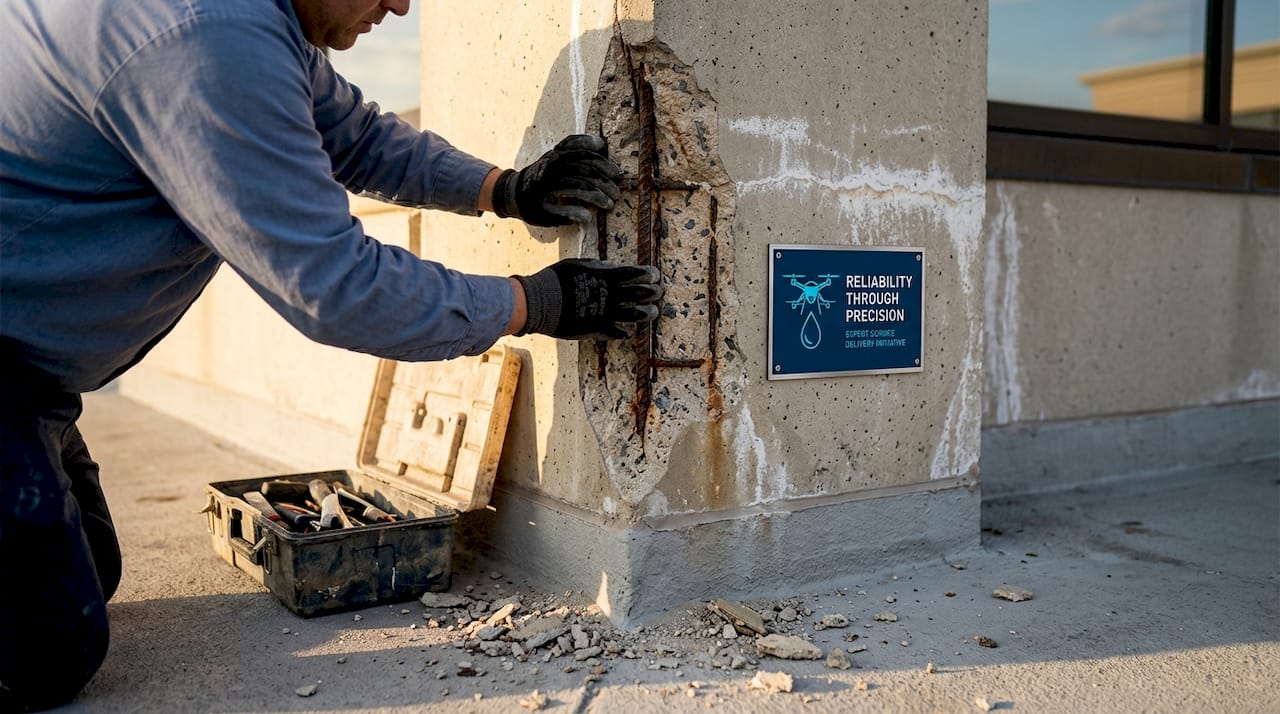
Regulatory pressure adds urgency. Florida law mandates milestone inspections and 40-year recertifications for specific buildings, along with balcony and facade safety checks. Non-compliance triggers fines, forced evacuations, insurance gaps, and liability exposure.
Key risks of neglected maintenance:
- Corrosion of structural steel and rebar
- Concrete spalling and safety hazards
- Mold growth degrading sealants and coatings
- Failed milestone or 40-year recertification inspections
- Insurance premium increases or coverage denial
- Tenant complaints and reputational damage
"A building that looks clean can hide thousands of dollars in structural damage. In South Florida, what you cannot see is more dangerous than what you can."
Pro Tip: Use your cleaning checklist for scheduling inspections. Catching early signs of spalling or sealant failure during routine cleaning saves tens of thousands in emergency repairs.
Core components of a commercial exterior maintenance program
A structured program is a layered system of inspections, cleaning, and documentation. Inspection frequencies vary: evaluate sealants every five to seven years; check EIFS and stucco every three years using infrared (IR) thermography to detect hidden moisture; and inspect roofs biannually. IR thermography reveals moisture trapped behind walls that is invisible to the naked eye.
Program framework:
- **Zone-based ratings: ** Divide the facade into zones (North, South, East, West, Roof) and assign condition ratings.
- **Component-specific cycles: ** Match inspection frequency to the vulnerability of each material.
- **Photo defect logs: ** Document every defect with GPS coordinates and date stamps to track progression.
- **Drone cleaning and inspection: ** Access upper floors and roof edges without scaffolding or rope access.
- **Risk-based remediation: ** Address water intrusion paths and structural cracks within 30 days.
| Building component | Inspection frequency | Key risk indicator | |: --- |: --- |: --- | | Facade sealants | Every 5 to 7 years | Cracking, shrinkage, adhesion loss | | EIFS and stucco | Every 3 years with IR | Hidden moisture, delamination | | Roof membrane | Biannually | Ponding water, seam failures | | Balconies and railings | Annually | Rust staining, concrete spalling | | Windows and glazing | Annually | Failed seals, frame corrosion |
High-resolution photo mapping and drone imaging allow property managers to build searchable defect databases. These are invaluable for recertification and insurance renewals.
Proactive vs reactive maintenance: Costs, risks, and ROI
The financial case for proactive maintenance is clear. Preventive maintenance costs 60 to 70 percent less than reactive repairs. A proactive balcony program may cost $15,000 over ten years; ignoring it until an emergency occurs can cost $53,000. Annual facade cleaning for a mid-size building runs $15,000 to $25,000. Neglecting it until biological growth penetrates the substrate pushes costs into six figures.
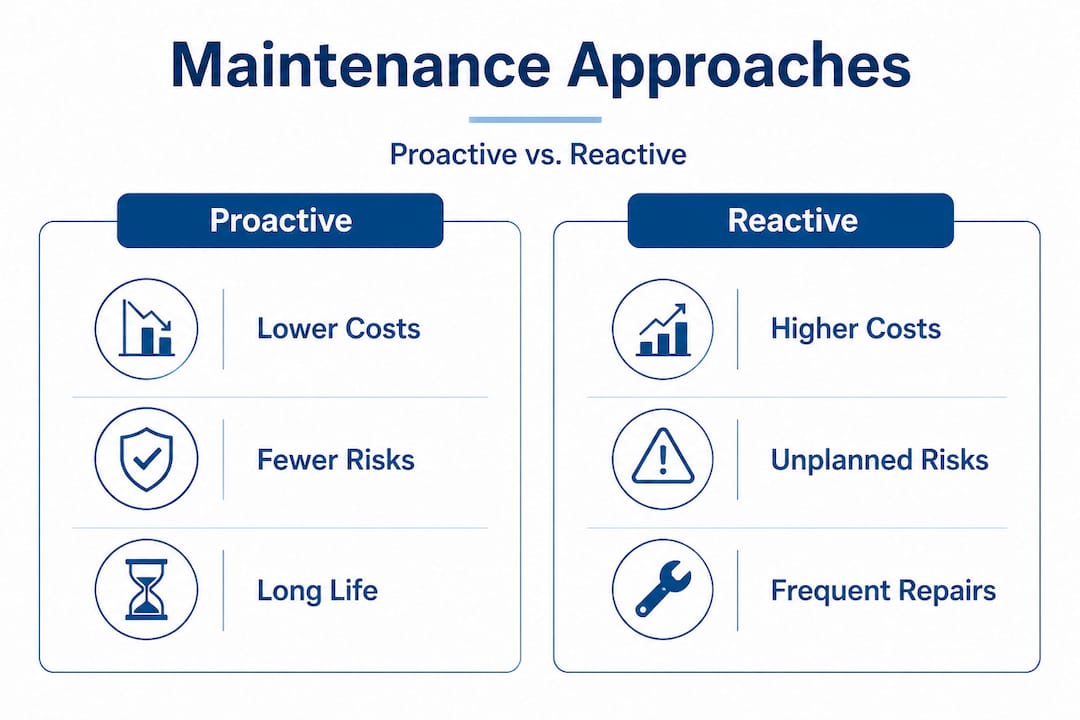
Proactive care extends building life and returns three to five dollars for every dollar spent on prevention.
| Maintenance approach | 10-year cost example | Risk profile | Compliance predictability | |: --- |: --- |: --- |: --- | | Proactive program | $15,000 to $25,000/year | Low | High | | Reactive only | $53,000+ per incident | High | Low |
Proactive programs allow for accurate budgeting and better insurance rates. Pro Tip: Compare the total cost of rope access vs drone cleaning or scaffolding vs drone cleaning. Mobilization costs and traffic disruption make traditional methods more expensive than basic day rates suggest.
Annual exterior maintenance checklist for high-rise buildings
Effective maintenance requires a time-based checklist. Monthly perimeter walks catch rust and ponding water.
**Monthly tasks: **
- Document new rust staining, efflorescence, or biological growth.
- Check roof drains and scuppers after heavy rain.
- Inspect ground-level sealants and expansion joints.
**Quarterly tasks: **
- Photograph all facade zones for change detection.
- Inspect balcony railings for corrosion or movement.
- Check mechanical penetrations and roof flashings.
**Annual tasks: **
- Commission a full facade wash to remove salt and pollutants.
- Complete a sealant assessment and joints repair.
- Conduct a pre-recertification audit.
- Update photo defect logs.
- Schedule facade washes before hurricane season (April-May).
- Use soft washing rather than high pressure on stucco or paint.
- Document work with dated photos.
- Budget 1% of the building's replacement value annually for maintenance.
Innovations in facade maintenance: Drones, coatings, and smarter materials
Drones are powerful tools for facade cleaning and inspection. For high-rise facades, drone cleaning eliminates fall risks, reduces timelines to a single day, and provides photo documentation. FAA-certified operators using industrial soft-wash systems reach 200 feet without scaffolding or traffic disruption.
Advantages of drone maintenance:
- Zero worker-at-height exposure.
- No scaffolding or lift mobilization costs ($10k-$30k savings).
- Minimal disruption to tenants and traffic.
- Faster completion, finishing in one day what usually takes five.
For high-rise cleaning without rope access, drones using de-ionized water leave surfaces cleaner longer with no mineral streaks.
Regarding materials: stainless steel, galvanization, and epoxy coatings improve durability. Upgrading fasteners and railings to marine-grade stainless steel stops the rust staining cycles common in coastal environments. Water-repellent topcoats applied to concrete after cleaning can extend substrate life by five to ten years.
The real reason maintenance plans fail (and how to fix it)
Maintenance programs fail when they are treated as ad-hoc activities rather than data-driven systems. The shift required is simple: stop viewing exterior maintenance as a cost center and start viewing it as value protection.
Budget 1% of the building's replacement value annually. Track every defect and repair in a documented system. Use this data to negotiate insurance and plan capital expenditure. A comprehensive checklist is a data collection system that builds the history needed for recertification and asset value.
Take the next step: Advanced exterior cleaning and inspection solutions
Manage your South Florida property using methods that reduce risk and cost.
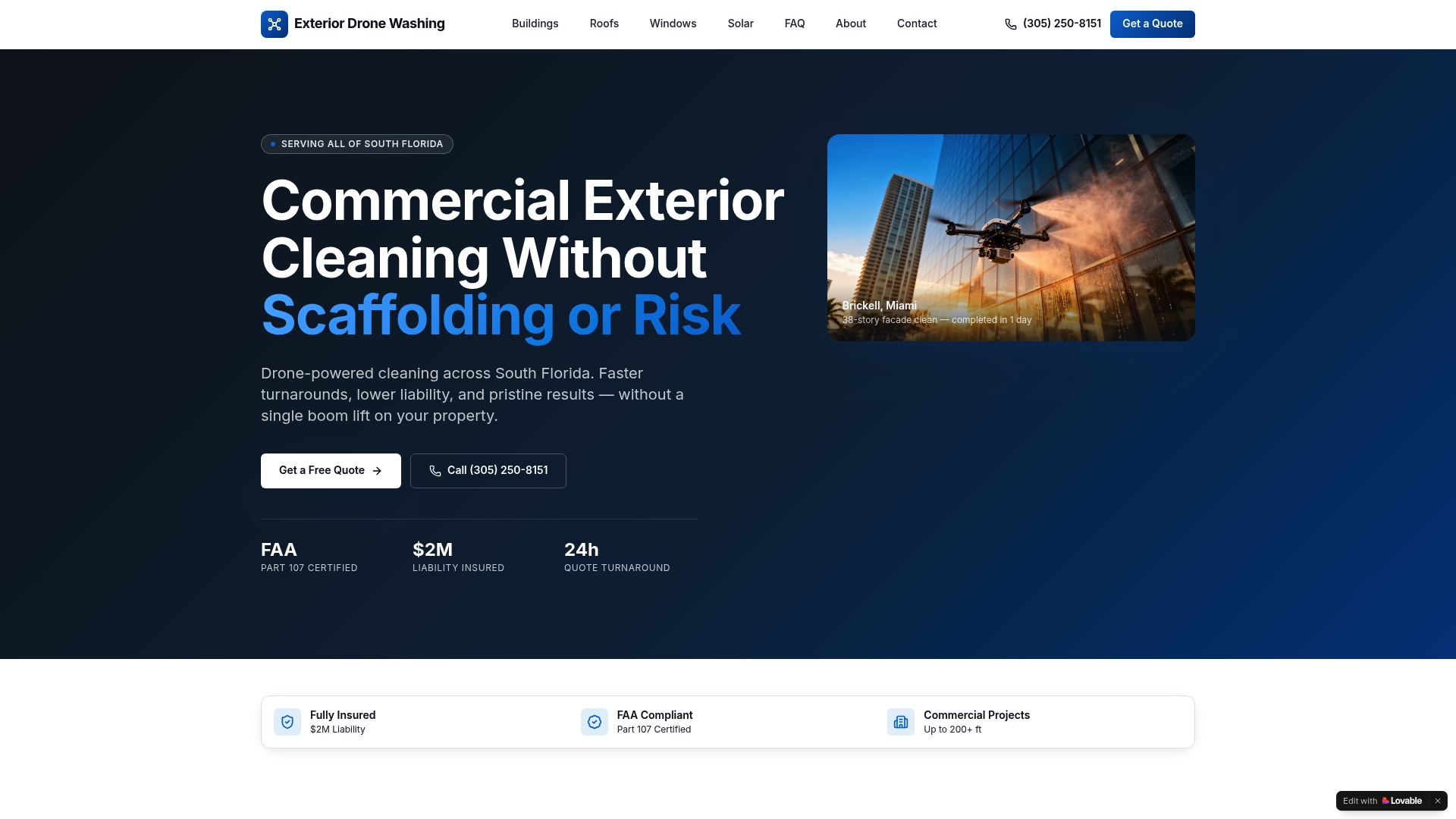
Exterior Drone Washing provides FAA-registered drone cleaning and inspection for the South Florida market. From Brickell building cleaning to commercial facade cleaning in Miami-Dade and Broward, our systems reach 200 feet without scaffolding. Every project includes photo documentation for your records. See our drone cleaning vs pressure washing guide for a cost breakdown. Contact us for a consultation.
Frequently asked questions
How often should a South Florida commercial facade be cleaned?
Annual cleaning is standard due to salt air and humidity. Mid-size properties cost $15,000 to $25,000 annually, significantly less than the cost of remediation.
What are South Florida's main legal requirements for commercial exterior maintenance?
Buildings over three stories or 50 feet must undergo milestone inspections and 40-year recertifications, including facade and balcony checks.
What's the biggest hidden risk with high-rise exteriors in the region?
Concrete spalling is the primary hazard. Rusting rebar fractures concrete from the inside before surface damage is visible.
Does drone cleaning replace all other maintenance access methods?
Drones are ideal for standard high-rise facades. Rope access is still used for complex architectural layouts or deep recesses where drone flight is obstructed.