
Commercial Facade Restoration Cleaning: A Property Manager's Guide
Discover what is commercial facade restoration cleaning and how it protects your property. Learn essential techniques and costs for preserving your building.
TL; DR:
- Commercial facade restoration cleaning is a preservation process that removes contaminants while protecting building materials. It uses controlled methods like low-pressure water, chemicals, and abrasives to prevent damage and maintain longevity. Regular cleaning and early defect detection help lower long-term maintenance costs in demanding environments like South Florida.
Commercial facade restoration cleaning is defined as a specialized process that removes damaging contaminants from building exteriors while preserving the structural integrity and material composition of the facade itself. Unlike routine washing, this process applies controlled methods, including low-pressure water, chemical treatments, and soft abrasives, to protect the substrate while restoring the building’s appearance. For commercial property owners in Miami-Dade, Broward, and Palm Beach counties, understanding what is commercial facade restoration cleaning is the first step toward protecting a major capital asset from South Florida’s relentless humidity and UV exposure. Cleaning costs typically run $5–$6 per square foot, while full restoration work can reach $10–$60 or more depending on complexity.
What is commercial facade restoration cleaning, and how does it differ from basic cleaning?
Commercial facade restoration cleaning goes beyond surface washing. Basic facade cleaning removes visible dirt, mold, and pollutants to maintain appearance and asset value. Restoration cleaning adds a preservation goal: it protects the building material itself, whether that is concrete, masonry, stucco, EIFS, glass, or metal panel, from further degradation.
The distinction matters because the wrong method can cause permanent damage. Improper cleaning using high-pressure acids or poor rinsing can permanently alter masonry appearance and compromise the substrate. Professional standards require careful chemical selection, controlled dilution, and pre-wetting before any chemical application touches the facade.
Restoration cleaning also carries a different performance target. Historic masonry standards specify that achieving 80–90% cleanliness is the correct goal, not a “like new” result. Pushing beyond that threshold risks stripping protective surface layers and erasing the material’s character.
The three primary methods used in restoration cleaning are:
- Water-based cleaning: Low-pressure soaking and rinsing, best for light soiling on sensitive materials
- Chemical cleaning: Controlled application of alkaline or acidic solutions with strict dilution and rinse protocols, used for biological growth, staining, and oxidation
- Low-pressure abrasive cleaning: Fine media applied at controlled pressure for stubborn deposits on durable substrates
Pro Tip: Always request a building exterior cleaning guide from your contractor that identifies the specific method matched to each facade material on your property. One building can require three different approaches on three different surfaces.
South Florida’s climate adds another layer of complexity. High humidity and intense UV radiation accelerate biological growth and surface degradation, which means method selection must account for moisture retention risks specific to the region.
How is commercial facade cleaning performed on South Florida buildings?
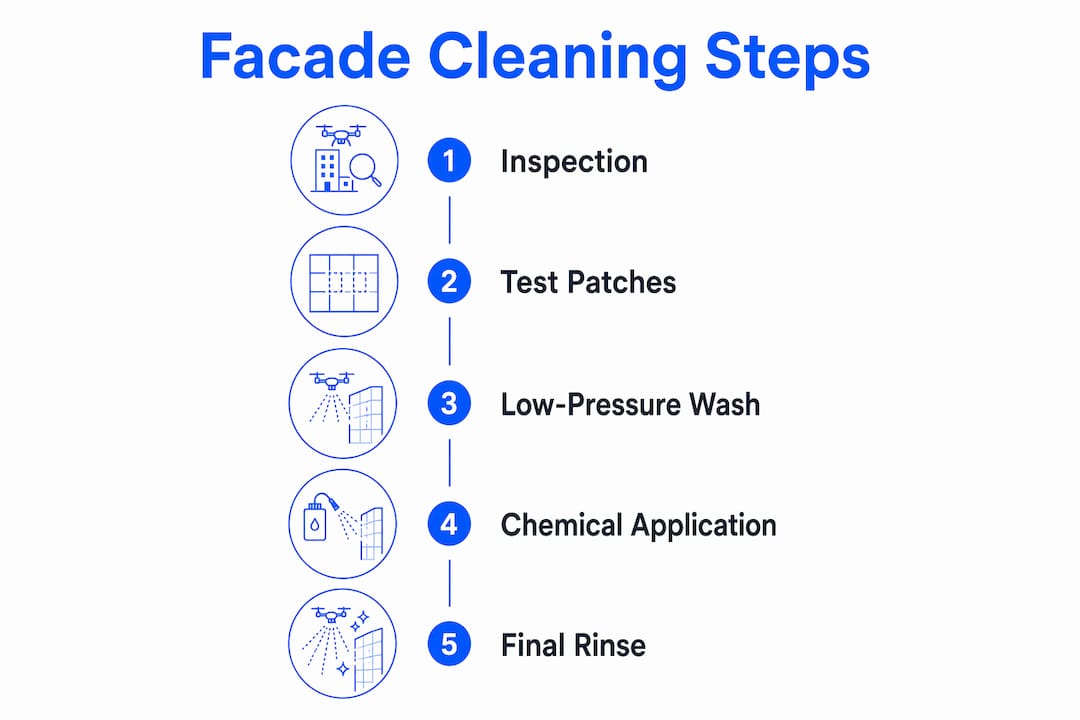
The process follows a staged sequence designed to protect the facade at every step. Skipping stages is the most common cause of contractor-induced damage on South Florida commercial properties.
- Initial inspection and material identification: The contractor documents facade materials, existing damage, staining types, and access constraints before any water or chemical touches the building.
- Test patch application: Test patches are applied in inconspicuous areas to confirm the selected method will not discolor, etch, or weaken the substrate.
- Pre-wetting: The facade is saturated with clean water before chemical application. This prevents chemicals from absorbing too deeply into porous materials.
- Cleaning from bottom to top: Cleaning bottom to top optimizes rinsing effectiveness and prevents dirty runoff from streaking already-cleaned surfaces.
- Thorough rinsing: Cleaning agents left in masonry pores deposit soluble salts that cause efflorescence and long-term surface degradation. Complete rinsing is non-negotiable.
- Post-cleaning inspection: The crew documents results, identifies any defects revealed by cleaning, and flags areas needing repair or sealant work.
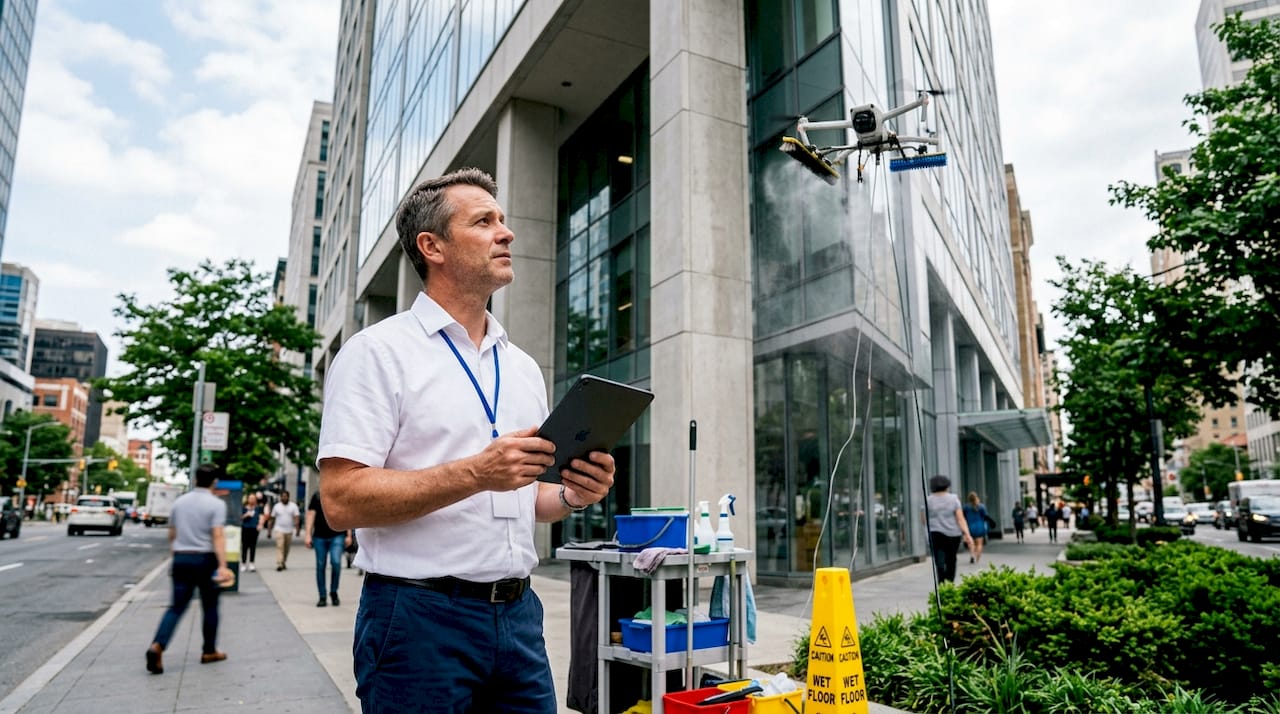
Access method is a major variable for South Florida high-rises. Traditional scaffolding and boom lifts add significant cost and require permits, road closures, and extended project timelines. Drone-assisted cleaning using tethered industrial drones has changed the access equation for buildings above four or five stories. Crews stay on the ground, no rigging is needed, and most projects complete in one to three days.
Pro Tip: Schedule facade cleaning during South Florida’s dry season, from november through april, to reduce the risk of rain interrupting rinsing cycles and leaving chemical residue on the surface.
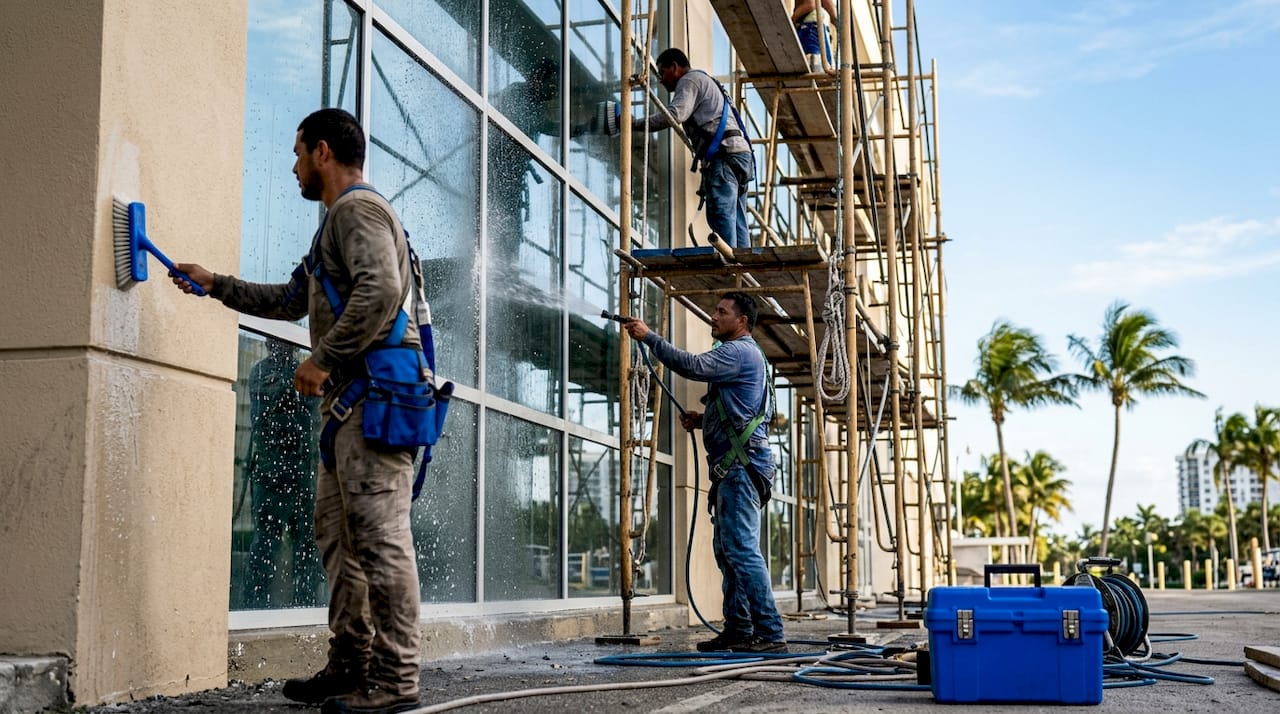
Coordinating access equipment with cleaning and repair work in a single mobilization can reduce total project costs by approximately 20%. That coordination requires planning, but the savings are real.
What are the cost factors and maintenance benefits?
Facade restoration cleaning costs depend on building height, facade material, contamination severity, and access method. Basic commercial facade cleaning runs $5–$6 per square foot. Restoration work, which includes material-specific treatments and post-cleaning repairs, ranges from $10 to $60 or more per square foot.
The more important number is the cost of doing nothing. Deferred facade maintenance costs increase approximately 7% annually. A repair that costs $5,000 today can become a $5 million restoration project if neglected for years. That compounding effect is especially aggressive in South Florida, where humidity, salt air, and UV exposure accelerate deterioration faster than in most other U.S. climates.
Restoration cleaning also functions as an inspection tool. Cleaning reveals hidden defects such as failed sealants, hairline cracks, and delaminating coatings that are invisible under a layer of biological growth or grime. Catching these defects during a cleaning cycle costs far less than discovering them after water intrusion has damaged interior systems.
| Cost factor | Impact on budget |
|---|---|
| Facade material type | Sensitive materials like EIFS require gentler methods, increasing labor time |
| Building height | High-rise access via scaffolding adds 20%+ to total project cost |
| Contamination severity | Heavy biological growth or staining requires multiple treatment cycles |
| Deferred maintenance | Each year of delay increases repair costs by approximately 7% |
| Access method | Drone cleaning reduces access costs by 30–60% vs. traditional methods |
South Florida’s UV exposure and humidity directly accelerate facade wear and require a consistent cleaning schedule to keep costs predictable. Properties that clean on a regular cycle spend less per event and avoid the compounding damage that turns cleaning projects into structural repairs.
How does facade restoration cleaning fit into a long-term maintenance strategy?
Facade restoration cleaning is not a one-time fix. It is one component of a maintenance program that includes inspection, cleaning, repair, and waterproofing in a defined sequence. Property managers who treat cleaning as an isolated event consistently overspend on emergency repairs.
The correct sequence is: inspect first, clean second, repair third, seal fourth. Cleaning before repair removes contaminants that would otherwise prevent sealants and coatings from bonding properly. Sealing before cleaning traps moisture and biological growth under the new coating, accelerating failure.
Key practices for South Florida commercial properties:
- Annual facade inspections: Document condition changes, new cracking, sealant failures, and biological growth patterns before they escalate
- Scheduled cleaning intervals: Most South Florida commercial facades benefit from cleaning every 12–24 months due to humidity and biological growth rates
- Predictive maintenance tools: Thermal imaging and drone inspections identify subsurface moisture and delamination before visible damage appears, stabilizing long-term maintenance costs
- Coordinated mobilization: Combine cleaning, inspection, and minor repairs in a single contractor visit to reduce access equipment costs
- Post-storm assessment: After tropical storms or hurricanes, inspect and clean facades before assessing structural integrity, since storm debris and biological contamination can mask damage
Facade cleaning without scaffolding has made it easier for property managers to maintain shorter cleaning intervals without the cost and disruption of traditional access methods. Shorter intervals mean less severe contamination at each cleaning cycle, which reduces chemical load and material stress over time.
Key Takeaways
Commercial facade restoration cleaning protects building materials and asset value by combining preservation-focused cleaning methods, scheduled maintenance intervals, and early defect detection.
| Point | Details |
|---|---|
| Restoration vs. basic cleaning | Restoration cleaning preserves building materials; basic cleaning only removes surface contaminants. |
| Cost of delay | Deferred facade maintenance costs increase approximately 7% annually, compounding repair bills fast. |
| Method selection matters | Test patches and material-matched methods prevent permanent substrate damage during cleaning. |
| South Florida climate risk | Humidity and UV exposure accelerate facade wear, requiring cleaning every 12–24 months. |
| Drone access advantage | Drone-assisted cleaning reduces access costs by 30–60% compared to scaffolding or boom lifts. |
Why preservation beats perfection every time
The biggest mistake I see property managers make is hiring a contractor who promises a “like new” result. That promise should be a red flag, not a selling point.
Facade restoration cleaning is fundamentally a preservation act. The goal is a stable, visually authentic facade, not a cosmetic reset. When contractors chase a perfect finish on masonry or stucco, they apply more pressure, stronger chemicals, and more passes than the material can tolerate. The result looks great for six months, then fails faster than it would have with a gentler approach.
South Florida buildings face enough stress from salt air, UV radiation, and tropical moisture without adding contractor-induced damage to the list. I have seen EIFS facades on Brickell office towers develop widespread delamination after a single aggressive cleaning cycle. The repair cost exceeded the original cleaning contract by a factor of four.
The GSA’s technical guidance on historic masonry cleaning recommends a stepwise escalation strategy: start with the gentlest method, test, evaluate, and only escalate if necessary. That principle applies to every commercial facade, not just historic buildings. It protects the material, controls cost, and produces results that last.
Property managers who push back on contractors promising perfection, and instead demand a documented test-patch protocol and a preservation-first scope, consistently get better long-term outcomes. The facade does not need to look new. It needs to be clean, stable, and protected.
, Eliot
How Vistadronecleaning serves South Florida facade restoration
Vistadronecleaning operates across Miami-Dade, Broward, and Palm Beach counties using FAA Part 107-certified pilots and tethered industrial drones to clean commercial building facades up to 200 feet tall without scaffolding, permits, or road closures.

For property managers weighing access options, the drone vs. traditional cleaning comparison shows how drone-assisted methods cut project costs by 30–60% while keeping crews safely on the ground. Vistadronecleaning uses a pure de-ionized water rinse that leaves no streaks or chemical residue, which matters on sensitive EIFS, glass, and metal panel facades common across South Florida commercial properties. The company carries $2M in liability insurance and delivers free quotes within 24 hours. Contact Vistadronecleaning to schedule a facade cleaning assessment for your property.
FAQ
What is the difference between facade cleaning and facade restoration?
Facade cleaning removes surface contaminants to maintain appearance. Facade restoration combines cleaning with material preservation and repair to address structural deterioration, and it costs significantly more per square foot.
How often should South Florida commercial facades be cleaned?
Most South Florida commercial facades require cleaning every 12–24 months due to high humidity, UV exposure, and biological growth rates that are faster than in drier climates.
What cleaning methods are used in facade restoration?
Restoration cleaning uses low-pressure water soaking, controlled chemical application with strict dilution and rinsing, and low-pressure abrasive cleaning, with the method matched to the specific facade material.
Why are test patches required before full facade cleaning?
Test patches confirm that the selected cleaning method will not discolor, etch, or weaken the substrate before it is applied across the entire facade, preventing irreversible damage.
Does facade restoration cleaning add property value?
Restoration cleaning protects asset value by revealing hidden defects early, preventing the compounding cost of deferred maintenance, and maintaining the building’s appearance for tenants and investors.
Recommended
- Why Buildings Need Facade Maintenance: A Property Manager’s Guide, Vista Drone Cleaning
- Facade Cleanliness and Tenant Attraction: 2026 Guide, Vista Drone Cleaning
- Step-by-step facade cleaning that minimizes disruption
- Facade Cleaning Without Scaffolding: A Property Manager’s Guide, Vista Drone Cleaning