Commercial Rooftop Solar Maintenance Explained for Managers
Discover commercial rooftop solar maintenance explained. Learn proactive steps to ensure peak performance and protect your investment in South Florida.
TL; DR:
- Regular proactive maintenance keeps South Florida commercial solar systems operating safely and efficiently.
- Key activities include inspections, cleaning, electrical testing, and performance monitoring, especially given harsh coastal conditions.
Commercial rooftop solar maintenance is the set of proactive, scheduled activities that keep photovoltaic (PV) systems operating safely and at peak output on commercial properties. The industry term is “operations and maintenance, ” or O&M, and it covers inspections, cleaning, electrical testing, and performance monitoring. For property managers, facility directors, and sustainability officers in Miami-Dade, Broward, and Palm Beach counties, commercial rooftop solar maintenance explained properly means understanding that South Florida’s coastal salt air, urban dust, and intense sun create conditions that accelerate panel degradation faster than most other U.S. markets. A neglected array in Fort Lauderdale or Boca Raton does not just underperform. It depreciates a capital asset worth hundreds of thousands of dollars.
What does commercial rooftop solar maintenance actually involve?
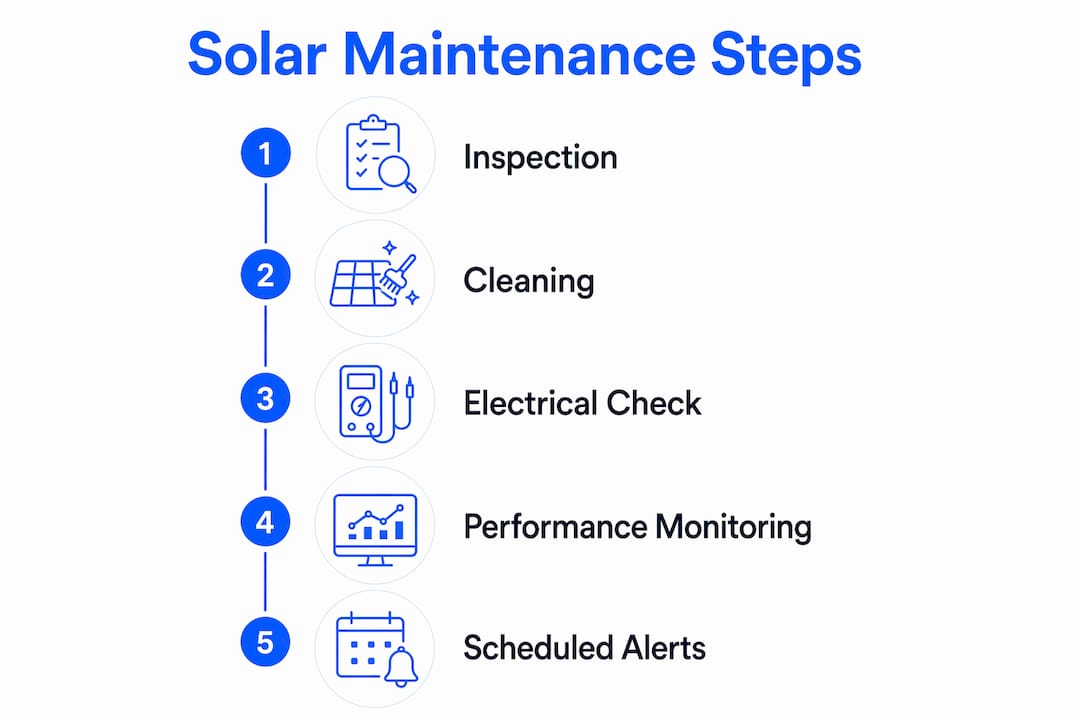
Commercial rooftop solar maintenance covers four core activity categories: visual inspections, cleaning, electrical system checks, and production monitoring. Each category targets a different failure mode, and skipping any one of them creates gaps that compound over time.
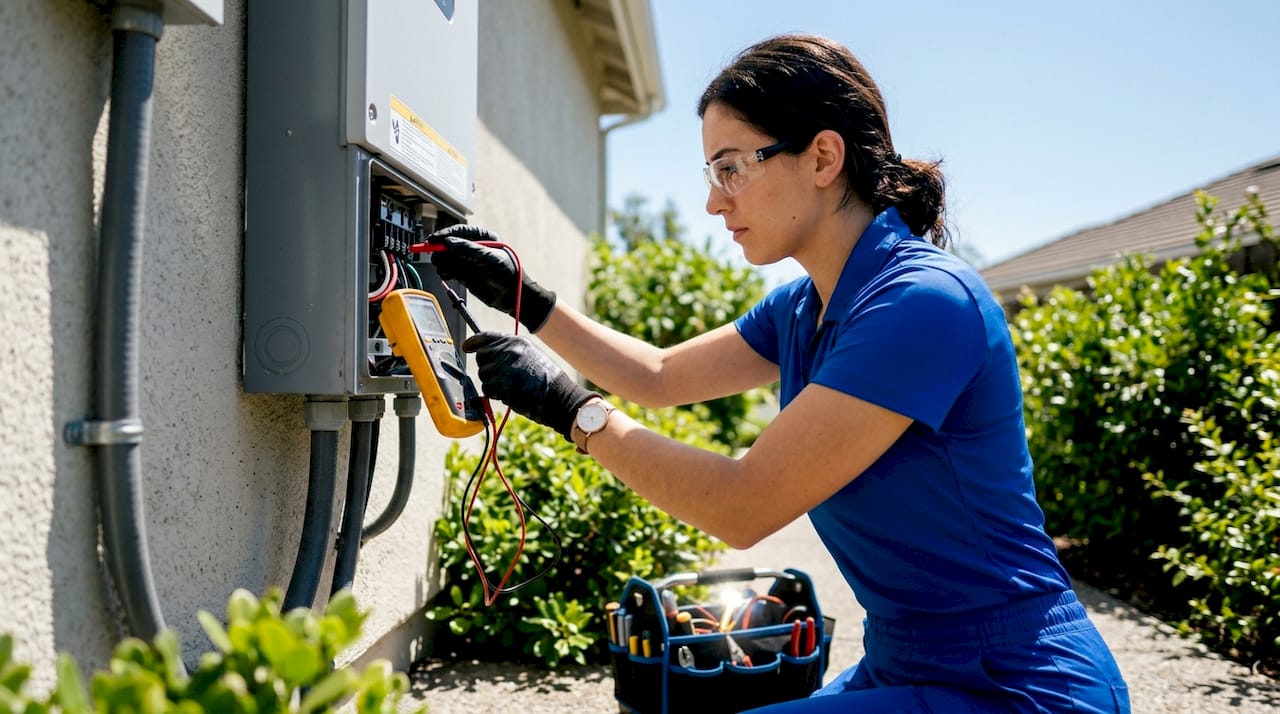
Visual inspections are the foundation of any O&M program. Industry best practices advise quarterly visual inspections of modules, mounting hardware, wiring, and roof penetrations. Technicians look for cracked glass, delamination, loose racking, corroded connectors, and any signs of water intrusion around roof flashings and sealants. Roof integrity checks are frequently left out of basic maintenance contracts, but omitting flashing inspections is one of the fastest paths to expensive water damage on a commercial rooftop.
Cleaning removes the soiling layer that blocks sunlight from reaching the cells. In South Florida, salt deposits from Biscayne Bay and the Atlantic, bird droppings from coastal bird populations, and construction dust from active urban development all accumulate faster than in inland markets. The cleaning method matters as much as the frequency. Pure deionized water rinses leave no mineral residue, which is the standard for commercial arrays. Abrasive tools or tap water with high mineral content can etch glass and accelerate degradation.
Electrical system checks go beyond what a visual inspection can catch. Semi-annual inverter checks, annual thermal imaging under IEC 62446 compliance standards, and five-year Electrical Installation Condition Reports (EICR) form the electrical maintenance backbone for commercial sites. Thermal imaging is the only task directly tied to IEC 62446 compliance, and it detects hot spots, bypass diode failures, and cell cracks invisible to the naked eye.
Production monitoring closes the loop. Remote SCADA platforms track output in real time and flag deviations from expected generation curves. This data tells facility directors whether a performance drop comes from soiling, shading, equipment fault, or grid curtailment, so the right response gets deployed without guesswork.
Pro Tip: Set a calendar alert to cross-reference your monitoring dashboard against your last cleaning date every 30 days. A sudden output drop with no weather explanation almost always points to soiling or a failed string inverter.
How often should you schedule solar maintenance in South Florida?
Maintenance frequency in South Florida follows a tiered schedule, but local environmental conditions push most commercial sites toward the higher end of each interval.
- Quarterly: Full visual inspection of modules, mounting, wiring, and roof penetrations. Flag any physical damage, corrosion, or vegetation encroachment.
- Semi-annual: Inverter performance check, vegetation management around the array perimeter, and connector torque verification. Sites near the coast in areas like Miami Beach or Hollywood should add a salt residue assessment at this interval.
- Annual: Drone-based or ground-level thermal imaging scan per IEC 62446 standards, full production data review, and cleaning frequency reassessment based on monitoring trends.
- Every five years: EICR by a licensed electrical contractor to verify the full installation meets current safety codes and to maintain insurance coverage.
Commercial arrays can lose 4%–30% annual efficiency without maintenance, with 10%–25% losses common in coastal and industrial environments like those found across Miami-Dade and Broward counties. That range represents a wide spread in potential revenue loss, and the difference between the low and high end is almost entirely determined by how consistently O&M is performed.
Cleaning timing matters as much as cleaning frequency. Cleaning during peak sunlight causes rapid thermal shock to hot glass, which creates micro-cracks that reduce cell efficiency permanently. Schedule cleaning for early morning or late afternoon, when panel surface temperatures are lower.
Performance-based cleaning, triggered by SCADA monitoring data rather than a fixed calendar date, optimizes cost-efficiency compared to rigid schedules. When your monitoring platform shows output dropping below a defined threshold, that is the signal to clean, not the calendar.
What are the most common rooftop solar maintenance mistakes?
Most efficiency losses on commercial arrays in South Florida trace back to a short list of repeated mistakes. Recognizing them is the first step toward avoiding them.
- Skipping roof integrity checks. Solar O&M contracts often focus only on the panels and inverters. Roof flashings, sealants, and penetrations around mounting hardware are frequently overlooked. Water intrusion from a failed sealant can destroy insulation, ceiling assemblies, and electrical conduits before anyone notices a problem.
- Cleaning at the wrong time of day. Applying cold water to panels heated to 140°F or more during a South Florida afternoon creates thermal shock. The resulting micro-cracks are invisible but permanent, and they reduce output for the life of the panel.
- DIY electrical maintenance. DIY maintenance carries serious electrical hazards on commercial PV systems. Licensed technicians are required for safe and warranty-compliant servicing. Unlicensed work also voids most manufacturer warranties and can invalidate insurance claims.
- Delaying inverter fault repairs. An inverter fault that sits unresolved for two weeks can cost more in lost generation than the repair itself. Full-service O&M contracts typically require technician response within 48 hours for inverter faults, targeting 95%–98% system availability.
- Neglecting documentation. Every inspection, cleaning visit, and repair should be logged with date, technician name, findings, and corrective actions. Missing records create gaps in warranty claims and complicate insurance disputes after storm damage, which is a real risk in South Florida’s hurricane season.
Pro Tip: Ask your O&M provider for a written maintenance log after every visit. If they cannot produce one, that is a signal to find a provider who can. Documentation is your legal and financial protection.
Property managers who wait for a utility bill spike before calling for maintenance pay more in emergency repairs than those on proactive O&M contracts. The math consistently favors prevention.
What role do professional providers and advanced technology play?
Professional O&M is not just about fixing broken parts. It is proactive asset management focused on protecting return on investment and avoiding costly emergency repairs. The distinction matters because it changes how providers are selected and how contracts are structured.
Licensed technicians bring three things that in-house staff typically cannot: electrical safety certification, manufacturer warranty compliance, and access to specialized diagnostic equipment. Thermal cameras calibrated for IEC 62446 compliance, insulation resistance testers, and IV curve tracers are not standard facility management tools. Without them, hidden faults go undetected until they become failures.
Drone-based inspection and cleaning technology has changed what is possible on South Florida commercial rooftops. For a facility manager’s safety guide on rooftop solar arrays, the core advantage of drone technology is that crews stay on the ground. No rope access, no scaffolding, no boom lifts, and no road closures. On a 10-story office tower in Brickell or a warehouse complex in Pompano Beach, that translates directly to lower cost and lower liability exposure.
The table below compares key service attributes across maintenance approaches for commercial rooftop solar systems.
| Service attribute | Traditional ground/lift crews | Drone-assisted O&M |
|---|---|---|
| Roof access risk | High (workers on roof) | Low (crews on ground) |
| Thermal imaging coverage | Partial (access-limited) | Full array in one pass |
| Cleaning method | Manual, variable pressure | Controlled pure-water rinse |
| Permit/road closure needs | Often required | Not required |
| Documentation output | Manual reports | Digital logs with imagery |
SCADA integration adds another layer. When monitoring platforms feed real-time performance data to O&M providers, maintenance becomes dynamic rather than reactive. A string that drops 15% below its expected output curve triggers a targeted inspection, not a full-site shutdown. That specificity saves time and reduces unnecessary access to the roof.
Key Takeaways
Consistent, documented O&M is the single most effective way to protect the financial return of a commercial rooftop solar investment in South Florida.
| Point | Details |
|---|---|
| Follow a tiered schedule | Quarterly inspections, semi-annual inverter checks, annual thermal imaging, and five-year EICR protect system integrity. |
| Clean at the right time | Schedule cleaning for early morning or late afternoon to prevent thermal shock and micro-cracks. |
| Document every visit | Maintenance logs protect warranty claims and insurance coverage, especially after hurricane-season events. |
| Use monitoring data | SCADA platforms trigger cleaning and repairs based on actual performance drops, not fixed calendar dates. |
| Hire licensed professionals | Electrical work and thermal imaging require certified technicians to maintain warranty and insurance compliance. |
Why I think most South Florida solar owners underestimate their maintenance risk
I have seen the pattern repeat across Miami-Dade and Broward: a property manager installs a commercial array, signs a basic warranty, and assumes the system will run itself for 25 years. The first two years look fine. Then efficiency quietly erodes, and by the time the utility bill tells the story, the array has been running at 15%–20% below its rated output for months.
The unique challenge in South Florida is that the environment attacks panels from multiple directions simultaneously. Salt air corrodes connectors and mounting hardware. Afternoon thunderstorms deposit organic material that bakes onto glass the next morning. Bird activity near the coast creates concentrated soiling patterns that standard cleaning schedules miss entirely. None of these factors appear in the generic O&M templates written for inland markets.
The technology shift toward drone-based inspection and cleaning is the most meaningful development I have seen for South Florida commercial properties. It removes the access problem entirely. A 15-story hotel in Miami Beach no longer needs a crane or a rope access team to get a full thermal scan. That changes the economics of annual IEC 62446 compliance from a major budget line to a routine service call.
My strongest recommendation is to treat your O&M contract the same way you treat your property insurance. You do not wait for a flood to buy coverage. You do not wait for a failed inverter to call a technician. Proactive documentation, licensed professionals, and performance-based cleaning schedules are the three practices that separate high-performing commercial arrays from expensive rooftop liabilities.
, Eliot
Vistadronecleaning: solar panel care for South Florida commercial properties
Vistadronecleaning provides commercial solar panel cleaning across Miami-Dade and Broward counties using FAA Part 107-certified pilots and tethered industrial drones. The Lucid Bots Sherpa system delivers a pure deionized water rinse across the full array without crews stepping onto the roof, eliminating the access risks and permit requirements that drive up costs with traditional methods.
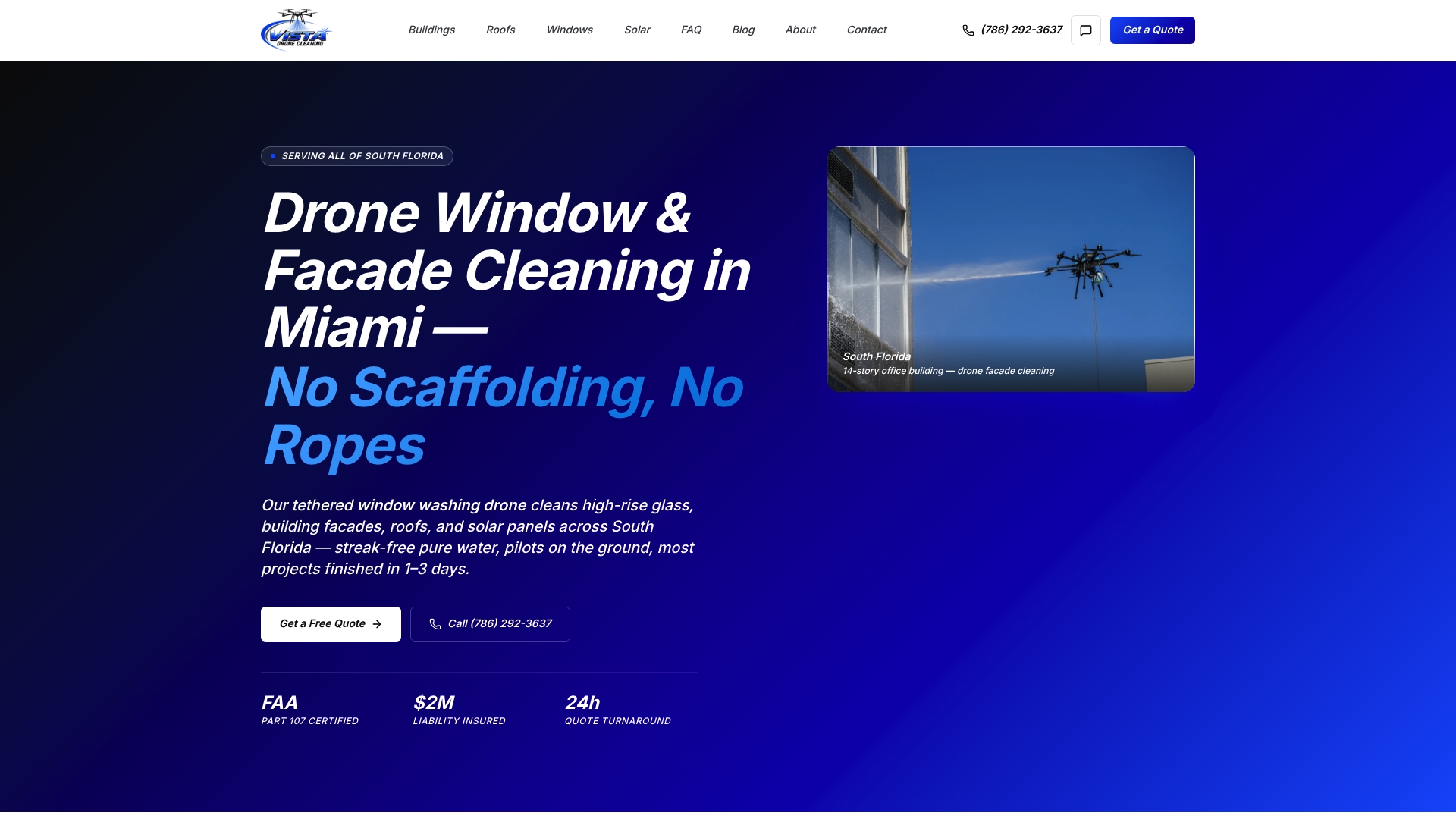
Every service includes digital documentation of pre- and post-clean conditions, supporting your warranty records and insurance files. Most commercial projects finish in 1–3 days at 30%–60% lower cost than scaffold or lift-based alternatives. Vistadronecleaning carries $2M liability insurance and provides free quotes within 24 hours. Contact the team to schedule a site assessment for your Fort Lauderdale, Boca Raton, Miami Beach, or Coral Gables property.
FAQ
What is commercial rooftop solar maintenance?
Commercial rooftop solar maintenance, formally called operations and maintenance (O&M), is the set of scheduled inspections, cleaning, electrical testing, and performance monitoring activities that keep a commercial PV system operating safely and at rated output.
How often should commercial solar panels be cleaned in South Florida?
Most commercial arrays in coastal South Florida require cleaning every 2–3 months due to salt air, bird activity, and urban dust accumulation. Performance-based scheduling triggered by SCADA monitoring data is the most cost-efficient approach.
What are the biggest rooftop solar maintenance mistakes?
The most damaging mistakes are skipping roof integrity checks, cleaning panels during peak midday heat, delaying inverter fault repairs, and failing to document maintenance visits. Each mistake either reduces output or creates warranty and insurance exposure.
Is annual thermal imaging required for commercial solar systems?
Annual thermal imaging aligned with IEC 62446 standards is the recognized best practice for commercial PV systems and is required by most insurers and warranty providers to maintain coverage.
Can facility staff perform solar maintenance without a licensed technician?
Visual inspections can be performed by trained facility staff, but electrical maintenance requires licensed technicians to meet safety standards, preserve manufacturer warranties, and comply with insurance requirements.