Non-Disruptive Building Cleaning Methods for South Florida
Discover effective non-disruptive building cleaning methods for South Florida. Keep your property clean without disrupting tenant operations.

TL; DR:
- Non-disruptive building cleaning methods include drone facade cleaning and electrostatic spraying, which minimize operational impact. These techniques protect tenant relationships, reduce costs, and extend building lifespan by preventing frequent maintenance. Effective scheduling and communication are essential for maximizing benefits and avoiding disruptions.
Non-disruptive building cleaning methods are defined as exterior and interior maintenance techniques that keep a commercial property clean without halting operations, blocking access, or generating significant noise for occupants. For property managers and facility operators across Miami-Dade, Broward, and Palm Beach counties, the two leading approaches are drone-based facade cleaning and advanced janitorial technologies like electrostatic spraying. Both methods protect tenant relationships, preserve building aesthetics, and avoid the road closures and permit delays that traditional scaffolding creates. The right combination depends on building height, facade material, and how much downtime your tenants can tolerate.
1. Non-disruptive building cleaning methods: what they are and why they matter
The industry term for this category is “low-impact building maintenance, ” though property managers increasingly search for it as non-invasive building cleaning. The core principle is the same: clean the building without disrupting the people inside or the public outside. South Florida’s dense urban corridors in Brickell, Fort Lauderdale, and Boca Raton make this especially relevant. A scaffolding rig on a busy commercial block can block parking, restrict pedestrian access, and generate noise complaints for weeks.
Traditional methods like rope access and boom lifts require permits, road closures, and extended setup times. That cost shows up in tenant satisfaction scores and lease renewals, not just invoices. Choosing low-disruption alternatives is not just a convenience decision. It is a property value decision.
2. Drone-based facade cleaning for high-rise exteriors
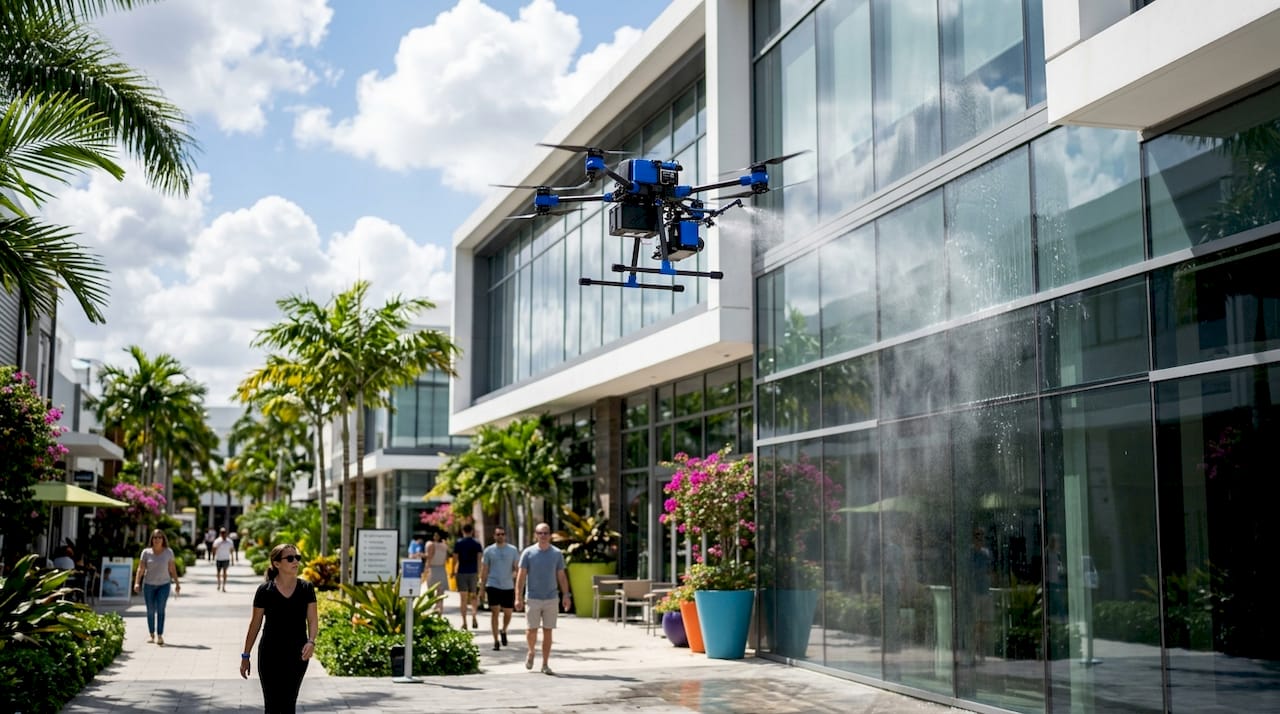
Drone facade cleaning is the most operationally efficient method for commercial high-rises above six stories. Tethered industrial drones like the Lucid Bots Sherpa deliver adjustable-pressure water spray across glass, stucco, EIFS, and metal panel facades without any crew working at height. The drone operator stays on the ground, which eliminates fall hazard liability and removes the need for rigging permits.
The time savings are significant. Drone-based cleaning cuts project timelines by up to five times compared to scaffolding, and costs 40–80% less. A facade that previously required two weeks of scaffold setup and cleaning can be completed in one to three days. That difference matters enormously for a hotel in Miami Beach or an office tower in Coral Gables where every day of disruption affects revenue.
Vistadronecleaning operates with FAA Part 107-certified pilots and carries $2M in liability insurance. No street closures, no permits for the rig itself, and no boom lifts blocking your parking structure. The drone cleaning process uses a streak-free, pure de-ionized water rinse that leaves no chemical residue on the glass or facade surface.
- No scaffolding or rope access required
- Crews remain safely on the ground throughout the project
- Adjustable pressure protects delicate facade materials including EIFS and glass
- Projects typically complete in 1–3 days
- No road closures or special rigging permits needed
- Suitable for buildings up to 200 feet tall
Pro Tip: Schedule drone facade cleaning during mid-week mornings when pedestrian traffic near the building is lowest. This further reduces any minor operational impact and gives your tenants the cleanest possible view by the weekend.
3. Electrostatic spraying for interior disinfection
Electrostatic spraying is the leading low-disruption method for interior commercial spaces including lobbies, elevator banks, and shared office floors. The technology charges disinfectant particles so they wrap around surfaces evenly, including the backs of chairs and undersides of desks, without leaving wet residue. Electrostatic spraying disinfects an entire office floor in 20–30 minutes versus 1–2 hours for traditional manual wiping.
That speed improvement of 300–400% means your cleaning crew can complete a full floor cycle during a lunch break or between tenant shifts. Rooms return to use within minutes rather than hours. For a condominium lobby in Aventura or a shared conference center in Plantation, that kind of turnaround is the difference between a complaint and a compliment.
Electrostatic spraying supplements manual cleaning rather than replacing it. Rapid disinfection without chemical residue reduces room downtime and improves occupant safety. Pair it with non-toxic, biodegradable disinfectants to meet South Florida’s environmental standards and reduce chemical exposure for building occupants.
- Disinfects surfaces in 5–15 minutes per room
- No wet residue means spaces reopen immediately
- Works on high-touch surfaces including elevator buttons and door handles
- Compatible with non-toxic, eco-friendly cleaning agents
- Reduces chemical use compared to traditional spray-and-wipe methods
Pro Tip: Run electrostatic disinfection during the daytime for light maintenance passes, then schedule manual deep cleaning after hours. This hybrid approach keeps your building hygienic around the clock without visible disruption.
4. Nanotechnology coatings as a preventive cleaning investment
Nanotechnology coatings are thin protective layers applied to exterior glass, facades, and interior surfaces that repel dirt, water, and biological growth at the molecular level. Nanotech coatings cut cleaning frequency by up to 50%, which means fewer cleaning cycles per year and less disruption overall. They also extend building finish life by 30–50%, reducing long-term maintenance costs.
For South Florida properties, this is particularly valuable. Salt air from Biscayne Bay and the Atlantic accelerates surface degradation on glass and metal panel facades in Miami Beach, Bal Harbour, and Hollywood. A nanotech coating applied after a thorough drone wash creates a hydrophobic barrier that sheds salt deposits and organic buildup between cleaning cycles. The result is a building that looks cleaner longer with fewer interventions.
Planning exterior cleaning as a capital investment with smart coatings and data-driven schedules extends facade life and reduces lifecycle costs significantly. Property managers who treat coatings as a one-time expense miss the compounding return. A coating applied every two to three years, combined with annual drone cleaning, delivers a lower total cost than quarterly traditional cleaning cycles.
5. Scheduling strategies to minimize disruption
Scheduling is as important as the cleaning method itself. The most effective approach combines daytime light maintenance with after-hours deep cleaning, a model known as a hybrid cleaning schedule. Experts recommend notifying tenants 2–4 weeks in advance for any major exterior or interior cleaning project. That window gives tenants time to adjust their own schedules and reduces complaint volume significantly.
For exterior projects on South Florida high-rises, a zoned approach works best:
- Divide the building into faces or zones. Clean one side of the building at a time rather than wrapping scaffolding or drone operations around the entire structure simultaneously.
- Sequence zones by tenant impact. Start with the side facing the least-trafficked street or the zone with the fewest occupied units.
- Communicate zone timelines clearly. Post signage at building entrances and send digital notices with specific dates for each zone.
- Schedule around South Florida’s seasonal patterns. Avoid scheduling exterior cleaning during hurricane season peak months (august through october) when weather delays are most likely. The dry season from november through april offers the most predictable windows.
- Coordinate with building management software. Use your property management platform to log cleaning dates, tenant notifications, and completion records for each zone.
A zoned scheduling approach focusing on one building face at a time keeps tenant impact minimal and complaint management straightforward. This method also makes it easier to reschedule individual zones if weather or operational issues arise without disrupting the entire project.
6. Comparison of low-disruption cleaning methods for South Florida properties
Each method serves a different building type and operational context. The table below compares the four primary non-disruptive commercial cleaning approaches on the criteria that matter most to property managers in Miami-Dade, Broward, and Palm Beach counties.
| Method | Speed | Cost vs. Traditional | Disruption Level | Best For |
|---|---|---|---|---|
| Drone facade cleaning | Up to 5x faster | 40–80% lower | Very low | High-rises, hotels, office towers |
| Electrostatic spraying | 300–400% faster | Moderate savings | Very low | Lobbies, offices, shared interiors |
| Nanotechnology coatings | Preventive (applied once) | High upfront, low lifecycle | Minimal | All exterior facade types |
| Manual low-impact cleaning | Standard | Baseline | Low to moderate | Low-rise retail, smaller properties |
Drone cleaning delivers the largest efficiency gain for tall buildings where traditional access methods require permits and extended setup. Electrostatic spraying wins on interior speed and occupant safety. Nanotech coatings reduce the total number of cleaning cycles needed, which compounds savings over time. Manual low-impact cleaning with microfiber systems and non-toxic agents remains the practical choice for smaller retail centers in Pompano Beach or Delray Beach where building height is not a factor.
Eco-friendly facade cleaning techniques for commercial buildings in South Florida increasingly combine drone washing with biodegradable agents to meet both aesthetic and environmental standards.
7. When to choose each method: a situational guide
Matching the right method to your building’s specific conditions prevents wasted budget and unnecessary disruption. The decision framework is straightforward.
Choose drone cleaning when:
- Your building is taller than six stories
- Scaffolding would require a street closure or permit in a dense urban area like Brickell or downtown Fort Lauderdale
- Your project timeline is under two weeks
- Your facade includes mixed materials such as glass curtain wall combined with EIFS panels
Choose electrostatic spraying when:
- You need to disinfect occupied interior spaces during business hours
- High-touch surface turnover is a priority, such as in a hotel or medical office building
- You want to reduce chemical use and meet green building standards
Choose nanotech coatings when:
- You have recently completed a full exterior cleaning and want to extend the results
- Your building faces direct salt air exposure in Miami Beach, Aventura, or Hollywood
- You are planning a multi-year maintenance budget and want to reduce annual cleaning frequency
Combine methods when:
- You manage a large mixed-use property with both high-rise exterior and active interior common areas
- Your board has approved a capital maintenance plan that covers both facade longevity and tenant health standards
Non-disruptive commercial building cleaning for South Florida properties works best when the method matches the building type, not just the budget.
Drone cleaning for Miami high-rises specifically addresses the access and permit challenges that make traditional methods impractical in dense urban corridors.
Key takeaways
The most effective non-disruptive building cleaning strategy for South Florida combines drone facade cleaning for exteriors with electrostatic spraying for interiors, supported by nanotech coatings and a zoned scheduling plan.
| Point | Details |
|---|---|
| Drone cleaning leads for tall buildings | Cuts project time by up to 5x and costs 40–80% less than scaffolding. |
| Electrostatic spraying wins on interior speed | Disinfects a full office floor in 20–30 minutes with no residue or downtime. |
| Nanotech coatings reduce cleaning cycles | Cut cleaning frequency by up to 50% and extend facade life by 30–50%. |
| Zoned scheduling limits tenant impact | Notify tenants 2–4 weeks out and clean one building face at a time. |
| Method selection drives results | Match the cleaning method to building height, facade type, and occupant schedule. |
The real cost of disruption that most property managers underestimate
Working with commercial properties across South Florida, I have seen the same mistake repeated: property managers choose a cleaning method based on the line-item quote and ignore the operational cost of the disruption itself. A scaffolding contract that looks cheaper on paper often costs more when you factor in the lost parking revenue, the tenant complaints, and the lease renewal conversations that go sideways because a resident spent three weeks staring at a scaffold platform outside their window.
Drone-based documentation creates time-stamped digital records that help managers prioritize repairs cost-effectively. That is a benefit most property managers do not think about until they are standing in front of their board trying to justify a repair that could have been caught earlier. The drone does not just clean. It gives you a visual record of the facade condition at every cleaning cycle.
The other thing I have learned is that tenant communication matters more than the cleaning method itself. Non-disruptive cleaning success depends on contractor-managed logistics paired with transparent tenant communication through phased schedules and clear signage. A perfectly executed drone cleaning project still generates complaints if tenants had no warning. Give them four weeks’ notice, post clear signage, and most tenants will not even notice the work is happening.
The future of building maintenance in Miami-Dade and Broward is data-driven and technology-forward. Managers who treat cleaning as a capital investment rather than a reactive expense will see lower lifecycle costs and better asset performance over time.
, Eliot
How Vistadronecleaning serves South Florida’s low-disruption maintenance needs
Vistadronecleaning provides FAA Part 107-certified drone cleaning for commercial high-rises, condominiums, hotels, and office towers across Miami-Dade, Broward, and Palm Beach counties. Every project uses tethered Lucid Bots Sherpa drones with pure de-ionized water rinse, no scaffolding, no road closures, and no rigging permits.
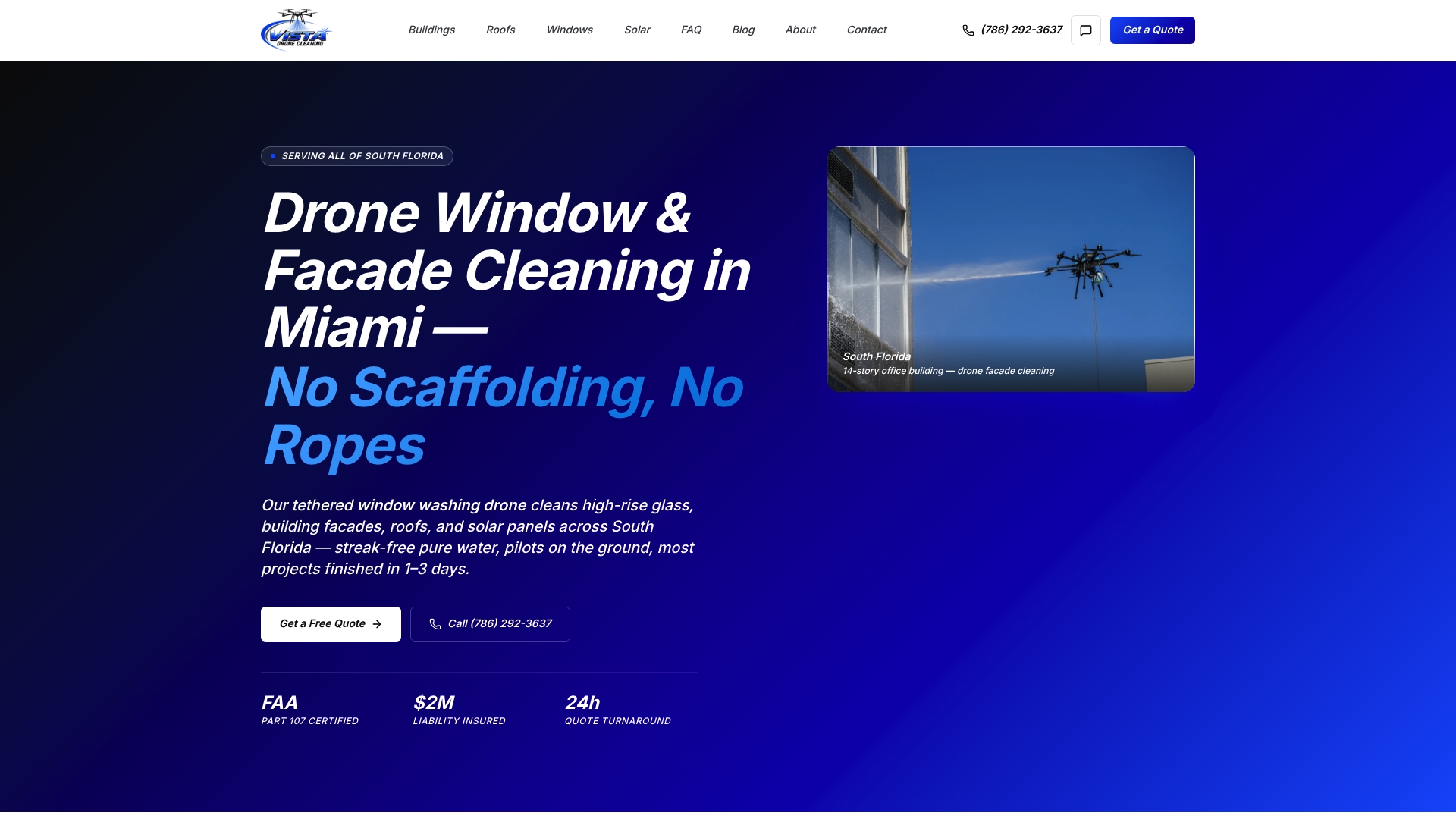
For property managers comparing options, the drone vs. traditional cleaning breakdown shows exactly where the cost and disruption differences appear. Most South Florida projects complete in 1–3 days with $2M liability coverage included. Request a free quote within 24 hours at vistadronecleaning.com and get a customized maintenance schedule built around your building’s occupancy calendar.
FAQ
What is non-invasive building cleaning?
Non-invasive building cleaning refers to methods that clean a commercial property without scaffolding, road closures, or significant disruption to occupants. Drone-based facade cleaning and electrostatic spraying are the two leading non-invasive approaches for South Florida commercial properties.
How much faster is drone cleaning than scaffolding?
Drone-based facade cleaning reduces project timelines by up to five times compared to traditional scaffolding. A project that previously took two weeks can typically be completed in one to three days.
When should property managers notify tenants before exterior cleaning?
Experts recommend notifying tenants 2–4 weeks in advance for any major exterior cleaning project. This window reduces complaints and gives occupants time to adjust their schedules around the work.
Do nanotech coatings actually reduce cleaning frequency?
Yes. Nanotechnology coatings repel dirt and water at the molecular level and cut cleaning frequency by up to 50%. They also extend building finish life by 30–50%, making them a cost-effective preventive investment for South Florida facades exposed to salt air.
Is electrostatic spraying safe for occupied commercial spaces?
Electrostatic spraying is safe for occupied spaces when applied with non-toxic, approved disinfectants. It provides rapid disinfection without chemical residue, and treated rooms can typically be reoccupied within minutes of application.