Warehouse Exterior Wall Cleaning Methods: South Florida Guide
Discover effective warehouse exterior wall cleaning methods for South Florida. Learn how soft-wash techniques ensure compliance and protect your property.

TL; DR:
- Drone-delivered soft-wash with wastewater containment is the safest and most compliant method for cleaning South Florida warehouses above 40 feet.
- Using low-pressure, chemical-based soft-wash minimizes substrate damage while meeting strict local stormwater regulations.
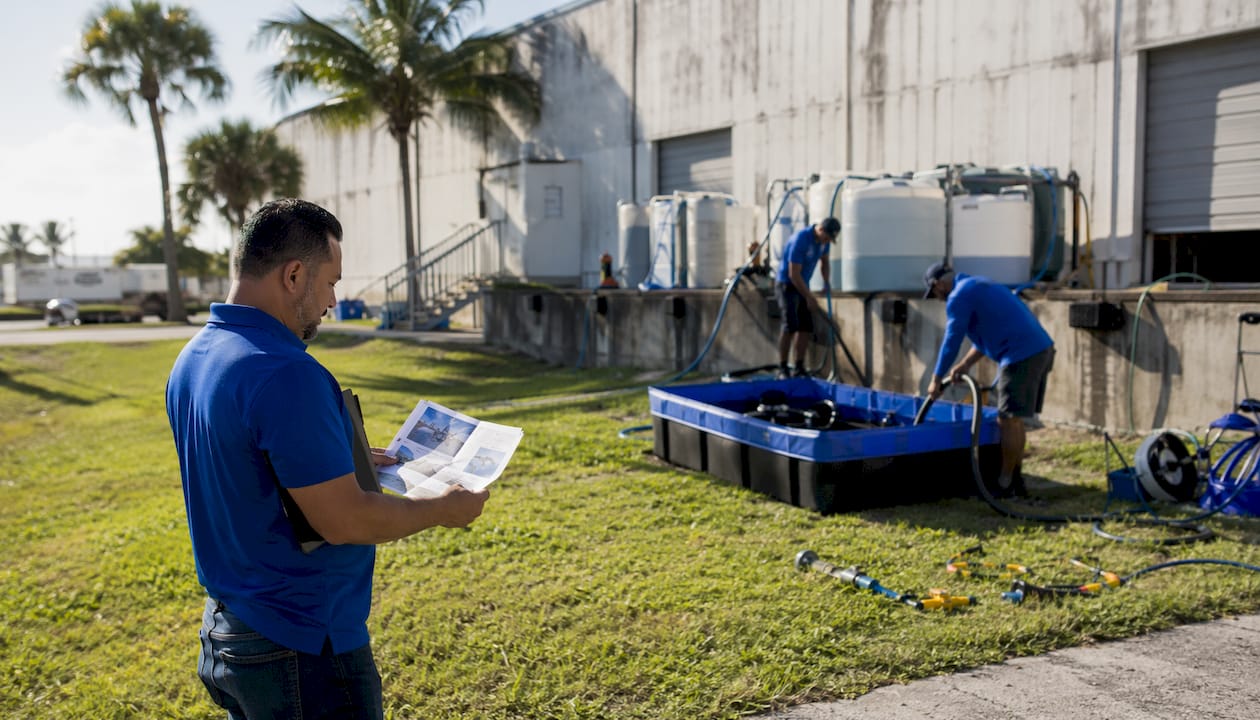
Drone-delivered soft-wash with on-site wastewater capture is the right call for most South Florida warehouses. Miami-Dade county prohibits discharging pressure-washing runoff to storm drains, and property owners can retain liability even when a contractor causes the illegal discharge. That single compliance reality shapes every decision below.
Quick method comparison:
- Soft-wash (low-pressure chemical): Best for coated metal panels, painted masonry, EIFS, and stucco. Under 500 PSI with biocidal dwell time removes biological growth without etching factory coatings.
- High-pressure washing: Appropriate only for uncoated tilt-up concrete. Avoid on Kynar/PVDF panels.
- Steam cleaning: Good for heritage masonry and grease-heavy loading dock areas.
- Chemical-only (no rinse): Useful on water-restricted sites; requires biodegradable formulations.
- Drone/tethered soft-wash: Best for facades at higher elevations. Crews stay on the ground; targeted application reduces runoff volume.
- Pure-water rinse: Streak-free finish on glass and solar panels; no detergents means simpler wastewater handling.
Miami-Dade and Broward enforce the Clean Water Act at the local level. Any cleaning contractor working your warehouse must arrive with a written wastewater containment and approved disposal plan, not just a verbal promise.
Pro Tip: Ask every bidder for their closed-loop vacuum recovery setup or bermed containment plan before signing anything. A documented containment plan is your primary shield against owner liability.
Table of Contents
- What should you ask a contractor before they touch your warehouse walls?
- Which cleaning method fits your warehouse’s wall material?
- How do you minimize environmental impact beyond just staying compliant?
- What should you do after the cleaning crew leaves?
- Drone operators vs. traditional contractors: what’s the real trade-off in South Florida?
- Vistadronecleaning cleans South Florida warehouses without scaffolding or surprises
- Key Takeaways
- FAQ
What should you ask a contractor before they touch your warehouse walls?
Start with four non-negotiables: FAA Part 107 certification (required for any drone operator), $2M liability insurance minimum, a written wastewater containment and disposal plan, and proof of substrate testing on a small inconspicuous area before full application. Spot testing confirms chemical compatibility with your specific cladding and protects manufacturer warranties. Also request a fixed-price proposal with a project timeline, and verify the contractor’s safe building washing practices match local ordinance requirements.
Which cleaning method fits your warehouse’s wall material?
Different substrates demand different approaches. Here’s the breakdown:
| Substrate | Recommended method | Key caution |
|---|---|---|
| Kynar/PVDF coated metal panels | Soft-wash under 500 PSI | High pressure voids factory coating warranty |
| Tilt-up uncoated concrete | Controlled pressure wash | Capture all runoff; no storm drain discharge |
| Painted masonry | Soft-wash with dwell time | Test patch first; avoid alkaline cleaners on painted surfaces |
| EIFS/stucco | Low-pressure soft-wash | Never exceed 100 PSI; water intrusion risk at joints |
| Insulated metal panels | Soft-wash only | Seams and gaskets vulnerable to high-pressure damage |
| Rooftop solar arrays | Pure-water rinse | No detergents; deionized water prevents mineral spotting |

How do you minimize environmental impact beyond just staying compliant?
Compliance is the floor, not the ceiling. Use biodegradable, pH-neutral surfactants wherever possible. Closed-loop recovery systems filter and transport wastewater to approved disposal sites, eliminating runoff risk entirely. Drone-based application reduces total water volume because chemistry is delivered precisely to the facade rather than broadcast across the ground. For water-restricted projects, dry ice blasting leaves zero moisture or abrasive residue. The Florida DEP’s MSGP stormwater permit requires industrial facilities to implement best management practices that minimize pollutant discharge, so documenting your contractor’s environmental controls directly supports your permit compliance record.

What should you do after the cleaning crew leaves?
Walk the facade within 48 hours and photograph any areas showing streaking, residue, or missed biological growth. For South Florida’s coastal and shaded exposures, commercial building exteriors typically need annual cleaning, with semi-annual treatment for shaded or coastal elevations, and loading docks and aprons may require quarterly service. Schedule the next service before you need it, not after tenants start complaining.
Drone operators vs. traditional contractors: what’s the real trade-off in South Florida?
Traditional scaffold and lift contractors carry real advantages on low-rise facades with easy ground access. But in Miami-Dade and Broward, the math shifts quickly on anything above three stories.
Drone operators (e.g. Vistadronecleaning):
- Crews stay on the ground; no fall risk, no road closures, no lift permits
- Most projects complete in a few days at significantly lower cost than scaffolding
- Targeted soft-wash application produces less runoff, simplifying wastewater capture
- FAA Part 107 certification required; adds a compliance layer traditional contractors don’t carry
- Before/after 4K documentation included
Traditional scaffold/lift contractors:
- Better suited for low-rise facades with heavy mechanical soiling
- Higher mobilization cost and longer setup time on buildings of considerable height
- Greater worker fall exposure and potential for road or dock disruption
- Wastewater management depends entirely on the contractor’s own protocols
For warehouses above 40 feet in Miami, Fort Lauderdale, or Boca Raton, drone cleaning vs. traditional methods consistently favors the drone approach on cost, safety, and compliance documentation.
Vistadronecleaning cleans South Florida warehouses without scaffolding or surprises
Facility managers in Miami-Dade and Broward get one fixed-price proposal, a written wastewater containment plan, and a crew that never leaves the ground.

Vistadronecleaning uses FAA Part 107-certified pilots and tethered Lucid Bots Sherpa industrial drones to deliver substrate-matched soft-wash chemistry on facades of considerable height. Every project includes before/after 4K documentation and $2M liability coverage. No scaffolding, no road closures, no permit delays. Most warehouse projects wrap in a few days. Service areas include Miami, Brickell, Coral Gables, Aventura, Fort Lauderdale, Hollywood, Plantation, Coral Springs, Pompano Beach, Boca Raton, and Delray Beach. Request a free site assessment and get a quote within 24 hours.
Key Takeaways
Drone-delivered soft-wash with documented wastewater capture is the safest, most compliant warehouse exterior wall cleaning method for South Florida properties above 40 feet.
| Point | Details |
|---|---|
| Wastewater compliance is owner liability | Miami-Dade prohibits storm drain discharge; owners can be liable even when a contractor causes the violation. |
| Soft-wash protects coated substrates | Pressures beyond recommended low levels risk voiding Kynar/PVDF and factory coating warranties on metal panels. |
| Cleaning frequency by exposure | Annual for most exteriors; semi-annual for shaded or coastal elevations; quarterly for loading docks and aprons. |
| Drone advantage above 40 feet | Most projects complete in a few days at significantly lower cost than scaffolding. |
| Vistadronecleaning | FAA Part 107-certified, insured, serving Miami-Dade and Broward with fixed-price drone soft-wash proposals. |
FAQ
What is the safest cleaning method for warehouse metal panels?
Soft-wash under 500 PSI with a biocidal dwell time is the standard recommendation. High pressure risks etching or delaminating Kynar and PVDF factory coatings, which can void manufacturer warranties.
Do South Florida property owners need a wastewater plan for exterior cleaning?
Yes. Miami-Dade and Broward enforce Clean Water Act requirements that prohibit runoff from entering storm drains. Property owners may retain liability for illegal discharges even when a contractor caused them.
How often should a South Florida warehouse exterior be cleaned?
Most building exteriors need annual cleaning, with semi-annual treatment for shaded or coastal elevations. Loading docks and aprons may require quarterly service.
Does drone cleaning require special certification in Florida?
Yes. Any commercial drone operator must hold FAA Part 107 certification. Vistadronecleaning pilots carry that certification and operate tethered industrial drones on facades of considerable height.
Is EIFS or stucco safe to pressure wash?
Not with standard pressure. EIFS requires low-pressure soft-wash at or below 100 PSI to avoid water intrusion at joints and seams, which can cause long-term structural moisture damage.