Zero-Emission Exterior Cleaning Methods for South Florida
Discover what is zero emission exterior cleaning method and how Vistadronecleaning uses innovative technology for eco-friendly building maintenance.
TL; DR:
- A zero-emission exterior cleaning method uses electric drones, pure de-ionized water, and runoff containment to clean buildings without emissions or chemical discharge. It requires all equipment to be electric, free of fossil-fuel access tools, and use controlled water management to protect sensitive stormwater systems. Most projects cost less and finish faster than traditional methods, with specific credentials necessary for vendors.
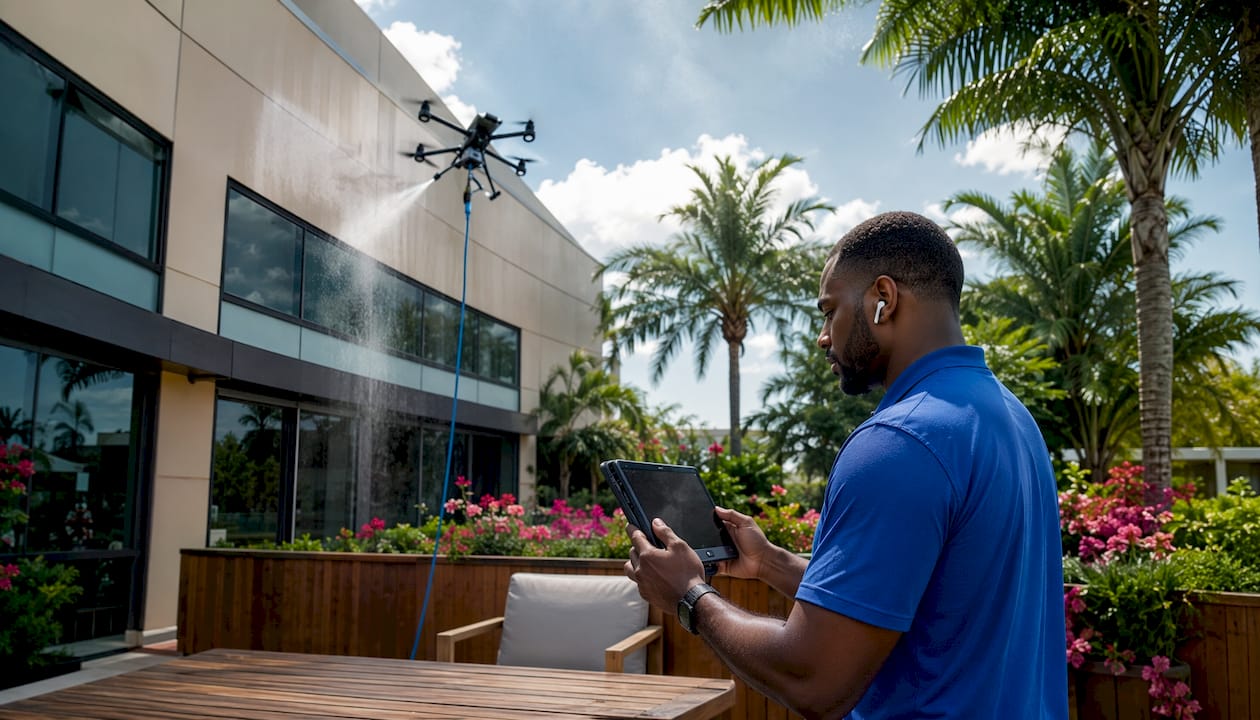
A zero-emission exterior cleaning method uses electric-powered drones, pure de-ionized water, and on-site runoff containment to clean commercial buildings and solar arrays with no fossil-fuel equipment on site and no chemical discharge. Vistadronecleaning operates exactly this model across Miami-Dade, Broward, and Palm Beach counties, with FAA Part 107-certified pilots flying tethered Lucid Bots Sherpa drones on high-rise facades, rooftop solar arrays, and commercial windows up to 200 feet. Most projects finish in a few days and cost substantially less than traditional scaffold or lift methods.
The term “zero-emission” here refers to site-level operational emissions, not a marketing label. No diesel lifts, no chemical surfactants, no runoff entering South Florida’s stormwater system.
Table of Contents
- What does a zero-emission exterior cleaning method actually require?
- How drone-based systems put those criteria into practice
- When traditional methods are still the right call
- Questions to ask every vendor before you book
- Vistadronecleaning serves South Florida properties that need this done right
- FAQ
- Key Takeaways
What does a zero-emission exterior cleaning method actually require?
Four criteria separate a genuinely zero-emission approach from one that just sounds green.
Electric power source only. The drone itself runs on batteries. Diesel or gas-powered lifts, generators, and pressure washers disqualify a method immediately.
No fossil-fuel access equipment. Scaffolding, boom lifts, and rope-access rigs typically arrive on diesel trucks and require road or sidewalk permits. A zero-emission method eliminates them entirely.
No chemical discharge. Using “green” products alone does not qualify. As eco-friendly powerwashing guidance makes clear, a method that wastes water or allows runoff to reach storm drains fails the zero-emission standard regardless of which cleaner is in the tank.
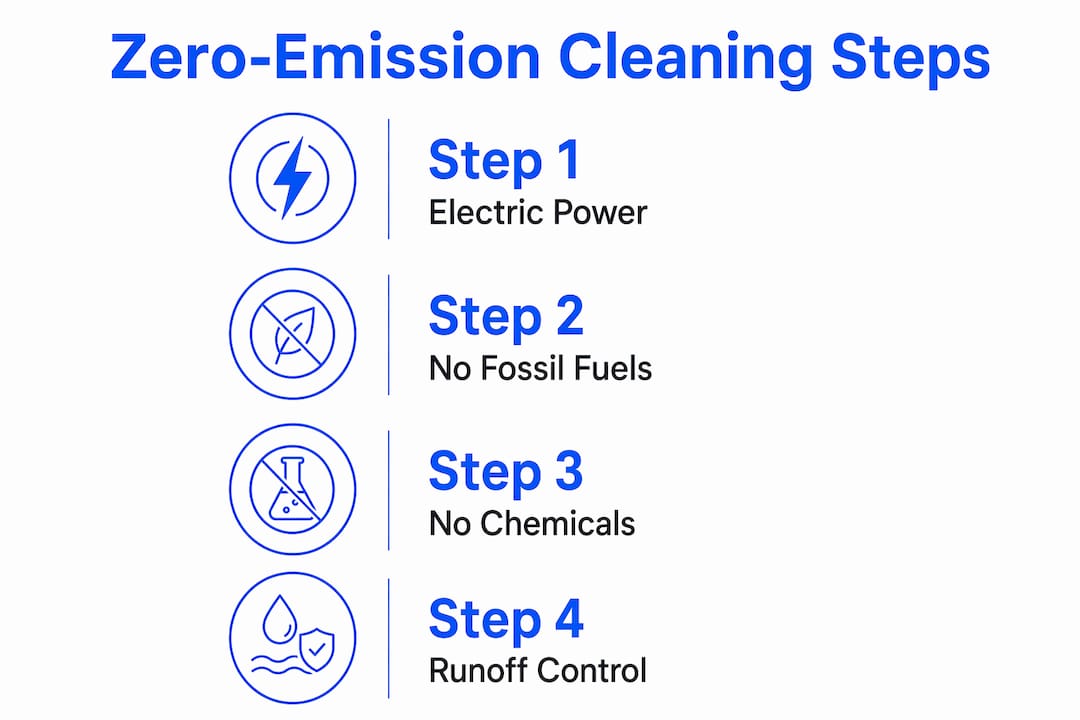
Runoff containment and water-volume management. South Florida’s stormwater system is particularly sensitive. Any cleaning waste, even biodegradable, must be contained on site and kept out of drains. Written containment plans are the proof point.
How drone-based systems put those criteria into practice
Tethered, battery-powered drones deliver pure de-ionized water in controlled micro-volumes directly to the surface. The pilot stays on the ground; no crew reaches the facade or roof. That single fact removes fall risk, eliminates the need for lifts, and cuts the permit burden that would otherwise slow a Brickell or downtown Fort Lauderdale job by days.
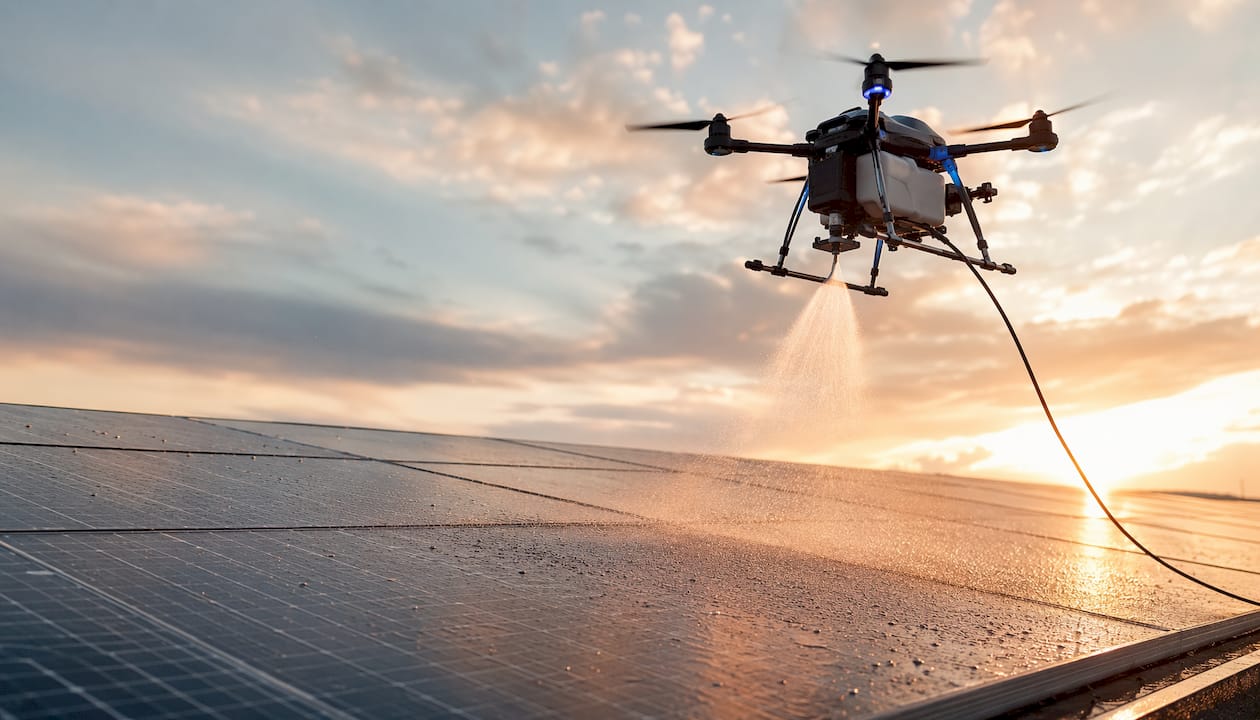
The water itself does the work. Ultra-purified water has no chemical residue, dries streak-free, and leaves nothing behind to enter a drain. Drone systems use significantly less water per window than manual methods. For solar arrays, the contact-free spray approach also prevents the micro-cracking that brushes or physical hoses can cause, protecting panel warranties and long-term output.
Dirty panels can see energy output gains above 30% after cleaning; even lightly soiled arrays typically recover between 12% and 16%. For property managers tracking an ENERGY STAR score or ESG metrics, those numbers translate directly into reportable improvements.
When traditional methods are still the right call
Drone cleaning has real limits. Heavy biological growth, thick calcium deposits, or deeply ingrained graffiti usually need chemical treatment or high-pressure water blasting that a pure-water drone system cannot deliver alone. Ground-based methods remain necessary for certain surface types, including unsealed concrete and heavily textured masonry where precision spray cannot reach recessed areas. Severe weather windows, common during South Florida’s hurricane season, ground drone operations entirely. Structural access issues on older buildings with no safe anchor points may also require a hybrid approach.
Questions to ask every vendor before you book
Before signing any contract, get written answers to these:
- FAA Part 107 certification. Ask for the pilot certificate number, not just a verbal confirmation.
- Insurance: require a certificate of insurance showing at least $2M liability coverage, naming your property.
- Runoff containment plan: a written site-specific plan, not a generic policy statement.
- Water type: confirm de-ionized or ultra-pure water; ask for TDS meter readings if solar panels are involved.
- Before-and-after documentation: site photos and measurable metrics, not just testimonials.
- Pilot training records: documented operator training specific to the drone model being used.
Vistadronecleaning serves South Florida properties that need this done right
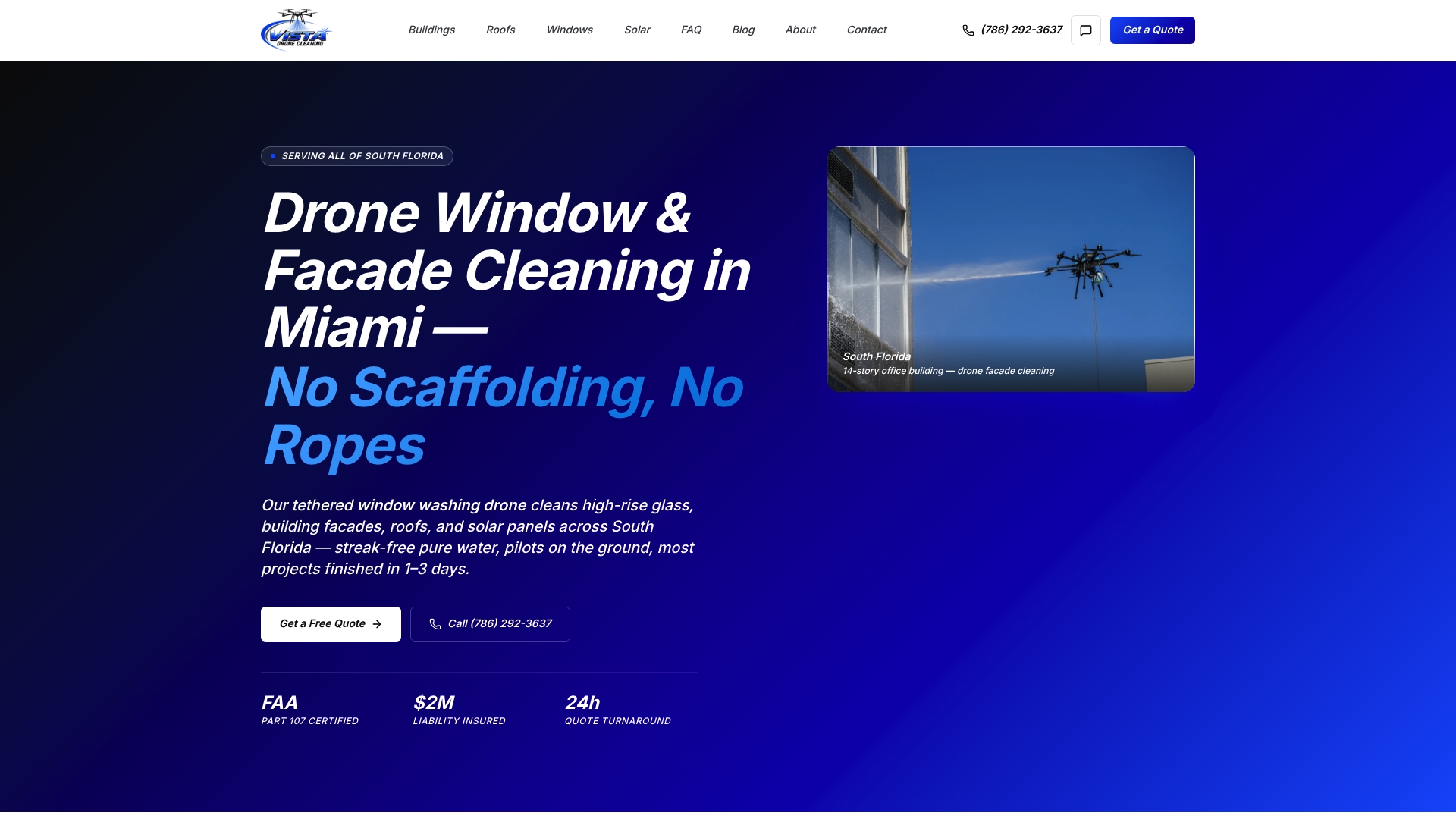
Vistadronecleaning covers Miami-Dade and Broward counties with FAA Part 107-certified pilots, $2M liability insurance, and tethered Lucid Bots Sherpa drones built for commercial high-rises, hotels, office towers, and rooftop solar arrays. No scaffolding, no road closures, no chemical discharge. Drone cleaning vs. traditional methods shows the full cost and timeline comparison if you want the numbers side by side. For solar arrays specifically, the pure-water PV wash service page covers the process in detail. Free quotes come back within 24 hours. Have your building’s square footage, floor count, and a few site photos ready when you reach out.
Pro Tip: Request a written runoff containment plan before any vendor starts work. In South Florida, discharging cleaning waste into a storm drain is an environmental violation regardless of how “green” the product is.
FAQ
What does “zero-emission” mean for exterior cleaning?
It means no fossil-fuel equipment on site, no chemical discharge, and controlled runoff containment. Electric drones and pure de-ionized water are the core delivery mechanism.
Does drone cleaning work on high-rise buildings in Miami?
Yes. Tethered, battery-powered drones can clean facades and windows on commercial buildings up to 200 feet without scaffolding or boom lifts, and without requiring road or sidewalk permits.
How much can drone cleaning save compared to traditional methods?
Most projects come in 30–60% lower in cost than scaffold or lift-based cleaning, and typically finish in 1–3 days rather than the longer timelines traditional rigging requires.
Is pure de-ionized water safe for solar panels?
Yes. Contact-free de-ionized water spray avoids the micro-cracking that brushes or physical hoses can cause, protecting panel warranties while restoring energy output.
What credentials should I require from a drone cleaning vendor?
At minimum: FAA Part 107 pilot certification, $2M liability insurance, documented pilot training records, and a written site-specific runoff containment plan.
Key Takeaways
A zero-emission exterior cleaning method combines electric drone operations, pure de-ionized water, and on-site runoff containment to eliminate site-level emissions and chemical discharge on South Florida commercial properties.
| Point | Details |
|---|---|
| Zero-emission defined | Electric power, no chemical discharge, and written runoff containment are all required simultaneously. |
| Water savings | Drone systems use significantly less water per window than manual methods. |
| Solar panel ROI | Heavily soiled panels can recover more than 30% energy output after a pure-water drone clean, while lightly soiled arrays typically see a 12–16% improvement. |
| Cost and timeline | Most South Florida projects finish in 1–3 days at 30–60% lower cost than scaffold or lift methods. |
| Vistadronecleaning | FAA Part 107-certified, $2M insured, serving Miami-Dade and Broward with tethered Lucid Bots Sherpa drones. |
Recommended
- Sustainable Exterior Cleaning Best Practices for South Florida, Vista Drone Cleaning
- Low-Environmental-Impact Building Cleaning: A South Florida Guide, Vista Drone Cleaning
- Cost-Saving Exterior Cleaning Ideas for South Florida Buildings
- Non-Disruptive Building Cleaning Methods for South Florida, Vista Drone Cleaning