
Complete building cleaning checklist for South Florida high-rises
Discover the ultimate building cleaning checklist for South Florida high-rises. Protect your property from harsh elements and save on maintenance!
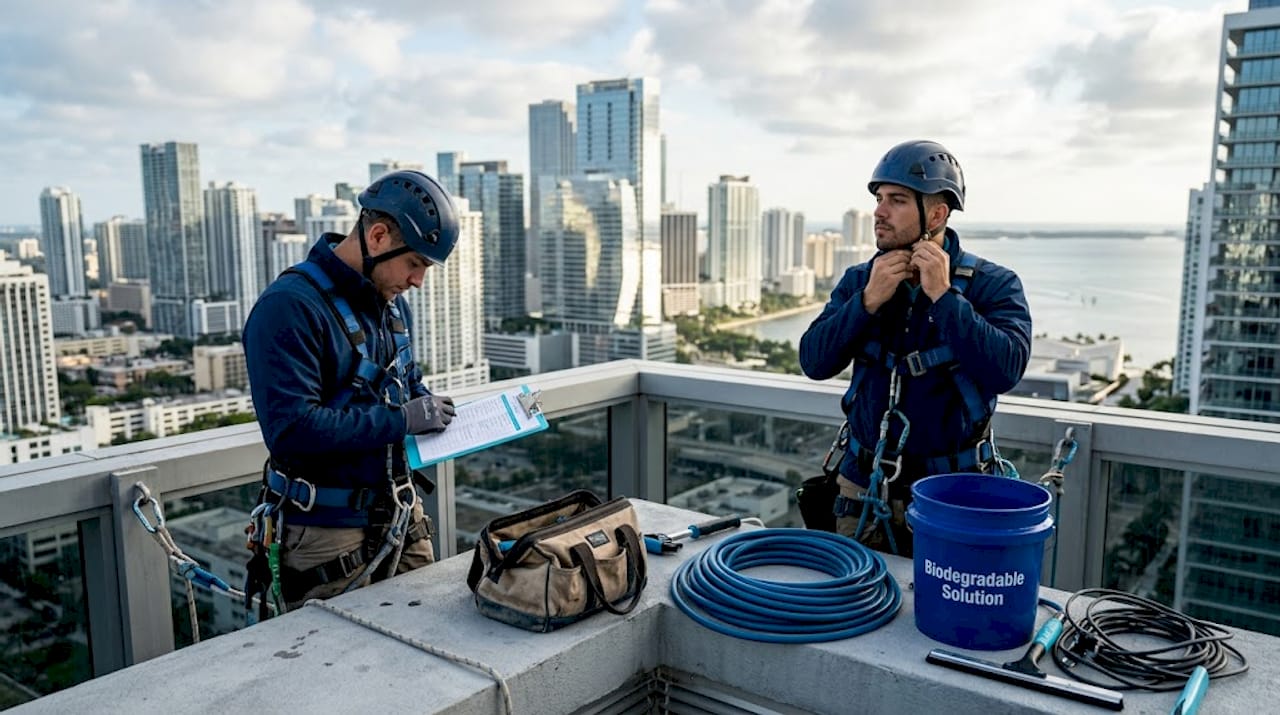
High-rise maintenance in South Florida is a battle against salt air, 80% humidity, intense UV, and hurricane-force winds. These elements relentlessly assault facades, windows, and roofs. Quarterly or biannual cleaning is mandatory to stop mold and algae from colonizing building faces during the rainy season. Use this checklist to protect your assets, satisfy compliance, and curb long-term maintenance costs.
Table of Contents
- The essential steps for a building cleaning checklist
- Choosing the right exterior cleaning methods
- Safety protocols and regulatory compliance
- Scheduling, special cases, and maintenance best practices
- What most property managers overlook about high-rise exterior cleaning
- Streamline your building cleaning with advanced solutions
- Frequently asked questions
Key Takeaways
| Point | Details |
|---|---|
| Routine assessment | On-site evaluations catch surface and safety issues early. |
| Method selection | The right method prevents avoidable surface damage. |
| Quarterly schedules | Frequent cleaning in high humidity controls mold and algae. |
| Compliance | Adhering to safety regulations protects against accidents and fines. |
| Advanced solutions | Drone technology streamlines maintenance and reduces disruption. |
The essential steps for a building cleaning checklist
Every South Florida high-rise demands a strict sequence. Skipping steps leads to surface damage, failed inspections, or liability claims.
A commercial exterior cleaning checklist follows this order:
- Pre-inspection of surfaces and materials. Identify every surface: glass, stucco, EIFS, painted concrete, or aluminum. Each material has specific pressure tolerances. Mixing these up causes etched glass or delaminated paint.
- On-site safety and access assessment. Map access points before equipment arrives. Note overhangs, utility lines, and pedestrian zones. Identify where rope-free access strategies can eliminate risk.
- Weather monitoring. South Florida conditions shift fast. Humidity affects chemical dwell times, and wind can carry solutions onto vehicles or neighboring properties.
- Equipment and PPE verification. Calibrate pressure equipment and check hoses. Ensure the team wears chemical-resistant gloves, eye protection, and non-slip footwear.
- Soft wash vs. high-pressure. Confirm the method based on the pre-inspection. Applying the wrong pressure to stucco causes irreversible pitting.
- Apply solution and dwell time. The cleaning agent needs time to break down biological growth and oxidation. Rushing this leads to poor results.
- Top-to-bottom rinsing. Rinse downward to prevent contamination. Use the lowest effective pressure to avoid forcing water into window seals.
- Post-clean inspection. Walk the building again. Look for missed spots, streaks, or residue.
- Documentation. Photograph results and record chemicals used. This protects you during insurance claims or audits.
Pro Tip: Use a shared digital checklist app so your team can view real-time progress and sign off remotely.
Choosing the right exterior cleaning methods
Selecting the wrong method voids warranties, damages property, and increases liability.
Soft washing is standard for South Florida. Low pressure (60 PSI or less) with biodegradable solutions removes algae and mold without harming stucco or EIFS.
High-pressure washing (2,500 to 4,000 PSI) is for durable surfaces like concrete parking decks or brick. Do not use this on painted facades; it strips coatings and invites moisture.
Drone cleaning uses FAA-registered drones to reach facades up to 200 feet. When comparing rope access vs drone cleaning, drones offer 30-60% savings over scaffolding. They eliminate rigging, slash project timelines, and remove worker-at-height liability.
Rope access is for complex geometries where drones cannot fly, but it requires extreme safety systems and perfect weather.
| Method | Best surface types | Pressure | Worker risk | Cost impact |
|---|---|---|---|---|
| Soft wash | Stucco, EIFS, painted | Under 60 PSI | High (traditional) | Moderate |
| High-pressure | Concrete, brick, pavers | 2,500-4,000 PSI | High (traditional) | Moderate to high |
| Drone cleaning | All facades, windows | Adjustable | None | 30 to 60% savings over scaffolding |
| Rope access | Complex facades | Variable | Very high | High |
Safety protocols and regulatory compliance
In Florida, exterior cleaning at height is a regulated activity. Non-compliance results in fines and insurance denials.
Core safety protocols include OSHA compliance, scaffold certification, and redundant harness systems. Work must stop when winds exceed 25 mph (Beaufort Force 6).
"Operations must halt in winds exceeding Beaufort Force 6. The liability exposure from a single incident will dwarf the cost of rescheduling."
Your compliance sub-checklist:
- OSHA 1926 Subpart R compliance.
- Scaffold certification and Bosun's Chair training logs.
- Pre-shift harness inspections.
- Written weather hold policy.
- Insurance certificates with $1M+ general liability.
Reviewing safety tips for window cleaning helps you vet vendors properly.
Scheduling, special cases, and maintenance best practices
Quarterly or biannual cleaning is standard. Buildings near Brickell Avenue or the Port of Miami often require quarterly cycles due to salt spray and diesel exhaust.
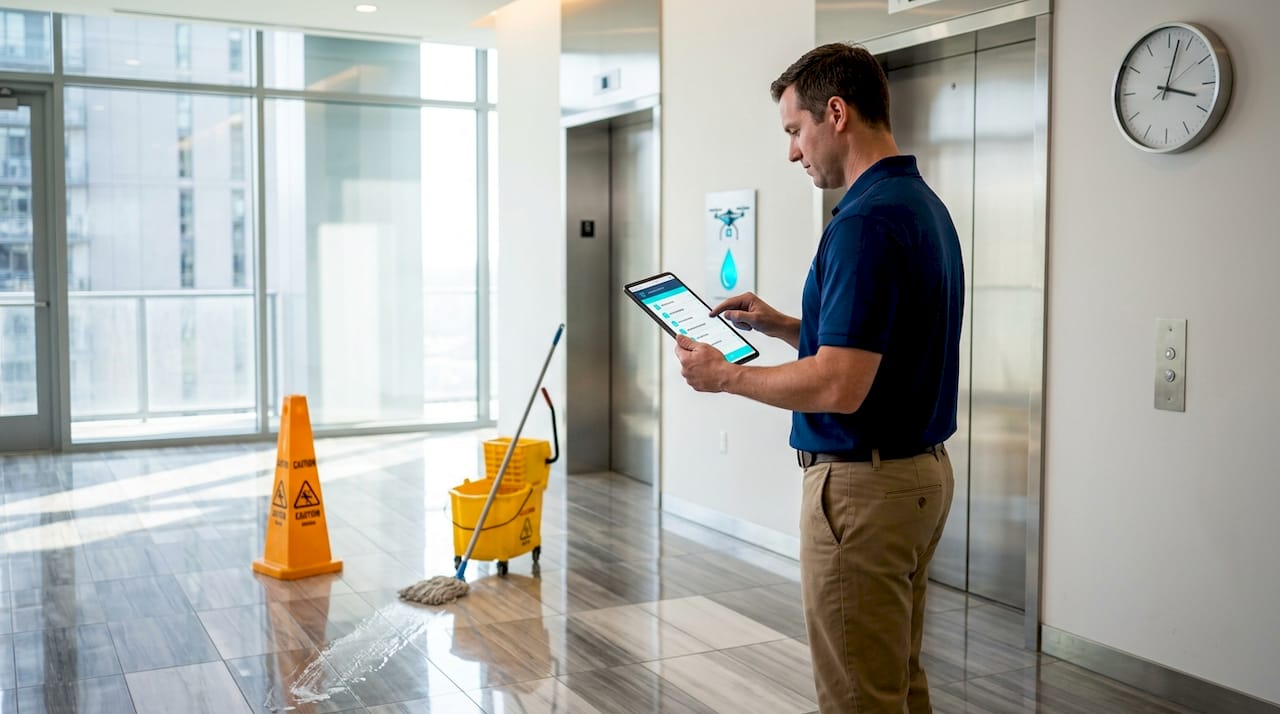
Hybrid schedule:
- Daily: Lobby glass and high-touch entries.
- Weekly: Parking facades and loading docks.
- Monthly: Drainage gutters and lower ledges.
- Quarterly/Biannually: Full facade, upper windows, roofs, and solar panels.
Special considerations:
- Mold Management: Use mold-inhibiting residuals to prevent growth from returning within 60 days.
- Post-Construction: Require specialized solvents for silicone or concrete splatter.
- Hurricane Season: Schedule a major clean in early May and an assessment after big storms.
- Occupancy: Use scaffold-free cleaning to avoid disrupting hotel or residential tenants.
| Cleaning type | Frequency | South Florida driver |
|---|---|---|
| Full facade wash | Quarterly-Biannual | Mold, salt air |
| Window cleaning | Monthly-Quarterly | UV oxidation, spray |
| Roof surface | Biannual | Organic growth |
| Solar panels | Quarterly | Dust, pollen |
| Parking structures | Monthly-Quarterly | Diesel soot |
What most property managers overlook about high-rise exterior cleaning
Don't accept quotes from vendors who haven't visited the site. Reputable contractors require a physical inspection, hold BOMA/ISSA memberships, and carry $1M+ in liability.
Avoid defaulting to the lowest bid. In high-rise cleaning, low prices usually signal missing safety steps or undertrained crews. Finding the most affordable cleaning method means calculating value per outcome.
Finally, embrace technology. Drone cleaning is the fastest, safest way to handle complex towers. If your vendor doesn't offer it, you are likely overpaying for increased risk.
Streamline your building cleaning with advanced solutions
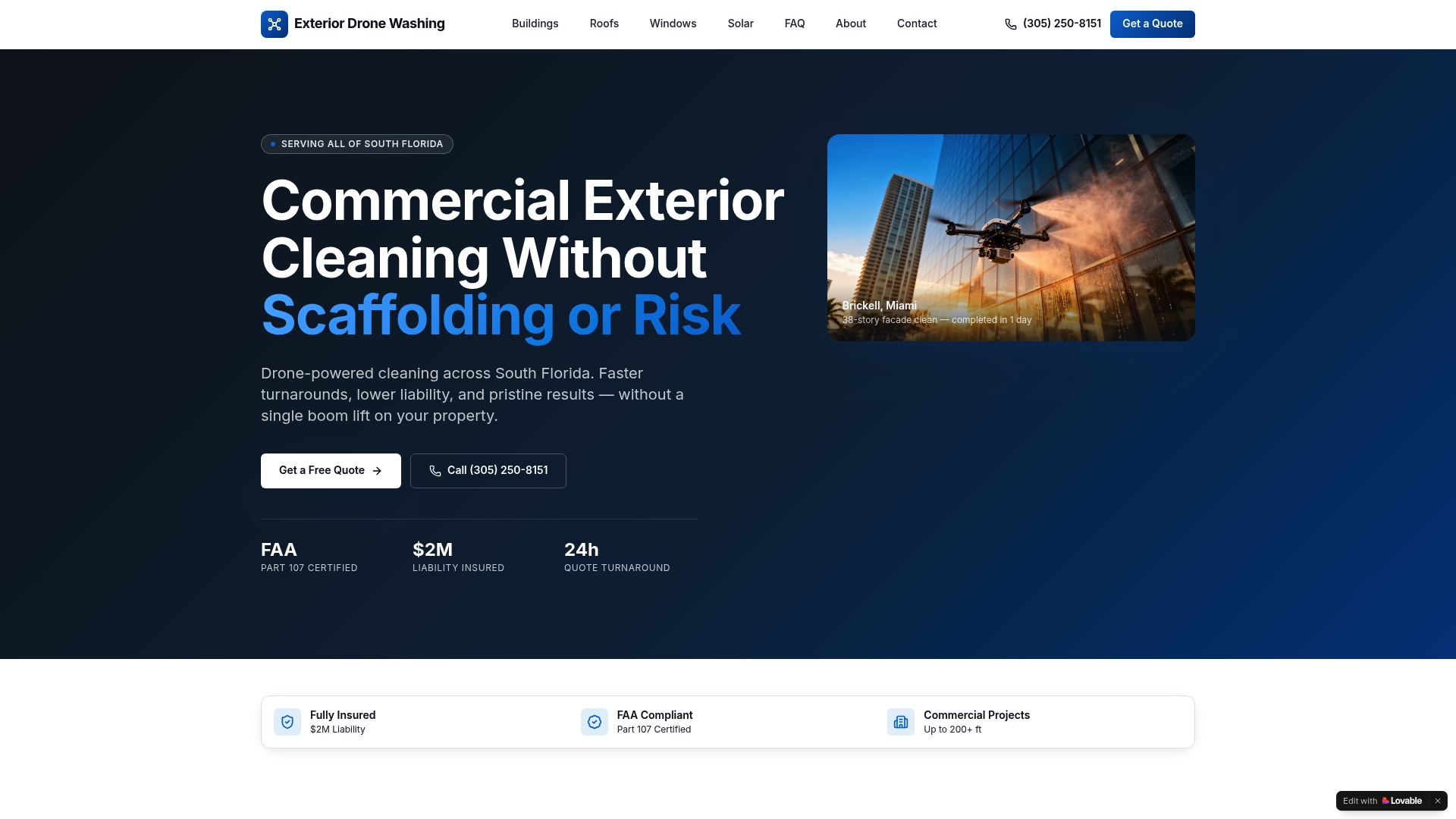
Exterior Drone Washing provides FAA-registered drone cleaning for South Florida commercial properties. We eliminate fall risks and reduce costs by 30-60%. Whether managing a Brickell high-rise or a hotel, our team matches the method to your building's needs. See our commercial building cleaning services or scaffold-free building cleaning options to simplify your maintenance.
Frequently asked questions
How often should high-rise building exteriors be cleaned in South Florida?
Quarterly or biannually, depending on salt air exposure and humidity.
What's the safest cleaning method for painted or stucco high-rises?
Soft washing at 60 PSI or less using biodegradable solutions.
What safety protocols must be followed for exterior cleaning?
OSHA standards, equipment inspections, and weather halts at 25 mph winds.
Is a vendor site inspection necessary before getting a cleaning quote?
Yes. On-site inspections are required for accurate pricing and safety planning.