
How Roof Cleaning Boosts HVAC Efficiency in South Florida
Discover the role of roof cleaning in HVAC efficiency. Improve your system's performance and lower energy costs in South Florida today!
TL; DR:
- Regular roof cleaning in South Florida restores solar reflectance, reduces HVAC energy use, and cuts peak demand charges. It supports cooling efficiency, prolongs roof lifespan, and enhances indoor air quality when combined with coil maintenance. Coordinating cleaning efforts with HVAC servicing maximizes property energy savings and operational efficiency.
The role of roof cleaning in HVAC efficiency is direct: a dirty roof absorbs more heat, raises the temperature of air entering rooftop units, and forces compressors to work harder. In South Florida’s climate, where cooling systems run nearly year-round, that added strain translates into measurable energy waste and higher utility bills. Cool roofs with high solar reflectance are the standard solution for commercial buildings in Miami-Dade, Broward, and Palm Beach counties, but reflectance degrades fast without regular maintenance. Keeping that surface clean is not optional maintenance. It is a core part of managing HVAC performance and roof condition.
How does roof cleanliness directly affect HVAC energy consumption?
A dirty roof surface absorbs significantly more solar radiation than a clean one. Biological growth such as algae, mold, and lichen, along with particulate debris, darkens the surface and reduces its ability to reflect sunlight. That extra absorbed heat raises the roof membrane temperature, which in turn heats the air immediately above the roof deck.
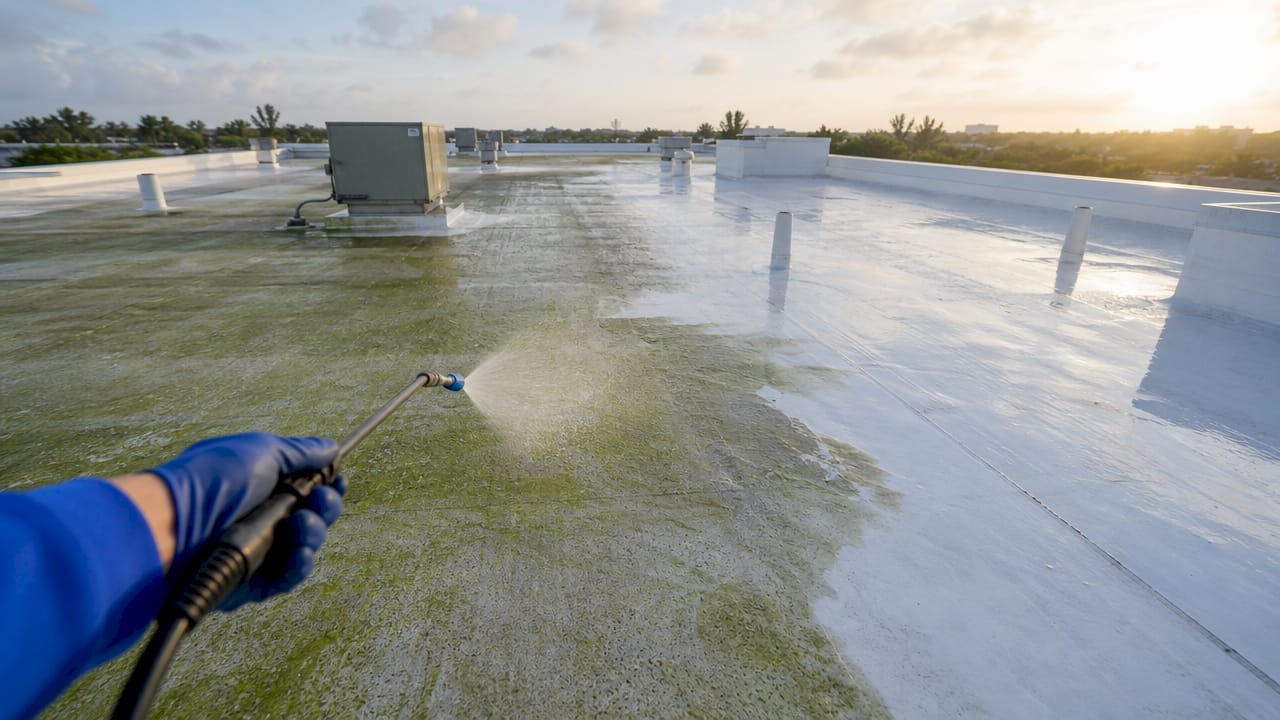
Rooftop HVAC units pull intake air from that zone. HVAC air inlets can draw air 3.5°F to 7°F hotter than ambient temperature due to roof heat alone. That means the compressor starts each cycle already fighting elevated temperatures, burning more electricity to reach the same cooling output.
The compressor load problem compounds when you factor in condenser coil condition. Dirty condenser coils increase energy use by 27% to nearly 40%, and neglecting a single 30-ton rooftop unit can cost over $2,200 annually in wasted electricity. A dirty roof and dirty coils together create a compounding efficiency loss that shows up clearly on your monthly utility statement.
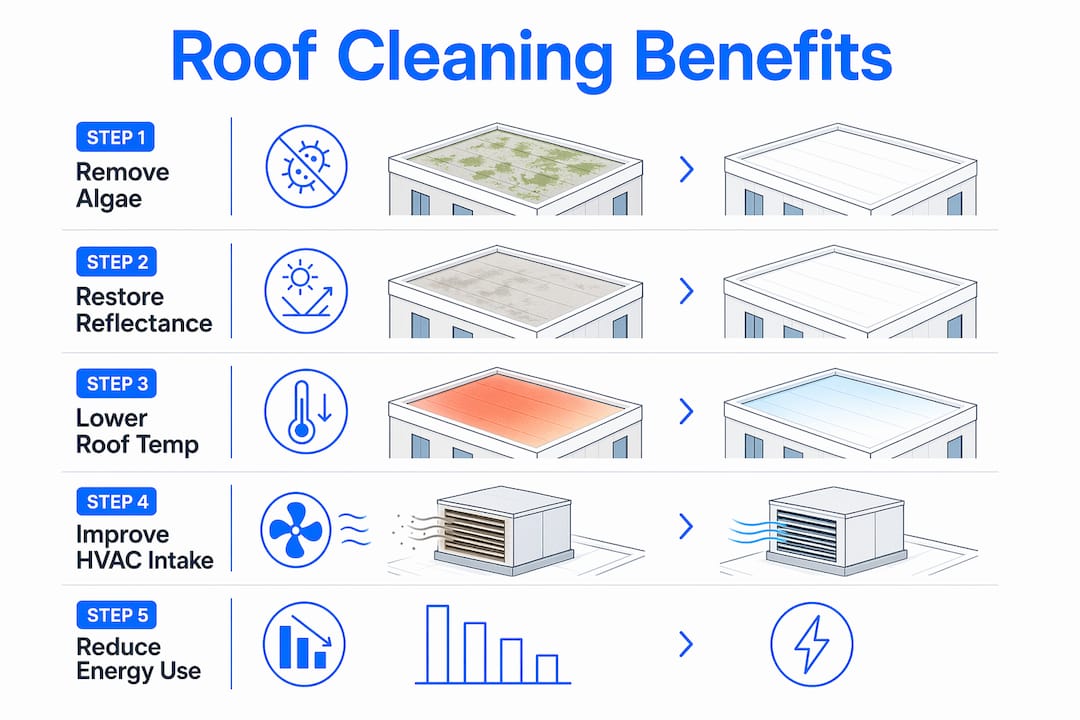
Here is the sequence that drives the problem:
- Biological growth and debris accumulate on the roof surface.
- Solar reflectance drops, and the roof membrane temperature rises.
- Rooftop HVAC units pull in hotter intake air.
- Compressors run longer cycles to compensate.
- Energy consumption and demand charges increase.
Pro Tip: Schedule roof inspections and coil cleaning at the same time. Addressing both in one visit gives you a complete picture of your system’s thermal load and avoids the situation where cleaning one component masks the cost of neglecting the other.
What are the benefits of maintaining cool roofs through regular cleaning?
Cool roofs are defined by high solar reflectance and thermal emittance. They reflect a large portion of incoming solar energy rather than absorbing it, which directly reduces the cooling load on HVAC systems. In hot climates like South Florida, cool roofs deliver annual cooling savings of 10–30%, translating to $0.10–$0.40 per square foot of conditioned roof area. A 20,000 square foot commercial building in Miami can see $4,000–$7,000 in annual cooling savings.
The problem is that reflectance does not hold without maintenance. Reflective roof surfaces lose 10–20% of their solar reflectance within 1–3 years from soiling and biological growth. Annual cleaning recovers 5–10% of that lost reflectance. That recovery directly restores the energy savings the roof was designed to deliver.
Beyond energy consumption, clean roofs also cut peak demand charges. Cool roofs reduce peak electrical demand by 10–15% during the hottest hours of the day. Demand charges can represent 30–50% of a commercial building’s total electricity bill. Maintaining roof reflectance through cleaning is one of the most cost-effective ways to reduce that line item.
Key benefits of regular roof cleaning for South Florida commercial properties:
- Restored solar reflectance: Annual cleaning recovers lost reflectance and sustains the energy performance of cool roof systems.
- Lower cooling loads: A cleaner, cooler roof surface reduces the thermal burden on rooftop HVAC units throughout the cooling season.
- Reduced peak demand charges: Maintaining reflectance during peak summer hours directly lowers demand-based utility fees.
- Extended roof membrane life: A clean rooftop prolongs roof membrane life by preventing biological growth from degrading the surface material.
- Improved indoor air quality: Fewer contaminants near rooftop HVAC intakes means cleaner air entering the building’s ventilation system.
Pro Tip: Use mild alkaline cleaners rather than high-pressure washing. Professional soft washing restores 85–90% reflectivity safely, while high-pressure methods can damage roof membranes and void manufacturer warranties.
Are there limits to what roof cleaning alone can achieve?
Roof cleaning delivers real energy savings, but property managers need to understand where it fits in the overall maintenance picture. The impact varies based on roof type, soiling type, and climate conditions.
South Florida is one of the few regions where cleaning is clearly worth the cost. In hot, humid climates, biological growth degrades reflectance significantly, making cleaning cost-effective. In drier climates where only dust accumulates, natural rainfall often handles the job. Miami-Dade and Broward properties deal with algae, mold, and lichen year-round, which means passive cleaning is not sufficient.
There are also limits to what roof cleaning accomplishes on its own:
- Roof cleaning restores reflectance but does not repair aging or cracked membranes that compromise insulation.
- Silicone roof coatings maintain 75–80% reflectivity over a decade; acrylics degrade faster and may need more frequent cleaning cycles.
- The largest direct HVAC energy savings come from cleaning condenser coils, not the roof surface alone. Roof cleaning supports coil performance by reducing the ambient heat load, but it does not replace coil maintenance.
- Cleaning frequency should match the building’s biological exposure. A rooftop with heavy shade from adjacent structures or trees will accumulate growth faster and need more frequent service.
The practical takeaway: roof cleaning is a high-value maintenance task in South Florida, but it works best as part of a coordinated plan, not as a standalone fix.
How can property managers build a roof and HVAC maintenance plan?
A coordinated maintenance plan treats the roof and the HVAC system as connected components, because they are. The roof’s thermal performance directly sets the operating conditions for every unit mounted on it.
Start with coil cleaning. Dirty condenser coils are the single largest direct driver of HVAC energy waste, with consumption increases of 27–40% when coils are neglected. Schedule coil cleaning at least twice per year for South Florida properties, where heat and humidity accelerate fouling.
Next, address equipment placement. HVAC units mounted on raised racks benefit from cooler intake air and better heat rejection than units sitting directly on the roof deck. If your rooftop units sit flat on the membrane, raising them is a one-time capital improvement that pays back in lower operating costs.
A practical maintenance sequence for South Florida commercial buildings:
- Annual roof soft-wash cleaning: Schedule in late spring before peak cooling season. This restores reflectance before the months when it matters most.
- Biannual HVAC coil cleaning: Coordinate with your mechanical contractor in spring and fall to keep compressor loads in check.
- Quarterly roof inspections: Walk the roof or use drone inspection to catch biological growth early before it degrades reflectance significantly.
- Post-storm debris removal: South Florida’s hurricane season runs june through november. Clear debris promptly after storms to prevent membrane damage and blocked drainage.
- Annual reflectance measurement: Use a portable reflectometer or request a reading from your cleaning contractor to track whether cleaning is restoring performance to baseline.
Pro Tip: Coordinate your commercial roof cleaning checklist with your HVAC service contract. When both vendors visit within the same week, you get a complete thermal performance assessment without scheduling two separate site shutdowns.
Vistadronecleaning uses FAA Part 107-certified pilots and tethered Lucid Bots Sherpa drones to perform soft-wash roof cleaning on commercial high-rises throughout Miami-Dade and Broward counties. Crews stay on the ground, no scaffolding or permits are needed, and most projects finish in 1–3 days. That makes it practical to schedule cleaning annually without disrupting building operations.
Key Takeaways
Roof cleaning sustains cool roof reflectance, reduces HVAC compressor load, and cuts peak demand charges, making it one of the highest-return maintenance investments for South Florida commercial buildings.
| Point | Details |
|---|---|
| Reflectance degrades fast | Roof surfaces lose 10–20% solar reflectance within 1–3 years without cleaning. |
| Cleaning restores savings | Annual soft-wash cleaning recovers 5–10% reflectance and sustains cool roof energy performance. |
| Peak demand impact | Clean cool roofs reduce peak electrical demand by 10–15%, lowering demand charges that make up 30–50% of bills. |
| Coil cleaning is critical | Dirty condenser coils increase HVAC energy use by up to 40%; roof and coil maintenance work together. |
| South Florida is ideal | Hot, humid conditions make biological growth the primary threat, making cleaning clearly cost-effective here. |
What I’ve learned from watching South Florida buildings skip this step
Property managers often treat roof cleaning as a cosmetic task. That framing costs real money. I’ve seen buildings in Brickell and Fort Lauderdale spend tens of thousands on HVAC repairs without ever addressing the roof condition that was driving the compressor failures in the first place. The roof was the problem. The HVAC unit was just where the symptom showed up.
The other mistake I see is treating roof cleaning as a one-time fix after visible algae appears. By the time growth is visible from ground level, reflectance has already dropped significantly. Annual cleaning before the problem becomes obvious is what actually sustains energy performance. Reactive cleaning is better than nothing, but it is not a strategy.
The buildings that manage this well treat exterior maintenance as a system. Roof cleaning, coil service, and equipment placement decisions all connect. When you manage them together, the energy savings stack. When you manage them separately, you end up fixing symptoms instead of causes.
One more thing: soft washing is the only method worth using on commercial membranes. High-pressure washing cleans faster but damages the surface and voids warranties. The short-term convenience is not worth the long-term cost.
, Eliot
Vistadronecleaning’s roof cleaning services for South Florida buildings
South Florida commercial buildings need roof cleaning that is safe, thorough, and membrane-friendly. Vistadronecleaning delivers exactly that across Miami-Dade, Broward, and Palm Beach counties using tethered industrial drones and professional soft-wash techniques that restore cool roof reflectance without damaging the surface.

FAA Part 107-certified pilots handle every job from the ground. No scaffolding, no boom lifts, no road closures. Most commercial rooftop projects finish in 1–3 days at 30–60% lower cost than traditional methods. The result is a cleaner roof that reflects more heat, reduces HVAC compressor load, and supports lower utility bills through the cooling season. Request a free quote within 24 hours at Vistadronecleaning’s roof cleaning page and get your building ready before peak season.
FAQ
How does a dirty roof affect HVAC performance?
A dirty roof absorbs more solar heat, raising the temperature of air entering rooftop HVAC units by 3.5°F to 7°F above ambient. That forces compressors to run longer cycles and consume more electricity.
How often should commercial roofs in South Florida be cleaned?
Annual soft-wash cleaning is the standard recommendation for South Florida commercial buildings. Hot, humid conditions accelerate biological growth that degrades solar reflectance, making yearly cleaning cost-effective.
Does roof cleaning actually save money on energy bills?
Yes. Cool roofs in hot climates deliver 10–30% annual cooling energy savings, and cleaning restores 5–10% of lost reflectance each cycle. It also reduces peak demand charges, which can represent 30–50% of a commercial electricity bill.
Is soft washing safe for commercial roof membranes?
Soft washing with mild alkaline cleaners restores 85–90% of roof reflectivity without damaging membranes or voiding warranties. High-pressure washing can cause membrane damage and should be avoided on commercial rooftops.
Should roof cleaning replace HVAC coil maintenance?
No. Coil cleaning has the largest direct impact on HVAC energy efficiency, with dirty coils increasing consumption by up to 40%. Roof cleaning and coil maintenance work together and should both be part of a coordinated maintenance schedule.