
Window Cleaning Without Ropes: Safe High-Rise Methods 2026
Discover effective window cleaning without ropes in 2026. Explore safe, innovative methods like drones and water-fed poles for high-rise buildings.
TL; DR:
- Rope-free window cleaning methods include water-fed poles, tethered drones, and facade robots that improve safety and reduce costs. Each technique suits different building heights and facade shapes, with drones ideal for high-rises and robots for flat surfaces. Safety and cost advantages, combined with technical limitations, guide the selection of appropriate methods for high-rise buildings.
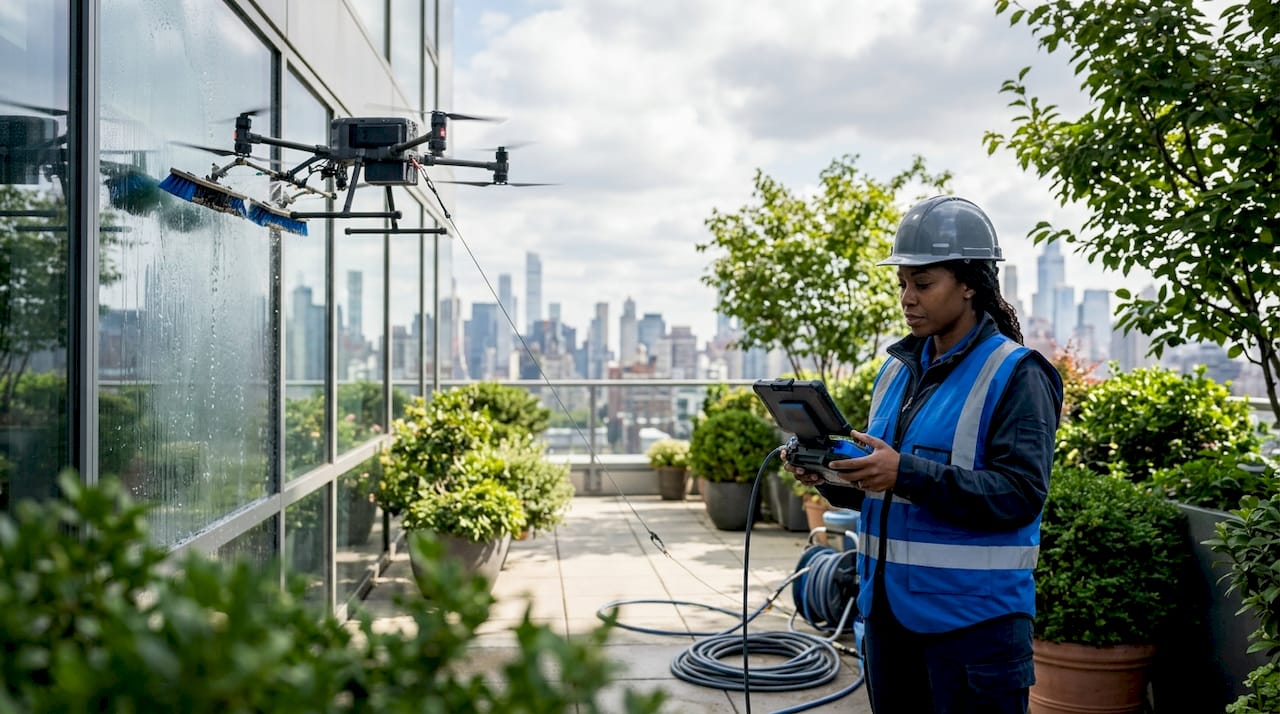
Window cleaning without ropes is defined as any method that removes the need for rope access, scaffolding, or suspended platforms to clean building windows at height. For facility managers and property owners across Miami-Dade, Broward, and Palm Beach counties, this shift matters because traditional rope access carries significant liability, requires permits, and often forces road closures. The three leading rope-free approaches are water-fed pole systems, FAA-certified tethered drones, and emerging facade-cleaning robots. Each method reduces worker risk while cutting project timelines and costs compared to conventional rope access.
What are the main rope-free techniques for window cleaning on high-rise buildings?
Rope-free window cleaning covers three distinct technologies, each suited to a different building height and facade type.
Water-fed pole systems
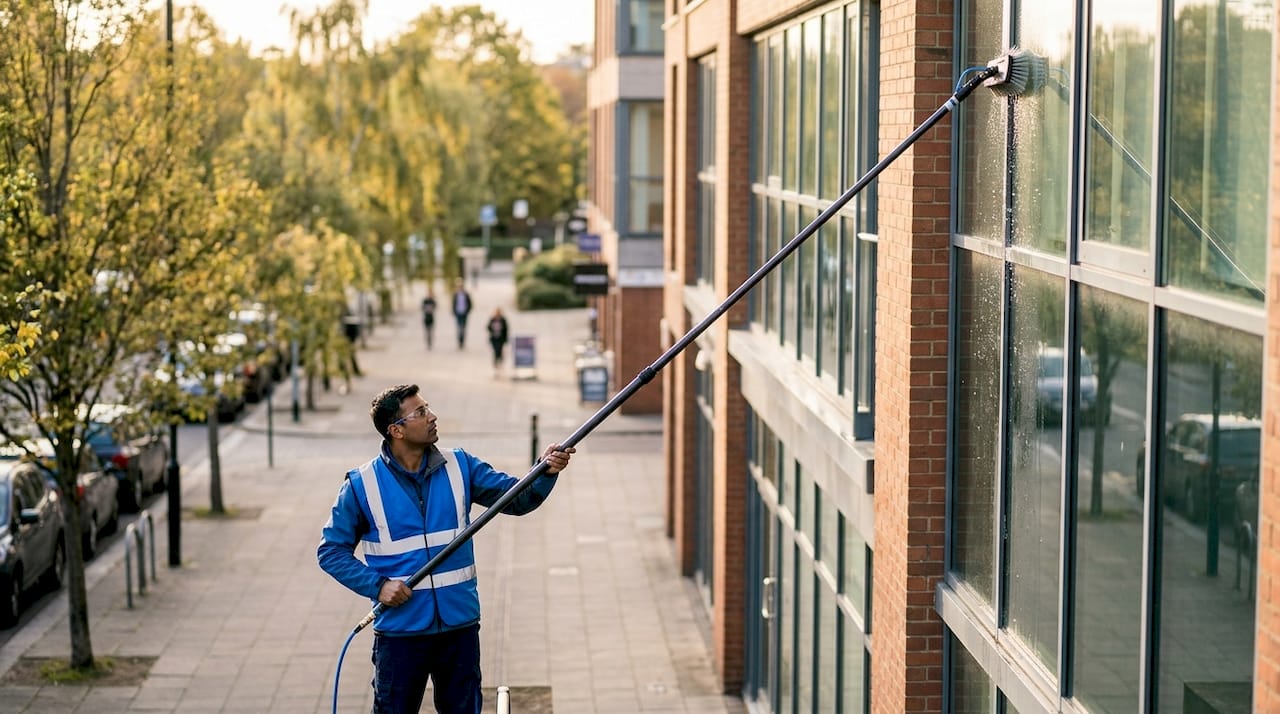
Water-fed poles are telescoping aluminum or carbon fiber poles connected to a purified water supply. Purified water below 5 ppm total dissolved solids dries naturally on glass without leaving mineral deposits or streaks. That means no squeegee pass and no chemical detergents. The system works well on buildings up to six stories, making it the go-to choice for mid-rise office parks in Boca Raton, retail centers in Coral Springs, and low-rise condominiums throughout Broward County.
Tethered industrial drones
Commercial drones take rope-free window washing into true high-rise territory. Tethered drones like the Lucid Bots Sherpa stay connected to a ground water supply, which removes tank refills and improves flight stability against the wind turbulence common around Miami’s dense Brickell corridor. Tethered drones reach hard-to-access facades while keeping the entire crew safely on the ground. FAA Part 107 certification is required for commercial drone operations, and pilots must conduct a site assessment before each flight to account for microclimates created by surrounding towers.
Facade-cleaning robots
Robotic systems represent the newest category of high window cleaning techniques. These platforms attach to the building surface and move in a block-wise pattern, covering each section methodically. Modular facade robots reduce water usage by 26% compared to traditional methods, a meaningful advantage for South Florida buildings where water costs and conservation requirements are growing concerns. Current robotic systems work best on flat glass curtain walls and are less practical on buildings with deep balconies or irregular setbacks.
- Water-fed poles: Best for buildings up to six stories; zero chemicals; streak-free finish
- Tethered drones: Ideal for high-rises above six stories; FAA Part 107 required; ground crew only
- Facade robots: Suited to flat glass curtain walls; lowest water consumption; emerging technology
Pro Tip: Ask any rope-free provider whether their drone pilots hold an active FAA Part 107 certificate. This is a federal requirement for commercial drone operations, and an unlicensed operator exposes your property to significant liability.
How do rope-free methods improve safety and reduce costs?
Safety is the primary driver behind the shift to rope-free window cleaning. Rope access places workers at height for extended periods, creating sustained exposure to fall risk. Drone and water-fed pole crews work entirely from the ground, removing that exposure category.
“Drone-based window cleaning divisions have recorded zero lost-time injuries compared to historical rope-access injury rates. Water-fed pole cleaning crews have similarly reported zero lost-time injuries over a decade, a safety record that directly reduces insurance premiums and workers’ compensation claims for commercial cleaning firms.”
That safety record translates directly into lower liability costs for property owners. Fewer incidents mean lower insurance premiums and fewer workers’ compensation claims. Rope-free methods minimize operational disruptions such as road closures, balcony furniture removal, and tenant notifications, which reduces the indirect costs that rarely appear in a cleaning quote but always show up in a facility manager’s budget.
| Factor | Rope access | Rope-free methods |
|---|---|---|
| Lost-time injury rate | Documented incidents over time | Zero recorded over a decade |
| Setup time | Hours of rigging required | Minimal; crews deploy quickly |
| Road closures | Often required | Not required |
| Permit requirements | Frequently needed | Typically not needed |
| Project duration | Several days to weeks | 1–3 days for most buildings |
| Relative cost | Higher baseline | 30–60% lower than scaffold methods |
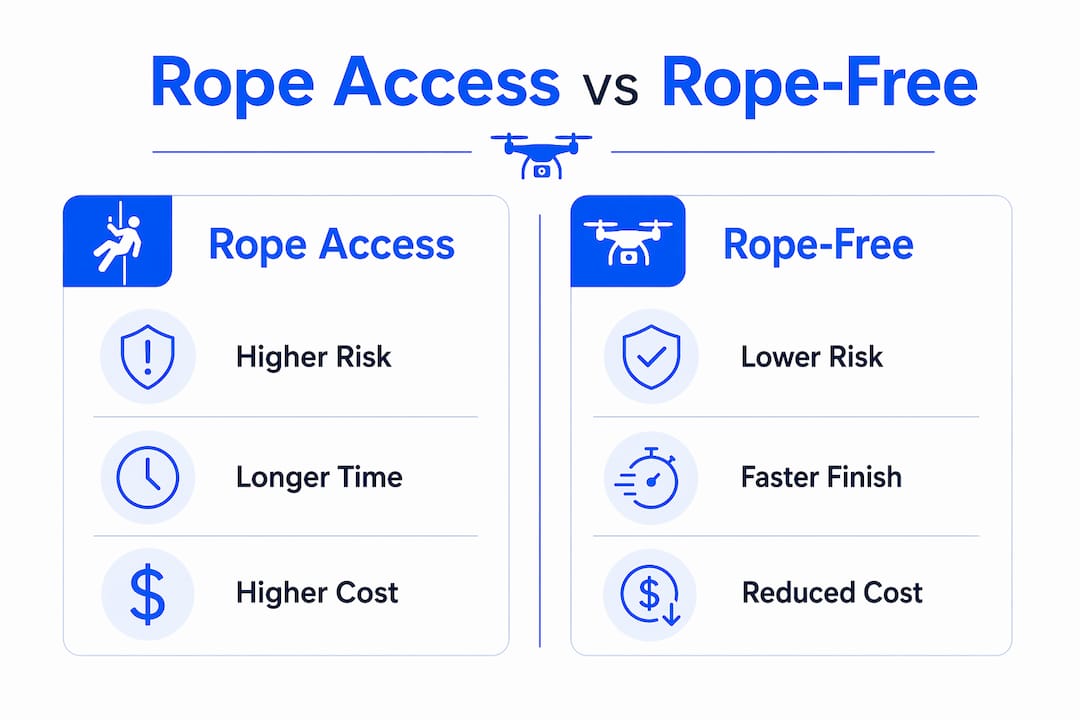
The cost gap is substantial. Vistadronecleaning reports that most drone-based projects finish in 1–3 days at 30–60% lower cost than traditional scaffold or lift methods. That range reflects real differences in rigging labor, permit fees, and equipment rental that rope access always carries.
What are the practical limitations of rope-free window cleaning?
No single method handles every building. Understanding the constraints of each approach helps facility managers avoid costly surprises.
Height and reach limits are the most common constraint. Water-fed poles top out at roughly six stories. Above that threshold, drones or rope access become necessary. For a 40-story tower in Fort Lauderdale or a Brickell high-rise above 200 feet, a tethered drone is the only rope-free option currently available at commercial scale.
Building geometry creates a second constraint. Rope access holds an advantage on buildings with irregular shapes, deep setbacks, or recessed window frames that aerial systems cannot reach cleanly. A drone or pole cannot follow a window that sits two feet inside a concrete recess. Facility managers overseeing architecturally complex properties in Coral Gables or Miami Beach should request a site assessment before committing to a fully rope-free program.
Weather and wind affect drone operations more than any other variable. Localized wind turbulence and unexpected hazards like wildlife nests can ground a drone crew mid-project. South Florida’s afternoon thunderstorm season, which runs from june through october, requires flexible scheduling and clear cancellation policies in any service contract.
- Confirm the provider’s wind speed threshold for drone operations before signing a contract
- Request a written site assessment that identifies any architectural features that may require supplemental methods
- Build weather delay clauses into service agreements to avoid penalty fees during storm season
- Verify the provider carries at least $2M in liability insurance before any crew arrives on site
Pro Tip: For mixed-height campuses in areas like Aventura or Pompano Beach, the most cost-effective approach often combines water-fed poles for lower structures and drones for the main tower. Ask providers to quote a hybrid scope.
How to evaluate a rope-free window cleaning service in South Florida
Choosing a provider requires more than comparing price per square foot. The right service partner brings certified technology, a clean safety record, and local knowledge of South Florida’s building stock.
-
Verify FAA Part 107 certification. Any commercial drone operator must hold an active FAA Part 107 remote pilot certificate. Ask for the certificate number and confirm it is current. An uncertified operator cannot legally fly commercially and creates direct liability for your property.
-
Check insurance coverage. A minimum of $2M in general liability insurance is the standard for commercial exterior cleaning in South Florida. Confirm the policy covers drone operations specifically, as some general liability policies exclude unmanned aircraft.
-
Review the equipment list. Industrial-grade tethered drones like the Lucid Bots Sherpa are built for commercial cleaning loads. Consumer-grade drones are not. Ask what specific equipment the provider uses and whether it is purpose-built for facade cleaning.
-
Request local project references. A provider with completed projects in Miami-Dade or Broward understands the microclimate challenges, HOA coordination requirements, and building access protocols specific to South Florida. References from comparable properties carry more weight than general testimonials.
-
Evaluate cost transparency. A credible provider offers a written quote within 24 hours and itemizes setup, labor, and any supplemental methods. Vague pricing that bundles everything into a single day rate makes it impossible to compare proposals accurately.
-
Confirm the drone vs. traditional comparison has been done for your building. Some properties genuinely benefit from a hybrid approach. A provider who recommends only one method regardless of building type is not giving you an objective assessment.
Key Takeaways
Rope-free window cleaning methods deliver measurable safety, cost, and efficiency advantages over traditional rope access for the vast majority of South Florida commercial properties.
| Point | Details |
|---|---|
| Zero ground-level injury record | Water-fed poles and drones have recorded zero lost-time injuries over a decade of commercial use. |
| Cost savings of 30–60% | Drone-based cleaning costs 30–60% less than scaffold or lift methods on most commercial projects. |
| Height determines method | Water-fed poles handle up to six stories; tethered drones are required for taller high-rise buildings. |
| FAA certification is non-negotiable | Commercial drone operators must hold an active FAA Part 107 certificate to operate legally. |
| Building geometry still matters | Irregular facades and deep setbacks may require supplemental rope access even on rope-free projects. |
What I’ve learned from watching South Florida go rope-free
The shift away from rope access in Miami-Dade and Broward has moved faster than most facility managers expected, and the reason is not technology. It is liability. After one lost-time injury claim, the math on rope access changes permanently for a property owner. The insurance premium increase alone often exceeds the annual cost of switching to a drone-based program.
What surprises most clients I work with is how little disruption a well-run drone window cleaning project creates. No road closures. No tenant complaints about workers on balconies. No permit delays pushing the project three weeks. A crew shows up, deploys from the ground, and finishes a 20-story building in two days.
The education gap is real, though. Many facility managers still assume drones are a novelty or a cost premium. The opposite is true for buildings above six stories. The providers who will win this market over the next few years are the ones who can show a clear, itemized comparison between their drone scope and a rope-access quote for the same building. That transparency is what converts skeptical facility managers into long-term clients.
My advice: do not wait for your current rope-access contract to expire before requesting a drone assessment. Get the comparison now. The numbers will make the decision for you.
, Eliot
Vistadronecleaning’s rope-free services for South Florida properties
Vistadronecleaning operates across Miami-Dade, Broward, and Palm Beach counties using FAA Part 107-certified pilots and tethered Lucid Bots Sherpa drones to clean high-rise windows, building facades, roofs, and solar panels without scaffolding or rope access. Most commercial projects finish in 1–3 days, and the company carries $2M in liability insurance on every job.
Property owners and facility managers can request a free quote within 24 hours. Vistadronecleaning’s team will assess your building, identify the right combination of drone window washing and water-fed pole methods, and deliver a written cost comparison against traditional methods. For a full breakdown of how the technology works, visit the drone cleaning overview page before your next maintenance cycle.
FAQ
What is window cleaning without ropes?
Window cleaning without ropes uses methods like water-fed poles, tethered drones, and facade robots to clean building windows at height without rope access or suspended platforms. These methods keep crews on the ground and eliminate the fall risk associated with traditional rope work.
How high can water-fed poles reach?
Water-fed pole systems are effective on buildings up to approximately six stories. Above that height, tethered drones or other rope-free alternatives become necessary for safe and effective cleaning.
Do drone window cleaning operators need FAA certification?
Yes. Commercial drone operators in the United States must hold an active FAA Part 107 remote pilot certificate. Operating without this certification is illegal and creates direct liability for the property owner.
Is rope-free window cleaning cheaper than rope access?
Drone-based cleaning typically costs 30–60% less than scaffold or lift methods on commercial projects. The savings come from eliminating rigging labor, permit fees, and equipment rental costs that rope access always requires.
When does rope access still make sense?
Rope access remains the better choice for buildings with highly irregular shapes, deep window setbacks, or recessed architectural features that drones and poles cannot reach cleanly. A site assessment from a qualified provider will identify whether any sections of your building require supplemental rope work.