Rooftop Solar Array Cleaning Safety: A Facility Manager's Guide
Ensure safety in operations with our guide on solar array cleaning safety on rooftops. Protect workers and minimize risks effectively.

TL;DR:
- Safety in rooftop solar array cleaning requires fall arrest systems, electrical lockout/tagout procedures, and ground-based or drone methods to eliminate fall and electrical hazards. Proper training, equipment inspections, and scheduling during cooler hours are essential to protect workers and preserve panel warranties. Drone-assisted cleaning offers a safe, cost-effective alternative by removing roof access and live electrical risks entirely.
Solar array cleaning safety on rooftops means treating every cleaning operation as a simultaneous fall hazard and live electrical event that demands de-energized systems, certified personal protective equipment, and documented fall arrest protocols before a single worker steps onto the roof. Federal OSHA standards require fall protection for any worker exposed to a fall of 4 feet or more, and solar arrays generate direct current voltage in any light condition, including overcast skies and early morning. Facility managers and sustainability officers in Miami-Dade, Broward, and Palm Beach counties face additional pressure from South Florida’s intense heat, humidity, and storm patterns, all of which compound standard rooftop hazards. Getting this right protects workers, preserves panel warranties, and limits your organization’s legal exposure.
What are the key fall protection requirements for rooftop solar array cleaning?
Fall protection is the first non-negotiable layer of any rooftop solar cleaning safety plan. Federal OSHA standards require fall protection systems for workers exposed to fall hazards of 4 feet or more during rooftop solar cleaning. That threshold is lower than most facility managers expect, and virtually every commercial rooftop in Fort Lauderdale, Boca Raton, or Miami triggers it immediately.
OSHA identifies a roof pitch of 4:12 as a critical threshold. Any roof at or above that pitch requires a personal fall arrest system, not just a warning line or safety monitor. A personal fall arrest system includes three components: a full-body harness, a shock-absorbing lanyard, and a certified anchor point rated for at least 5,000 pounds per attached worker. Each component must be inspected before every use.
Anchor point selection is where many commercial properties fail. Rooftop HVAC curbs, conduit runs, and solar racking frames are not rated anchor points. Facility managers must verify that dedicated anchor hardware is installed and load-tested before authorizing any rooftop cleaning crew. On flat commercial roofs common across Miami-Dade, a horizontal lifeline system connected to certified anchors allows workers to move across the array without repeatedly re-anchoring.
South Florida’s heat creates a secondary fall risk that rarely appears in standard OSHA training. Rooftop surface temperatures in Miami can exceed 160°F on a clear afternoon, causing heat exhaustion within minutes. Scheduling rooftop access for early morning hours reduces both thermal shock risk to panels and heat stress risk to workers.
- Verify all anchor points are load-tested and rated before crew access.
- Confirm every worker wears a full-body harness with a shock-absorbing lanyard.
- Schedule roof access during early morning to reduce heat stress.
- Document all fall protection equipment inspections in writing.
- Conduct a site-specific rescue plan before work begins, not after.
Pro Tip: Perform a rooftop hazard assessment before every cleaning cycle, not just the first one. Panel additions, HVAC replacements, and storm damage can change anchor point availability and roof surface conditions between visits.
How to manage electrical hazards during solar array cleaning

Electrical hazard management is the most underestimated risk in rooftop solar panel safety. Solar panels generate electricity whenever exposed to light, meaning electrical hazards persist even in low-light conditions or early morning. A panel covered by cloud still produces enough voltage to cause a fatal shock. Industry professionals treat solar arrays as live circuits throughout the entire cleaning process, regardless of inverter status.

Shutting down the inverter is necessary but not sufficient. Cleaning fatalities reported in 2025 highlight that the DC side of a solar array remains energized even after the inverter is switched off. Workers must also open the DC disconnect switch and verify zero voltage with a calibrated meter before any moisture is applied. This is the lockout/tagout procedure adapted for photovoltaic systems.
Key electrical safety steps for cleaning rooftop solar systems:
- Shut down the inverter and confirm the AC output reads zero.
- Open the DC disconnect and verify DC voltage with a calibrated meter.
- Apply lockout/tagout tags to both the inverter and DC disconnect.
- Use only insulated tools and non-conductive cleaning equipment.
- Never apply water near junction boxes, conduit entry points, or damaged panel frames.
- Treat the array as energized throughout cleaning, even after shutdown steps are complete.
Solar panels produce DC voltage on the DC side even with the inverter shut down. That fact changes the risk profile entirely. Arc flash incidents can occur at DC voltages far lower than most workers expect, and the consequences are severe.
Pro Tip: Require any cleaning contractor serving your Miami or Fort Lauderdale property to provide written proof of electrical safety training specific to photovoltaic systems. General electrical certifications do not cover PV-specific arc flash and DC hazard protocols.
What are best practices to reduce rooftop access risks?
The safest approach to rooftop solar cleaning safety without ladders is to eliminate roof access entirely. Ground-based cleaning systems using telescopic carbon fiber poles with pure-water filtration can extend up to 30 feet, allowing crews to clean most low-slope commercial arrays from the ground. That 30-foot reach covers the majority of single-story and many two-story commercial rooftops across Coral Springs, Plantation, and Pompano Beach.
Drone-assisted cleaning takes ground-based safety further. Vistadronecleaning deploys FAA Part 107-certified pilots operating tethered Lucid Bots Sherpa industrial drones to clean commercial solar arrays on properties up to 200+ feet tall without any worker accessing the roof. The crew stays on the ground. There is no scaffolding, no boom lift, and no fall arrest system required because no one is elevated. That approach eliminates the two primary hazards, falls and electrical contact, simultaneously.
When roof access cannot be avoided, a thorough hazard assessment is mandatory before any worker steps onto the surface. Roof inspections before cleaning should evaluate fragile surfaces, damaged wiring, and panel integrity to avoid unintended hazards during cleaning. A cracked panel frame or exposed wiring discovered mid-job creates a far more dangerous situation than one identified before work begins.
| Access method | Fall risk | Electrical contact risk | Roof inspection required |
|---|---|---|---|
| Ground-based pole systems | None | Low | Recommended |
| Drone-assisted cleaning | None | None | Recommended |
| Roof access with fall arrest | High without PPE | High without lockout/tagout | Mandatory |
| Unprotected roof access | Extreme | Extreme | Mandatory |
Proper hazard assessments include checking weather, roof pitch, presence of nesting birds, and emergency rescue plans tailored to commercial rooftop solar cleaning. South Florida’s storm season runs june through november, and cleaning should never be scheduled when wind speeds exceed safe thresholds for elevated work or drone operations.
- Confirm weather forecasts for the full work window, not just the start time.
- Inspect all panel frames and wiring for storm damage before cleaning begins.
- Identify and document any fragile roof surfaces such as aged TPO membranes.
- Establish an emergency rescue plan with a designated contact before crews mobilize.
What cleaning techniques preserve solar panel safety and warranty?
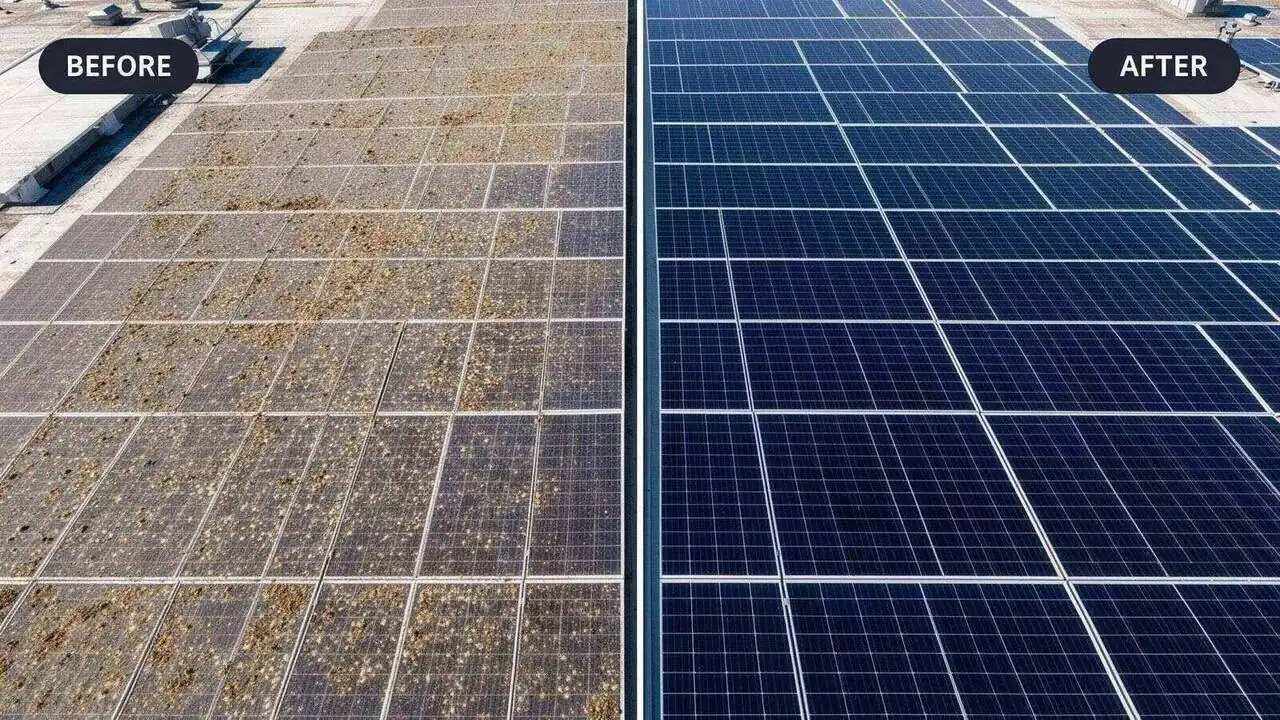
Safe cleaning technique protects both workers and the panels themselves. Improper cleaning equipment like pressure washers can void solar panel warranties and damage panels, increasing long-term costs. High-pressure water forces moisture into junction boxes, degrades frame seals, and creates hot spots that reduce panel output over time. Most manufacturer warranties explicitly prohibit pressure washing.
Thermal shock from cleaning hot panels with cold water causes micro-cracks and glass seal failure, reducing solar panel lifespan. Cleaning is recommended only in early morning or late evening when surface temperatures are stable. In South Florida, panel surface temperatures can reach extreme levels by 9 a.m. on a clear day, making early morning the only practical safe window for water application.
Safe cleaning technique checklist:
- Use soft brushes or microfiber pads. Never use abrasive scrubbers or steel wool.
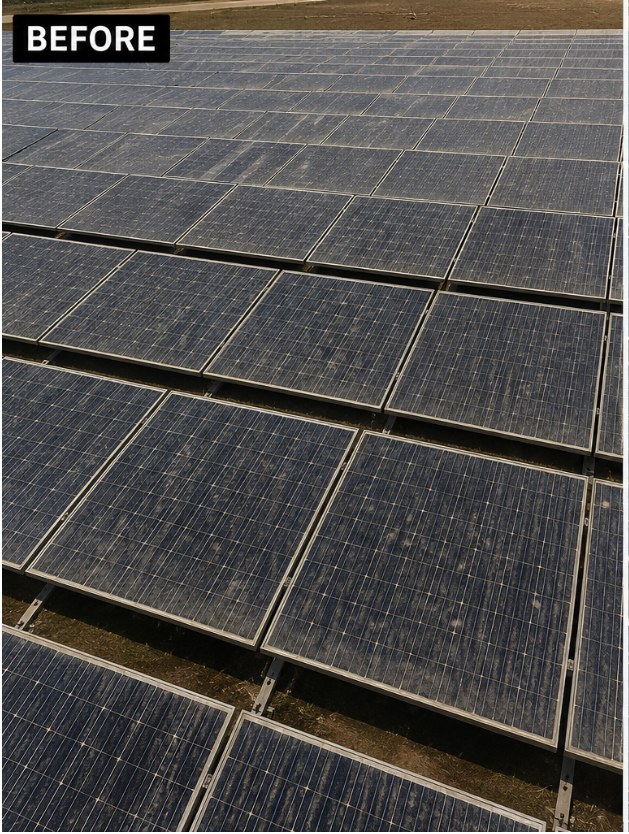
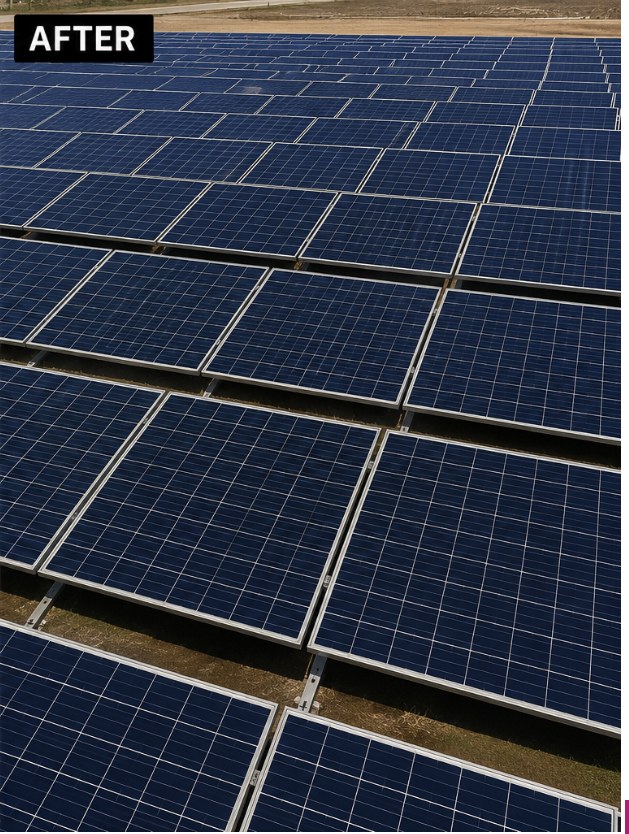
- Apply de-ionized or purified water. Tap water leaves mineral deposits that reduce output.
- Avoid all cleaning during high winds or when rain is forecast within two hours.
- Never spray water directly at panel edges, frames, or junction boxes.
- Check manufacturer guidelines for approved cleaning agents before using any detergent.
- Clean panels before 9 a.m. or after 5 p.m. to avoid thermal shock in South Florida’s climate.
Using untrained or non-specialist cleaners exposes facility managers to serious risks due to live electrical hazards and roof fall dangers. The technique matters as much as the equipment. A trained technician using a soft brush and de-ionized water causes zero panel damage. An untrained worker with a pressure washer can void a warranty and create a latent electrical fault in a single visit.
South Florida’s climate adds one more consideration. Salt air from Biscayne Bay and the Atlantic deposits chlorides on panel surfaces. Those deposits are corrosive to aluminum frames and conductive enough to create surface leakage currents. Panels in Miami Beach, Aventura, and Boca Raton coastal properties need more frequent cleaning and should always be rinsed with pure water as the final step.
Key Takeaways
Solar array cleaning safety on rooftops requires fall arrest systems, electrical lockout/tagout procedures, and ground-based or drone cleaning methods to eliminate the two primary hazards before any work begins.
| Point | Details |
|---|---|
| Fall protection is mandatory | OSHA requires fall arrest systems for any rooftop fall hazard of 4 feet or more. |
| Panels stay live after inverter shutdown | DC voltage persists on the array side; lockout/tagout both the inverter and DC disconnect. |
| Ground-based methods eliminate roof access | Telescopic poles and drone cleaning remove fall and electrical contact risks entirely. |
| Pressure washing voids warranties | Use soft brushes and de-ionized water only; clean in early morning to prevent thermal shock. |
| Training and documentation are non-negotiable | Written hazard assessments, PPE records, and electrical certifications protect workers and limit liability. |
Why I think most facility managers underestimate the electrical side of this problem
The fall hazard gets most of the attention in safety briefings, and I understand why. A worker on a sloped roof is a visible risk. But the electrical hazard is the one that kills without warning, and it is far less visible.
I have seen facility managers approve cleaning crews who had fall arrest gear but zero photovoltaic electrical training. Those crews shut down the inverter, assumed the system was safe, and applied water. The DC side was still live. They got lucky. Not every crew does.
Most insurance policies for exterior cleaning exclude live electrical work. That means if an unqualified crew causes an incident on your property, the claim gets denied. The liability lands on the facility manager who approved the work. Verifying that a contractor carries coverage specifically written for photovoltaic cleaning is not a formality. It is the difference between a covered incident and a lawsuit.
South Florida’s environment makes this more urgent, not less. The heat, the salt air, the afternoon storms, and the density of commercial solar installations across Miami-Dade and Broward counties all raise the stakes. ISCA experts stress formal training and PPE investment as fundamental for safely entering the solar cleaning trade. I agree. And I would add: verify that training is specific to PV systems, not just general electrical work.
The most practical shift I have seen is facility managers moving to drone-assisted cleaning for their high-rise and mid-rise arrays. When no one goes on the roof, the fall and electrical contact risks drop to near zero. That is not a technology preference. It is a safety outcome.
— Eliot
Vistadronecleaning’s approach to safe solar panel cleaning in South Florida
Facility managers in Miami-Dade and Broward counties who want to eliminate rooftop access risks entirely have a direct option. Vistadronecleaning operates FAA Part 107-certified pilots and tethered Lucid Bots Sherpa industrial drones to clean commercial solar arrays without any crew member accessing the roof. Every job uses a pure de-ionized water rinse, which protects panel warranties and leaves no mineral residue.

Vistadronecleaning carries $2M liability insurance and covers all of South Florida, from Coral Gables and Miami Beach to Fort Lauderdale and Boca Raton. Most commercial solar cleaning projects finish in 1–3 days at 30–60% lower cost than scaffold or lift methods. For facility managers who need a safe solar panel cleaning solution that meets OSHA fall protection standards without putting workers at elevation, Vistadronecleaning offers free quotes within 24 hours. Contact the team to schedule a site assessment for your property.
FAQ
What fall protection does OSHA require for rooftop solar cleaning?
OSHA requires fall protection systems for workers exposed to fall hazards of 4 feet or more. Roofs at or above a 4:12 pitch require a personal fall arrest system with a certified anchor point, full-body harness, and shock-absorbing lanyard.
Are solar panels still live after the inverter is turned off?
Yes. Solar panels produce DC voltage on the array side even with the inverter shut down. Workers must open the DC disconnect and verify zero voltage with a calibrated meter before applying any moisture.
Can pressure washing damage solar panels?
Pressure washing can void manufacturer warranties, force moisture into junction boxes, degrade frame seals, and create hot spots. Use soft brushes and de-ionized water only, and clean during early morning hours to avoid thermal shock.
What is the safest way to clean rooftop solar arrays without roof access?
Ground-based telescopic carbon fiber poles with pure-water filtration reach up to 30 feet and eliminate roof access for most commercial properties. Drone-assisted cleaning, as used by Vistadronecleaning, extends that capability to arrays on buildings over 200 feet tall.
What insurance should a solar panel cleaning contractor carry?
Contractors must carry liability insurance that explicitly covers live electrical work on photovoltaic systems. Standard exterior cleaning policies often exclude this coverage, and a denied claim leaves the facility manager exposed to legal liability.