High-rise window cleaning: Safe, efficient, cost-effective steps
Discover step by step commercial window cleaning techniques that ensure safety, efficiency, and cost-effectiveness for high-rises. Click to learn more!
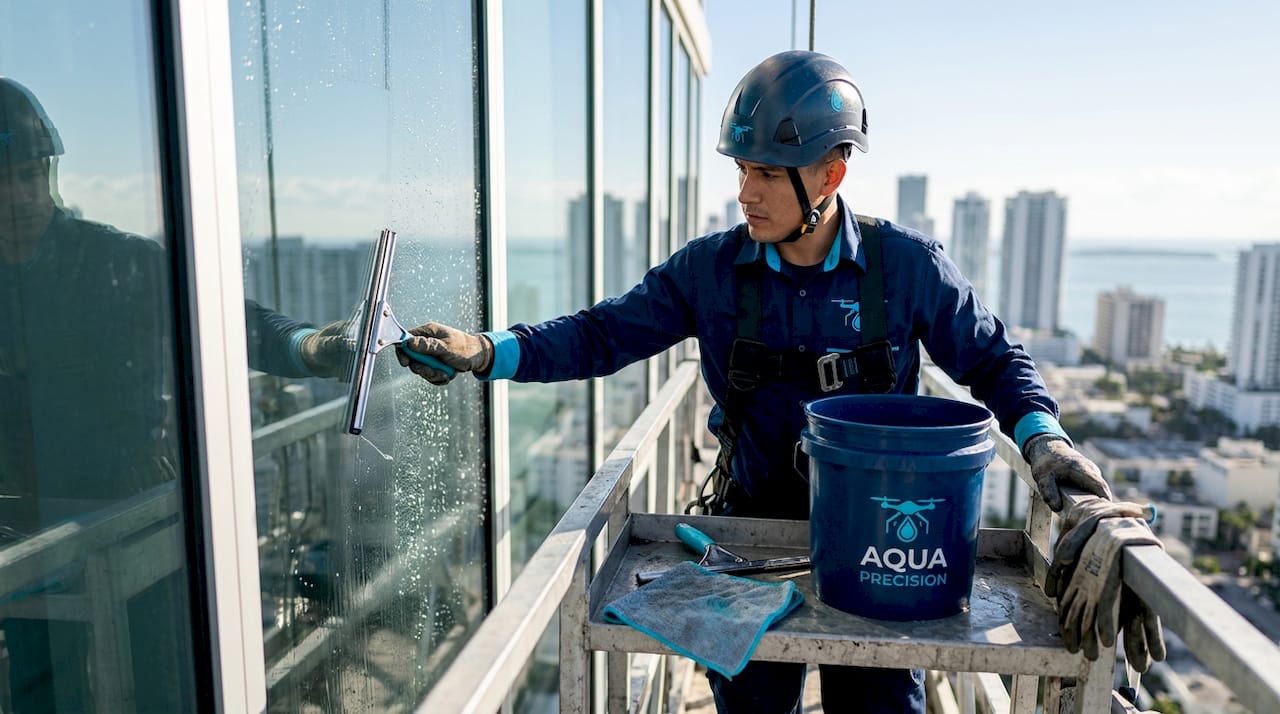
South Florida's coastal climate throws salt spray, humidity, algae, and subtropical storms at glass, leaving grimy residue faster than almost anywhere else in the country. For Miami property managers, pristine windows affect tenant satisfaction, property value, and glass integrity. Success requires balancing safety, compressed schedules, and tenant disruption while controlling costs. This guide covers every step of professional high-rise window cleaning.
Table of Contents
- What you need: Tools, materials, and safety requirements
- Inspection and planning: Setting the stage for successful cleaning
- Step-by-step cleaning process: Execution and best practices
- Common mistakes and troubleshooting tips
- Verification and maintenance scheduling: Ensuring lasting results
- Why innovative access methods outpace traditional window cleaning in Miami
- Explore smarter window cleaning solutions for South Florida properties
- Frequently asked questions
Key Takeaways
| Point | Details |
|---|---|
| Safety comes first | OSHA and IWCA standards are required and guide all preparations. |
| Choose the right access | Rope access or drones deliver better cost and minimal disruption for tall buildings. |
| Schedule to climate | Miami properties require quarterly or bi-monthly cleaning to prevent salt buildup. |
| Technique matters | Working top-to-bottom and cleaning frames first prevents streaks. |
| Innovate for efficiency | Modern drone and pure-water options streamline outcomes. |
What you need: Tools, materials, and safety requirements
High-rise commercial window cleaning is governed by OSHA fall-protection requirements and ANSI/IWCA I-14.1 standards regarding anchor systems, equipment certification, and training. Non-compliance is a legal risk that halts projects and exposes properties to liability.
Essential Equipment Checklist:
- Squeegees and scrubbers
- Water-fed pole systems with de-ionized or reverse osmosis purification
- Rope access gear: Harnesses, descenders, and rated anchor hardware
- Personal protective equipment (PPE): Helmets, gloves, and non-slip footwear
- Aerial work platforms (AWPs) for lower floors
- Industrial drones with soft-wash capability for complex geometry
- Cleaning solutions compatible with impact-resistant glazing
- Anchor inspection records
| Access method | Best for | Cost level | Safety setup time | Tenant disruption |
|---|---|---|---|---|
| Rope access | Tall buildings, tight sites | Medium | Moderate | Low |
| Scaffolding | Multi-floor, complex facades | High | High | High |
| Aerial work platform | Mid-rise, open ground access | Medium-high | Moderate | Medium |
| Water-fed pole | Up to 70 ft, ground-based | Low | Low | Very low |
| Drone cleaning | 100 to 200 ft, all facades | Low to medium | Very low | Minimal |
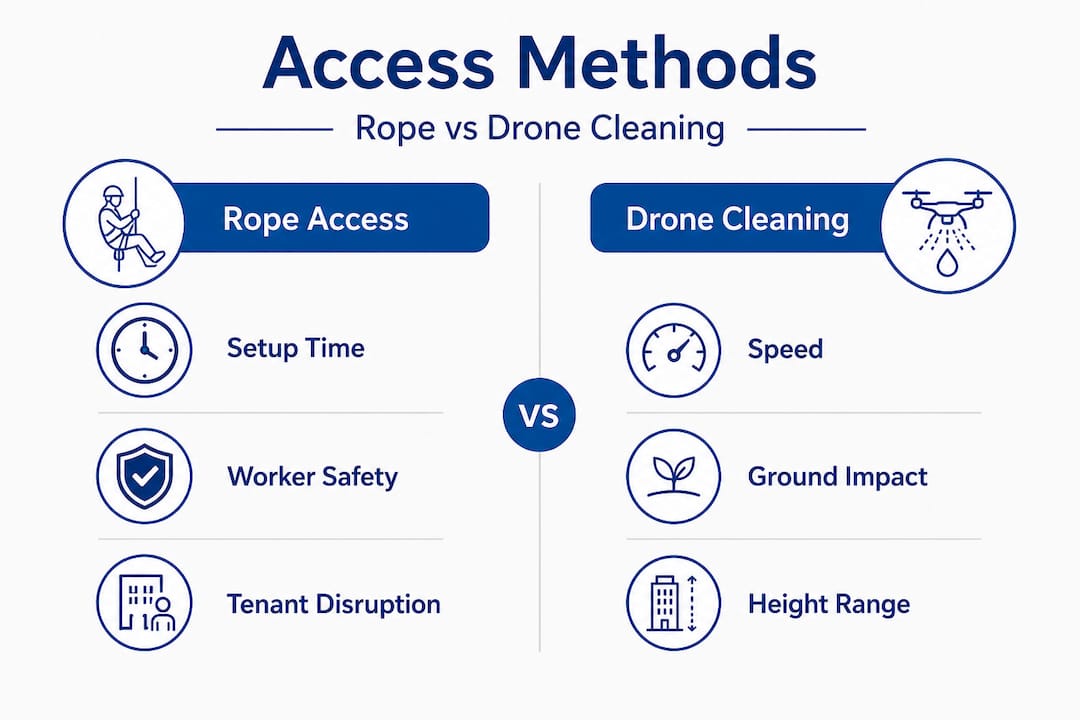
Review safe cleaning regulations before choosing an access method. Inspect every piece of gear before each job; South Florida’s humidity accelerates equipment degradation.
"Never rely on unverified anchor points. OSHA and IWCA standards are mandatory for certified high-rise operation."
The choice between rope access vs drone cleaning is critical. While rope access is the industry standard, drones eliminate worker-at-height risk and lower setup time.
Inspection and planning: Setting the stage for successful cleaning
Pre-job inspections identify hazards and prevent costly mistakes. A professional Miami high-rise inspection includes:
- Windows and glazing: Identify cracks, failed seals, or delamination.
- Frames and sills: Check for corrosion or loose caulking that allows water ingress.
- Anchor points: Verify current certification and structural integrity for rope access.
- Site perimeter: Check pedestrian traffic, HVAC units, and landscaping.
Selecting an access method depends on site conditions, not just height. For restricted sites, non-rope high-rise cleaning resolves problems that would otherwise require expensive road closure permits.
South Florida's coastal challenges like salt accumulation mean oceanfront properties need bi-monthly service to prevent permanent glass etching. Always check a 72-hour forecast; afternoon thunderstorms from May through October make mid-job stoppages expensive.
Step-by-step cleaning process: Execution and best practices
- Safety briefing: Confirm PPE, communications, and weather. Assign a ground safety coordinator.
- Setup: Rig anchor points or position drone launch zones. Do not start until systems are verified.
- Clean frames and sills first: Removing salt and biological growth from frames prevents them from running down onto clean glass.
- Apply solution: Use pH-neutral formulas for impact glass and low-E coatings.
- Scrub and rinse top-to-bottom: This ensures dirty water flows away from clean areas. Proper technique prevents streaks.
- Squeegee or purified-water rinse: Use squeegees for accessible areas and water-fed poles with de-ionized water for mid-floors. For heights above 70 feet, use high-rise glass cleaning methods like drones or rope access.
- Detail pass: Inspect for missed spots or residue at edges before moving equipment.
| Method | Effective height | Streak risk | Setup time | Worker at height |
|---|---|---|---|---|
| Traditional squeegee | Up to 4 floors | Low | Minimal | Yes |
| Water-fed pole | Up to ~70 ft | Very low | Low | Minimal |
| Rope access | Unlimited | Low | Moderate | Yes |
| Drone soft-wash | Up to 200 ft | Very low | Very low | No |
Choosing the right facade cleaning method reduces rework and annual costs.
Common mistakes and troubleshooting tips
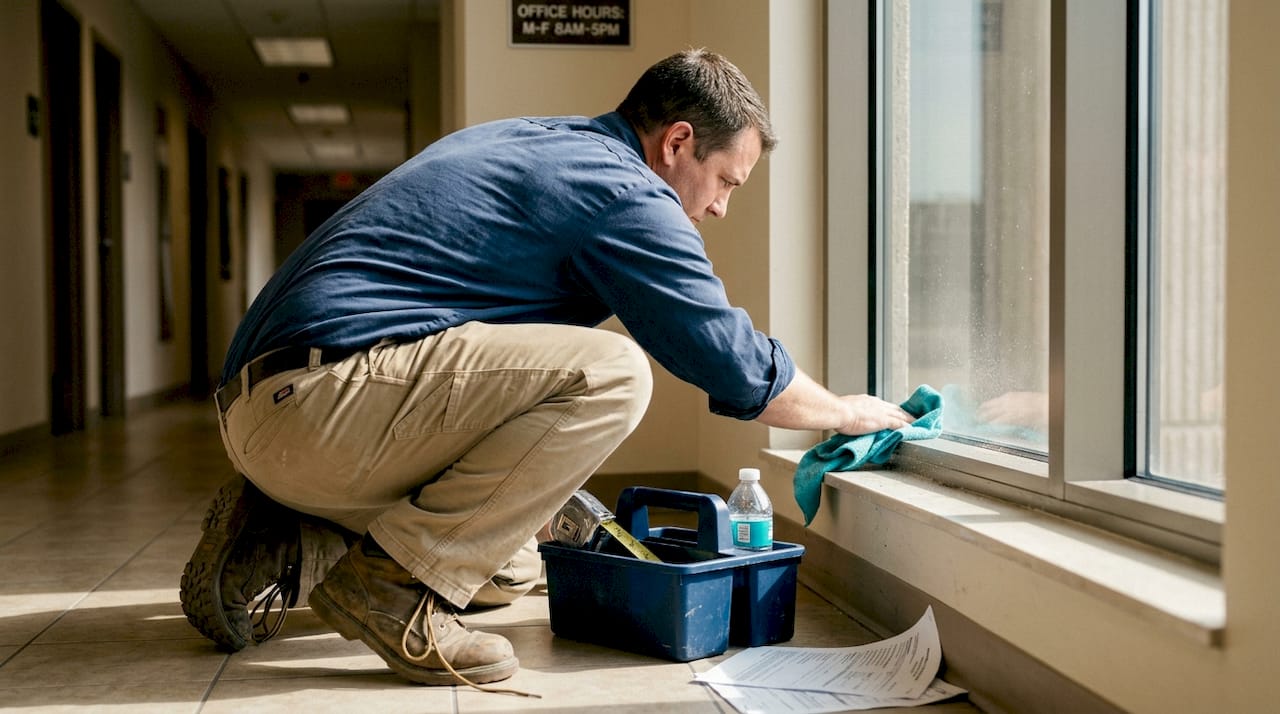
- Skipping frame prep: Drips from frames ruin clean glass.
- Using unfiltered water: Miami’s water leaves spots as it dries in the sun.
- Damaging seals: Excessive pressure or abrasive pads cause water leaks.
- Midday cleaning: High UV levels dry solution too fast, leaving residue.
- Inadequate weather planning: Humidity and storms can undo work within days.
Impact glazing and curtain walls require non-abrasive methods to protect sealants. Damaging these systems leads to water intrusion far more expensive than cleaning. For buildings with difficult access, scaffold-free cleaning eliminates many logistical problems.
Verification and maintenance scheduling: Ensuring lasting results
Post-cleaning verification should include:
- Glass inspection: Scan for streaks or mineral deposits.
- Sealant condition: Confirm all caulking and sills are intact.
- Documentation: Log anchor usage and flag hardware needing recertification.
- Photos: Before-and-after photos provide a record for insurance and owners.
Miami's climate typically requires quarterly cycles. Oceanfront buildings often need bi-monthly service. Salt accumulation and humidity effectively double the necessary frequency compared to inland properties. A formal maintenance log protects glass warranties and keeps scheduling proactive.
Why innovative access methods outpace traditional window cleaning in Miami
The main cost driver in South Florida is the access method. Scaffolding requires permits and lane closures that can cost more than the cleaning itself. In dense areas like Brickell and Downtown, these logistics are often prohibitive.
Rope access is faster and scales well but involves safety risks and liability exposure. Drone-based methods eliminate worker-at-height risk entirely. For Miami buildings exceeding 20 stories, drones remove permitting and setup complexity.
"Logistics often outweigh chemical costs. Choosing a smarter access method lowers the total project cost."
Explore smarter window cleaning solutions for South Florida properties
Managing a high-rise cleaning program requires coordinating safety, climate cycles, and logistics.
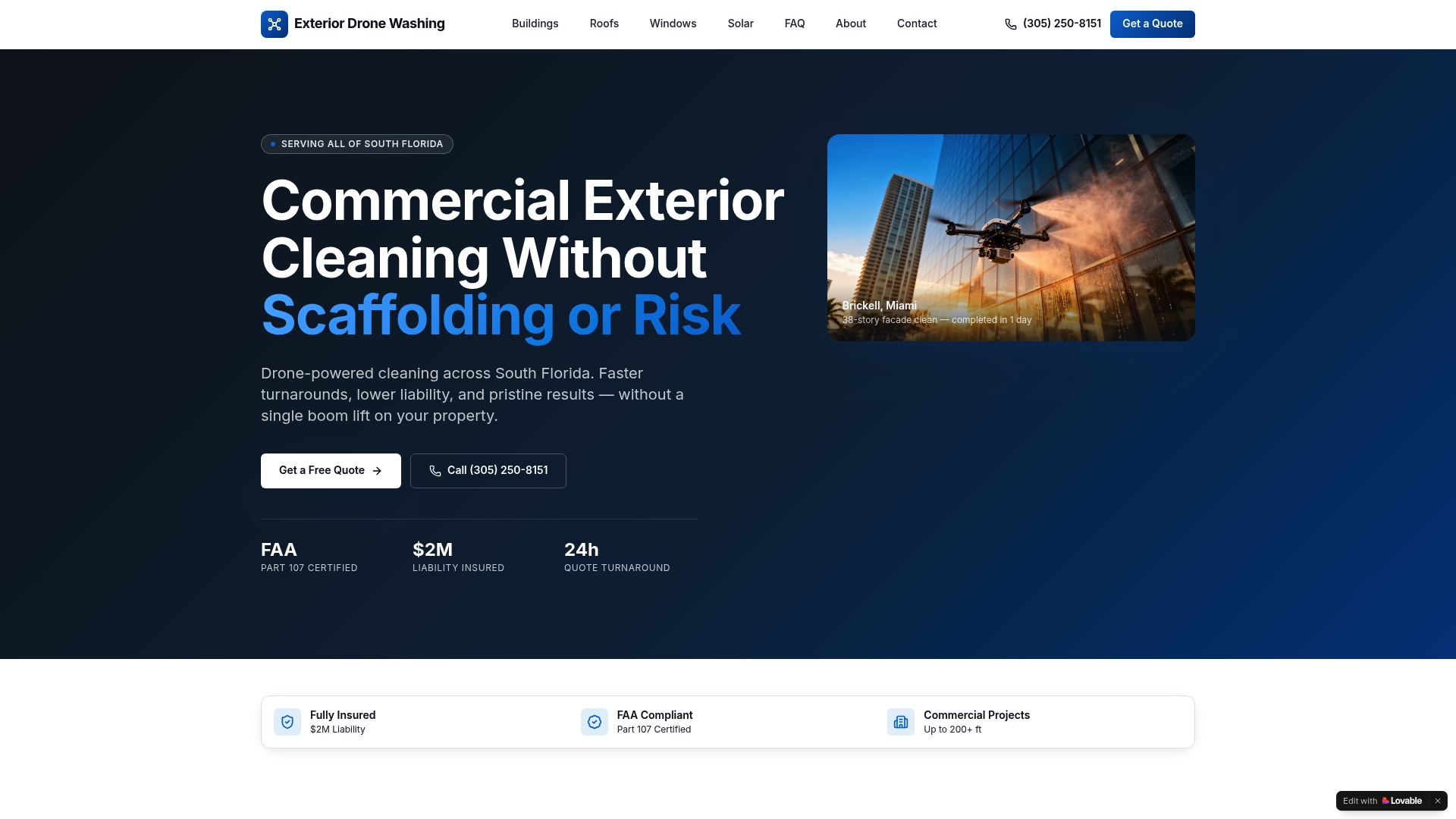
At Exterior Drone Washing, our FAA-registered drones handle buildings up to 200 feet without scaffolding or lane closures. Whether you need Miami drone cleaning, pricing details, or a rope access vs drone comparison, we provide the field experience to help you protect your property.
Frequently asked questions
How often should high-rise commercial windows be cleaned in Miami?
Quarterly is standard, though oceanfront properties often require bi-monthly service to prevent mineral etching from salt spray.
What are the main safety standards for high-rise window cleaning?
OSHA fall protection rules and ANSI/IWCA I-14.1 govern equipment certification, anchor systems, and training requirements.
How do water-fed poles compare to traditional squeegee methods?
Water-fed poles use purified water for a spot-free rinse on hard-to-reach windows, while squeegees are best at lower heights and for interior glass.
What's the best way to reduce tenant disruption during window cleaning?
Drones and rope access minimize ground setup and speed up the process compared to scaffolding.
What are the most common mistakes in commercial window cleaning?
Ignoring frames before cleaning glass and using unfiltered water are the most common causes of streaks and mineral spotting.