What is drone facade cleaning and how is it different from facade washing?+
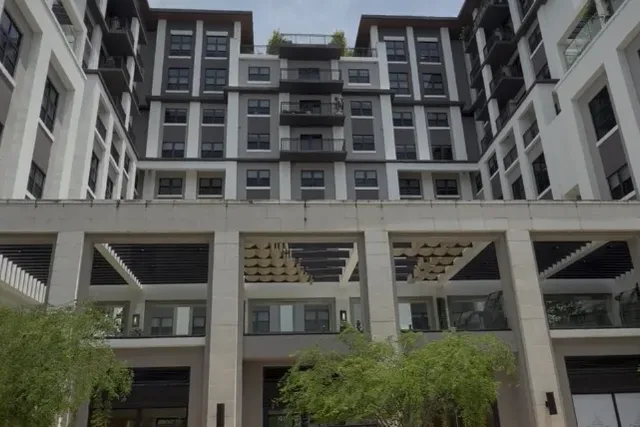
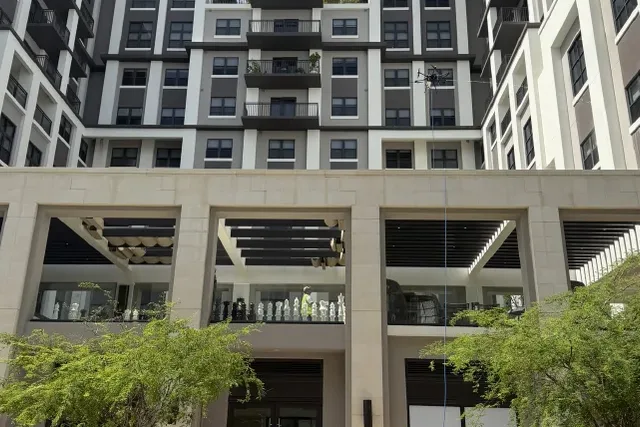
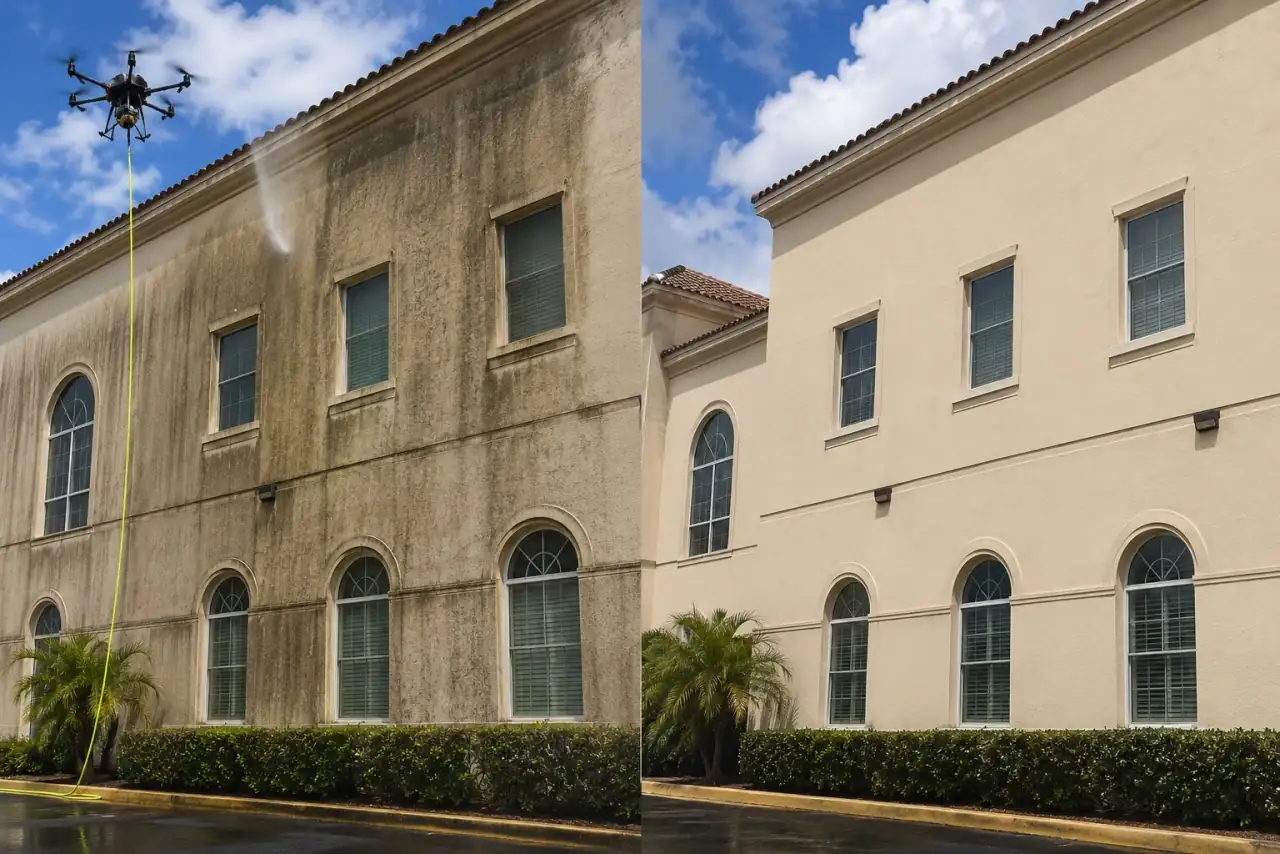
Drone facade cleaning uses a tethered industrial drone, flown by an FAA Part 107 commercial pilot, to apply biodegradable soft-wash detergent and a de-ionized pure-water rinse across the entire building envelope. The pilot, pump, and water tank stay on the ground; the drone reaches every elevation, parapet, sunshade, fin, louver, and recessed soffit without a single anchor, lift, or scaffold leg. Traditional 'facade washing' relies on rope access, swing stages, or boom lifts to put crew at height: drone facade cleaning eliminates the crew-at-height variable entirely, and finishes in 1–3 days instead of weeks.
Which facade substrates can a drone clean in Miami?+
Glass curtain walls (clear, low-E, ceramic-frit, tinted, mirrored, laminated, low-iron), painted stucco, EIFS / synthetic stucco, GFRC, precast and cast-in-place concrete, brick and mortar, ACM (aluminum composite metal panel), anodized aluminum, painted steel, porcelain rainscreens, terra cotta, coral stone, and architectural signage. Chemistry and dwell time are matched per substrate. What cleans salt haze off mirrored glass is not the same as what lifts mildew streaks off EIFS, and precast efflorescence gets a calcium-safe rinse.
How much does drone facade and building cleaning cost in Miami?+
Commercial facades run $0.12–$0.25 per sq ft, fixed price after a free site survey with no minimum charge, and bigger jobs get lower rates, $0.12–$0.20 at 40,000 sq ft and up. Totals follow facade area: $1,200–$2,375 at 10,000 sq ft, $4,800–$8,000 at 40,000 sq ft, $10,364–$20,000 at 100,000 sq ft. That is typically 30–60% less than scaffolding or boom-lift work on the same building, and well below rope access; the savings come from skipping rigging, permits, lift rental, and certified-anchor crew time.
How long does drone facade cleaning take vs scaffolding?+
Most facades finish in 1–3 days, and larger towers take a few days longer. Scaffolding and swing-stage crews typically need weeks, much of it spent assembling the rigging before any cleaning begins.
Is drone facade cleaning safe for glass curtain walls and EIFS?+
Yes. Low-pressure soft-wash plus 0-TDS pure-water rinse stays well below the impingement threshold for curtain-wall gasket beads, sealant joints, EIFS finish coats, and ACM panel seams. It is safe for low-E, ceramic-frit, tinted, mirrored, and laminated glass, and safer than ground pressure washing for EIFS, which high PSI cracks and delaminates. There is no impact force, no chemical strippers, and no driving water behind cladding: the two biggest risks of pressure washing on glass and EIFS facades are gasket failure and moisture intrusion, and soft-wash eliminates both.
Does drone facade cleaning damage architectural sealants, gaskets, or paint coatings?+
No. Soft-wash chemistry plus pure-water rinse is rated safe for silicone and polyurethane sealants, EPDM and neoprene gaskets, fluoropolymer (Kynar) coil coatings, anodized and powder-coated aluminum, and elastomeric facade paints. There is no chemical attack on coatings and no mechanical erosion of joint sealants, the same workflow used on Class A Brickell glass towers is the workflow on Boca Raton coral-stone HOA buildings.
Can a drone reach louvers, sunshades, fins, parapets, and recessed soffits?+
Yes, and this is where drones materially outperform lifts and rope access. The drone holds position at any elevation and angle, so vertical fins, horizontal sunshades, decorative parapets, illuminated cabinet signs, marquee canopies, porte-cochère soffits, recessed balcony walls, and architectural louvers all get reached without lift extension or rope rigging. These are the surfaces traditional methods skip or undercharge for, and the surfaces where dirt accumulates first.
Do you need to close the sidewalk, lobby, parking, or porte-cochère?+
Almost never. The ground crew sets up in a single parking space or service drive. Spotters maintain a brief perimeter cone zone directly under the active flight only. Pedestrian access, lobby operations, valet, and porte-cochère drop-offs continue normally throughout the project, a critical difference from scaffolding (sidewalk shed for weeks) or boom lifts (closed lane for days).
Can you clean an occupied building during business hours?+
Yes. There's no swing stage outside windows, no scaffolding in the lobby, no boom lift in the porte-cochère, and no crew over the sidewalk. Tenants get a 48-hour notice, the drone flies one elevation at a time, and occupancy continues. Pre-dawn or evening flights are available for offices and hotels.
Are permits required for drone facade cleaning in Miami-Dade, Broward, or Palm Beach?+
Most South Florida municipalities do not require special permits for FAA Part 107 operations on private commercial property. Scaffolding and swing stages routinely require building department permits, ROW (right-of-way) closures, and pedestrian-canopy engineering. Drone facade cleaning skips all three. We handle building-management approvals, certificates of insurance, and FAA LAANC airspace authorization before mobilization.
Do you need FAA authorization to fly in Miami's controlled airspace?+
Yes. Most of urban Miami sits in controlled airspace near MIA. We file LAANC airspace authorization with the FAA before mobilization and carry the certificate on every job site. Our pilots operate under 14 CFR Part 107, with authorizations filed for controlled airspace near MIA, FLL, OPF, TMB, and PBI.
How often should South Florida facades be cleaned?+
The interval is set at the site survey. Oceanfront properties from Brickell to Hallandale Beach need cleaning most often (salt haze and tropical mildew accumulate fast); coastal-but-not-oceanfront Edgewater, Wynwood, Aventura, and Coconut Grove less often; inland Miami-Dade, Broward, and Palm Beach Class A office and retail least often. Salt-air corrosion of metal cladding and EIFS staining both accelerate when cycles slip, and most facade warranties require documented maintenance, drone cleaning provides 4K aerial documentation for the warranty file.
What insurance do you carry, and how fast can you issue a COI?+
$2M commercial general liability plus dedicated UAS (drone) aviation liability. Certificates of insurance naming the building owner, property manager, and HOA or condo board are issued before mobilization, typically within 24 hours of contract, same-day for repeat Miami property management clients.
Do you provide before-and-after documentation suitable for boards and insurance carriers?+
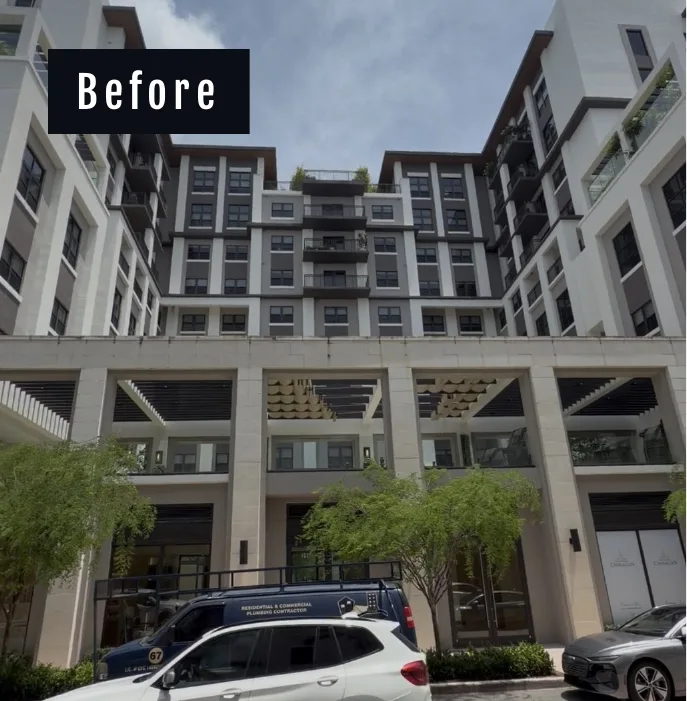
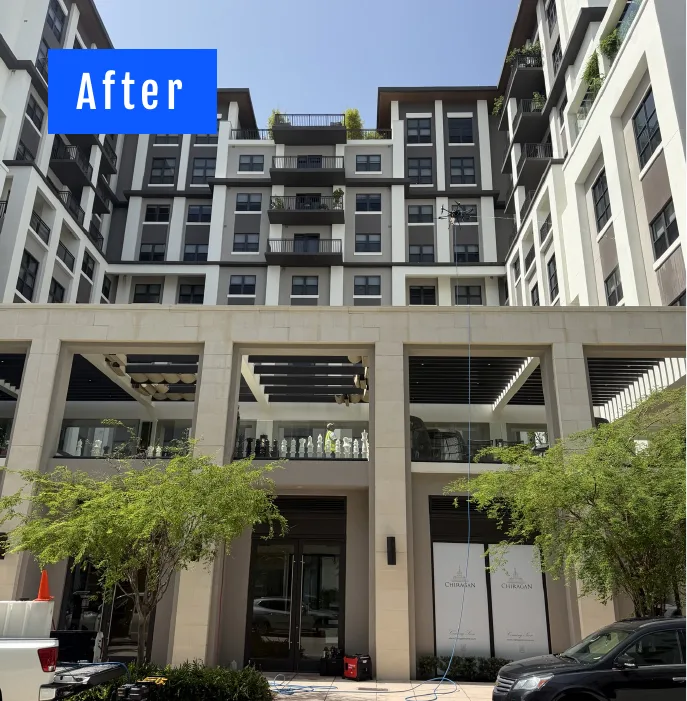
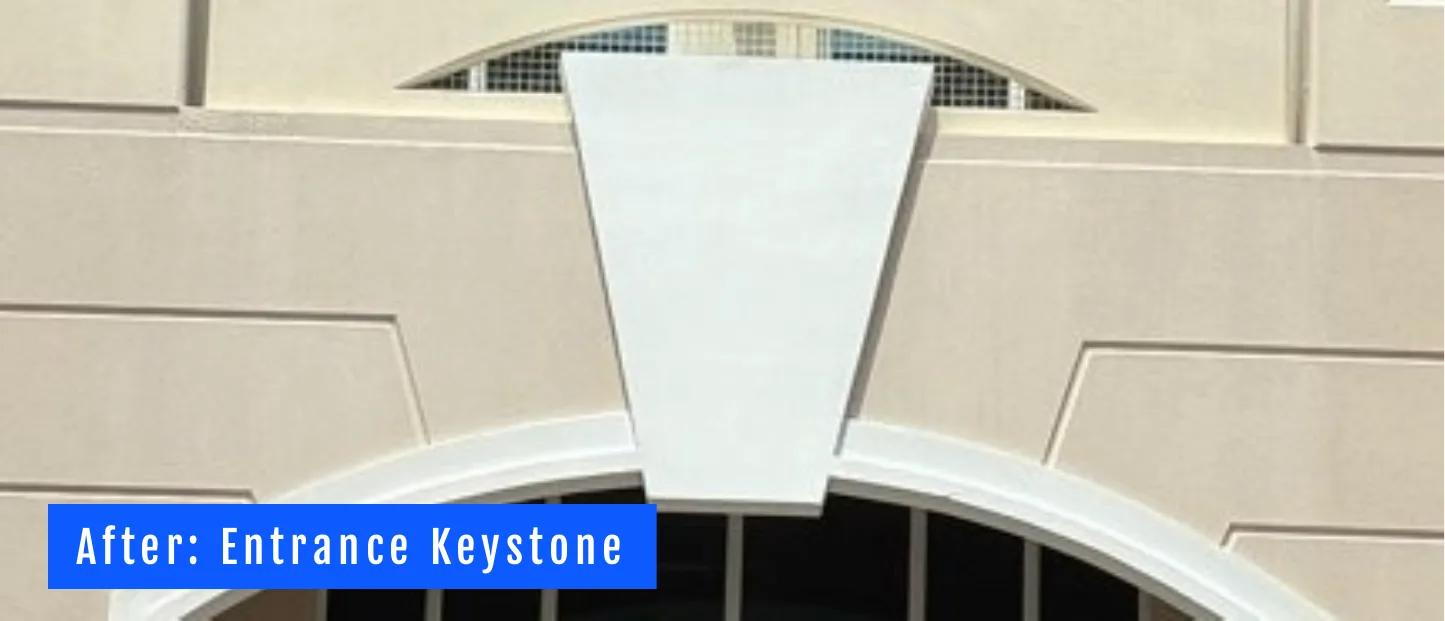
Yes. Every project includes 4K geotagged aerial footage and elevation-by-elevation photo documentation, delivered to the property manager within 48 hours of completion. Condo boards, HOAs, asset managers, facade-warranty carriers, and commercial GL insurers routinely request and accept this documentation as verification of completed maintenance, and most Miami property managers attach it to the board package or annual condition report.