
What to Budget for a Condo Tower Facade Maintenance Project
Learn how to budget effectively for condo tower facade maintenance, including costs for inspections, repairs, and contingencies.
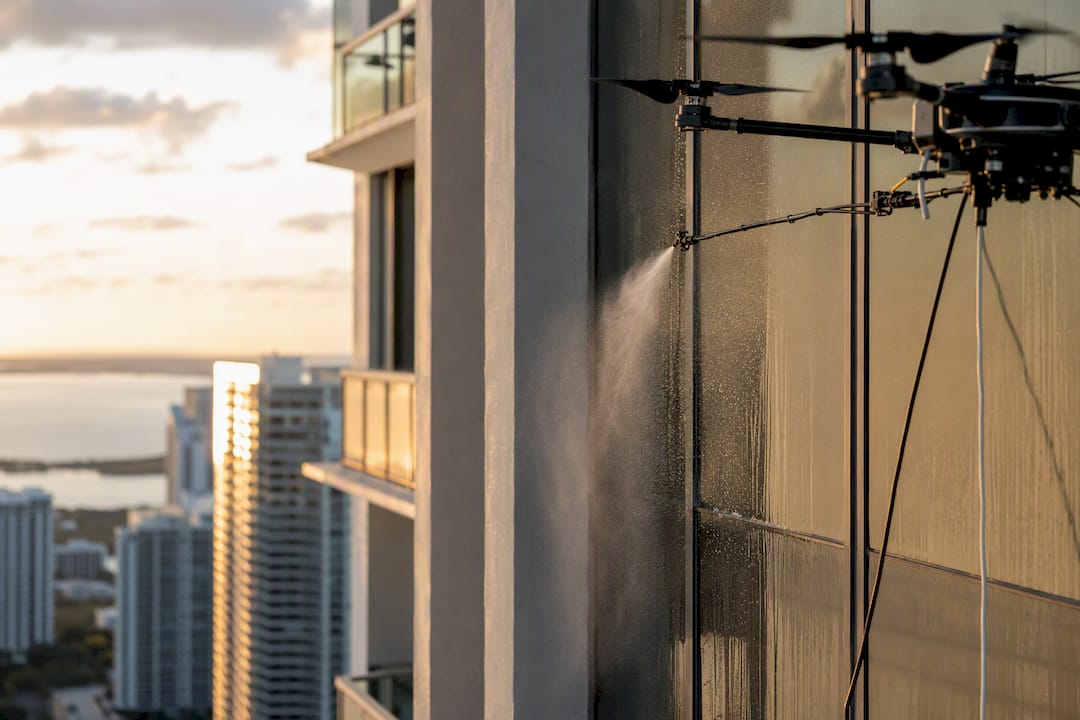
Plan on $8 to $35 per square foot of exterior wall for a full facade maintenance cycle on a South Florida condo tower, depending on substrate condition, height, and repair scope. For a 100-unit high-rise, that often lands between $400,000 and $1.2 million once you factor in engineering, contractor work, and contingency. Your budget should include multiple line items such as a Structural Integrity Reserve Study (SIRS) or engineer report, contractor scope and unit pricing, access or scaffolding costs, contingency for hidden damage, and permits or insurance riders. The first move: schedule a SIRS visual inspection or a drone-enabled facade survey within the next 30 to 60 days, before you write a single dollar figure into next year’s budget.
- Engineer/SIRS inspection and reporting fees
- Contractor base scope and unit-price allowances
- Access method (scaffolding, swing stage, or drone survey)
- Contingency reserve for unknowns
- Permitting, traffic control, and insurance riders
Pro Tip: Small condos typically pay $8,000 to $12,000 for a SIRS with drone visual assessment, mid-rises (6 to 12 stories) run $12,000 to $20,000, and towers 13 stories and up run $20,000 to $35,000. That fee is a fraction of the facade repair budget it protects.
Key Takeaways
A condo tower facade maintenance budget succeeds when boards sequence the SIRS, contractor walkdown, and owner vote in that order, with contingency sized to the project’s actual risk profile.
| Point | Details |
|---|---|
| Start with the SIRS | Order a licensed engineer’s inspection before pricing any contractor scope. |
| Budget by square foot | Plan $0.20 to $15+ per square foot depending on whether work is cosmetic or structural. |
| Size contingency to risk | Use about 10% for cosmetic work and 15 to 20% for mid-risk repair budgets. |
| Get quotes within 90 days | Contractor walkdowns and firm proposals should follow the SIRS quickly, before conditions shift. |
| Consider drone surveys | Vista Drone Cleaning’s drone-enabled inspection and cleaning cuts access and mobilization costs 30 to 60% versus scaffolding. |
Table of Contents
- Condo Tower Facade Maintenance Budget: Cost Drivers and Quick Ranges
- How Do You Estimate Facade Repair Costs Accurately?
- What Are Your Funding Options for Facade Repairs?
- What Commonly Blows Up a Facade Repair Budget?
- How Preventive Maintenance and Drone Cleaning Lower Lifetime Costs
- How Do You Present the Budget to Owners?
- Facade Maintenance Budget Line Items to Include
- Get a Facade Survey Before You Finalize Next Year’s Numbers
- Sources
- FAQ
Condo Tower Facade Maintenance Budget: Cost Drivers and Quick Ranges
Eight variables drive most of the swing in a condo tower facade maintenance budget: substrate type (concrete, stucco, EIFS, or metal panel), building height, percent of visible deterioration, history of water intrusion, balcony and railing condition, window perimeter sealant age, joint sealant failure rate, and the access method a contractor needs to reach the work.
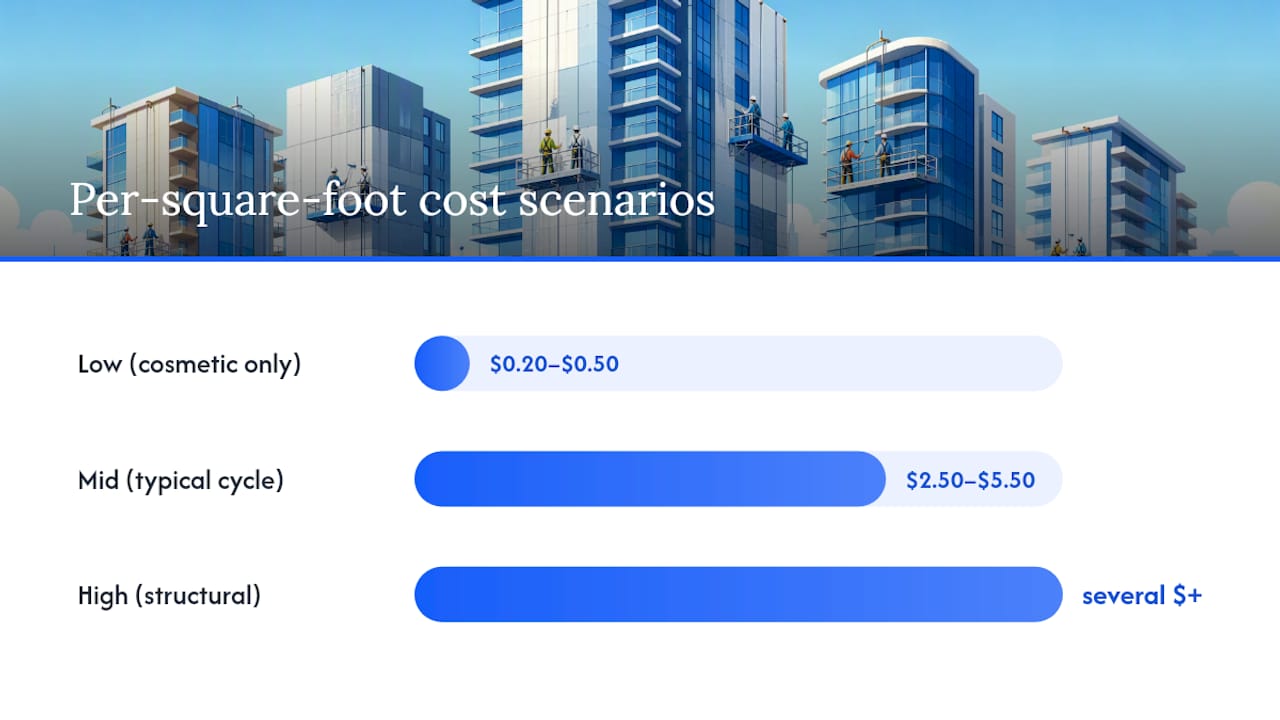
Waterproofing and coating work in Florida typically runs from $0.12 to $0.25 per square foot for pressure washing up to $2.50 to $5.50 per square foot for elastomeric coating systems with crack repair. A mid-rise with tens of thousands of square feet of exterior wall can land in the low hundreds of thousands of dollars for a full envelope cycle, depending on how much structural repair hides behind the paint.
| Scenario | Per Square Foot | What’s Included |
|---|---|---|
| Low (cosmetic only) | $0.12 to $0.25 | Soft-wash, minor caulk, spot coating |
| Mid (typical cycle) | a few dollars | Elastomeric coating, sealant replacement, minor spalling repair |
| High (structural) | several dollars and up | Concrete restoration, rebar repair, balcony work, full recoat |
Pro Tip: To convert SIRS component costs into per-unit math, take the total replacement cost for each facade component, divide by remaining useful life in years, then divide by unit count. A $600,000 recoat with a 15-year cycle across 100 units comes out to $400 per unit per year, before contingency.
How Do You Estimate Facade Repair Costs Accurately?
An accurate condo renovation budget for the facade never starts with a contractor quote. It starts with an engineer’s eyes on the building, then narrows step by step.
- Order a visual condition survey. Use a drone-enabled facade survey or traditional ground-and-scaffold walkdown to document every elevation. Drone data alone boosts inspection coverage from roughly 10 to 15% with ground-level checks to 90 to 100%, which catches defects a sidewalk inspection misses.
- Commission the SIRS. Florida law requires a licensed engineer or architect to perform the structural integrity reserve study every 10 years for buildings three stories or taller, listing remaining useful life and replacement cost for each component.
- Schedule a contractor walkdown. A SIRS is a planning tool, not a final quote: engineers can’t physically inspect every elevation in the level of detail a bidding contractor needs.
- Collect scoped proposals with mock-ups. Ask contractors to test sample repair areas before locking in unit pricing.
What to require in every proposal:
- Unit prices per square foot or linear foot, not just a lump sum
- Allowances clearly separated from firm scope
- A phased pricing option if the board wants to spread work over multiple years
- A written change-order protocol
- Warranty terms in writing, not verbal assurance
Pro Tip: Book contractor walkdowns within 60 to 90 days of receiving the SIRS report. Waiting longer means engineers and contractors are working off stale conditions, especially after a wet South Florida summer.
What Are Your Funding Options for Facade Repairs?
Most South Florida boards fund tower facade work through some combination of reserves, special assessments, and financing. Reserve funding driven by SIRS numbers is the cleanest path when the association planned ahead, but few buildings started early enough to avoid a hybrid approach.
| Funding Route | Best For | Watch Out For |
|---|---|---|
| Reserve draw | Boards with fully funded SIRS reserves | Rarely covers 100% of a large structural scope |
| Special assessment | Filling a funding gap fast | Owner pushback, hardship cases |
| Loan or line of credit | Spreading cost over time without draining reserves | Interest cost, lender covenants |
| Phased/pooled funding | Multi-year projects, smoother cash flow | Requires longer planning horizon |
Boards should watch Florida’s budget-change voting triggers closely. A board-approved special assessment or a reserve waiver change can require an owner vote depending on the percentage increase involved, so confirm your specific threshold with association counsel before finalizing numbers. Many associations soften the blow by combining a short-term loan with pooled reserve accounting, which lowers year-one contributions while still meeting long-term funding obligations.
What Commonly Blows Up a Facade Repair Budget?
The gap between an engineer’s estimate and the final invoice almost always traces back to five things: missing brick ties or wall anchors, hidden rebar corrosion under a coating that looked fine from the ground, water intrusion behind cladding that wasn’t visible until demolition started, sealant failure at window perimeters, and unplanned balcony deck repairs discovered mid-project.
A pattern shows up repeatedly across South Florida towers: a contractor opens up what looked like a minor spalling patch and finds corroded rebar running the length of an elevation. What was scoped as a $40,000 repair becomes an $85,000 change order because nobody could see the steel until the concrete came off.
Pre-bid checks that catch this before it hits your budget:
- Require the SIRS to flag any area with visible rust staining or cracking along rebar lines
- Ask contractors for a probe or sounding survey on suspect sections before finalizing price
- Confirm whether balcony railings and decks were inspected as part of the same scope
- Check sealant age against manufacturer lifespan, not just visible condition
How Preventive Maintenance and Drone Cleaning Lower Lifetime Costs
Boards that fund exterior maintenance proactively avoid the much larger bills that come with emergency structural repairs triggered by neglected concrete spalling or salt-air corrosion. Regular soft-wash cleaning, sealant lifecycle tracking, seasonal inspections, and balcony deck coatings all slow deterioration between full facade cycles.
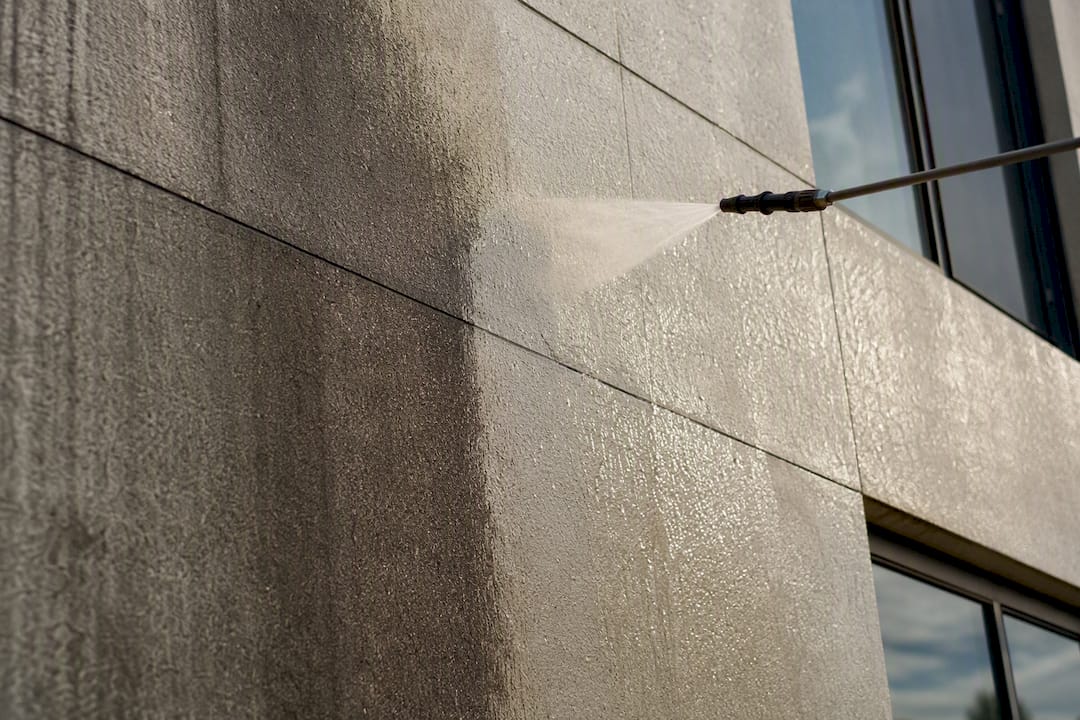
Access method matters just as much as the maintenance schedule itself. Traditional scaffold or rope-access setups require permits, road closures, and multi-day mobilization before a single wall gets touched. Drone-enabled inspection and cleaning skips that entirely: crews stay on the ground, there’s no rigging to permit, and most projects finish in one to three days.

Because mobilization and access are often the biggest hidden cost in a facade scope, drone-enabled cleaning and survey work commonly runs 30 to 60% lower than scaffold or lift-based methods for comparable square footage.
Vista Drone Cleaning operates throughout Miami-Dade, Broward, and Palm Beach counties with FAA Part 107-certified pilots and tethered industrial drones capable of reaching towers up to 200 feet tall. Every project carries $2 million liability insurance, and crews document conditions with 4K before-and-after imagery that boards can hand straight to their engineer or contractor.
Pro Tip: A drone facade survey before your SIRS renewal gives your engineer photo documentation of every elevation, which often shortens the on-site inspection time and sharpens the resulting cost estimate.
How Do You Present the Budget to Owners?
Break the SIRS into line items instead of a single lump sum. Owners understand and accept reserve increases faster when they can see exactly which component drives which cost, rather than one intimidating total.
For town halls and ballot packets, show:
- Before/after photos or drone imagery documenting the deterioration
- A phased schedule with dollar amounts attached to each phase
- Per-unit dollar impact, not just the building-wide total
- The funding source for each phase (reserve, assessment, loan)
Time your presentation around the annual budget meeting when possible. Reserve major structural work for a dedicated special meeting or ballot rather than burying it in a routine annual vote.
Facade Maintenance Budget Line Items to Include
Your budget workbook or reserve schedule should list: SIRS/engineer fees, drone survey and photo documentation, contractor mock-ups, contractor base scope, unit-price allowances per square foot or linear foot, access and mobilization, traffic control and permitting, and a warranty/contingency line.
| Building Profile | Total Project Range | Per-Unit Range |
|---|---|---|
| 100-unit tower, mid-risk recoat | $400,000 to $1,200,000 | $400 to $700 |
| 100-unit tower, structural repair | $400,000 to $1,200,000 | $8,000 to $12,000 |
A board member’s take on sequencing
Get the SIRS locked in first, then the contractor walkdown, then talk to owners. Skip a step and you’re presenting numbers you’ll have to walk back. In South Florida, target spring for mobilization, before hurricane season complicates scheduling and access.
Get a Facade Survey Before You Finalize Next Year’s Numbers
Vista Drone Cleaning gives boards a way to document facade condition and shrink the access line item before a single scaffold permit gets filed.

That matters most in two moments: early in your budgeting process, when your engineer needs full-elevation photo documentation before writing the SIRS, and later, when you need clean before/after imagery to show owners exactly what their reserve dollars bought. Most projects wrap in one to three days, and every job carries $2 million liability insurance.
If your board is heading into a SIRS renewal or planning a facade cycle anywhere in Miami-Dade, Broward, or Palm Beach counties, request a free drone survey quote and expect a proposal back within 24 hours.
Sources
- Aerially
- SIRS waterproofing: A Florida condo board guide (SWPFL)
- How to set condo maintenance fees (ReservesPro)
- Structural integrity reserve studies from the inside out (FCAP Group)
This article is general information, not a substitute for advice from a qualified financial advisor. Consult a qualified financial professional about your own circumstances before acting on anything here.
FAQ
What happens after 50 years living in a condominium?
Florida’s structural integrity reserve study requirements target buildings three or more habitable stories regardless of age, but older towers typically show more concrete spalling and corrosion, which raises facade repair costs and makes an early SIRS more urgent.
Is $500 a month HOA high?
It depends on what the fee funds. A $500 monthly HOA fee that includes full reserve funding for a SIRS-driven facade cycle, insurance, and amenities is often reasonable for a high-rise, while the same fee with underfunded reserves can signal a special assessment is coming.
Is $300 a good budget for monthly house maintenance?
For a single-family home, a general maintenance figure varies depending on many factors, but condo towers need separate, dedicated facade reserve funding built from SIRS component costs rather than a flat household maintenance number.
How much does it cost to maintain a 2,000 square foot house?
Can a drone survey replace the SIRS engineer inspection?
No. A drone survey documents facade condition and improves inspection coverage, but Florida law requires the SIRS itself to be performed and certified by a licensed engineer or architect.