
Shopping Center Facade Maintenance Checklist for Property Managers
Discover essential elements of a shopping center facade maintenance checklist. Enhance safety, protect asset value, and keep tenants satisfied.
TL; DR:
- Proper facade maintenance saves property managers from costly repairs and preserves building value in South Florida. It involves regular inspections, material-specific checks, sealant evaluations, cleaning, and detailed digital documentation. Using drone cleaning and proactive records management improves efficiency and reduces disruption for shopping centers.
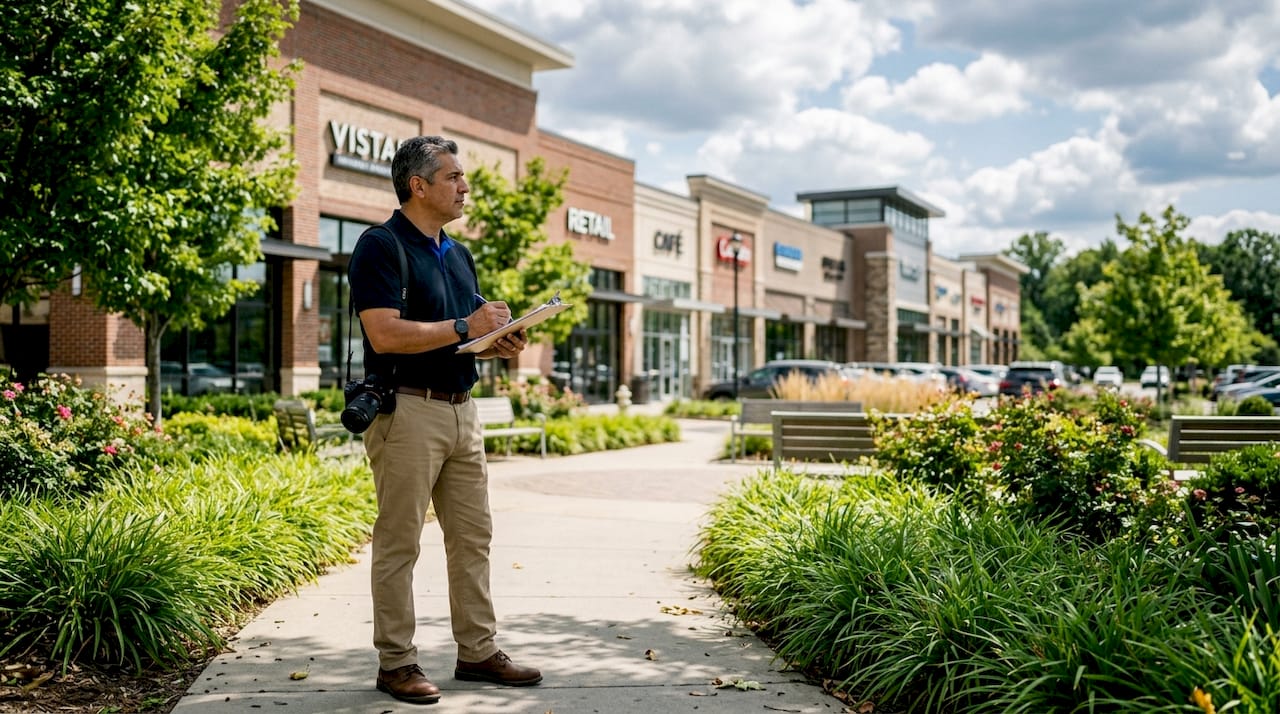
A shopping center facade maintenance checklist is a structured set of inspections, cleaning tasks, and repair actions that property managers follow to preserve building exteriors, maintain safety, and protect long-term asset value. In South Florida, where UV radiation, salt spray, and hurricane-force winds accelerate facade aging, a disciplined checklist is not optional. Routine facade inspections prevent minor surface issues from becoming six-figure restoration projects. The industry term for this practice is facade condition assessment, and it covers everything from stucco cracks to sealant failure to post-storm structural review. Property managers who follow a consistent program keep tenants satisfied, pass code inspections, and protect the center’s market value.
What does a shopping center facade maintenance checklist include?
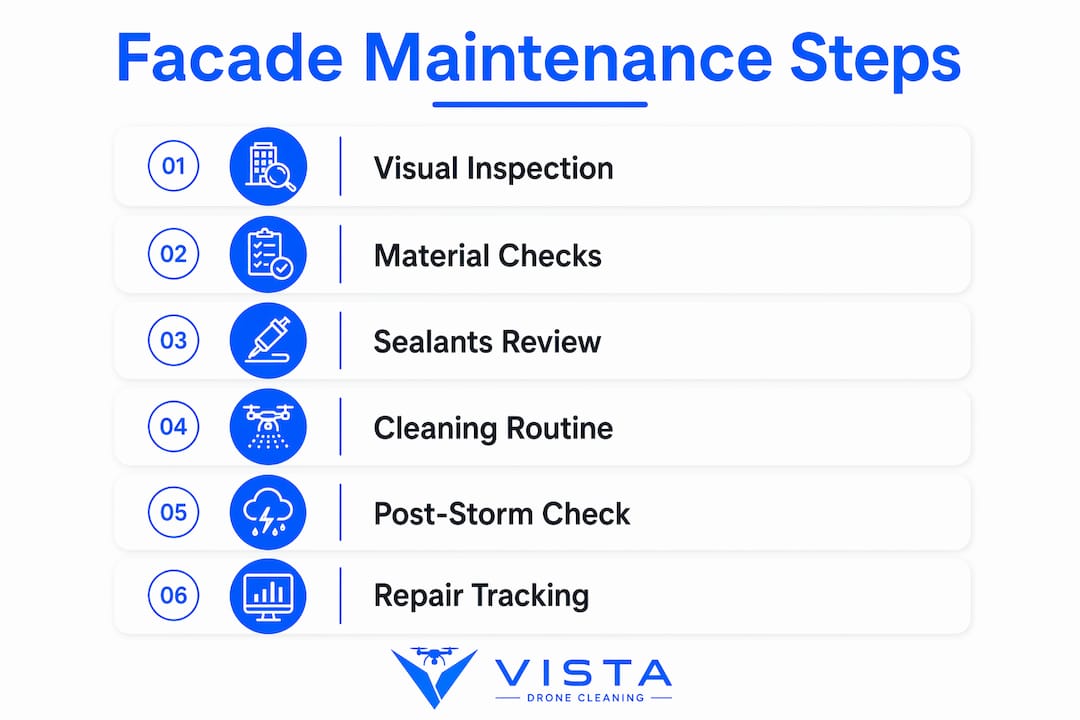
A complete facade maintenance checklist covers six core categories: visual inspection, material-specific assessment, sealant and flashing review, cleaning, paint and finish maintenance, and documentation. Each category targets a different failure mode, and skipping any one of them creates gaps that compound over time.
Visual facade inspection
Start every inspection cycle with a full perimeter walkthrough. Look for cracks, staining, peeling coatings, displaced cladding panels, and efflorescence (the white mineral deposits that signal water infiltration). Document every defect with geotagged photos so you can track whether conditions are stable or worsening. Buildings over six stories require a mandatory 5-year facade inspection cycle by qualified professionals, with annual visual inspections recommended for all other structures. Annual walkthroughs catch the early-stage problems that are cheap to fix.

Material-specific checks
South Florida shopping centers commonly use EIFS (Exterior Insulation and Finish Systems), stucco, metal panels, and glass curtain walls. Each material fails differently. EIFS and stucco are vulnerable to impact cracks and moisture intrusion. Metal panels corrode at fastener points from salt air. Glass develops hard water mineral buildup that etches the surface if left untreated. Your checklist must include material-specific criteria, not a generic “check for damage” line.
Sealants, caulking, and flashing
Sealant failure is the leading entry point for water damage in commercial facades. Inspect all expansion joints, window perimeters, and roof-to-wall transitions at least twice per year. In South Florida’s heat, sealants degrade faster than manufacturer ratings suggest. Replace any caulking that shows cracking, shrinkage, or adhesion loss before the next rainy season.
Cleaning and finish maintenance
Soft washing and drone cleaning extend facade lifespan while minimizing retail disruption. Your cleaning checklist should include facade soft washing, awning scrubbing, signage cleaning, and canopy underside inspection. A structured touch-up paint program with standardized color specs prevents mismatched patchwork and reduces full repaint costs. Keep a paint inventory log with manufacturer codes for every facade zone.
Pro Tip: Photograph every facade zone from the same angle and distance at each inspection cycle. Side-by-side comparison photos reveal slow-developing problems, like hairline crack growth, that a single walkthrough will miss.
How to implement a regular facade cleaning routine in South Florida
Scheduling facade cleaning for a South Florida shopping center requires balancing weather windows, retail traffic patterns, and material-specific needs. The following sequence works for most open-air plazas and strip centers in Miami-Dade and Broward counties.
-
Schedule quarterly facade assessments. South Florida’s climate accelerates facade aging due to UV radiation and salt spray. Quarterly walkthroughs catch seasonal damage before it compounds. High-traffic anchor storefronts may need monthly spot checks.
-
Choose eco-friendly cleaning methods. Biodegradable, low-pressure soft washing protects EIFS and stucco while meeting South Florida’s environmental standards. Eco-friendly cleaning methods also reduce runoff risk near storm drains, which matters under Florida’s water quality regulations.
-
Integrate drone cleaning for upper-level facades. Tethered industrial drones, like the Lucid Bots Sherpa used by Vistadronecleaning, reach facades up to 200 feet without scaffolding or boom lifts. This eliminates road closures and sidewalk shutdowns that disrupt tenant businesses during peak hours.
-
Apply dryfall or scrubbable finishes in high-traffic zones. Entryways, food court facades, and loading dock walls take the most abuse. Scrubbable coatings allow spot cleaning without repainting entire bays.
-
Coordinate cleaning with tenant turnover. When a tenant vacates, schedule a full facade cleaning and touch-up before the space is re-listed. A clean, uniform exterior accelerates re-leasing. Facade cleanliness directly affects tenant attraction and retention in retail centers.
-
Avoid peak retail periods. Schedule facade work for early mornings on weekdays. In South Florida, avoid scheduling exterior work during the june through september afternoon storm window. Most drone cleaning projects finish in 1–3 days, making early-week scheduling practical.
Pro Tip: Build your cleaning calendar around South Florida’s dry season (november through april). Facades cleaned before the rainy season arrive at peak condition just as summer foot traffic increases.
What are the best practices for post-storm facade inspection?
South Florida shopping centers face hurricane-force winds, hail, and flood events that can cause immediate structural facade damage. A post-storm inspection within 24–48 hours is critical for documentation, insurance claims, and preventing secondary damage from water infiltration.
Post-storm inspection priorities include:
- Wind and impact damage: Check for displaced cladding panels, cracked stucco, broken glazing, and dislodged signage. Photograph every defect before any cleanup begins.
- Salt spray and flood residue: Coastal shopping centers in areas like Boca Raton, Hollywood, and Miami Beach accumulate salt deposits after storm surge events. Salt accelerates corrosion on metal panels and fasteners.
- Moisture infiltration: Use thermal imaging and moisture meters to identify water behind EIFS or stucco. Wet insulation that is not dried out within 48–72 hours leads to mold and structural degradation.
- Condition rating assignment: Rate every defect using a three-tier system: Safe (monitor), SWARMP (Significant, Widespread, Accelerating, Requiring Monitoring and Planning), or Unsafe (immediate action required). This system, used in formal facade inspection programs, gives contractors and insurers a clear repair priority framework.
- Insurance documentation: Compile geotagged photos, condition ratings, and repair cost estimates into a single report before contacting your insurer. Incomplete documentation is the most common reason storm claims are delayed or reduced.
A post-storm facade inspection report is not just a maintenance record. It is a legal and financial document. Treat it with the same rigor you would apply to a lease agreement.
How to track and manage facade repairs with digital tools
Reactive repair management, fixing problems only after tenants complain, costs significantly more than proactive tracking. Proactive digital documentation using thermal imaging, geotagged photos, and moisture data supports insurance claims and audit compliance, and it distinguishes top-tier property management in South Florida.
A Computerized Maintenance Management System (CMMS) centralizes all facade records in one place. Property managers can log inspection reports, attach photos, assign repair deadlines, and track contractor completion. The table below outlines the core components of an effective digital facade tracking system.
| Tracking component | Purpose | Recommended frequency |
|---|---|---|
| Geotagged photo log | Documents exact defect location and progression | Every inspection cycle |
| Condition rating record | Prioritizes repairs by severity (Safe, SWARMP, Unsafe) | Updated after each inspection |
| Repair deadline tracker | Prevents overdue work orders from falling through | Reviewed monthly |
| Paint spec inventory | Enables rapid, consistent touch-ups during tenant turnover | Updated at each repaint |
| Compliance inspection log | Tracks mandatory 5-year cycles and annual walkthroughs | Maintained continuously |
Using CMMS with geotagged photos and condition ratings greatly improves facade maintenance effectiveness and compliance tracking. That improvement shows up directly in audit results and insurance outcomes.
A well-maintained paint inventory deserves special attention. Detailed paint specifications enable rapid, consistent touch-ups that preserve facade aesthetics and reduce rollover costs during tenant transitions. Store manufacturer color codes, sheen levels, and application notes for every facade zone in your CMMS.
Pro Tip: Set automated escalation alerts in your CMMS for any repair rated SWARMP or Unsafe. If a work order is not assigned within 72 hours, the system should notify the facility director directly. Manual follow-up processes fail under high workloads.
Key takeaways
A shopping center facade maintenance checklist prevents costly repairs, supports compliance, and directly protects tenant retention and property value in South Florida’s demanding climate.
| Point | Details |
|---|---|
| Annual inspections are non-negotiable | Conduct visual walkthroughs every year; buildings over six stories require a formal 5-year cycle. |
| Material-specific checks matter | EIFS, stucco, metal panels, and glass each fail differently and need targeted inspection criteria. |
| Post-storm response is time-sensitive | Complete a full facade assessment within 24–48 hours of any storm event for insurance and safety. |
| Digital records drive compliance | CMMS with geotagged photos and condition ratings supports audits, claims, and contractor coordination. |
| Drone cleaning reduces disruption | Tethered drone systems clean upper facades without road closures, scaffolding, or tenant disruption. |
Why facade maintenance is the most underrated line item in your budget
Property managers I speak with in South Florida consistently underestimate what a dirty or deteriorating facade costs them. They see facade maintenance as a cosmetic expense. The reality is that facade maintenance prevents major restoration costs and directly drives asset market value. A center that looks neglected signals risk to prospective tenants before they ever walk through a door.
The ROI calculation is straightforward. Catching a sealant failure early costs a few hundred dollars to repair. Missing it for two rainy seasons means water behind the EIFS, mold remediation, and potentially $500,000+ in restoration work. That is not a hypothetical. It is the pattern I see repeated at retail centers across Miami-Dade and Broward that deferred maintenance for three or more years.
South Florida’s climate makes this worse than almost anywhere else in the country. The combination of UV intensity, salt air from the coast, and the june through october hurricane season creates a four-front attack on building exteriors. A checklist built for a shopping center in the Midwest will not protect a center in Fort Lauderdale or Boca Raton. You need inspection frequencies, cleaning methods, and material protocols calibrated to this specific environment.
The integration of drone cleaning and digital inspection records changes the economics of facade upkeep. Vistadronecleaning’s approach, using FAA Part 107-certified pilots and tethered Lucid Bots Sherpa drones, means upper-level facades get cleaned on the same schedule as ground-level storefronts. That consistency is what separates centers that maintain their value from those that require expensive catch-up restoration every five years.
, Eliot
Vistadronecleaning’s facade services for South Florida shopping centers
Shopping center property managers in Miami-Dade and Broward counties face a specific challenge: keeping multi-story facades clean and documented without shutting down retail operations. Vistadronecleaning solves that problem with tethered industrial drone cleaning that reaches facades up to 200 feet, with crews staying safely on the ground and no scaffolding, permits, or road closures required.

Most facade cleaning projects complete in 1–3 days at 30–60% lower cost than traditional scaffold or lift methods. Vistadronecleaning also provides high-resolution drone inspection footage that property managers can use directly for insurance documentation and compliance records. For a detailed breakdown of how drone methods compare to conventional approaches, see drone vs. traditional cleaning. Free quotes are available within 24 hours for shopping centers throughout Miami, Fort Lauderdale, Boca Raton, and surrounding South Florida markets.
FAQ
What is a facade maintenance checklist for shopping centers?
A facade maintenance checklist is a structured set of inspection tasks, cleaning procedures, and repair tracking steps that property managers follow to keep a shopping center’s exterior safe, compliant, and visually appealing. It covers visual assessments, material-specific checks, sealant inspections, cleaning schedules, and digital documentation.
How often should a shopping center facade be inspected?
Annual visual inspections are recommended for all commercial buildings, and buildings over six stories require a formal facade inspection by a qualified professional on a mandatory 5-year cycle. South Florida’s climate warrants quarterly walkthroughs given the accelerated wear from UV exposure and salt air.
What should a post-storm facade inspection cover?
A post-storm inspection should document wind and impact damage, salt spray residue, moisture infiltration behind cladding, and any displaced or cracked facade elements. Complete the inspection within 24–48 hours of the storm event to support insurance claims and prevent secondary water damage.
How does drone cleaning fit into a facade maintenance program?
Drone cleaning allows property managers to clean upper-level facades on a regular schedule without scaffolding, boom lifts, or retail disruption. Vistadronecleaning’s drone facade cleaning service covers stucco, EIFS, glass, and metal panel surfaces at commercial properties throughout South Florida.
What digital tools help manage facade repair tracking?
A CMMS (Computerized Maintenance Management System) with geotagged photo logs, condition ratings, and repair deadline tracking is the standard for professional facade management. These records support compliance audits, contractor coordination, and insurance documentation for South Florida retail properties.