
Facade Cleanliness and Tenant Attraction: 2026 Guide
Discover the role of facade cleanliness in tenant attraction. Learn how curb appeal influences lease renewals and enhances tenant satisfaction.

TL; DR:
- Facade cleanliness greatly influences tenant perception and lease renewal rates in South Florida commercial properties. Regular cleaning, scheduled based on condition, prevents structural damage and reinforces professional management. Using drone technology allows safe, efficient, and cost-effective facade maintenance, boosting property value and tenant satisfaction.
Facade cleanliness is a decisive factor in attracting and retaining tenants in South Florida commercial properties. The role of facade cleanliness in tenant attraction goes beyond aesthetics. In the industry, this is called “curb appeal management, ” and it directly shapes tenant perception, lease renewal decisions, and vacancy rates. Research published in 2026 shows that tenant satisfaction ties directly to renewal rates and effective gross rent growth. For property managers in Miami, Brickell, Fort Lauderdale, and Boca Raton, a dirty facade is not a cosmetic problem. It is a leasing liability.
How does facade cleanliness impact tenant perception and satisfaction?
A building’s exterior is the first impression every prospective tenant forms before stepping inside. Facade visual attributes are statistically linked to perceived pleasantness and emotional arousal in occupants. That means a streaked, stained, or discolored facade does not just look bad. It triggers a measurable negative emotional response in the people you need to sign leases.
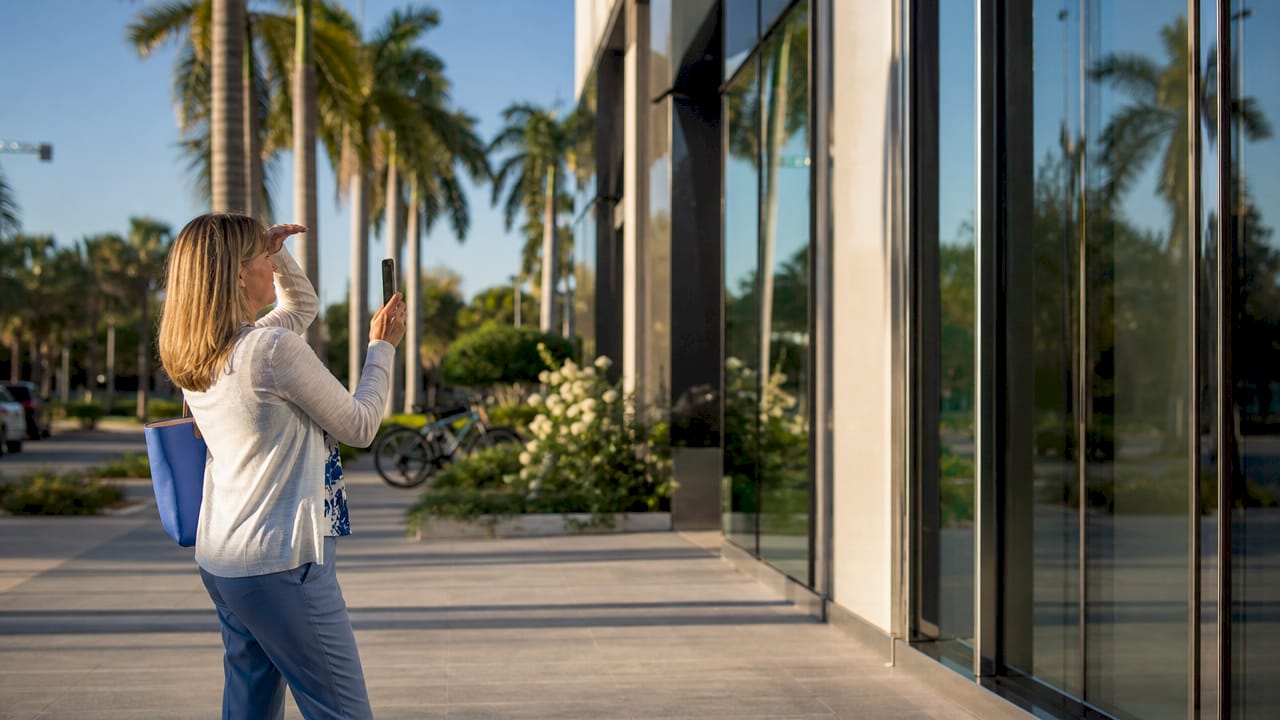
Clean facades communicate something specific: that management is attentive, proactive, and professional. Tenants read the condition of a building’s exterior as a signal of how their space will be maintained once they move in. A property in Brickell with a spotless glass curtain wall tells a prospective tenant something very different from one with algae stains and oxidized panels.
South Florida’s climate makes this challenge more acute than in most markets. High humidity, salt air from Biscayne Bay and the Atlantic coast, and intense UV exposure accelerate biological growth, efflorescence, and surface staining on stucco, EIFS, glass, and metal panel facades. A building that looked clean in january can show visible degradation by april without a scheduled maintenance program.
The connection between cleanliness and tenant satisfaction has real financial weight. A 1-point increase in tenant satisfaction correlates to 8.6% higher lease renewal willingness and a 23.1% lower move-out probability. That is not a soft metric. That is a direct line from facade condition to your vacancy rate.
“Curb appeal including clean facades strengthens tenant interest, increases tour activity, shortens vacancies, and improves tenant retention.”: Caton Commercial
Key ways facade cleanliness shapes tenant perception:
- Professionalism signal: A clean exterior tells tenants the property is actively managed, not neglected.
- Safety perception: Visible staining, mold, or deterioration raises questions about structural integrity and air quality.
- Tour conversion: Prospective tenants who see a well-maintained exterior are more likely to schedule a showing and follow through to a lease.
- Retention reinforcement: Existing tenants who see ongoing maintenance feel their investment in the space is protected.
What are the risks of neglecting facade cleanliness for tenant attraction and property value?
Facade neglect does not stay cosmetic for long. Inadequate facade maintenance causes structural damage, often linked to infrequent painting and missing panel board replacement. What starts as a surface stain becomes a substrate problem, and substrate problems become expensive repairs.
The sequence of neglect follows a predictable pattern in South Florida properties:
- Surface contamination accumulates. Biological growth, pollution deposits, and salt residue build up on stucco, glass, and metal panels. This is visible to tenants and prospects within months of the last cleaning.
- Water ingress begins. Contamination traps moisture against the building envelope. In Miami-Dade’s rain-heavy climate, this accelerates paint failure, caulk degradation, and panel separation.
- Structural damage develops. Facade degradation and maintenance effectiveness research confirms that maintenance applied at higher degradation levels is significantly less effective. The window for low-cost intervention closes fast.
- Tenant confidence erodes. Visible neglect signals to current tenants that management is reactive, not proactive. Renewal conversations become harder. Vacancy risk rises.
- Repair costs spike. Deferred maintenance on a 20-story office tower in Fort Lauderdale or a mixed-use building in Boca Raton does not scale linearly. A cleaning program that costs a fraction of a percent of asset value annually can prevent repairs that cost multiples of that.
The reputational damage compounds the financial damage. A building with a visibly deteriorated facade in a competitive market like Coral Gables or Aventura loses ground to properties that maintain their exteriors consistently. Prospective tenants touring multiple properties will notice the difference immediately, and they will not always tell you why they chose the other building.
Improper cleaning also carries risk. Excessive water pressure, wrong chemical concentrations, or abrasive methods can damage EIFS coatings, etch glass, and accelerate the very deterioration you are trying to prevent. Neglect and improper cleaning both lead to the same outcome: higher costs and lower tenant confidence.
What best practices and inspection schedules optimize facade cleanliness?
The most effective facade maintenance programs separate two distinct goals: aesthetic appearance and building envelope performance. Tenants respond primarily to appearance, but envelope performance protects asset value and prevents the structural damage that ultimately destroys tenant confidence. Both goals require scheduled attention.
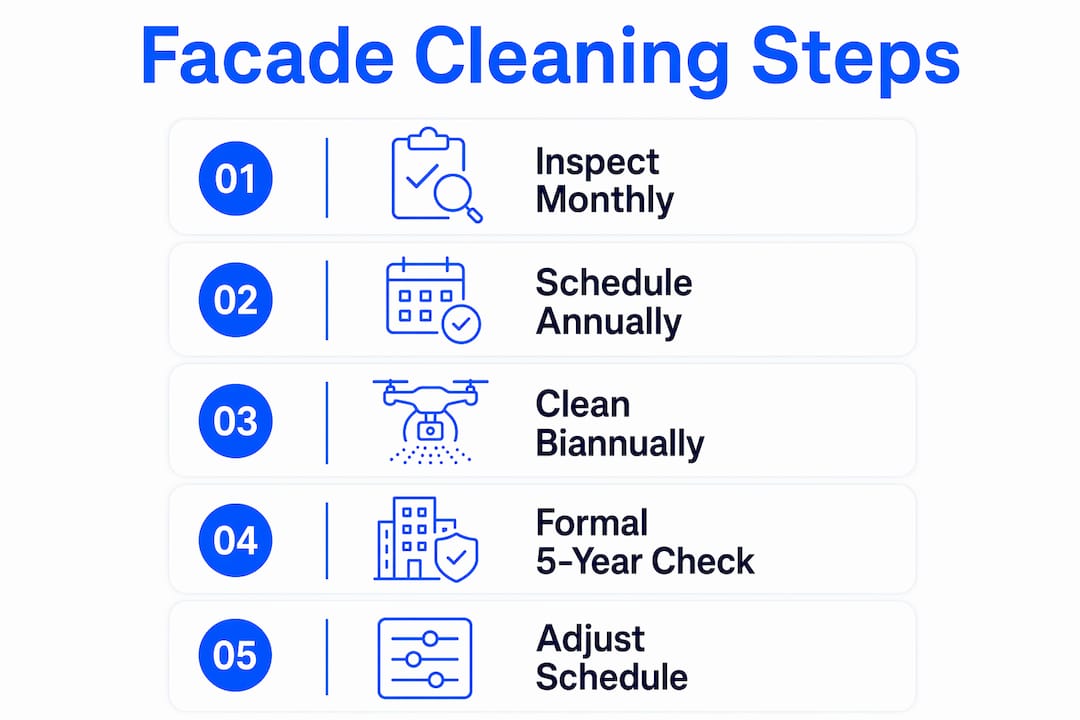
Annual visual inspections and formal 5-year inspections reduce repair costs by up to 60%. That figure reflects the value of catching problems early, before surface contamination becomes substrate damage. For South Florida properties, annual visual inspections should be timed around the end of hurricane season, typically in november or december, when storm-driven debris and water exposure have peaked.
Inspection and cleaning schedule comparison
| Frequency | Inspection type | Primary goal | Best for |
|---|---|---|---|
| Monthly | Visual walkthrough | Spot contamination early | High-traffic retail, hotel facades |
| Annually | Full visual inspection | Assess overall condition | Office towers, condominiums |
| Every 5 years | Formal structural inspection | Envelope performance, code compliance | All commercial properties |
| After major storms | Damage assessment | Identify water ingress points | All South Florida properties |
Cleaning schedules should be driven by facade condition severity, not calendar alone. Setting proactive cleaning triggers based on observed degradation captures early-stage contamination and maximizes maintenance effectiveness. A Brickell high-rise facing Biscayne Bay may need cleaning twice a year due to salt air exposure. A warehouse in Pompano Beach with a painted concrete facade may need it once annually.
Pro Tip: Link your facade cleaning schedule to your tenant satisfaction survey cycle. Run a survey 30 days after a cleaning project and compare scores to the prior period. That data gives you a concrete before-and-after metric to present to ownership and leasing teams.
Cleaning method selection matters as much as frequency. Cleaning methods and water management must be specified to avoid harming facade materials. Pure de-ionized water rinses leave no mineral residue on glass or metal panels. Soft-wash techniques use low pressure and appropriate solutions for stucco and EIFS surfaces. High-pressure washing on the wrong substrate causes more damage than the contamination it removes.
For South Florida properties, also integrate facade cleaning into your exterior maintenance strategy to align cleaning cycles with seasonal weather patterns and local building code requirements.
How can property managers measure the ROI of facade cleaning programs?
ROI measurement for facade cleaning starts with the metrics you already track. Tracking tenant satisfaction changes and linking them to renewal and vacancy trends gives you a direct line from cleaning investment to leasing performance. The data points that matter most are:
- Tenant satisfaction scores before and after cleaning projects, measured through structured surveys
- Tour activity volume in the 60 days following a facade cleaning, compared to the prior period
- Showing-to-lease conversion rate as a proxy for how exterior appearance affects prospect decisions
- Renewal rate changes tracked quarterly against satisfaction score movements
- Repair cost avoidance calculated by comparing deferred maintenance costs at comparable properties against your proactive cleaning spend
Curb appeal directly drives tour activity and shortens vacancy periods. That means a facade cleaning project is not just a maintenance expense. It is a leasing tool with a measurable effect on how quickly you fill vacant space.
The cost avoidance argument is equally strong. A commercial property in Hollywood or Plantation that runs a consistent cleaning program avoids the compounding repair costs that come from deferred maintenance. The math is straightforward: cleaning costs a fraction of what panel replacement, repainting, or water damage remediation costs.
Drone facade cleaning adds another layer to the ROI calculation. Projects that finish in 1–3 days without scaffolding, road closures, or permit delays minimize tenant disruption. Less disruption means fewer complaints, fewer lease concessions, and a cleaner satisfaction score at the end of the project.
Key takeaways
Facade cleanliness is a direct driver of tenant satisfaction, lease renewal rates, and vacancy reduction in South Florida commercial properties.
| Point | Details |
|---|---|
| Satisfaction drives renewals | A 1-point satisfaction gain links to 8.6% higher renewal willingness and 23.1% lower move-out probability. |
| Neglect compounds costs | Surface contamination leads to water ingress, structural damage, and repair bills that far exceed cleaning costs. |
| Inspect on a schedule | Annual visual inspections and 5-year formal inspections reduce repair costs by up to 60%. |
| Match cleaning to conditions | South Florida’s salt air and humidity require condition-based triggers, not calendar-only scheduling. |
| Measure what matters | Track satisfaction scores, tour activity, and renewal rates before and after cleaning to prove ROI. |
What I’ve learned about facade cleanliness programs in South Florida
The property managers who get the best results from facade cleaning are not the ones who clean the most often. They are the ones who clean at the right time, with the right method, and then measure what happens afterward.
The biggest mistake I see is reactive cleaning. A building in Coral Gables or Miami Beach waits until the facade is visibly embarrassing before scheduling a project. By that point, the contamination has been doing structural work for months. The cleaning costs more, takes longer, and the tenant satisfaction damage is already done. Prospective tenants who toured during that window are gone.
The second mistake is treating all cleaning methods as equivalent. EIFS and stucco facades in South Florida are particularly vulnerable to improper technique. High-pressure washing on synthetic stucco can breach the coating and create water ingress points that show up as interior damage two rainy seasons later. Specifying the right method for each facade material is not a detail. It is the difference between maintenance and damage.
What actually works is integrating facade cleaning into your tenant experience program as a scheduled, visible event. When tenants see a cleaning crew working on the building, they notice. When they see the result, they feel it. That feeling shows up in your satisfaction surveys, and your satisfaction surveys show up in your renewal rates.
The South Florida market is competitive enough that the buildings winning leases are the ones where every touchpoint, including the exterior, signals quality management. Facade cleanliness is one of the lowest-cost, highest-visibility signals you have.
, Eliot
Vistadronecleaning: facade cleaning built for South Florida high-rises
South Florida’s commercial properties face cleaning challenges that ground-level crews cannot always address safely or efficiently. Vistadronecleaning uses FAA Part 107-certified pilots and tethered Lucid Bots Sherpa drones to clean facades on buildings up to 200 feet tall across Miami-Dade and Broward counties, with crews staying safely on the ground throughout.
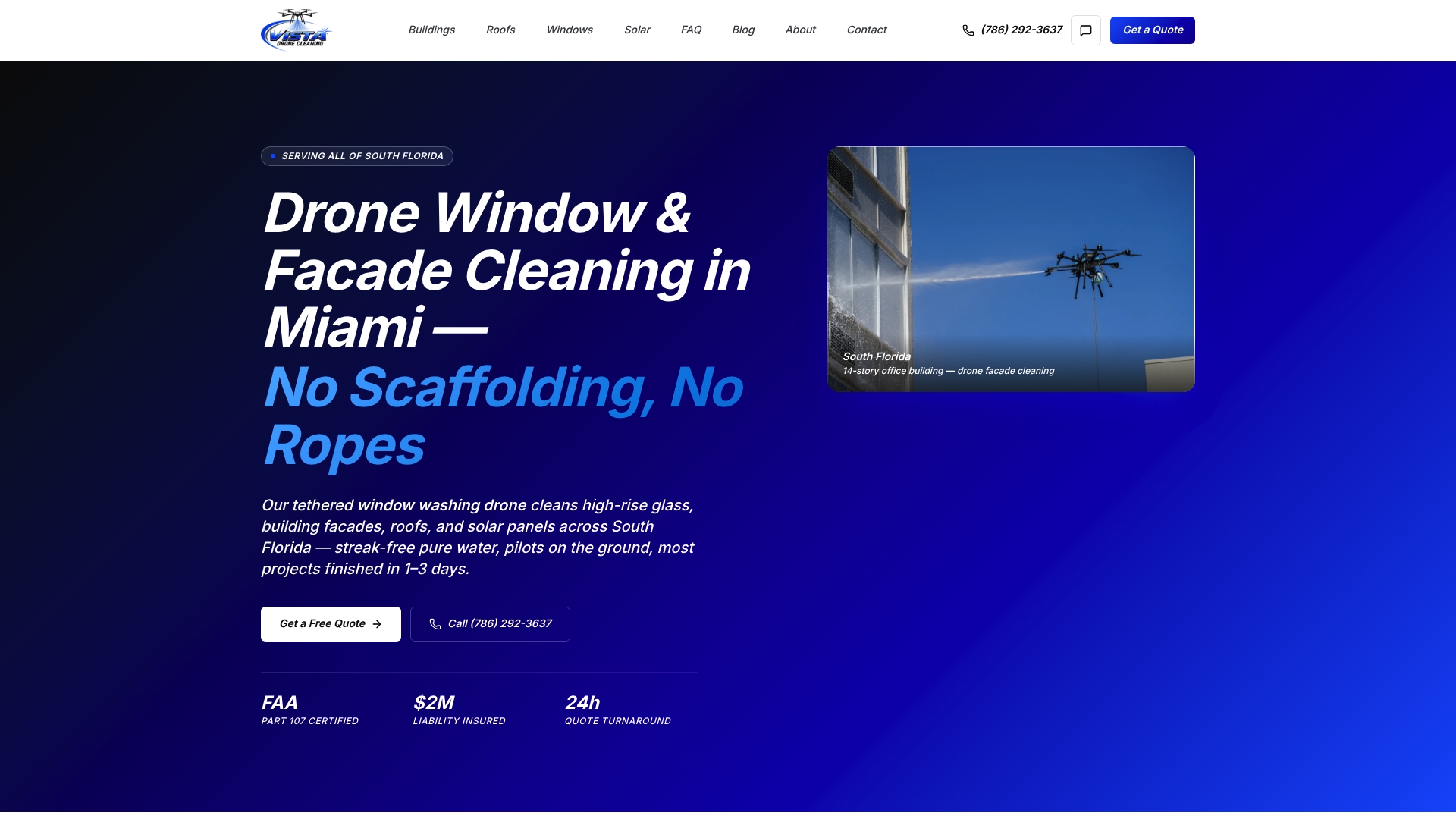
Most projects finish in 1–3 days at 30–60% lower cost than traditional scaffold or lift methods, with no road closures, rigging, or permit delays. The pure de-ionized water rinse leaves glass and metal panels streak-free without chemical residue. For property managers in Brickell, Fort Lauderdale, Boca Raton, and across South Florida, Vistadronecleaning offers drone facade cleaning that protects your building’s appearance, your tenants’ experience, and your leasing performance. Free quotes are available within 24 hours.
FAQ
How often should a commercial facade be cleaned in South Florida?
Most South Florida commercial properties benefit from facade cleaning once or twice per year, with additional cleaning after major storms. Salt air, humidity, and UV exposure accelerate contamination faster than in inland markets.
Does a clean facade actually affect lease renewal rates?
Research shows a 1-point increase in tenant satisfaction correlates to 8.6% higher lease renewal willingness. Facade condition is a direct driver of that satisfaction score.
What is the risk of using the wrong cleaning method on a facade?
Improper cleaning, particularly high-pressure washing on EIFS or stucco, can breach coatings and create water ingress points. Specifying the correct method for each facade material prevents damage that costs far more than the cleaning itself.
How do property managers prove the ROI of facade cleaning to ownership?
Track tenant satisfaction scores, tour activity volume, and renewal rates before and after each cleaning project. Comparing those metrics over two or three cycles builds a clear financial case for the program.
What is the difference between a visual inspection and a formal facade inspection?
A visual inspection is an annual walkthrough to identify surface contamination and obvious damage. A formal inspection, recommended every 5 years, assesses building envelope performance, structural integrity, and code compliance, and is typically conducted by a licensed engineer.