What Is Commercial Exterior Cleaning? A 2026 Guide
What Is Commercial Exterior Cleaning? A 2026 Guide !
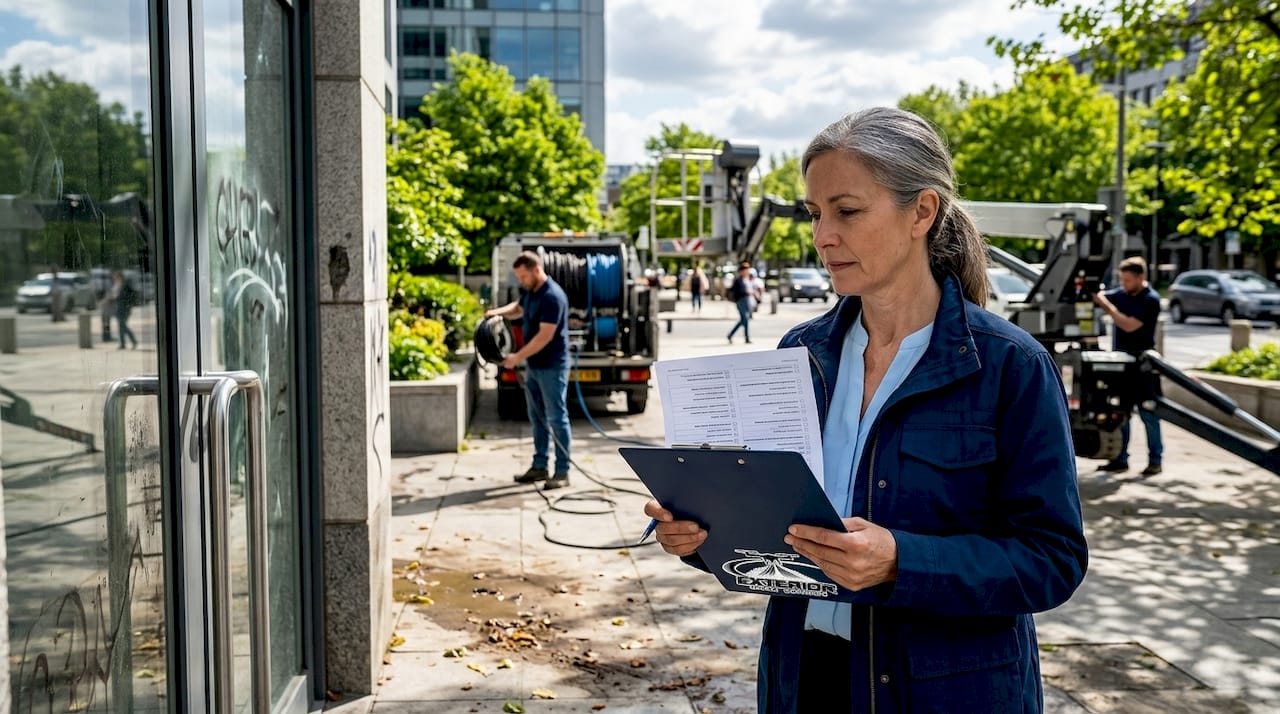
Commercial exterior cleaning is a critical line item in property maintenance budgets that directly impacts asset value, tenant retention, and structural health. It is a systematic, substrate-conscious process for removing contaminants before they cause permanent damage. This guide breaks down the methods and standards for maintaining your properties in 2026.
Table of Contents
- Key takeaways
- What commercial exterior cleaning actually means
- Cleaning methods and how they match building materials
- Scheduling and frequency: how often buildings need cleaning
- Choosing the right commercial exterior cleaning service
- Emerging technologies: drone cleaning and what’s next
- My take on what most property managers get wrong
- Ready to protect your building’s exterior properly?
- FAQ
Key takeaways
| Point | Details |
|---|---|
| More than curb appeal | Commercial exterior cleaning prevents structural damage, not just appearance issues. |
| Method must match material | Using the wrong technique on the wrong substrate causes expensive, irreversible harm. |
| Schedule matters | Most commercial buildings need cleaning every one to three years based on environment. |
| Documentation protects assets | Before-and-after condition reports track facade health and flag emerging repairs. |
| Technology is advancing fast | Drone-based cleaning offers safer, faster access to high-rise and hard-to-reach surfaces. |
What commercial exterior cleaning actually means
In the industry, this field is known as “commercial facade and exterior maintenance.” It refers to the removal of contaminants like dirt, mold, mildew, algae, exhaust residue, and mineral deposits. The service preserves material integrity while maintaining the building’s public appearance.
Professional exterior cleaning covers the full building envelope: cladding, brick, concrete, EIFS panels, painted metal, glass curtain walls, and rooflines. Qualified providers start with a substrate assessment to ensure the cleaning method matches the surface material.
Understand the difference between cleaning and restoration. Facade cleaning removes contaminants and prepares surfaces. Facade restoration involves structural repairs like repointing mortar or replacing cladding. Regular cleaning reveals early signs of damage before they require restoration, saving significant costs over time.
Common issues addressed during service:
- Biological growth: mold, mildew, algae, lichen, and moss
- Atmospheric soiling: vehicle exhaust, soot, and industrial particulate
- Efflorescence: white mineral deposits in masonry
- Staining from rust, tannins, or oxidized fixtures
- Embedded grime in porous precast concrete and brick
- Salt deposits in coastal environments
Left untreated, biological growth retains moisture and accelerates surface degradation. Salt deposits fracture masonry at a microscopic level. These facts form the core of any professional building facade cleaning guide.
Cleaning methods and how they match building materials
Applying the wrong method causes damage that exceeds the cost of the cleaning itself. Professionals utilize two primary technologies: pressure washing and soft washing.
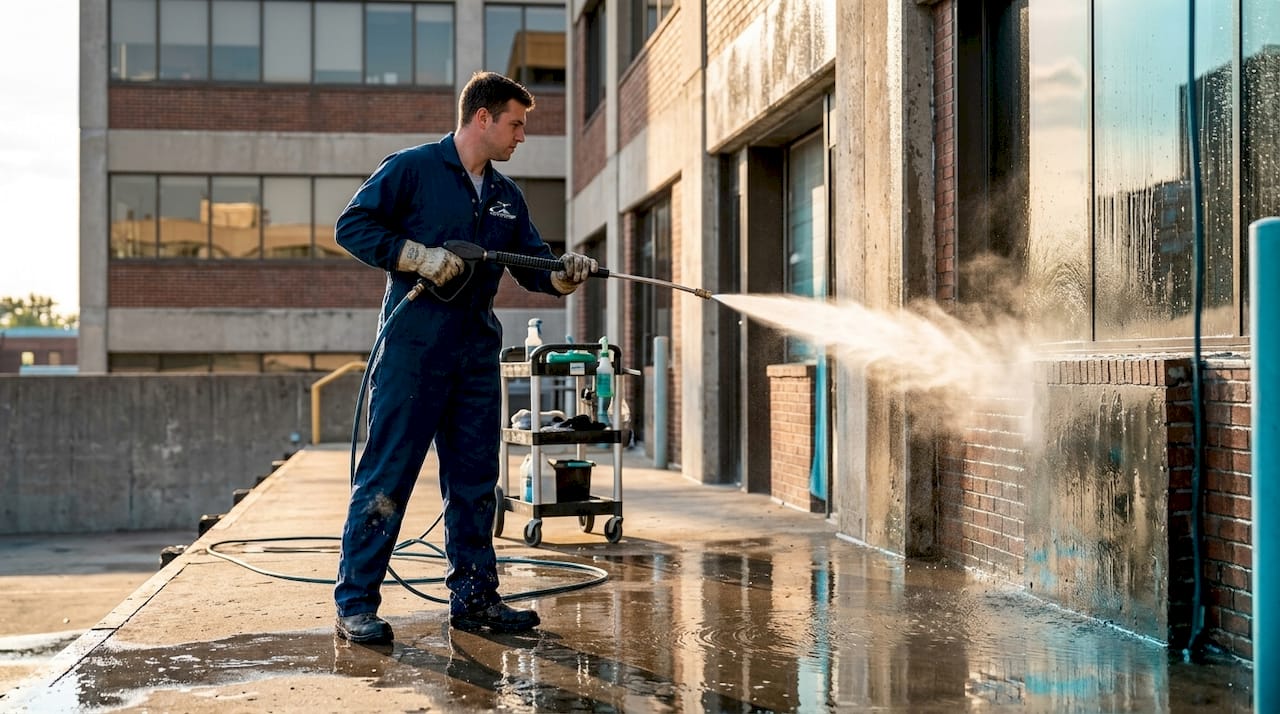
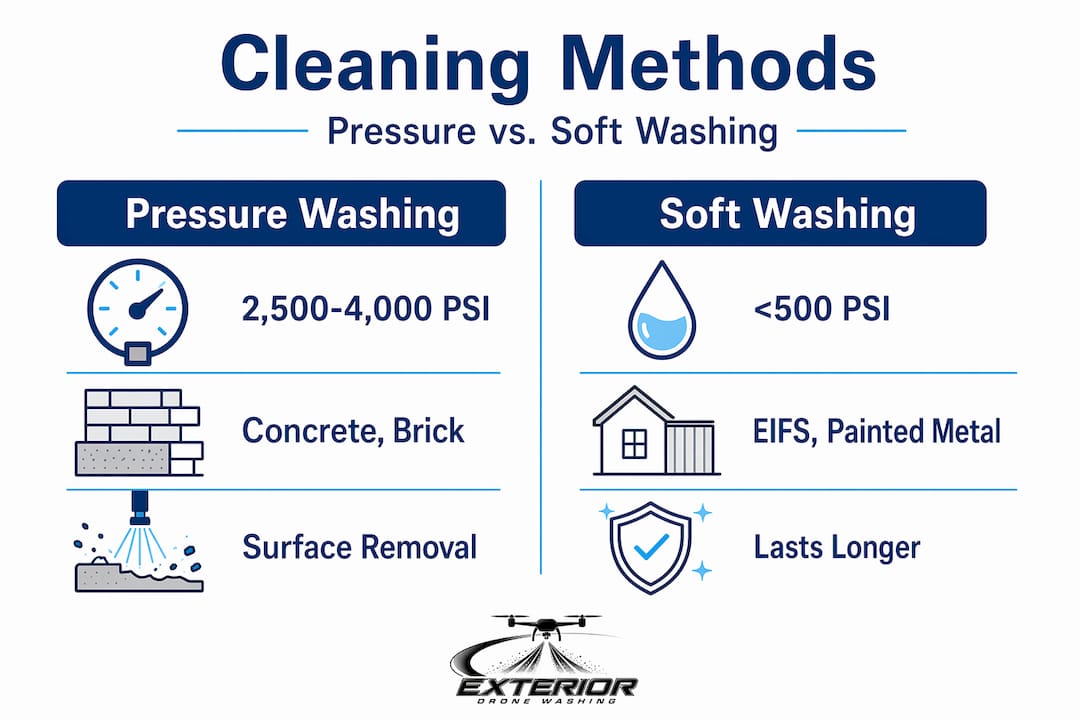
Pressure washing uses mechanical force at 2,500 to 4,000 PSI for durable, non-porous surfaces like poured concrete, granite, and heavy steel. The water physically lifts the grime without needing chemical dwell time.
Soft washing uses pressure under 500 PSI combined with biodegradable agents. This method is for sensitive substrates like EIFS, stucco, and wood-composite cladding. It removes biological organisms at the root instead of just blasting away surface stains.
| Method | PSI range | Best for | Risk on wrong substrate |
|---|---|---|---|
| Pressure washing | 2,500 to 4,000 | Concrete, granite, brick, steel | Strips coatings, causes water intrusion |
| Soft washing | Under 500 | EIFS, stucco, paint, coated metal | Minimal when chemistry is managed |
| Hybrid approach | 500 to 1,500 | Pre-cast panels, aged masonry | Moderate without supervision |
High pressure on delicate materials like EIFS can strip textures and drive water into wall cavities. We prioritize structural-friendly facade cleaning to ensure long-term surface health over aggressive, short-term optics. Soft wash results last up to six times longer than pressure washing because they eliminate the biological core of the problem.
Pro Tip: Ask for a substrate assessment report before work begins. If a vendor skips this, walk away.
Scheduling and frequency: how often buildings need cleaning
Reactive cleaning is expensive. Waiting for a building to look "dirty" means contaminants have already begun structural damage. Most commercial buildings require cleaning every one to three years, depending on these variables:
- Environmental exposure: Proximity to highways or industrial zones increases soot accumulation.
- Coastal proximity: Salt air in markets like Miami accelerates corrosion. Annual cleaning is standard here.
- Building use: Retail and hospitality demand higher aesthetic standards.
- Material porosity: Uncoated masonry traps contaminants deeper and requires more frequent care.
- Shade coverage: Damp, shaded areas accelerate mold and algae growth.
Regular exterior cleaning maintains tenant satisfaction and reduces slip hazards on walkways. For multi-story buildings, scheduling must include documented OSHA-aligned access plans including fall protection and equipment inspections.
Pro Tip: Add cleaning cycles to your annual maintenance calendar. By the time it looks dirty, the damage is already underway.
Choosing the right commercial exterior cleaning service
Select vendors based on their process and safety standards:
- Substrate assessment. Methods must be determined by the surface material.
- Safety and access plans. Request written plans for any building above two stories.
- Chemistry transparency. Ensure cleaning agents are biodegradable to protect landscaping and stormwater systems.
- Condition documentation. Professional providers provide photo reports before and after the job.
- Certifications. Verify general liability, workers’ compensation, and FAA certification for drone operations.
- Modern technology. Ask about drone-assisted cleaning to reduce mobilization costs and safety risks.
Emerging technologies: drone cleaning and what’s next
Industrial drones have revolutionized the building facade washing process. Drones can access building exteriors up to 200 feet without scaffolding or boom lifts.
Benefits of drone-based maintenance:
- Safety. Eliminates fall risks by keeping workers on the ground.
- Speed. Completes multi-day scaffold projects in a fraction of the time.
- Cost. Reduces expenses by 30 to 60 percent by cutting labor and mobilization.
- Documentation. High-resolution imagery offers superior condition reporting.
- No Disruption. No lane closures or scaffold permits required.
For mid-rise and high-rise facades, drone cleaning is the most logical choice for safety and efficiency.
My take on what most property managers get wrong
The biggest mistake is treating exterior cleaning as a reactive task. Waiting until deterioration is visible leads to higher costs. I also see managers default to high pressure because it looks impressive quickly, but it often damages EIFS or painted finishes, leading to five-figure remediation bills.
Efficient programs are consistent. Set a schedule, verify the methods match the materials, and document the results. The buildings that look best after a decade aren't the ones hit with the most pressure; they’re the ones maintained with substrate-appropriate care.
, Eliot
Ready to protect your building’s exterior properly?
Vista Drone Cleaning specializes in commercial facade cleaning for high-rises and office towers across South Florida. We use FAA-registered drones and soft-wash systems to deliver results that are safer and more affordable than traditional scaffolding.
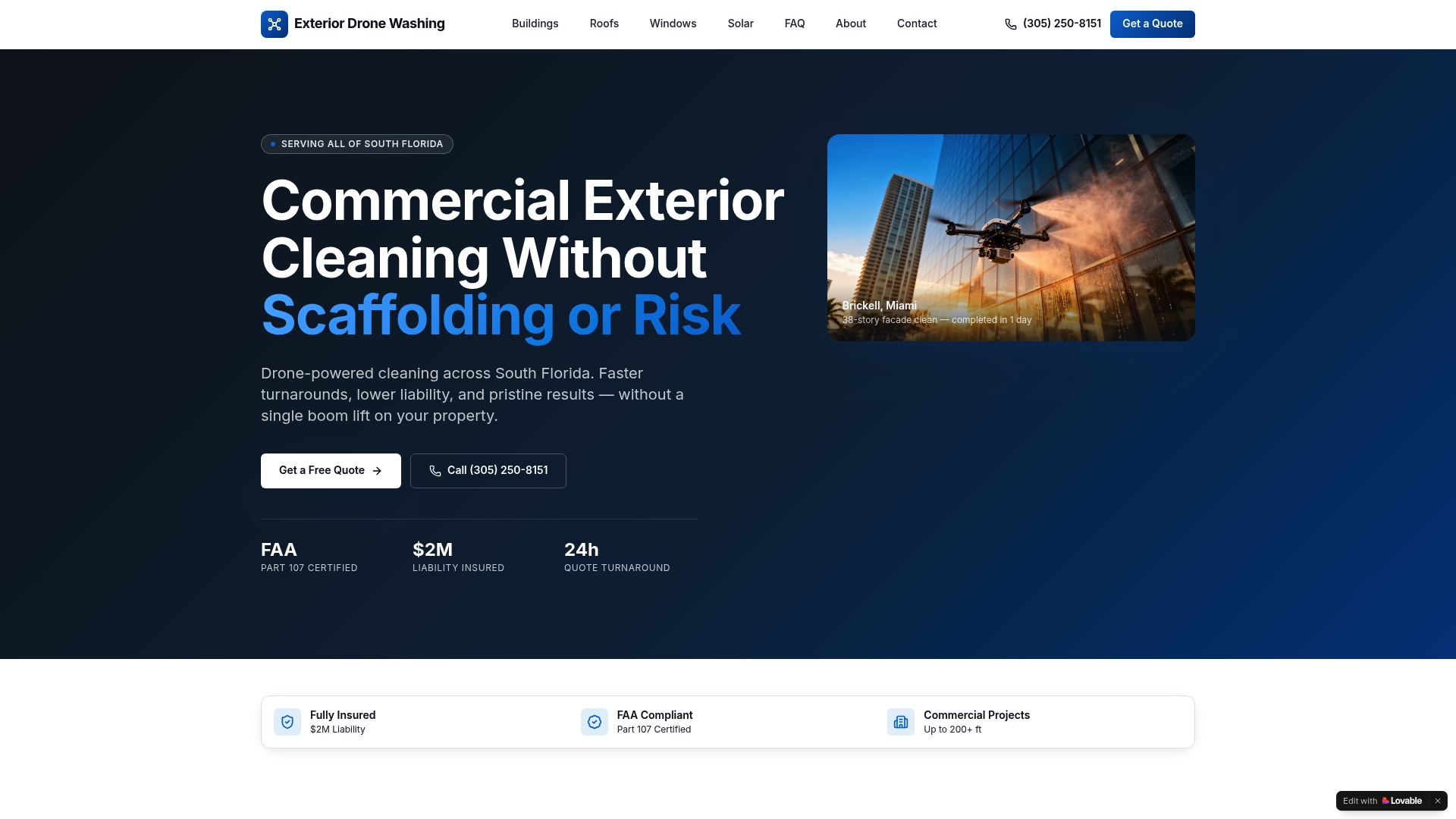
We provide substrate-conscious cleaning, OSHA safety planning, and full condition documentation. Save 30 to 60 percent compared to conventional methods. Visit our Miami drone cleaning page or review commercial drone cleaning options today.
FAQ
What does commercial exterior cleaning include?
It includes removing dirt, mold, algae, and minerals from cladding, brick, concrete, glass walls, and roofs.
How often should a commercial building be cleaned?
Every one to three years. Coastal or high-pollution areas usually require annual service.
What is the difference between pressure washing and soft washing?
Pressure washing uses high force for hard materials like concrete. Soft washing uses low pressure and chemicals for sensitive surfaces like stucco and EIFS.
Why is soft washing better for delicate building materials?
It removes the root of biological growth without risking surface damage or water intrusion.
How does drone cleaning work for commercial buildings?
Drones deliver cleaning agents to heights up to 200 feet, eliminating the need for lifts and reducing costs by up to 60 percent.