Types of building exterior cleaning: a commercial property manager's guide
Discover the essential types of building exterior cleaning for commercial properties. Ensure safety, efficiency, and longevity with this guide!
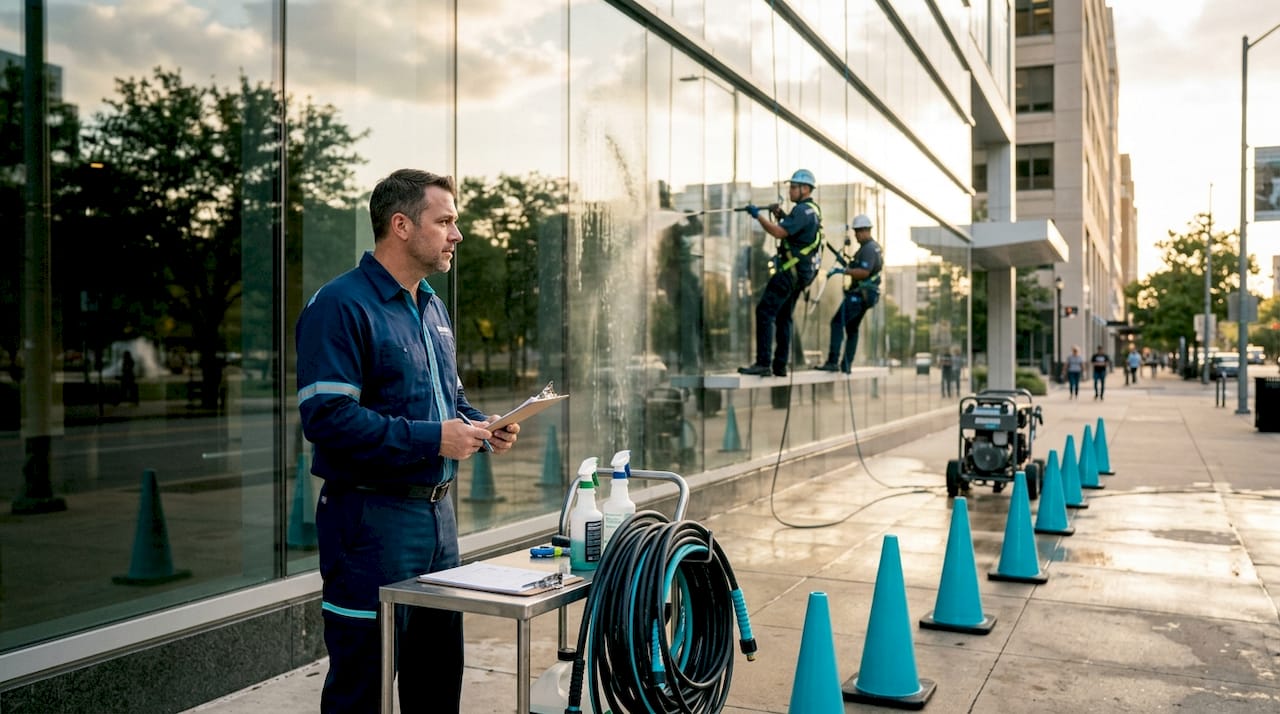
Picking the wrong exterior cleaning method for a commercial high-rise can strip coatings, void warranties, create liability exposure, and disrupt tenants. In South Florida, salt air, humidity, and biological growth accelerate surface degradation. Drone-based cleaning is changing high-rise maintenance by prioritizing safety and speed without compromising surface integrity.
Table of Contents
- Key criteria for selecting building exterior cleaning methods
- Soft washing for delicate surfaces and high-rises
- Pressure washing for durable building exteriors
- Drone-based facade cleaning: the future for high-rise buildings
- Comparing exterior cleaning types for commercial high-rises
- Choosing the right cleaning method for your South Florida commercial property
- Why drone cleaning is a game changer for commercial high-rise maintenance
- Explore drone cleaning solutions for your South Florida commercial property
- Frequently asked questions
Key criteria for selecting building exterior cleaning methods
In the high-rise commercial market, the wrong method is expensive. Evaluate these factors to protect your asset:
- Surface sensitivity. Glass curtain walls, painted panels, and EIFS respond differently to pressure. Methods that clean concrete can permanently etch glass.
- Building height. Above six stories, scaffolding costs climb and rope access introduces liability.
- Safety exposure. Falls are a leading cause of construction fatalities. Drone cleaning benefits include eliminating that exposure.
- Total cost. Factor in labor, equipment rentals, lane closures, and project duration—not just the initial quote.
- Cleaning effectiveness. Organic staining like mold and algae requires chemical treatment rather than raw pressure.
Soft washing advantages and drone delivery provide the best outcomes for South Florida towers.
Soft washing for delicate surfaces and high-rises
Soft washing is a low-pressure method for surfaces that cannot tolerate the force of pressure washing. It is the standard for roofs, stucco, EIFS, and vinyl siding.
Key characteristics:
- Pressure at or below 100 PSI. According to the National Roof Cleaning Authority, soft washing uses chemical-assisted cleaning at 100 PSI or below to prevent damage to roofs and siding.
- Sodium hypochlorite targets growth. This kills mold, mildew, and algae at the cellular level. Growth removed without chemicals typically returns within months.
- Ideal for high-rise painted facades. Reaching high facades via drone offers safety advantages over rope access.
- Preserves warranties. Manufacturers of metal panels and coatings often specify low-pressure washing. High pressure can void coverage.
The benefits include slower biological regrowth and extended paint life, reducing your long-term maintenance budget.
Pressure washing for durable building exteriors
Pressure washing uses sheer water force to dislodge contaminants. It is effective only on specific, durable materials.
Key facts:
- Operating range: 1,200 to 3,500 PSI. The National Roof Cleaning Authority confirms pressure washing works for concrete and brick but damages delicate surfaces above 500 PSI.
- Best for concrete and stone. Parking garages, plazas, and exposed aggregate withstand this force without degradation.
- High risk for glass and EIFS. High-pressure water can damage window seals and aluminum framing, leading to water intrusion.
- Surface preparation. This method is ideal for stripping old coatings before repainting or resealing.
Because of the pressure washing risks to mixed-material facades, South Florida high-rise owners generally reserve pressure washing for ground-level surfaces.
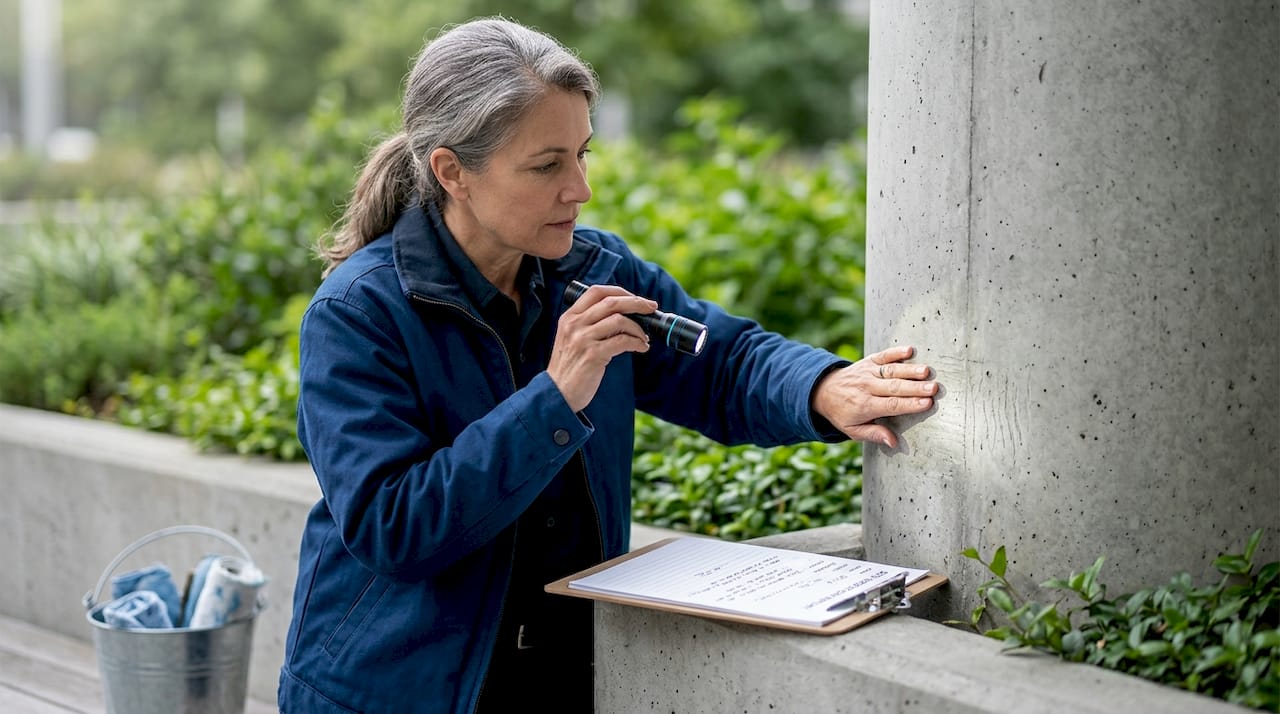
Drone-based facade cleaning: the future for high-rise buildings
Drone-based cleaning solves the height and safety problems traditional methods ignore.
The process:
- Ground-tethered supply. Drones connect to ground pumps for a continuous supply of deionized water or soft wash solution.
- GPS-mapped flight. Pre-programmed paths ensure consistent treatment with no missed panels.
- Calibrated pressure. Controlled delivery protects glass and coated surfaces while preventing streaks.
- Productivity. Drone facade cleaning increases productivity by up to 600%. It covers 3,500 square meters per day compared to 500 square meters for manual crews.
| Metric | Manual crew | Drone cleaning |
|---|---|---|
| Daily coverage | ~500 m² | ~3,500 m² |
| Scaffolding required | Yes | No |
| Fall risk | High | None |
| Project duration | 5-10 days | 1-3 days |
| Cost (20-35 stories) | Variable, often higher | $7,000 to $12,000 |
For 20 to 35-story towers, project costs typically range from $7,000 to $12,000, with annual contracts between $10,000 and $40,000.
Drone operations reduce the operational footprint, eliminating sidewalk closures and scaffolding. Review Brickell building cleaning examples to see how drone work avoids lane closures in dense neighborhoods.
Comparing exterior cleaning types for commercial high-rises
The National Roof Cleaning Authority categorizes methods by operating pressure: soft washing (≤100 PSI), pressure washing (1,200–3,500 PSI), and drone cleaning (calibrated for the surface).
| Method | Operating pressure | Best surfaces | Height suitability |
|---|---|---|---|
| Soft washing | 100 PSI | Stucco, EIFS, roofs | Low-to-mid rise |
| Pressure washing | 1,200-3,500 PSI | Concrete, brick | Ground level |
| Drone cleaning | Calibrated | All facade types | All heights |
- Facade material determines pressure tolerance.
- Height dictates access costs; drones eliminate scaffolding expenses.
- Speed minimizes tenant impact.
Choosing the right cleaning method for your South Florida commercial property
South Florida's heat and humidity allow algae and mold to colonize facades rapidly. Follow this sequence:
- Identify facade materials. Consult drawings to avoid using the wrong pressure on sensitive surfaces.
- Assess access constraints. For buildings up to 18 stories, drone cleaning is the most cost-effective solution.
- Match method to material. Use soft wash for stucco/EIFS and drone-delivered deionized water for glass.
- Budget for the full lifecycle. Annual contracts reduce per-cycle costs compared to one-off scaffolding mobilizations.
- Schedule around the wet season. Post-rainy season cleaning (October–November) removes biological growth before it stains.
- Verify certifications. FAA certification and insurance are mandatory for commercial drone operators.
For towers up to 18 stories, drone delivery is the safest and most efficient choice. Check high-rise cleaning pricing to compare total project costs against manual labor.
Why drone cleaning is a game changer for commercial high-rise maintenance
Traditional cleaning methods are primarily access workarounds. Scaffolding and rope access are slow, dangerous ways to position a person near a building. Drones solve this access problem.
Eliminating scaffolding removes weeks of mobilization, street-level disruption, and insurance risks. Drones provide uniform coverage, removing the human error found in manual methods. Drone cleaning increases quality; while a person on a rope battles wind and fatigue, a GPS-programmed drone maintains a perfect pattern regardless of conditions. This consistency protects coatings and extends the life of the facade.
Explore drone cleaning solutions for your South Florida commercial property
South Florida maintenance is demanding. Salt air and humidity require proactive care.
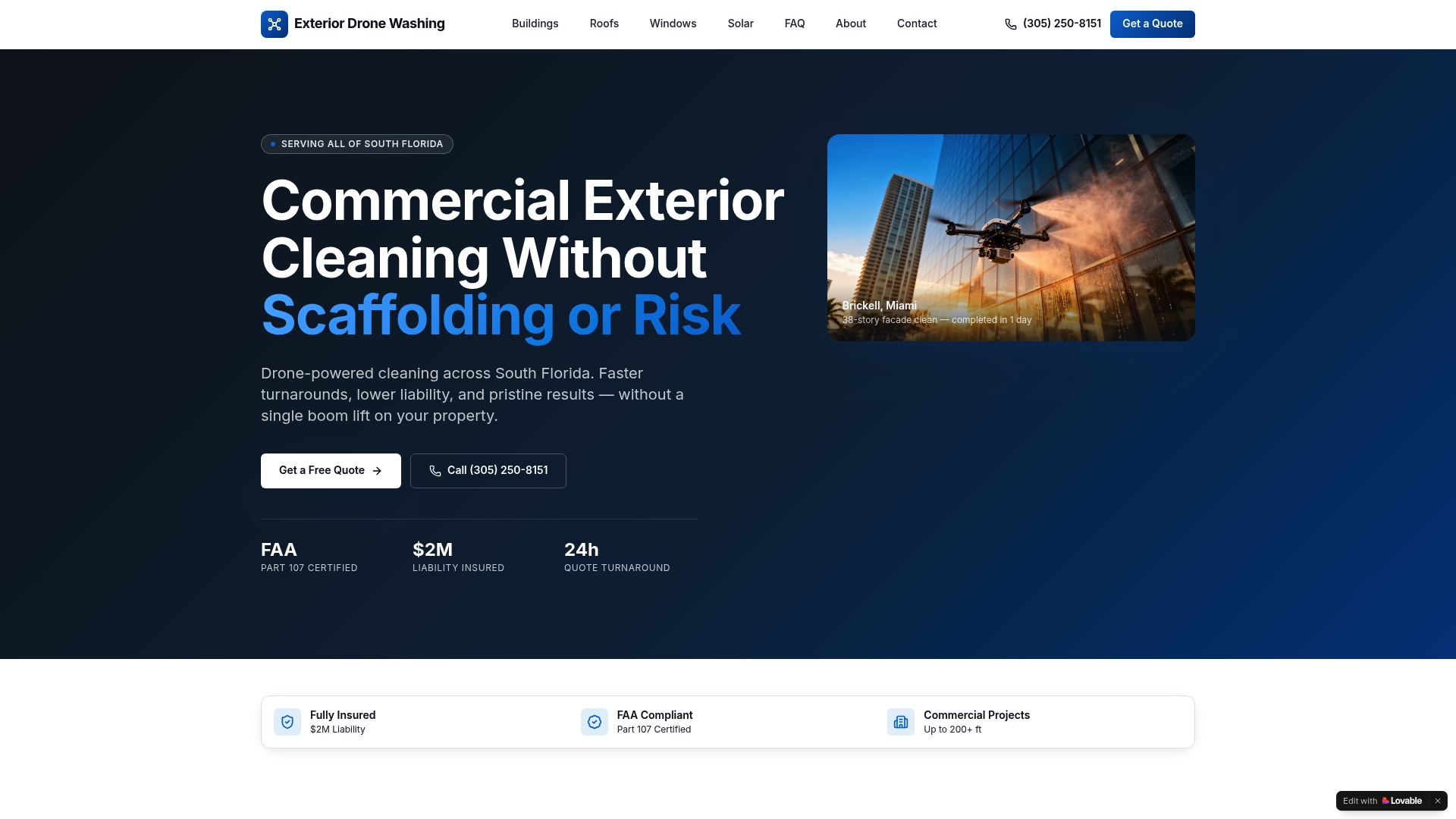
Exterior Drone Washing uses FAA-certified systems for facades up to 200 feet and higher. We provide consistent results without scaffolding or at-height risk. Whether managing a Brickell office tower or a beachfront hotel, our rope access-free cleaning programs scale to your budget. Contact us for a consultation.
Frequently asked questions
What are the main types of building exterior cleaning for commercial high-rises?
The primary types are soft washing (≤100 PSI), pressure washing (1,200–3,500 PSI), and drone-based cleaning, which uses calibrated pressure appropriate for the surface.
How does drone cleaning improve safety for high-rise facade maintenance?
Drones eliminate the need for scaffolding and rope access, removing fall risks entirely for technicians and reducing liability for property owners.
What factors influence the cost of drone-based exterior cleaning?
Building height, facade complexity, and cleaning frequency determine pricing. Towers (20–35 stories) typically cost $7,000 to $12,000 per project.
Can pressure washing damage certain building materials?
Yes. Pressure over 500 PSI can etch glass and strip protective coatings. Soft washing or calibrated drone delivery is recommended for sensitive surfaces.
Is drone cleaning environmentally friendly?
Yes. Drone systems use deionized water and controlled pressure, reducing the need for harsh chemicals on glass. They also have a minimal ground footprint compared to heavy machinery.