
Retail Facade Cleaning Without Parking Closure: 2026 Guide
Discover how retail facade cleaning without parking closure boosts foot traffic and revenue. Learn the best techniques for hassle-free maintenance.
TL; DR:
- Retail facade cleaning without parking closure involves off-hours scheduling and zone-by-zone execution to keep customer parking accessible. Soft washing and drone cleaning methods, along with vacuum recovery systems, prevent disruption and ensure stormwater compliance. Regular, scheduled maintenance preserves building appearance, avoids costly repairs, and maximizes tenant revenue.
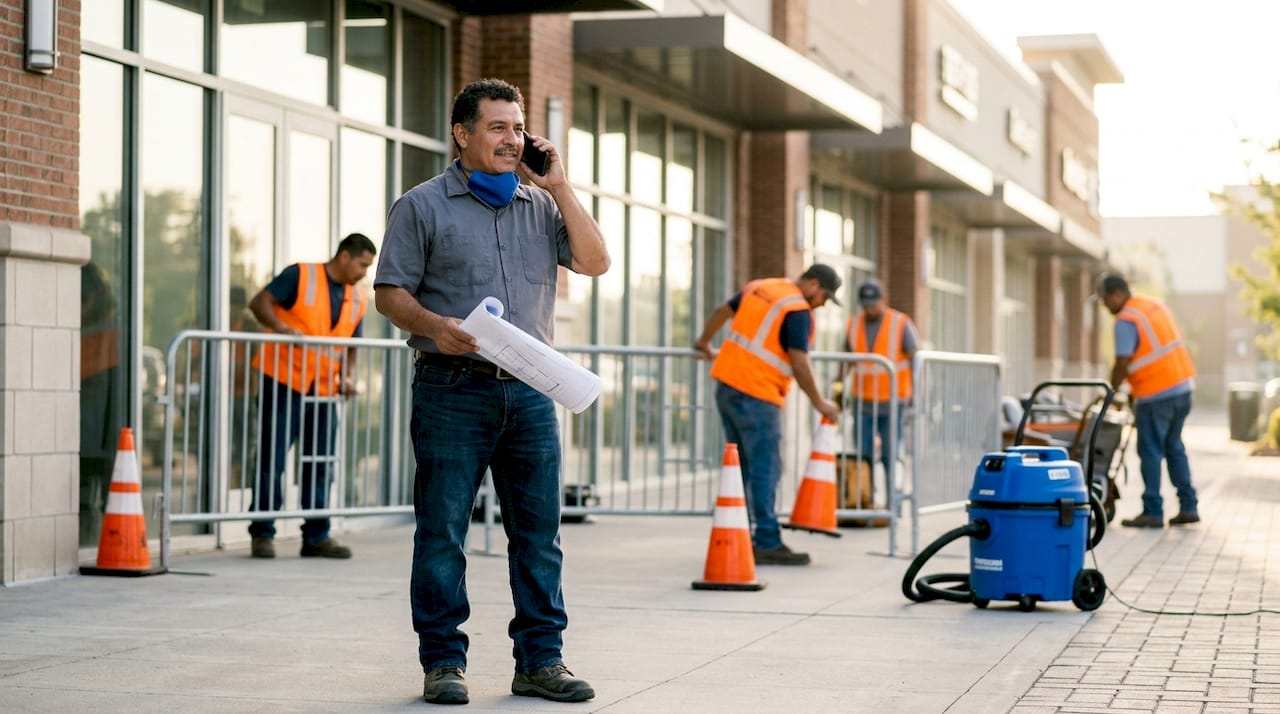
Retail facade cleaning without parking closure is the practice of washing and restoring a building’s exterior while keeping all customer parking spaces and access points fully open. Property managers at retail centers in Miami, Fort Lauderdale, Boca Raton, and across South Florida increasingly demand this approach because a closed parking lot directly costs tenants revenue. Clean storefronts and walkways can increase foot traffic by up to 20%. That number makes facade maintenance a business decision, not just a cosmetic one. The right combination of technology, scheduling, and execution makes zero disruption the standard, not the exception.
What tools and technologies enable retail facade cleaning without parking closure?
The industry term for low-disruption exterior maintenance is parking-safe commercial exterior cleaning. It covers several methods, each suited to different facade materials and building heights common in South Florida retail centers.
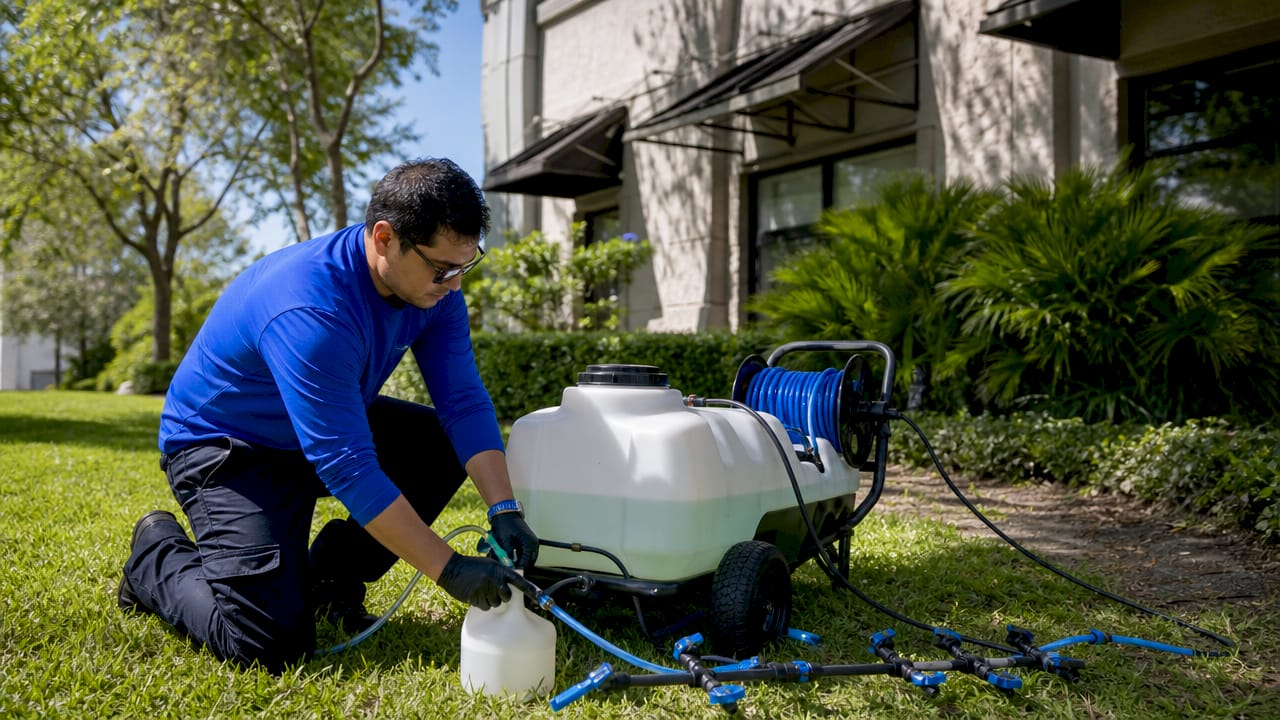
Soft washing is the preferred method for most retail facades. Soft washing uses gentle chemicals and low-pressure water, making it ideal for brick, EIFS (synthetic stucco), and composite panel facades. Traditional high-pressure washing risks cracking grout, blasting sealants off EIFS, and sending overspray across customer vehicles. Soft washing eliminates those risks while still removing mold, algae, and salt deposits, which are persistent problems in South Florida’s humid coastal climate.
Drone facade cleaning takes parking-safe methods further. Drone facade cleaning uses remotely piloted equipment to wash hard and soft surfaces without blocking parking or access lanes. Vistadronecleaning deploys FAA Part 107-certified pilots operating tethered Lucid Bots Sherpa drones that reach buildings up to 200 feet tall. The crew stays on the ground. No scaffolding, boom lifts, or rope access rigs occupy parking spaces or sidewalks.
Containment and runoff management complete the technology picture. Vacuum recovery systems capture contaminated wash water before it reaches storm drains, keeping projects in compliance with Miami-Dade and Broward County stormwater regulations. Containment dams and drain covers protect the property from fines and protect the surrounding environment.
- Soft washing: best for EIFS, brick, and painted concrete facades
- Drone cleaning: best for multi-story retail buildings and hard-to-reach surfaces
- Vacuum recovery systems: required for any project near storm drains
- Scheduling software: coordinates cleaning windows with tenant hours and customer traffic patterns
Pro Tip: Request that your vendor provide proof of vacuum recovery equipment before signing any contract. Vendors without it expose your property to municipal stormwater fines.
How to plan and schedule facade cleaning to avoid parking disruption
Scheduling is the single most controllable variable in a no-disruption cleaning project. Get it right and customers never notice the work happened.
-
Choose off-peak windows. Retail centers schedule facade work during early mornings (5–9 AM) or overnight (10 PM–5 AM). Surfaces dry and the property looks business-ready before the first customer arrives. In South Florida, early morning also avoids peak heat, which speeds chemical dwell time on soft-wash applications.
-
Communicate with tenants in advance. Send written notice to all tenants at least five business days before the cleaning date. Include the start time, estimated finish time, and which building sections are being cleaned. Tenants can alert their own staff and customers, reducing complaints.
-
Use a sectional cleaning approach. Divide the facade and adjacent parking areas into zones. Clean one zone at a time so the rest of the lot stays fully open. Cleaning crews sequence work section by section, keeping roughly half of all parking spots accessible at any point during the project.
-
Coordinate with other scheduled maintenance. Avoid scheduling facade cleaning on the same day as parking lot sweeping, landscaping, or HVAC servicing. Stacking maintenance activities multiplies the disruption and creates safety conflicts between crews.
-
Build a weather buffer. South Florida’s afternoon thunderstorm season runs from june through october. Schedule cleaning in the morning and build a one-day buffer into the contract for weather delays. This prevents rescheduling conflicts that push work into peak customer hours.
-
Confirm a locked-in price quote. The most successful projects start with a clear, locked-in price quote based on measured square footage, not hourly rates. Hourly billing creates incentives for slow work, which extends time in the parking lot.
Step-by-step execution of a parking-safe facade cleaning project
Understanding what happens on the day of cleaning helps property managers set expectations with tenants and verify that the vendor is following the agreed plan.
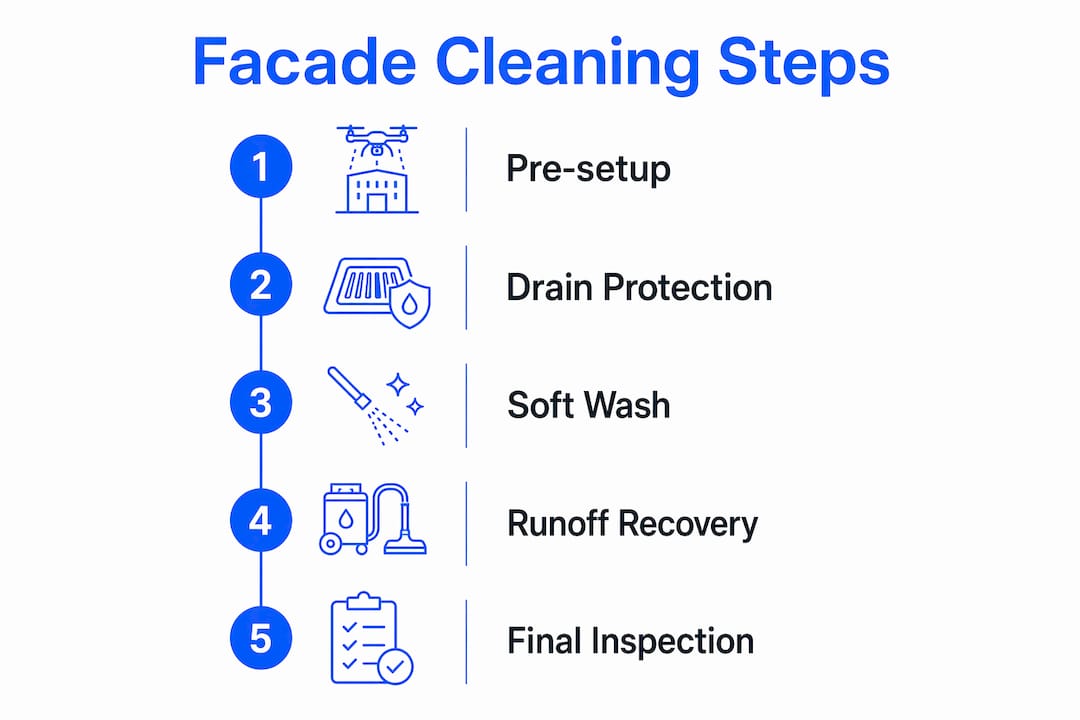
Step 1: Pre-cleaning setup. The crew places directional signage and safety barriers around the active work zone. Pre-cleaning preparation uses signage and targeted barriers without a full lot closure, so parking remains available outside the immediate work area. Barriers should be visible but not block vehicle lanes.
Step 2: Drain protection. Technicians install containment dams and drain covers over every storm drain within the splash zone. Failure to use vacuum recovery may result in costly fines and environmental damage. This step is non-negotiable on any South Florida commercial property.
Step 3: Facade cleaning. For ground-level and mid-rise retail buildings, soft washing crews apply biodegradable cleaning solution, allow it to dwell, then rinse at low pressure. For taller buildings, Vistadronecleaning’s drone operators apply solution and rinse from the air using de-ionized pure water, which leaves no streaks or mineral deposits.
Step 4: Runoff recovery. Vacuum recovery units collect all wash water from the containment zone. No contaminated water enters the storm drain system.
Step 5: Post-cleaning inspection. A supervisor walks the full facade and parking area before barriers come down. The inspection confirms the surface is clean, the pavement is dry, and no debris or equipment remains in customer areas.
| Phase | Action | Key requirement |
|---|---|---|
| Pre-cleaning | Signage and drain covers | No full lot closure |
| Cleaning | Soft wash or drone application | Sectional, zone-by-zone |
| Recovery | Vacuum runoff collection | Stormwater compliance |
| Inspection | Supervisor walkthrough | Customer-ready verification |
Common challenges when cleaning facades without closing parking
Even well-planned projects hit obstacles. Knowing them in advance lets you respond without losing control of the schedule or the customer experience.
-
Wet surface hazards. Active parking during cleaning creates slip risks near the work zone. Place wet-floor signage at every pedestrian entry point to the cleaning zone, not just at the barrier line. Assign one crew member to monitor foot traffic near wet surfaces throughout the project.
-
Humidity and drying delays. South Florida’s humidity slows surface drying, especially on north-facing facades that get less direct sun. Schedule those sections first so they have maximum drying time before the lot opens fully.
-
Stubborn stains on EIFS and stucco. Salt air deposits and biological growth on EIFS facades in Miami Beach, Aventura, and Pompano Beach often require a second soft-wash pass. Build a re-treatment clause into your contract so the vendor returns at no extra charge if stains remain after the first visit.
-
Vendor accountability gaps. Require photo documentation before and after each cleaning zone. Photos create a clear record for insurance purposes and give you objective proof that the work met the agreed standard.
-
Unexpected equipment failure. Ask your vendor what their backup plan is if primary equipment fails mid-project. A vendor without a backup unit will leave barriers in place while they source a replacement, effectively closing sections of your lot for hours longer than planned.
Pro Tip: Review your safe building washing examples before the project starts. Knowing what a properly executed job looks like gives you a concrete benchmark to hold your vendor to.
Key Takeaways
Retail facade cleaning without parking closure is fully achievable when property managers combine off-hours scheduling, zone-by-zone execution, and the right cleaning technology for their building type.
| Point | Details |
|---|---|
| Schedule off-peak windows | Book cleaning between 5–9 AM or 10 PM–5 AM so surfaces dry before customers arrive. |
| Use soft washing or drone cleaning | Match the method to your facade material; drone cleaning eliminates ground-level equipment entirely. |
| Mandate vacuum recovery | Require contractors to use vacuum recovery systems to meet South Florida stormwater regulations. |
| Clean in zones | Sectional cleaning keeps at least half the parking lot accessible throughout the project. |
| Lock in square-footage pricing | Fixed-price quotes prevent slow work and unexpected costs that extend time in the lot. |
Why zero disruption is the only standard worth setting
I’ve reviewed dozens of facade cleaning projects at retail centers across Miami-Dade and Broward County. The ones that go wrong almost always share one trait: the property manager treated scheduling as the vendor’s problem, not their own.
The assumption that a cleaning crew will figure out the logistics on-site is expensive. One customer who can’t find a parking spot during a busy saturday morning will leave and may not return. Multiply that across a full shopping center and the revenue loss from a single poorly planned cleaning day can easily exceed the cost of the cleaning itself.
The other pattern I see is property managers waiting too long between cleanings. South Florida’s combination of salt air, humidity, and intense UV exposure degrades facade surfaces faster than almost anywhere else in the country. Regular cleaning prevents costly structural damage and safety hazards. A quarterly soft-wash program costs a fraction of what facade repairs or slip-and-fall liability claims cost.
Drone cleaning changed the calculus for taller retail buildings. When Vistadronecleaning operates on a multi-story retail center in Brickell or Fort Lauderdale, there is no boom lift sitting in three parking spaces for two days. The crew is compact, the equipment footprint is minimal, and the project moves faster. For property managers who have dealt with traditional scaffold or lift crews, the difference is immediate and obvious.
My recommendation: treat facade cleaning as a recurring line item in your maintenance budget, not a reactive expense. Set a schedule, communicate it to tenants, and hold vendors to written performance standards. The step-by-step facade cleaning approach that keeps parking open is not complicated. It just requires a property manager who insists on it from the start.
, Eliot
Vistadronecleaning: parking-safe facade cleaning for South Florida retail
Vistadronecleaning serves retail centers throughout Miami-Dade, Broward, and Palm Beach counties with drone facade cleaning that requires no scaffolding, no boom lifts, and no parking closures. FAA Part 107-certified pilots operate tethered Lucid Bots Sherpa drones to clean stucco, EIFS, glass, and metal panel facades on buildings up to 200 feet tall. Most projects finish in 1–3 days at 30–60% lower cost than traditional methods.
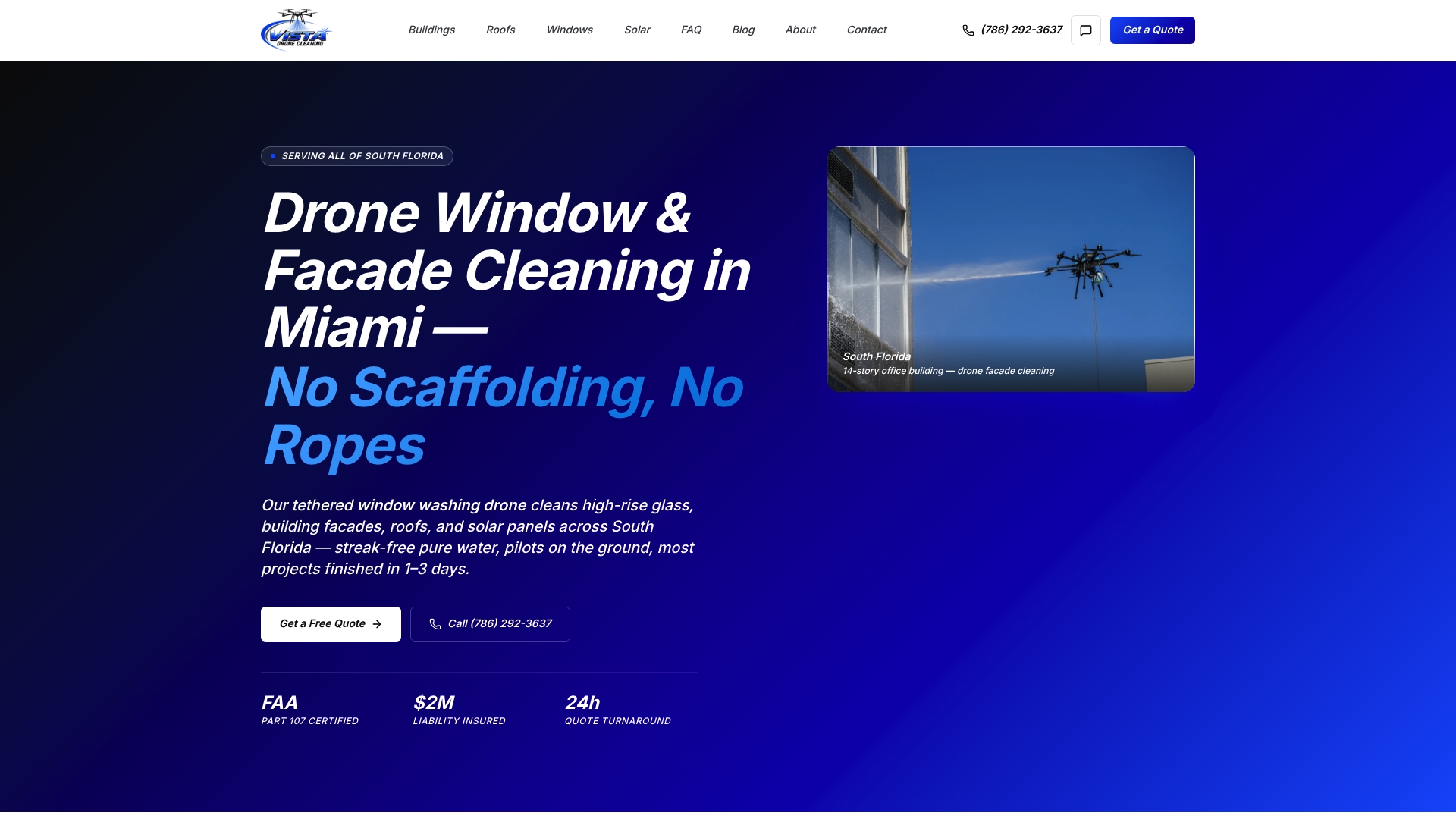
Vistadronecleaning carries $2M in liability insurance and delivers free quotes within 24 hours. If you manage a retail center in Miami, Fort Lauderdale, Boca Raton, or anywhere across South Florida, contact Vistadronecleaning to schedule a site assessment. See how drone cleaning compares to traditional methods before your next maintenance cycle.
FAQ
What is retail facade cleaning without parking closure?
Retail facade cleaning without parking closure is the practice of washing a building’s exterior using off-hours scheduling, zone-by-zone execution, and ground-minimal equipment so customer parking remains fully accessible throughout the project.
What cleaning method works best for South Florida retail facades?
Soft washing is best for brick, EIFS, and painted concrete facades because it uses low pressure and biodegradable chemicals that remove mold and salt deposits without damaging the surface. Drone cleaning is the preferred method for multi-story retail buildings because it eliminates ground-level equipment entirely.
When should facade cleaning be scheduled to avoid disrupting customers?
Retail centers schedule facade cleaning during early morning windows (5–9 AM) or overnight (10 PM–5 AM) so all surfaces are dry and the property is customer-ready by opening time.
Do I need vacuum recovery systems for facade cleaning in South Florida?
Yes. Miami-Dade and Broward County stormwater regulations require that contaminated wash water not enter storm drains. Contractors must use vacuum recovery systems and containment dams to capture runoff and keep the project in compliance.
How often should retail facades in South Florida be cleaned?
Monthly or quarterly recurring cleaning programs are the most cost-effective approach for South Florida retail centers. The region’s humidity, salt air, and UV exposure accelerate biological growth and surface degradation faster than in most other climates.