
What Causes Glass Film on Hotel Windows in South Florida
Discover the five common causes of glass film on hotel windows in South Florida and learn how to address this issue effectively.
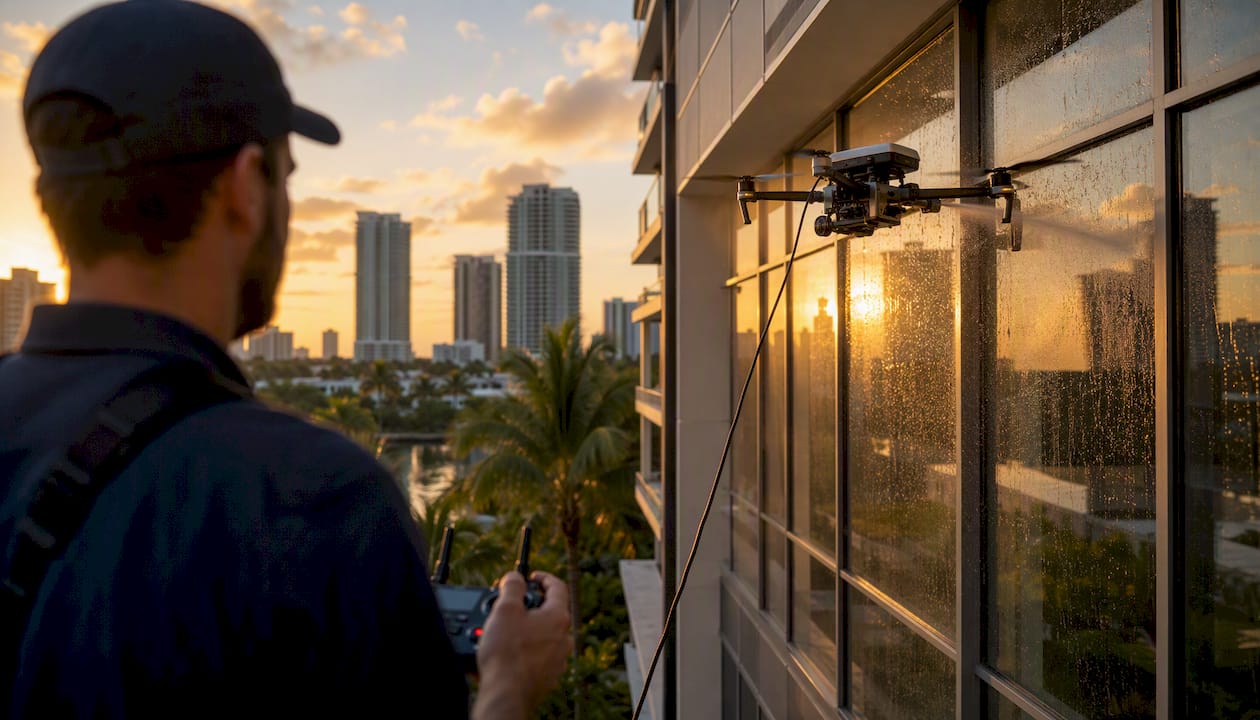
The cloudiness on your hotel’s exterior glass is almost always one of five things: salt spray crystallizing on the surface, hard-water mineral deposits from irrigation or roof runoff, sunscreen and body oils migrating from balconies, pollution and organic grime, or condensation residue from South Florida’s daily humidity cycles. In Miami-Dade, Broward, and Palm Beach counties, salt and minerals usually hit simultaneously, which means treating one without the other brings the film back within weeks.
Immediate next steps:
- Walk the perimeter at ground level and photograph every affected elevation before touching anything.
- Run a safe swipe test on an accessible pane: dampen a white cloth with distilled water and wipe a small area. If residue transfers white and chalky, you’re looking at minerals. If it smears glossy, suspect sunscreen or oil.
- Check for rough, crusted deposits or any pitting in the glass surface.
Call a certified vendor now if you see:
- Visible rough crusting or a sandpaper texture when you lightly touch the glass
- Any pitting, hazing that doesn’t wipe off, or iridescent discoloration (early etching)
- Film above the third floor, where ladder or pole access creates a fall risk
Pro Tip: Document everything with timestamped photos before any cleaning attempt. If a vendor later causes damage, your pre-cleaning record is the only evidence that protects you.
Key Takeaways
Salt spray, hard-water minerals, sunscreen oils, and organic grime are the primary causes of glass film on South Florida hotel windows, and each requires a different removal method to prevent permanent etching.
| Point | Details |
|---|---|
| Diagnose before cleaning | Identify film type (chalky, glossy, biological) with a distilled-water or isopropyl wipe test before choosing a removal method. |
| Match method to film type | Use pure de-ionized water for salt/dust, professional descalers for bonded minerals, and soft-wash chemistry for algae or mildew. |
| Maintenance cadence by exposure | High-exposure oceanfront properties need cleaning every 4–6 weeks; moderate-exposure urban sites every 8–12 weeks. |
| Vendor must-haves | Require FAA Part 107 certification, $2M liability insurance, and before/after 4K documentation in every RFP. |
| Vistadronecleaning | Provides drone-enabled high-rise glass cleaning across Miami-Dade and Broward at 30–60% lower cost than scaffold methods. |
Table of Contents
- What causes glass film on hotel windows in coastal South Florida?
- How do you identify what kind of film you’re seeing?
- What removal methods actually work at height?
- How do you prevent film from coming back?
- What should you ask vendors before signing a contract?
- What does a typical project cost and how long does it take?
- Why drone cleaning makes sense for South Florida hotels
- Vistadronecleaning removes glass film from South Florida hotel facades
- Sources
- FAQ
What causes glass film on hotel windows in coastal South Florida?
South Florida’s environment stacks multiple film-forming mechanisms on top of each other, which is why the glass on a Brickell high-rise or a Fort Lauderdale beachfront property degrades faster than comparable buildings inland.
Salt spray and marine-layer moisture are the primary culprits for oceanfront and bay-facing properties. Salt-laden coastal air deposits microscopic crystals on exterior glass; when humidity re-wets those crystals, they dissolve into a thin brine that leaves a haze as it dries. Repeat that cycle daily across a Miami Beach or Hollywood property and the residue builds into a persistent, slightly abrasive layer. The same coastal humidity also keeps airborne dust and pollen active on the surface longer, accelerating re-soiling between cleanings.
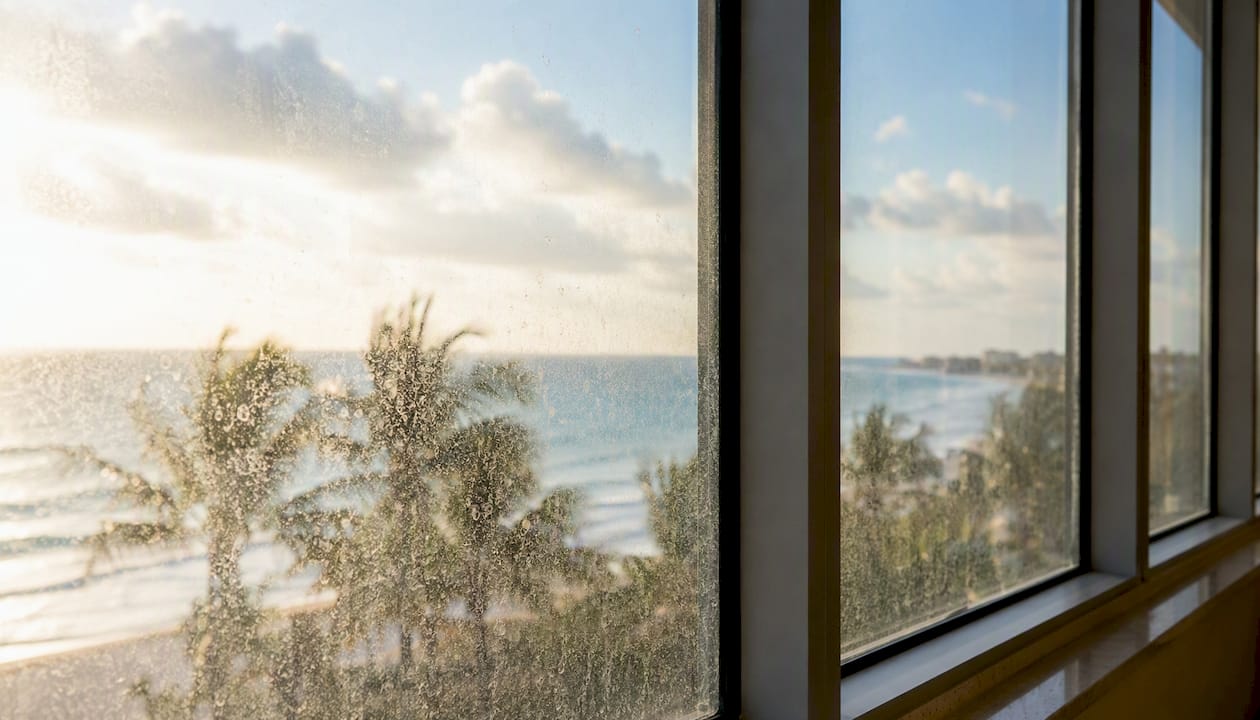
Hard-water mineral deposits from irrigation systems are the second major driver. Florida sprinkler overspray and mineral-laden runoff hit glass repeatedly, and each wet/dry cycle deposits another thin mineral layer. Over time those layers bond chemically to the glass and feel chalky or rough to the touch.
Sunscreen and body oils from pool decks, terraces, and balconies create a different problem. These films are translucent, slightly glossy, and attract airborne dust, so a window near a pool deck can look dirty again within days of cleaning.
Organic and pollution grime rounds out the picture:
- Pollen from South Florida’s year-round growing season sticks to any moist surface
- Bird droppings are mildly acidic and begin etching glass within days if left untreated
- Algae and mildew colonize shaded, north-facing elevations where coastal moisture re-wets surfaces repeatedly
Building design amplifies all of these. Balconies trap sunscreen mist and direct it onto the glass below. Pool decks generate spray that reaches lower floors. Roof drainage that runs across window frames deposits concentrated mineral loads. Window frames made of aluminum oxidize and shed particles that stain adjacent glass, and some older silicone sealants off-gas residues that attract grime.
How do you identify what kind of film you’re seeing?
Getting the diagnosis right before you clean matters. The wrong chemistry on the wrong film type either fails to remove it or damages the glass.
- White chalky or powdery residue, run a fingertip across the glass. If it feels rough or gritty, you have hard-water mineral deposits that may have bonded to the surface. A small drop of white vinegar on the spot will fizz slightly if minerals are present.
- Uniform cloudy haze with no texture, likely salt residue or condensation evaporation. A distilled-water wipe will partially clear it if it’s loose salt. If it doesn’t budge, the salt has cycled into a bonded mineral layer.
- Glossy, smeared appearance: sunscreen, body oil, or a silicone-based cleaner residue. An isopropyl alcohol wipe on a small test area will cut through oil films. If the smear clears, you have an oily film.
- Green, black, or gray biological growth, algae or mildew, almost always on shaded elevations. These require soft-wash chemistry, not just water.
- Iridescent or rainbow-like surface discoloration. This is early glass etching. Stop all tests and call a professional. Etching is permanent damage; further DIY attempts can deepen it.
Safety note: Any test above the ground floor requires proper PPE (gloves, eye protection) and must follow your property’s fall-protection policy. Never lean out of a window or use an unsecured ladder on an upper floor.
Pro Tip: Take a photo of each test spot in direct sunlight and in shade. Certain films only show clearly under one lighting condition, and the photos become part of your maintenance log.
Florida commercial windows face combined stresses (salt, hard water, humidity, and pollen) that can cause permanent etching if neglected. When in doubt, escalate.
What removal methods actually work at height?
The right method depends on the film type and the floor level. Here’s how they stack up:
- Pure de-ionized water rinse: Best for loose salt, dust, and light condensation residue. Streak-free high-rise glass cleaning relies on pure water because it leaves no mineral trace of its own. Effective for routine maintenance; insufficient for bonded mineral deposits.
- Soft-wash with substrate-matched chemistry: Required for algae, mildew, and light organic films. Dilution and dwell time matter, too strong and you risk damaging coatings; too weak and the biology returns within weeks.
- Professional descalers (mild acid-based solutions): The only reliable option for established mineral deposits that have chemically bonded to glass. These require trained applicators, glazing compatibility checks, and proper neutralization afterward. Household vinegar is too weak for heavy deposits.
- Solvent spot treatment for oily films: Isopropyl-based pre-treatment before a pure-water rinse prevents streaks and stops oil from trapping the next round of dust.
- Mechanical abrasion (scrub pads, steel wool): Avoid on coated or tempered glass. Even “safe” scrubbing on the wrong substrate causes micro-scratches that trap minerals and accelerate future buildup.
On drone-enabled access for high-rise hotels: FAA Part 107-certified drone cleaning eliminates the need for boom lifts, scaffolding, or rope access on buildings up to 200 feet. Crews stay on the ground, reducing fall risk entirely. The process includes pure de-ionized water rinses and before/after 4K documentation, so you have a verifiable record of condition before and after every service. For high-rise window cleaning safety and access, drone-enabled methods have become the practical standard for South Florida hotels that need frequent service without guest disruption.
Rope access or scaffolding still makes sense for deep-set windows, complex façade geometries, or heavy scale requiring hands-on mechanical descaling. Know which situation you have before you request bids.
How do you prevent film from coming back?
Prevention is mostly about frequency and irrigation control. Improper or infrequent cleaning lets mineral layers bond permanently, so the maintenance cadence has to match your exposure level.
| Exposure Level | Property Type | Recommended Frequency |
|---|---|---|
| High | Oceanfront, bay-facing, pool-deck adjacent | Regularly every several weeks |
| Moderate | Urban high-rise, inland with irrigation | Frequently every two to three months |
| Low | Sheltered elevations, low-irrigation sites | Every 3–6 months |
Reducing sprinkler mist and using purified rinse water both cut future staining significantly. Practical steps:
- Angle irrigation heads at least 3 feet away from any glass surface and switch to low-drift nozzles on zones adjacent to the building.
- Inspect rooftop drains and scuppers quarterly; concentrated mineral runoff from a blocked drain deposits more mineral load in one storm than weeks of normal exposure.
- Establish a balcony cleaning protocol that removes sunscreen and oil residue from railings and floors before it migrates to glass.
- Avoid silicone-based protectants on glass. They trap grime and create the persistent haze described above.
- Keep a simple maintenance log: date, elevation, film type observed, method used, and a before/after photo. Correlating entries with hurricane season salt spikes or pollen peaks helps you adjust frequency proactively.
What should you ask vendors before signing a contract?
Salt spray, hard water, humidity, and pollen combine to make Florida commercial windows a specialized maintenance category. Not every vendor is equipped for high-rise coastal work. Use this checklist in your RFP.
Non-negotiable qualifications:
- FAA Part 107 pilot certification (required for any drone-based cleaning)
- Proof of $2M liability insurance, naming your property as additional insured
- Written method statement: pure-water, soft-wash, descaler, or combination
- Before/after 4K documentation delivered with every service
Experience and references:
- Request two or three South Florida hotel references at comparable elevation ranges
- Ask for project timelines on buildings with 100–300 windows
- Confirm they have experience with your specific window coating or glazing type
Logistics and guest impact:
- What is their scheduling window to avoid pool hours and peak guest activity?
- Do they require road closures, permits, or airspace notifications?
- What is their escalation process if they discover etched glass or substrate damage mid-project?
- How do they handle chemical runoff near pool decks or landscaping?
Pro Tip: Ask vendors to walk the building with you before quoting. Any vendor who quotes remotely without a site visit is guessing on access complexity, substrate condition, and mobilization time.
For non-disruptive scheduling around hotel guests, confirm the vendor has a written guest-impact mitigation plan before work begins.
What does a typical project cost and how long does it take?
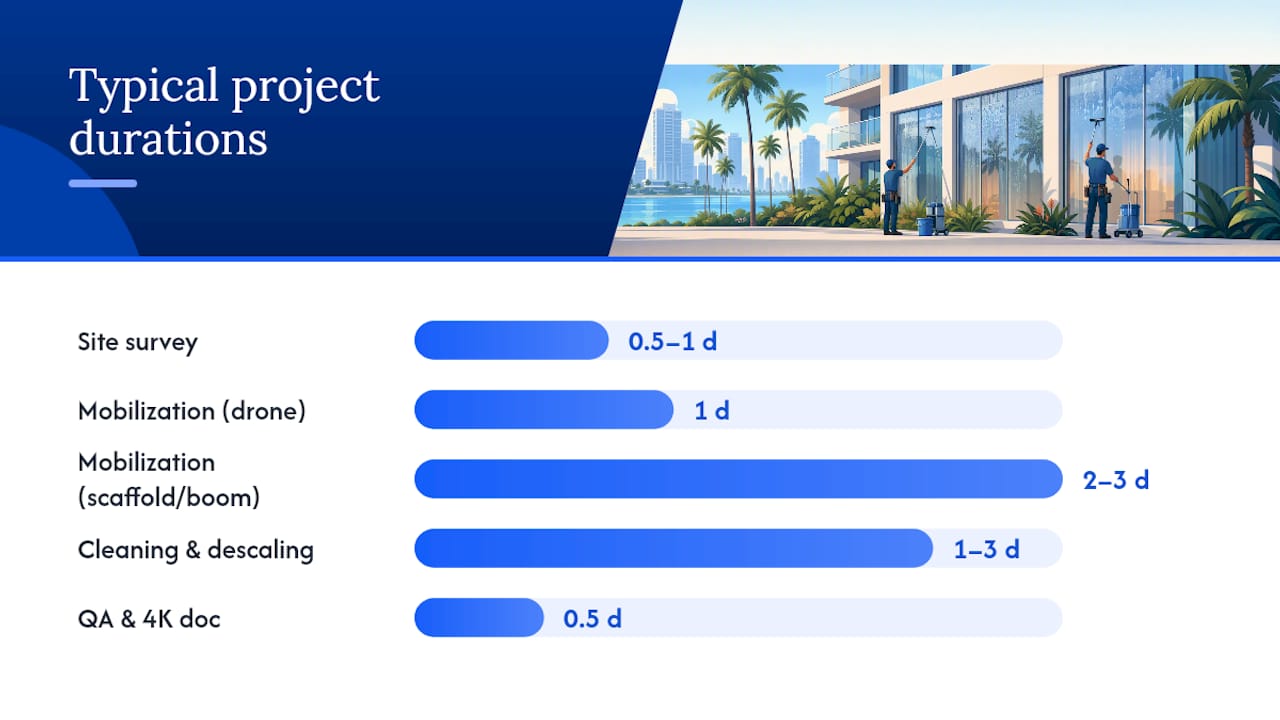
For a South Florida hotel with 100–300 windows, a realistic project timeline breaks down as follows:
- Site survey and spot evaluation: half a day to one day, depending on building complexity
- Mobilization: one day for drone-enabled teams (no lift delivery or rigging); two to three days for scaffold or boom-lift setups
- Cleaning and descaling: one to three days for most mid-rise hotels
- QA inspection and 4K documentation: half a day
Primary cost drivers:
- Access method: drone-enabled cleaning typically costs 30–60% less than scaffold or boom-lift equivalents, primarily because mobilization and equipment rental costs drop sharply
- Descaling requirement: bonded mineral deposits require more labor and chemistry than routine maintenance
- Substrate condition: etched glass needs specialist assessment before any cleaning begins
- Site logistics: properties in dense urban areas like Brickell or Miami Beach may require additional coordination for ground-level access
Seasonal timing affects both schedule and price. Hurricane season (June through November) compresses available service windows and can spike salt loads on coastal properties after major storm events. Pollen peaks in late winter and spring add organic load that increases soft-wash requirements. Commercial building maintenance guides consistently flag these seasonal drivers as reasons to lock in scheduled programs rather than reactive one-off cleanings.
Why drone cleaning makes sense for South Florida hotels
Coastal hotel façades in Miami-Dade, Broward, and Palm Beach present a specific operational challenge: the combination of salt, minerals, and organic growth means cleaning needs to happen frequently, yet traditional access methods. Boom lifts, scaffolding, rope access: are expensive, slow to mobilize, and disruptive to guests.
Drone-enabled cleaning resolves that tension. Crews stay on the ground, which eliminates the primary safety risk. There’s no rigging, no road closure, and no permit delay. For a beachfront property in Hollywood or a tower in Boca Raton, that means a service that would take a week with a scaffold can finish in one to three days. The before/after 4K documentation also gives property managers a defensible record of glass condition, which matters when an insurance or damage claim arises.
When vetting any vendor for this work, the three proof points that matter most are FAA Part 107 certification, $2M liability insurance, and documented before/after results. Those aren’t nice-to-haves; they’re the minimum standard for commercial high-rise work in South Florida.
Vistadronecleaning removes glass film from South Florida hotel facades
South Florida hotels dealing with salt haze, mineral buildup, or organic growth on high-rise glass have a faster, safer option than scaffolding or boom lifts.
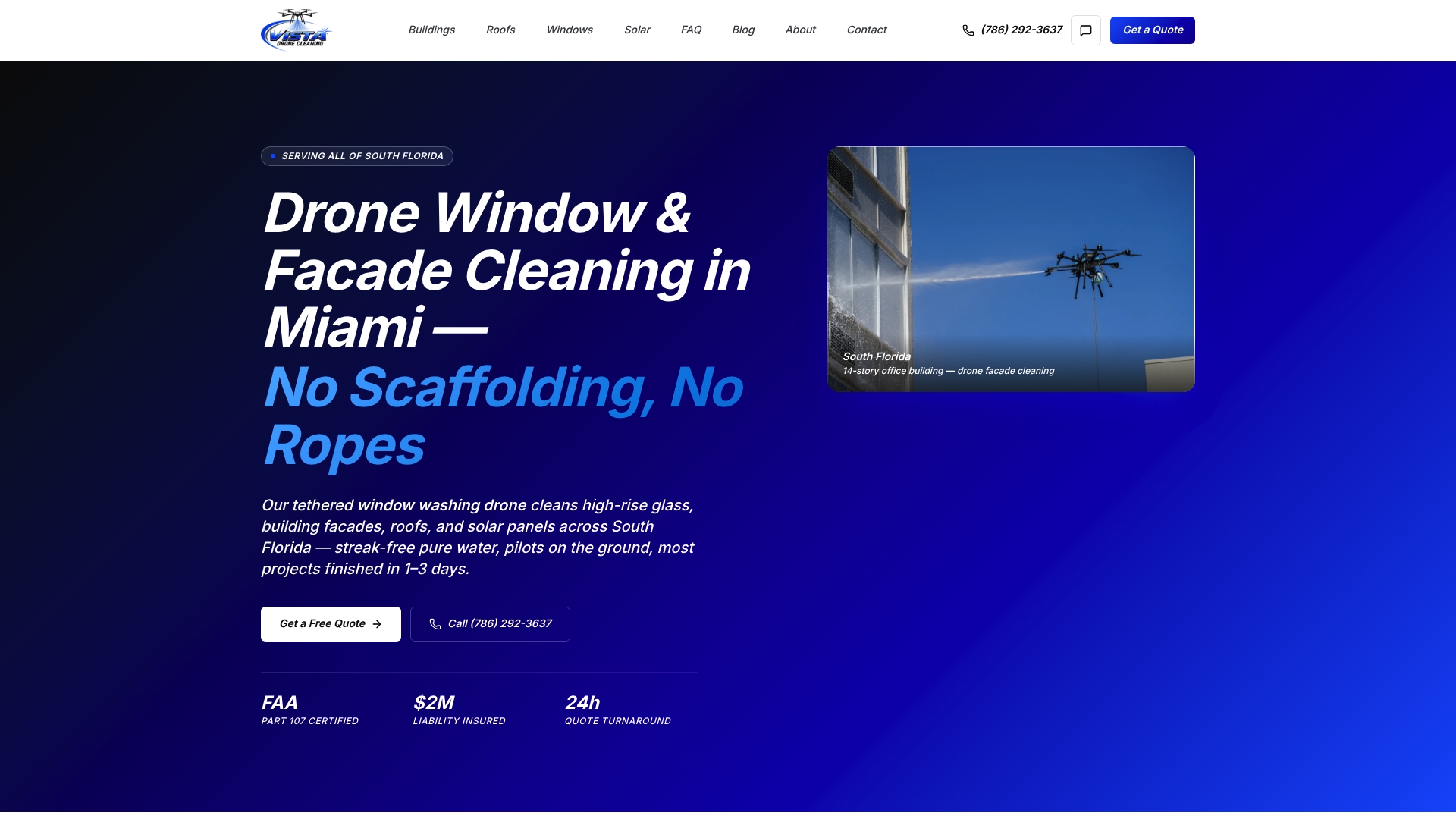
Vistadronecleaning deploys FAA Part 107-certified pilots and tethered industrial drones to clean facades up to 200 feet tall across Miami-Dade and Broward counties, with no scaffolding, no road closures, and no guest disruption. Every service includes a pure de-ionized water rinse for a streak-free finish, substrate-matched chemistry where needed, and before/after 4K documentation. The company carries $2M liability insurance and typically delivers projects at 30–60% lower cost than traditional scaffold or lift methods.
Request a free quote for your property at Vistadronecleaning and get a response within 24 hours.
Sources
- Coastal Window Cleaning in San Diego: Salt Air, Marine Layer, and Why Your Glass Gets Dirty Faster - All Clear window Cleaning
- Hard Water Stains on Windows in Florida
- Stubborn Window Stains and Marks – What Causes Them and How to Remove Them
- Window Cleaning Issues and Problems We Solve in Florida
- Top 5 Signs Your Commercial Building Needs Professional Window Cleaning - Blog
FAQ
What causes the white haze on hotel windows near the ocean?
Salt crystals deposited by coastal air dissolve into brine when humidity re-wets them, then leave a white residue as they dry. In South Florida, this cycle repeats daily, building a persistent haze that bonds to glass over time.
Is glass film on hotel windows harmful to the glass itself?
Yes, if left untreated. Mineral deposits and bird droppings are mildly acidic and can etch the glass surface permanently. Once etching occurs, no cleaning method fully restores clarity.
How often should South Florida hotels clean exterior windows?
Oceanfront and pool-adjacent properties typically need cleaning every 4–6 weeks. Urban high-rises with moderate irrigation exposure can extend that to every 8–12 weeks, depending on visible buildup.
Can hotel maintenance staff remove glass film without professional help?
Ground-floor and accessible panes with light salt or dust can be wiped with distilled water. Bonded mineral deposits, biological growth, and anything above the second or third floor require professional equipment, proper chemistry, and fall-protection compliance.
What should I ask a drone cleaning vendor before hiring them?
Confirm FAA Part 107 pilot certification, proof of $2M liability insurance, a written method statement covering pure-water and descaling protocols, and before/after 4K documentation. Vistadronecleaning provides all four for high-rise hotel projects across Miami-Dade and Broward counties.