
Don't Cancel South Florida Window Cleaning for Light Rain: Pure Water
South Florida property managers: learn when to reschedule and when light rain is fine. Pure deionized water and tethered drones keep high-rise windows clean.
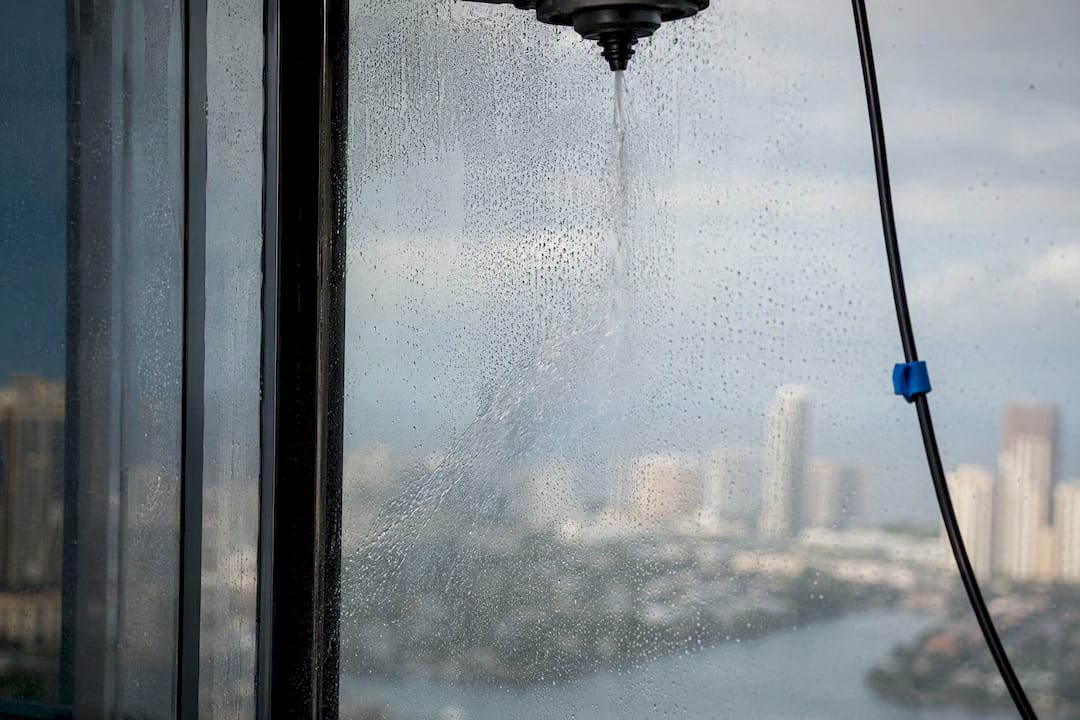

Yes, professional crews can clean windows during light rain or drizzle, and the results hold up. The reason is technical, not lucky: pure de-ionized water and full-frame detailing stop the spotting that untrained crews blame on the weather. Rescheduling only happens for lightning, heavy downpour, or wind strong enough to make ladder, lift, or drone work unsafe. On high-rises, that safety math gets stricter.
TL; DR:
- Crews can safely clean windows during light rain or drizzle by using pure de-ionized water that dries clear and prevents spotting, unless there is lightning or high winds.
- Rain mostly deposits dirt and pollutants from frames and ledges onto glass, making windows look dirtier shortly after rain, not the glass itself.
- Wind-driven rain creates uneven wetting and residue deposits, especially along seams and corners, which evaporate between showers and leave mineral spots.
- Traditional access methods are limited by weather, but tethered industrial drones and FAA Part 107 certified pilots enable safe, schedule-friendly high-rise cleaning during most rain.
- Property managers should write specific weather conditions into contracts, verify vendors’ pure-water capabilities, and adopt regular schedules based on building exposure to maintain long-term cleanliness.
Table of Contents
- Can You Clean Windows in the Rain? When Pros Proceed vs. Reschedule
- Why Windows Look Dirty Right After It Rains
- How Professionals Prevent Streaks When Cleaning in Wet Weather
- High-Rise and Commercial Cleaning: Safety, Insurance, and the Drone Option
- Building a Cleaning Schedule That Survives South Florida’s Wet Season
- Vista Drone Cleaning’s Take on Working Through Wet Weather
- Keep Your Building Clean on Vistadronecleaning’s Schedule, Not the Weather’s
- Sources
- FAQ
Can You Clean Windows in the Rain? When Pros Proceed vs. Reschedule
Light rain and drizzle are not the same operational category as a downpour, and treating them that way costs South Florida property managers money on canceled appointments that never needed canceling. A steady drizzle with good visibility and calm air is workable. A tropical downpour that cuts visibility to a few feet, or a squall line pushing wind gusts past safe operating limits, is not.
Crews commonly finish scheduled work through light rain and drizzle, reserving rescheduling for conditions that create real hazards rather than cosmetic inconvenience. Here’s what actually triggers a delay:
- Lightning within range, full stop, regardless of how light the rain is.
- Heavy precipitation that drops visibility below safe working distance.
- Sustained high winds that make ladders, lifts, or aerial equipment unstable.
- Standing water or slick surfaces that create fall risk for ground crews.
If none of those apply, a crew equipped with pure-water systems has every reason to keep the appointment. Canceling a Tuesday cleaning because Miami got a ten-minute afternoon shower is often the wrong call, since a reputable vendor should tell you upfront which of these thresholds they’re watching, not just “it’s raining, we’re out.”
Why Windows Look Dirty Right After It Rains
Here’s the myth that costs South Florida property owners real money: they assume rain re-dirties clean glass, so they push cleaning appointments to “wait for dry weather” that may not arrive for weeks during Broward County’s wet season. The actual culprit almost never involves the glass itself.
Frame and sill runoff does most of the damage. Aluminum window frames, stucco ledges, and roofline debris collect dust and pollutants between cleanings, and rain washes that grime directly down the pane. A window can look worse an hour after rain and still be structurally clean where it matters, the glass.
Wind-driven rain compounds the problem on taller buildings. Rather than falling straight down, rain angles into a facade, creating uneven wetting patterns and concentrated runoff streams along joints and corners. Peer-reviewed modeling of wind-driven rain shows that not every raindrop simply runs off a vertical surface. Some adhere and evaporate between showers instead, and that evaporation cycle is what leaves the faint mineral spots homeowners mistake for a failed cleaning job.
- Dust and pollen on frames wash onto glass during rainfall.
- Uneven wind-driven wetting concentrates dirt along seams and corners.
- Evaporating droplets between showers leave mineral and pollutant residue.
A separate runoff and evaporation study found that cumuliform rain events (the short, heavy bursts typical of a South Florida afternoon storm) leave more adhered droplets than steady, prolonged rain, because there’s less time for full runoff before the sun comes back out.
How Professionals Prevent Streaks When Cleaning in Wet Weather
The tool that makes light-rain cleaning viable is pure or de-ionized water. Regular tap water carries dissolved minerals that dry into visible spots on glass. Pure-water systems strip those minerals out before they ever touch the window, so the water dries clear whether it’s cleaning day or the sky opens up an hour later.
A proper wet-weather service follows a specific sequence:
- Wash the full frame and sill first, not just the glass, since that’s the actual source of most post-rain grime.
- Clean screens and nearby runoff paths so nothing re-deposits onto a freshly rinsed pane.
- Apply pure water across the entire surface, letting it sheet off evenly rather than pooling.
- Skip the squeegee-and-detergent routine that leaves soap residue behind for rain to reactivate later.
- Allow air-dry rather than forcing it, since pure water leaves nothing behind to streak.
Overcast, lightly rainy conditions often produce a cleaner finish than a bright sunny afternoon. Direct sun flash-dries cleaning solution before it can sheet off evenly, which is exactly what causes the streaking most people blame on “hard water.” A cloudy sky is not the enemy here.
Pro Tip: Ask any vendor whether they use pure or de-ionized water rather than a hose-and-detergent method. If they hesitate, that’s your answer about whether they can reliably work around South Florida’s afternoon storm pattern.

High-Rise and Commercial Cleaning: Safety, Insurance, and the Drone Option
Traditional access methods carry hard weather limits. Poles max out at a few stories. Boom lifts and rope access both have manufacturer-rated wind thresholds, and most crews won’t deploy either when visibility drops or gusts pick up, regardless of how light the actual rain is. For a 20-story condo tower in Brickell or a hotel facade in Fort Lauderdale, that means weather can shut down an entire crew for the day even when the rain itself is manageable.
Before approving any vendor for wet-weather work, ask these questions:
- Are pilots or technicians certified under FAA Part 107 for commercial drone operation?
- What’s the liability coverage, and can they provide proof?
- What wind speed or visibility threshold triggers their own reschedule policy?
- Does the equipment require scaffolding, permits, or road closures that add weather-related delay risk?
| Access method | Ground crew safety | Typical wind sensitivity | Permit/rigging needs |
|---|---|---|---|
| Boom lift or scaffold | Crew works at height | High | Often required |
| Rope access | Crew works at height | High | Often required |
| Tethered industrial drone | Crew stays on ground | Moderate, equipment-dependent | Typically minimal |
Tethered industrial drones keep operators grounded throughout the job, which changes the safety calculation for both light rain and general high-rise risk. A vendor citing $2M liability coverage alongside Part 107 certification is showing you the two verifiable credentials that actually matter for high-rise window cleaning safety.
Building a Cleaning Schedule That Survives South Florida’s Wet Season
South Florida’s coastal air and long rainy season accelerate soiling faster than most inland climates. Salt spray, humidity, and pollen buildup mean facades in polluted or coastal environments need more frequent attention than the industry’s general annual-cleaning guideline suggests.
Skipping a cleaning cycle because it might rain that week is usually the more expensive choice. Mineral deposits and pollutants that sit on glass and frames for months become harder, and pricier, to remove than a routine wash would have been.
For property managers building or revising a maintenance contract, four steps cover the gaps that cause disputes later:
- Set a realistic cadence based on building height, coastal exposure, and traffic, not a generic annual default.
- Write a weather clause into the contract defining exactly what triggers a reschedule (lightning, sustained high wind, low visibility) rather than leaving “bad weather” undefined.
- Confirm the vendor’s pure-water capability in writing, since that’s what makes light-rain scheduling flexibility possible in the first place.
- Keep a pre-service checklist covering frame and gutter condition, since those drive most of the visible grime blamed on rain.
A building on the Intracoastal in Fort Lauderdale or a retail center off Federal Highway in Boca Raton won’t have identical soiling patterns, but the same principle holds: consistent scheduling beats reactive, weather-driven cancellations.
Vista Drone Cleaning’s Take on Working Through Wet Weather
A drone cleaning company built its operating model around FAA Part 107 certified pilots and tethered industrial drones that keep crews on the ground for the full job. This design choice helps reduce weather-related scheduling concerns during rainy seasons. Clients receive a pure de-ionized water rinse, insured operations, and turnaround measured in days.
When a South Florida afternoon storm rolls through mid-project, the decision to continue or pause isn’t guesswork. It comes down to the same measurable thresholds any careful operator should use: wind, lightning, visibility. Nothing more mysterious than that.
, Eliot
Keep Your Building Clean on Vistadronecleaning’s Schedule, Not the Weather’s
Traditional scaffold and lift crews lose entire days to marginal weather because their equipment simply can’t operate safely in the conditions Vistadronecleaning handles routinely. That’s the practical edge for South Florida property managers: FAA Part 107 certified pilots run tethered industrial drones that keep every crew member on the ground, so a light Miami-Dade shower doesn’t automatically mean a canceled service window.

Vistadronecleaning covers drone window washing, full facade cleaning, and solar array pure-water washes for buildings up to 200 feet and beyond, without scaffolding, permits, or road closures slowing the project down. Every job runs under $2M liability insurance, and quotes come back within 24 hours of your request. Most commercial projects typically finish in a matter of days and can be less expensive than traditional scaffold or lift methods.
If your building sits anywhere from Miami-Dade to Palm Beach County and you’re tired of rescheduling around every forecast, compare drone cleaning against traditional methods or go straight to requesting a free quote for your high-rise or commercial property.
Sources
- Atmosphere (2019), research on soiling and cleaning intervals / WDR effects
- NOAA
- FAA, UAS commercial operator guidance
FAQ
Can a Window Cleaner Work in the Rain?
Yes, professional crews routinely work through light rain and drizzle using pure or de-ionized water systems that dry without spotting. They reschedule only for lightning, heavy downpours, or wind conditions that make ladders, lifts, or drones unsafe to operate.
When Should You Not Clean Windows?
Skip cleaning during lightning, heavy rain that limits visibility, or high winds that compromise access equipment. Outside those specific safety triggers, weather alone is rarely a good reason to cancel.
What Month Is Best to Clean Windows in South Florida?
There’s no single ideal month, since South Florida’s humidity and pollen mean facades soil year round. A consistent cadence tied to building exposure, not calendar timing, gets better long-term results than waiting for a “dry season.”
Are Window Cleaners Supposed to Dry Your Windows?
Not with a towel or forced drying. Pure de-ionized water is designed to air-dry completely clear, which is why overcast or lightly rainy conditions often produce a cleaner finish than direct sun that flash-dries solution and causes streaking.