
Streak-Free High-Rise Glass Cleaning Steps That Work
Discover effective streak-free high-rise glass cleaning steps to ensure crystal-clear facades. Optimize your cleaning techniques today!
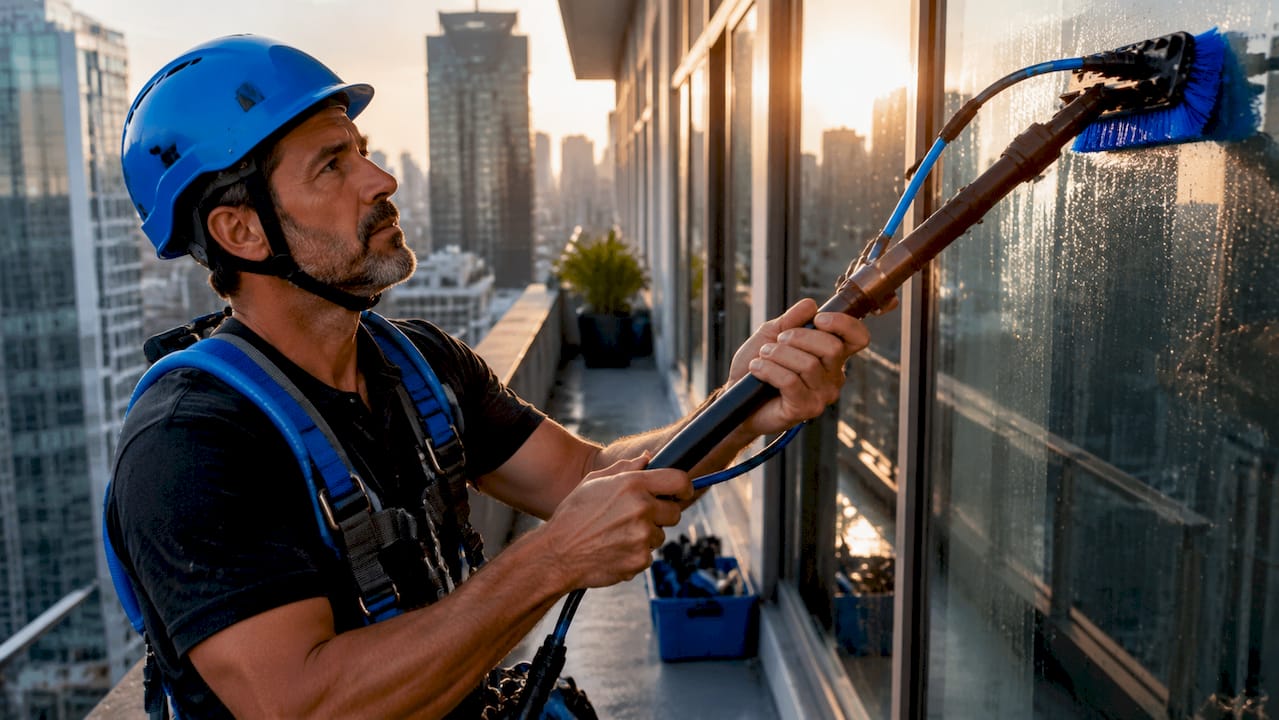

Streak-free high-rise glass cleaning is defined as a systematic process using deionized water, professional squeegee technique, and building-specific preparation to remove all residue from tall building facades without leaving marks. Property managers and facility directors who skip any one of these three elements consistently get streaks. The industry term for this discipline is commercial facade glass maintenance, and it combines water chemistry, physical technique, and environmental timing into a repeatable program. High-rise buildings typically require cleaning every 1–3 months in coastal or high-pollution zones and every six months in lower-exposure environments. Getting the steps right the first time protects glass coatings, preserves curb appeal, and reduces long-term facade repair costs.
What tools and materials are essential for streak-free high-rise glass cleaning?
The right equipment is the foundation of every streak-free result. No technique compensates for the wrong tools on a 30-story curtain wall.
Pure water filtration systems
Multi-stage RO/DI filtration is the professional standard for streak-free glass care on surfaces up to 60–70 feet. These systems reduce total dissolved solids (TDS) to near zero, which means the water evaporates without leaving mineral deposits or residue. Single-stage filtration fails in hard water regions like South Florida, where dissolved calcium and magnesium are high. Water-fed carbon fiber poles extend pure water delivery to upper floors without requiring technicians to leave the ground for lower-rise sections.
Squeegees, microfiber, and detergents
A professional squeegee with a sharp, undamaged rubber blade is non-negotiable. Blades must be wiped clean between every pass to prevent transferring residue back onto the glass. pH-neutral detergents protect modern low-E and hydrophobic glass coatings that older alkaline cleaners degrade over time. Microfiber cloths handle edge and corner detailing after squeegee passes, removing the thin water line that causes the “picture frame” streak effect along window borders.

Safety equipment
Rope access systems, certified anchor points, and aerial work platforms are required for floors above the reach of water-fed poles. Safety gear is not separate from cleaning quality. Rigorous safety protocols contribute directly to cleaner results because a stable, secure technician performs more precise work than one managing an unstable position.
Pro Tip: Check TDS levels with an inline meter before every job. Water above 10 ppm TDS will leave spots on glass, regardless of technique.
| Tool | Best use case |
|---|---|
| Multi-stage RO/DI water-fed pole | Ground-level delivery on buildings up to 60–70 feet |
| Professional squeegee with rubber blade | All glass surfaces requiring manual streak-free passes |
| pH-neutral detergent | Modern coated glass, low-E panels, hydrophobic surfaces |
| Microfiber cloths | Edge detailing, corner work, and post-squeegee touch-ups |
| Rope access or aerial platform | Upper floors beyond water-fed pole reach |

What are the streak-free high-rise glass cleaning steps in order?
Executing these steps in sequence is what separates a professional result from a streaky one. Skipping or reordering steps is the most common cause of callbacks.
-
Conduct a pre-cleaning assessment. Walk the building perimeter and map each elevation. Note glass type, coating, contamination profile (salt, exhaust, bird waste, construction dust), and any damaged seals or frames. Building-specific facade profiling is the professional standard because one-size-fits-all methods produce inconsistent results across different glass types and exposures.
-
Remove loose debris from frames and sills. Use a soft brush or low-pressure air to clear dust, grit, and debris from window frames before any water touches the glass. Dragging grit across a pane with a squeegee causes scratches that no cleaning technique can fix.
-
Apply detergent and agitate. Apply a diluted pH-neutral detergent solution using a scrubber sleeve or water-fed pole brush. Work in sections, scrubbing in circular motions to lift contamination from the glass surface. Do not let the solution dry on the glass before the next step.
-
Execute the squeegee pass using S-pattern strokes. Start at the top corner of each pane. Use continuous blade contact with overlapping six-inch passes in an S-pattern. Overlapping passes with blade wiping between each stroke prevents residue buildup and eliminates streaks across the main glass field. Wipe the blade with a clean, dry microfiber cloth after every single pass.
-
Detail the edges immediately. After the squeegee pass, run a folded microfiber cloth along all four edges of the pane. The water line left at the border must be thinner than one finger width. If it exceeds that, redo the edge pass rather than buffing a dry spot, which always leaves a streak.
-
Time the work around environmental conditions. Direct sunlight and high temperatures cause rapid drying that locks streaks into the glass before a technician can squeegee them off. Schedule work in early morning hours or on shaded elevations first. In Miami, east-facing facades should be cleaned before 9 a.m. to stay ahead of direct sun exposure.
-
Document results photographically. Photograph each elevation before and after cleaning. This creates a quality assurance record, supports client reporting, and identifies recurring contamination zones that need schedule adjustments.
Pro Tip: Work top to bottom on every elevation. Dirty water running down over already-cleaned glass below is the fastest way to double your work.
How do environmental and building-specific factors affect streak formation?
Environmental conditions are not background noise in high-rise glass cleaning. They are active variables that determine whether a technically correct cleaning produces a streak-free result or not.
Temperature, sunlight, and wind
High ambient temperatures accelerate evaporation. A squeegee pass that takes 30 seconds on a 65°F morning takes 10 seconds to dry on a 90°F afternoon in direct sun. Wind compounds this by pulling moisture off the glass faster than any technician can work. The practical fix is to schedule cleaning sessions in cooler, shaded conditions and to work in smaller sections during hot weather so no glass surface sits wet for more than 60 seconds.
Coastal and urban contamination
Buildings in Miami, Brickell, and Fort Lauderdale face salt aerosol from ocean exposure, which bonds to glass and requires longer dwell time from detergent before it releases. Urban towers near I-95 or the Port of Miami accumulate diesel particulate that behaves differently from salt and requires a slightly higher detergent concentration. Customized cleaning plans that profile glass types and local contaminants are the professional standard for these environments.
Maintenance schedule recommendations
- Monthly: Buildings within two blocks of the ocean, towers adjacent to major highways, and properties with food service exhaust near glass facades
- Quarterly: Standard urban commercial towers, office buildings in mixed-use districts
- Semi-annual: Low-pollution suburban office parks and warehouse facilities with minimal glass exposure
Cleaning frequency ranges from every one to three months for high-traffic and coastal buildings down to every six months for low-pollution sites. Sticking to the right interval prevents contaminant bonding that requires aggressive cleaning methods and risks coating damage.
What causes streaks, and how do you fix them?
Most streaks on high-rise glass trace back to four specific mistakes. Identifying which one applies to your building tells you exactly what to correct.
- Dirty squeegee blade. A blade with residue on it deposits that residue back onto the glass with every pass. Wipe the blade with a clean microfiber cloth after every single stroke, without exception.
- Mineral-rich water. Tap water or inadequately filtered water leaves calcium and magnesium deposits as it dries. Multi-stage RO/DI systems that reduce TDS to near zero are the only reliable fix, particularly in hard water regions.
- Missed edge detailing. The “picture frame” effect, where streaks appear only along the borders of a pane, results from skipping or rushing edge detailing after the squeegee pass. Leaving more than a one-finger-width water edge requires a redo pass, not buffing.
- Wrong detergent concentration. Too much detergent leaves a film. Too little fails to lift contamination. Follow manufacturer dilution ratios precisely and adjust only when contamination type demands it.
Pro Tip: If streaks appear only on south-facing glass, the cause is almost always sun exposure during cleaning, not technique. Shift that elevation to early morning or overcast days.
Safety disruptions also affect quality. Anchor stability and drop zone controls directly impact how precisely a technician can execute squeegee strokes at height. A technician managing an unstable rope position cannot maintain consistent blade pressure, which produces uneven passes and streaks.
Key takeaways
Streak-free high-rise glass cleaning requires deionized water, precise squeegee technique, immediate edge detailing, and building-specific scheduling to produce consistent, residue-free results.
| Point | Details |
|---|---|
| Use multi-stage RO/DI water | Reduce TDS to near zero to prevent mineral deposits on glass. |
| Follow the S-pattern squeegee method | Overlap passes by six inches and wipe the blade after every stroke. |
| Detail edges immediately | Keep the water border under one finger width or redo the pass. |
| Schedule around sun and heat | Clean shaded or cool elevations first to prevent rapid drying and streaks. |
| Customize by building profile | Match detergent, frequency, and method to your building’s specific contaminants. |
Why I think most streak problems are a planning failure, not a technique failure
After working with property managers across South Florida, I have seen the same pattern repeat: a building gets cleaned, streaks appear, and the crew gets blamed for poor technique. In most cases, the technique was fine. The planning was not.
Nobody scheduled the south elevation for early morning. Nobody checked the TDS output of the filtration unit before the crew started. Nobody mapped the contamination profile to know that the building sits two blocks from the ocean and needs monthly service, not quarterly. The cleaning team showed up and did their job. The program around them failed.
The facilities that consistently get streak-free results treat glass cleaning as a managed program, not a reactive task. They have a building facade manual. They track contamination patterns by elevation. They know which glass panels have low-E coatings that require pH-neutral chemistry. They schedule cleaning visits around Miami’s weather patterns, not around budget cycles.
Technology is closing the gap for buildings that lack that institutional knowledge. Pure water systems with inline TDS meters remove the guesswork from water quality. Photographic documentation before and after each visit creates a performance record that shows exactly where the program is working and where it is not. Drone-based cleaning platforms like the Lucid Bots Sherpa go further by keeping crews on the ground entirely, which removes the safety variable from the quality equation. A ground-based operator with a stable platform executes a more consistent cleaning pass than a rope-access technician managing wind load at 200 feet.
My recommendation to facility directors: audit your current program against the steps in this article before your next cleaning cycle. The fix is almost always in the preparation, not the execution.
, Eliot
How Vistadronecleaning delivers streak-free results without rope access
Property managers overseeing high-rise glass in Miami, Brickell, Fort Lauderdale, and Boca Raton now have a faster path to streak-free facades. Vistadronecleaning uses FAA Part 107-certified pilots and tethered Lucid Bots Sherpa industrial drones to deliver pure deionized water cleaning on commercial properties up to 200 feet tall. No scaffolding, no permits, no road closures. Most projects finish in 1–3 days at 30–60% lower cost than traditional scaffold or lift methods.

The ground-based approach eliminates the safety disruptions that degrade cleaning quality at height. Every project is backed by $2M liability insurance and a free quote within 24 hours. See how the method compares in detail on the drone vs. traditional cleaning page, or explore high-rise window cleaning services for South Florida commercial properties.
FAQ
What is the correct squeegee technique for streak-free high-rise glass?
Use an S-pattern with continuous blade contact, overlapping passes by six inches, and wipe the blade with a clean microfiber cloth after every stroke. Follow immediately with edge detailing to eliminate the “picture frame” streak effect.
How often should high-rise windows be cleaned to stay streak-free?
Cleaning frequency ranges from monthly for coastal and high-pollution buildings to every six months for low-exposure sites. Most urban commercial towers in South Florida require quarterly service at minimum.
Why does deionized water prevent streaks better than tap water?
Multi-stage RO/DI filtration reduces total dissolved solids to near zero, so the water evaporates without leaving mineral deposits. Tap water contains calcium and magnesium that bond to glass as white spots when dry.
What causes the “picture frame” streak effect on windows?
The picture frame effect results from insufficient edge detailing after the squeegee pass. If the water border along the pane edge exceeds about one finger width, the pass must be redone rather than buffed dry.
When is the best time of day to clean high-rise glass without streaking?
Direct sunlight and high temperatures cause rapid drying that locks streaks into the glass. Schedule work in early morning hours or on shaded elevations to keep drying time slow enough for proper squeegee and edge work.