What Does Building Exterior Staging Mean for Your Property?
Discover what building exterior staging means and how it enhances your property's value and appeal. Make your commercial space ready for events!
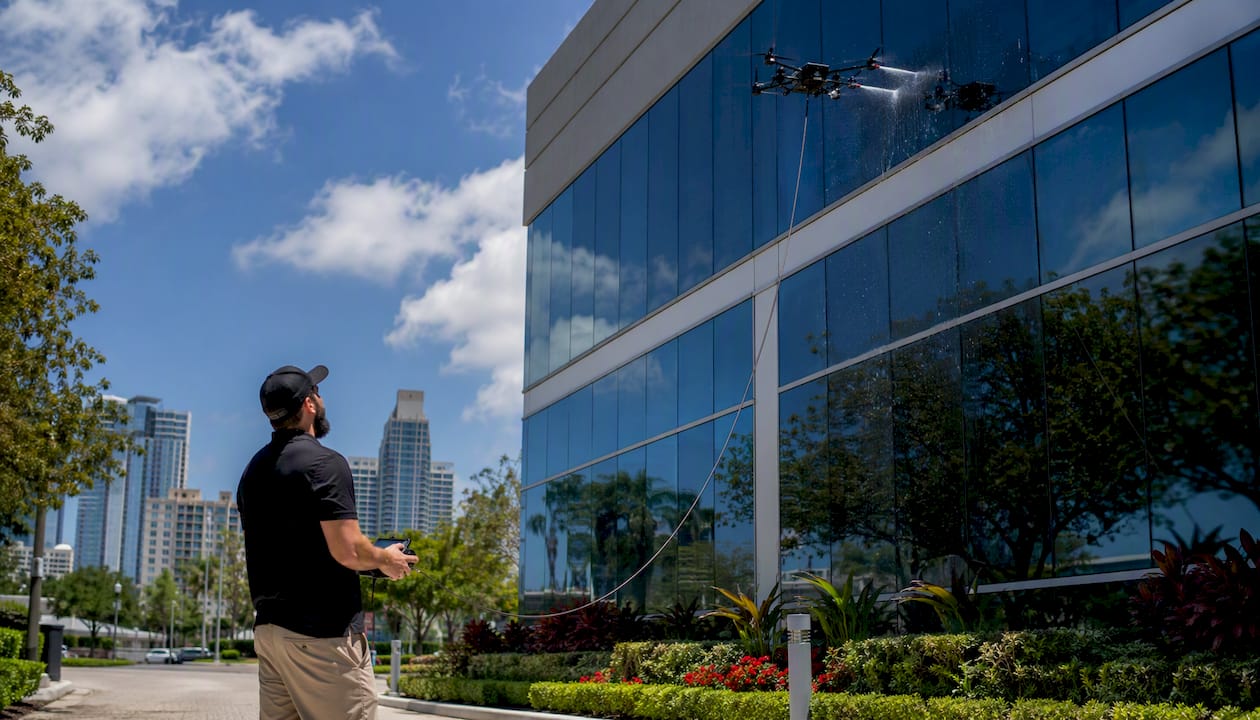
Building exterior staging is the professional cleaning and preparation of a commercial building’s exterior (windows, façade, roof, solar arrays, and ground-level approaches) so the property is photo-ready, event-ready, or occupancy-ready. In South Florida, where Miami’s humidity and salt air accelerate biological growth year-round, treat it as preventive asset protection, not a cosmetic touch-up.
The industry term you’ll hear from facility professionals is commercial exterior maintenance, and exterior staging is its event- or milestone-driven application. A property staged before a lease-up photo shoot, an HOA inspection, or a hotel grand opening has been cleaned, documented, and verified substrate by substrate.
Before calling a vendor, confirm they bring:
- FAA Part 107 certification for any drone-based work
- $2M general liability insurance (minimum)
- Substrate-matched soft-wash chemistry and a streak-free pure de-ionized water rinse
- Before/after 4K photo documentation
Vistadronecleaning covers all of Miami-Dade, Broward, and Palm Beach counties with exactly this scope.
Table of Contents
- What services does exterior staging actually include?
- Why does exterior staging matter so much in South Florida?
- How is exterior staging actually executed?
- What safety and compliance documents should you require?
- How do you choose the right exterior staging provider?
- How often should you schedule exterior staging after the first job?
- Key Takeaways
- The part most property teams get wrong about exterior staging
- Vistadronecleaning stages South Florida commercial exteriors without the disruption
- Useful sources and further reading
- FAQ
What services does exterior staging actually include?
The scope varies by property, but a complete commercial staging engagement typically covers these deliverables:
- Drone window washing, streak-free glass on high-rise and mid-rise facades using pure de-ionized water rinses
- Façade soft-wash, low-pressure application of substrate-matched chemistry on stucco, EIFS, concrete, metal panel, and painted surfaces
- Roof soft-wash: biological removal (mold, algae, lichen) without high-PSI damage to roofing materials; drone-assisted approaches speed completion on large commercial roofs
- Solar array pure-water cleaning. De-ionized rinse that leaves no mineral residue and supports PV output maintenance
- Hardscape pressure washing: driveways, parking decks, pool surrounds, and entry plazas
- Graffiti removal: chemical or pressure-based depending on substrate
- Awning and canopy cleaning
- Before/after 4K documentation, MSDS for all chemistries, and a written substrate-matched cleaning plan
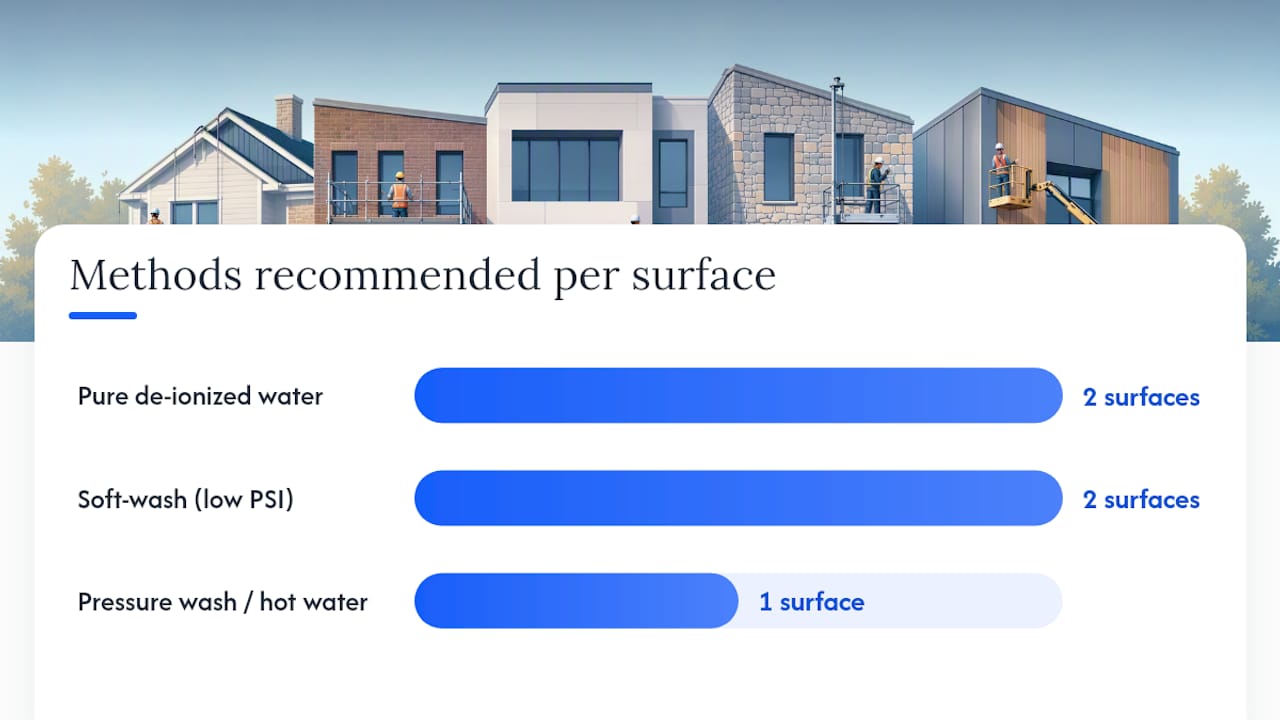
Pressure wash vs. soft-wash at a glance:
| Surface | Recommended Method | Why |
|---|---|---|
| Glass / windows | Pure de-ionized water, low pressure | Streak-free; no mineral deposit |
| EIFS / painted stucco | Soft-wash, low PSI | High PSI cracks or delaminate finish |
| Concrete / pavers | Pressure wash or hot water | Durable; needs mechanical action for grease |
| Tile / metal roof | Soft-wash | Avoids granule loss and coating damage |
| Solar panels | Pure de-ionized water | No residue; protects cell surface |
For a full building exterior maintenance checklist, property managers can use Vistadronecleaning’s published guide as a procurement template.
Why does exterior staging matter so much in South Florida?
The short answer: biology moves fast here. Miami’s subtropical climate creates constant moisture, salt-laden air, and intense UV exposure that keep mold, algae, and mildew growing on exterior surfaces year-round. Organic growth doesn’t just look bad. It traps moisture against the substrate, which accelerates decay in stucco, concrete, and sealants.
Statistic callout: According to CCR-Mag’s reporting on Miami exterior maintenance, biological contaminants in South Florida’s humid climate actively accelerate material deterioration and can obscure early structural damage, making proactive staging an asset-protection practice, not an optional upgrade.
The liability angle matters too. Algae-covered walkways and entry plazas create slip-and-fall exposure. Obscured cracks or spalling on a façade can go undetected until they become a code issue. A staged exterior gives your risk team a clean, documented baseline, and gives inspectors nothing to flag.
For properties in Miami-Dade approaching a 40-year recertification window, a staged and documented exterior can meaningfully simplify the inspection process.
Key liability and inspection benefits of a staged exterior:
- Removes slip hazards from algae-covered hardscapes
- Reveals substrate cracks, spalling, or sealant failures hidden under biological growth
- Provides photographic evidence of property condition for insurance and legal purposes
- Supports compliance with HOA maintenance covenants and local building codes
How is exterior staging actually executed?
The method depends on the substrate and the height of the work. Here’s how the main approaches compare:
| Method | Best For | Key Advantage | Limitation |
|---|---|---|---|
| Tethered drone soft-wash | High-rise glass, upper façades | No scaffolding; crews stay on ground | Requires FAA Part 107 pilot |
| Low-PSI soft-wash | EIFS, stucco, painted surfaces | Protects fragile finishes | Slower on heavy biological buildup |
| Pure de-ionized water rinse | Glass, solar panels | Zero mineral residue; streak-free | Not a standalone for heavy soiling |
| Hot-water pressure wash | Concrete, grease-heavy surfaces | Mechanical cleaning power | Too aggressive for sensitive substrates |
Vistadronecleaning uses Lucid Bots Sherpa tethered industrial drones, which reach buildings up to 200 feet without rigging, permits, or road closures. Drone window cleaning pairs the drone delivery system with substrate-matched chemistry and a final pure de-ionized water rinse for streak-free results on glass and metal panel facades. FAA Part 107-certified pilots operate every flight, and before/after 4K documentation is standard on every job.
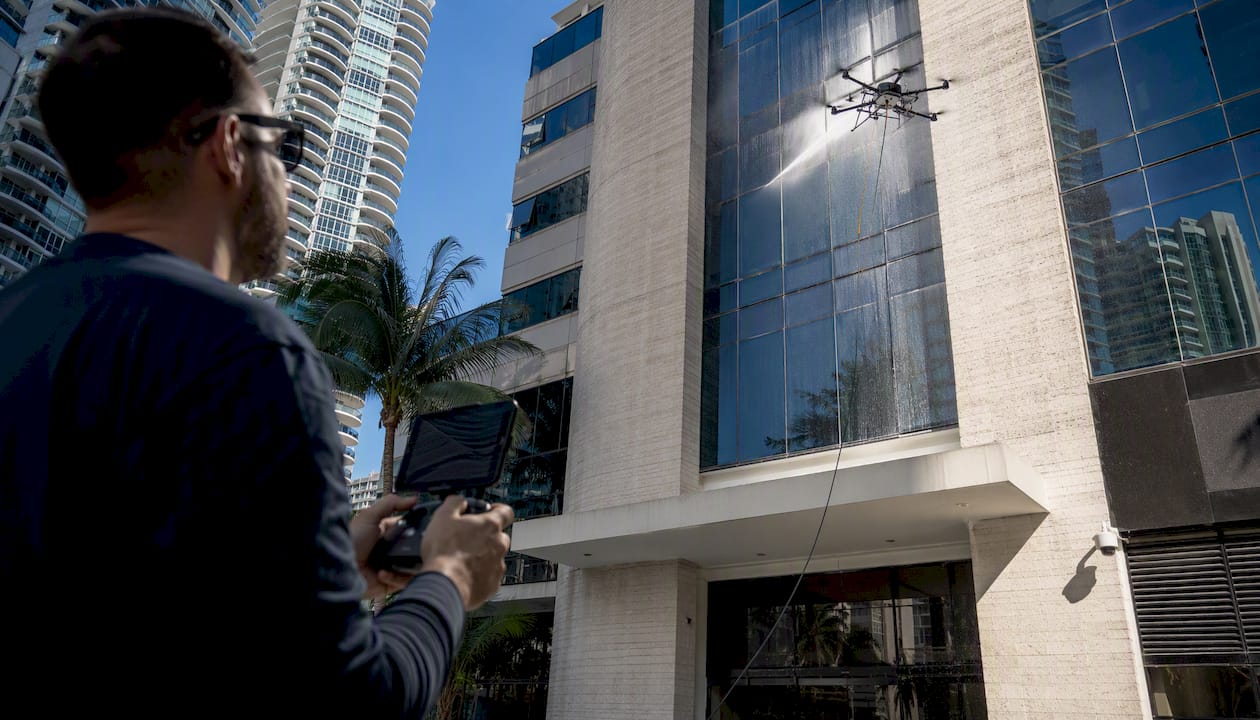
For EIFS and painted stucco, common on South Florida condominiums and hotel towers, soft-wash at low PSI with appropriate chemistry is the only safe option. High-pressure washing on these surfaces can crack the finish or force water behind the cladding, creating the exact moisture problem you’re trying to prevent.
Pro Tip: Ask your vendor to identify every substrate on your building before they quote. A single-method provider who applies the same PSI to glass, stucco, and concrete is a red flag.
What safety and compliance documents should you require?
Before any vendor starts work, your risk team should collect:
- FAA Part 107 pilot certification, required for any commercial drone operation
- $2M general liability insurance certificate, minimum for commercial property work
- Workers’ compensation proof: protects you if a crew member is injured on your property
- MSDS (Material Safety Data Sheets) for every chemistry used on site
- Site-specific method statement: written plan identifying substrates, methods, and PSI levels
During and after the job, request:
- Perimeter control documentation (how pedestrian and vehicle traffic was managed)
- Environmental protection notes (how landscaping and storm drains were protected)
- Before/after 4K photo report
- Warranty or guarantee terms in writing
- Scheduling records for recurring contract reference
For HOA boards managing South Florida exterior cleaning contracts, keeping a compliance file with these documents protects the association in the event of a claim or inspection.
How do you choose the right exterior staging provider?
Your provider checklist should cover:
- Demonstrated South Florida experience (Miami-Dade, Broward, or Palm Beach projects)
- FAA Part 107 certification on file
- Substrate-specific method selection, not a one-PSI-fits-all approach
- Insurance limits at or above $2M liability
- Sample before/after deliverables from comparable commercial properties
- Storm-response capacity for post-hurricane or post-tropical-storm work
Questions worth asking during procurement:
- What is your average crew size and job duration for a building of this footprint?
- Which chemistries do you use on EIFS versus concrete, and can you provide the MSDS in advance?
- Do you use tethered drones, lifts, or rope access, and what drives that choice?
- How do you handle occupied buildings or active parking areas during the job?
- What does your warranty or satisfaction guarantee cover?
Red flags to walk away from: vague or expired insurance certificates, refusal to provide MSDS before the job starts, no 4K documentation in their standard scope, and any insistence on high-PSI pressure washing for stucco or EIFS facades.
Pro Tip: Request a sample work report from a previous commercial job. A provider who can’t produce one has no documentation culture, and that’s a liability gap for your property.
How often should you schedule exterior staging after the first job?
Recommended cadence by property type:
- Coastal properties (Miami Beach, Aventura, Hollywood, Boca Raton oceanfront): monthly to bi-monthly; salt air and humidity accelerate regrowth fastest here
- Inland commercial buildings (office parks, retail centers, warehouses), 2–4 times per year as a standard maintenance cadence
- Post-storm touch-ups, schedule within 2–4 weeks after any tropical storm or hurricane event regardless of regular cycle
- Pre-event or pre-inspection staging. Schedule 1–2 weeks before a photo shoot, lease-up, grand opening, or recertification inspection
After each completed job, your provider should deliver:
- Condition report noting any substrate damage, cracks, or areas needing follow-up
- Recommended reapplication interval for any soft-wash coating applied
- Photo documentation archive for your maintenance records
- Warranty terms and contact for warranty claims
Align your intensive annual cleaning with your fiscal year budget cycle and flag it in your preventive maintenance calendar. Properties that include exterior staging in their annual budget, rather than treating it as a reactive spend, consistently avoid the larger remediation costs that come from deferred biological removal. For HOAs and property managers building out a recurring program, Vistadronecleaning offers flexible off-hours and weekend scheduling to minimize tenant disruption.
Key Takeaways
Building exterior staging is a preventive maintenance practice that protects commercial assets in South Florida by removing biological growth, documenting substrate condition, and preparing the property for photos, events, or occupancy.
| Point | Details |
|---|---|
| Exterior staging definition | Professional cleaning and prep of windows, façade, roof, and solar arrays for photo, event, or occupancy readiness. |
| South Florida urgency | Miami’s year-round humidity and salt air accelerate mold and algae growth, making proactive staging an asset-protection requirement. |
| Compliance requirements | Always require FAA Part 107 certification, $2M liability insurance, MSDS for all chemistries, and before/after 4K documentation. |
| Timeline and cost | Most commercial jobs complete in 1–3 days; drone methods claim 30–60% lower cost versus traditional scaffold or lift approaches. |
| Vistadronecleaning | Covers Miami-Dade, Broward, and Palm Beach counties with FAA-certified drone crews, substrate-matched chemistry, and no scaffolding or road closures required. |
The part most property teams get wrong about exterior staging
South Florida property managers tend to think about exterior staging the way they think about painting, something you do when it looks bad enough to notice. That framing costs money.
Biological growth on stucco or concrete doesn’t announce itself with dramatic discoloration in the early stages. It works quietly, trapping moisture against the substrate, softening sealants, and creating the conditions for spalling and water intrusion. By the time the façade looks visibly neglected, the remediation cost is already several multiples of what a twice-yearly soft-wash would have run.
The drone-based approach matters here for a reason beyond cost. Speed of execution means a property team can actually maintain a consistent schedule without the operational disruption that historically made property managers defer the work. A 1–3 day job with no road closures and no scaffolding is a job that gets done on time, every cycle. A two-week scaffold setup is a job that gets pushed to next quarter, then next year.
The other thing worth saying plainly: documentation is not a nice extra. Before/after 4K photos are evidence. They protect you in a slip-and-fall claim, they support your insurance renewal, and they give your board something concrete to show at the annual meeting. Any vendor who treats documentation as optional is telling you something about how they approach the rest of the job.
Vistadronecleaning stages South Florida commercial exteriors without the disruption
South Florida property teams dealing with high-rise windows, stucco facades, commercial roofs, or rooftop solar arrays have a faster path than traditional scaffold crews. Vistadronecleaning deploys FAA Part 107-certified pilots operating Lucid Bots Sherpa tethered industrial drones to clean buildings up to 200 feet tall across Miami-Dade, Broward, and Palm Beach counties, no rigging, no road closures, no permits for most jobs.
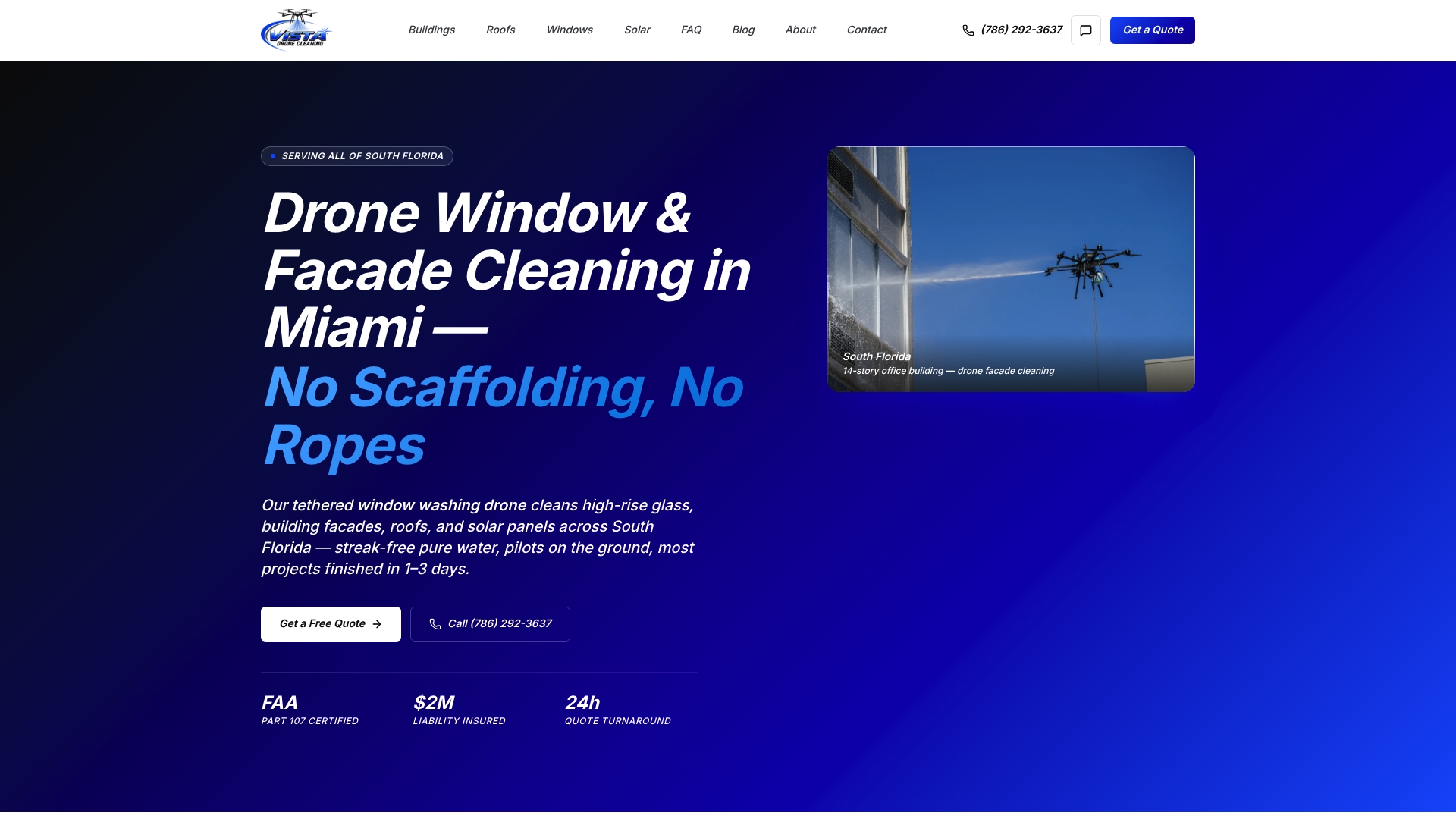
Every project includes substrate-matched soft-wash chemistry, a streak-free pure de-ionized water rinse, $2M liability coverage, and before/after 4K documentation delivered at close. Most commercial jobs finish in 1–3 days, and drone methods typically run 30–60% below the cost of comparable scaffold or lift work. Free quotes come back within 24 hours.
If your property needs drone window cleaning in Miami or a full exterior staging package before a lease-up, inspection, or event, request your free quote at vistadronecleaning.com.
Useful sources and further reading
Resources for procurement planning and deeper technical detail:
- Exterior Maintenance Challenges in Miami’s Humid Climate - CCR-Mag.com
- Drone Window Cleaning Miami | Building, Roof & Facade
- How Drone Window Cleaning Works | Drone Washing Explained
- Roof Cleaning Miami | Soft Wash & Drone Cleaning Miami-Dade
- Drone Solar Panel Cleaning Miami | Pure-Water Array Wash
- Building Exterior Maintenance Checklist for Property Managers: Vista Drone Cleaning
- HOA Building Exterior Cleaning South Florida: 2026 Guide: Vista Drone Cleaning
FAQ
What does building exterior staging mean for a commercial property?
Building exterior staging means professionally cleaning and preparing a commercial building’s exterior surfaces (windows, façade, roof, solar panels, and entry areas) so the property is ready for photography, events, inspections, or new occupancy.
How long does a commercial exterior staging job take in South Florida?
Most commercial exterior staging projects in Miami-Dade, Broward, and Palm Beach counties complete within a 1–3 day execution window, following an initial site survey and proposal.
What certifications should I require from an exterior staging provider?
Require FAA Part 107 pilot certification for any drone work, a $2M general liability insurance certificate, workers’ compensation proof, and MSDS for all chemistries used on site.
How often should a South Florida commercial building be staged?
Coastal properties benefit from monthly to bi-monthly service; most inland commercial buildings run on a 2–4 times per year schedule, with additional post-storm touch-ups after tropical weather events.
Does drone-based exterior staging cost less than traditional methods?
Vistadronecleaning claims 30–60% lower cost compared to traditional scaffold or lift methods for comparable scopes, driven by the elimination of rigging, permits, and extended equipment setup time.
Recommended
- What Is Commercial Exterior Cleaning? A 2026 Guide
- Building Exterior Maintenance Checklist for Property Managers, Vista Drone Cleaning
- Pre-Occupancy Building Exterior Cleaning: A Property Manager’s Guide, Vista Drone Cleaning
- Why Buildings Need Facade Maintenance: A Property Manager’s Guide, Vista Drone Cleaning