
HOA Building Exterior Cleaning South Florida: 2026 Guide
Discover essential tips for HOA building exterior cleaning in South Florida. Ensure compliance and protect your property in 2026.
TL; DR:
- South Florida HOAs must schedule surface-specific exterior cleaning regularly to prevent mold, damage, and legal issues. Using soft washing for facades and roofs, along with drone technology for high-rise windows, ensures efficient, non-damaging maintenance. Proper vendor vetting, insurance, and proactive scheduling protect property value and comply with legal requirements.
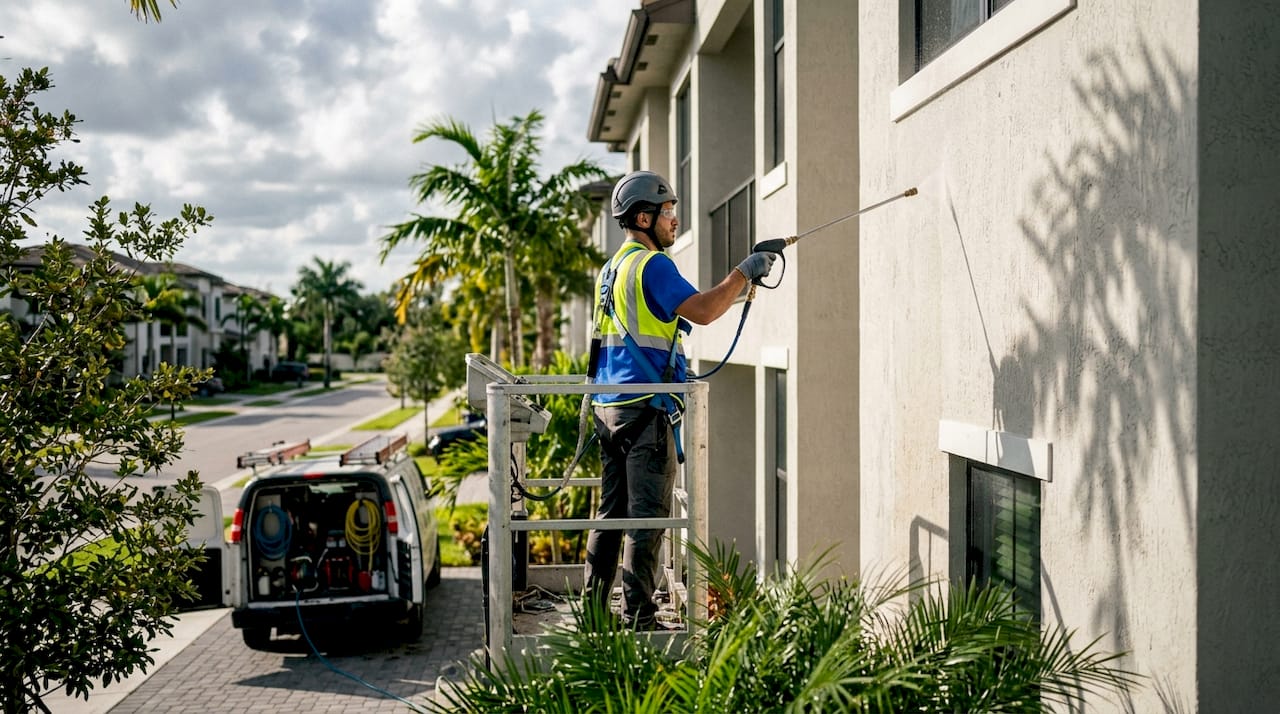
HOA building exterior cleaning in South Florida is defined as the routine, surface-specific washing of building facades, roofs, walkways, pool decks, and common areas to remove mold, algae, and biological growth accelerated by South Florida’s subtropical humidity. The industry term for this practice is commercial exterior building maintenance, and it carries real legal weight here. Under Florida Statutes section 718.111 and the structural safety requirements introduced by SB-4D, board members risk personal liability for neglecting structural maintenance. A dirty facade is not just an aesthetic problem. It is a compliance risk that can result in fines up to $15,000 for condominiums three stories and taller.
Top 10 essential exterior cleaning services for South Florida HOAs
South Florida’s climate creates a cleaning challenge unlike any other market in the country. High humidity, afternoon thunderstorms, and year-round heat combine to accelerate mold, mildew, and algae growth on virtually every outdoor surface. A structured, surface-specific approach is the only way to stay ahead of it.
1. Building facade soft washing
Soft washing is the correct method for painted stucco, EIFS, and concrete block exteriors. It uses low-pressure chemical application to remove mold at the root rather than blasting it off the surface. High-pressure washing on these materials can void paint warranties and force expensive repaints years ahead of schedule. For most South Florida HOA buildings, a semi-annual soft wash cycle is the standard.
Pro Tip: Before signing a full-community contract, request a paid pilot project on one building. It reveals vendor communication quality, cleanup habits, and actual cleaning results before you commit HOA funds at scale.
2. Roof soft-wash cleaning
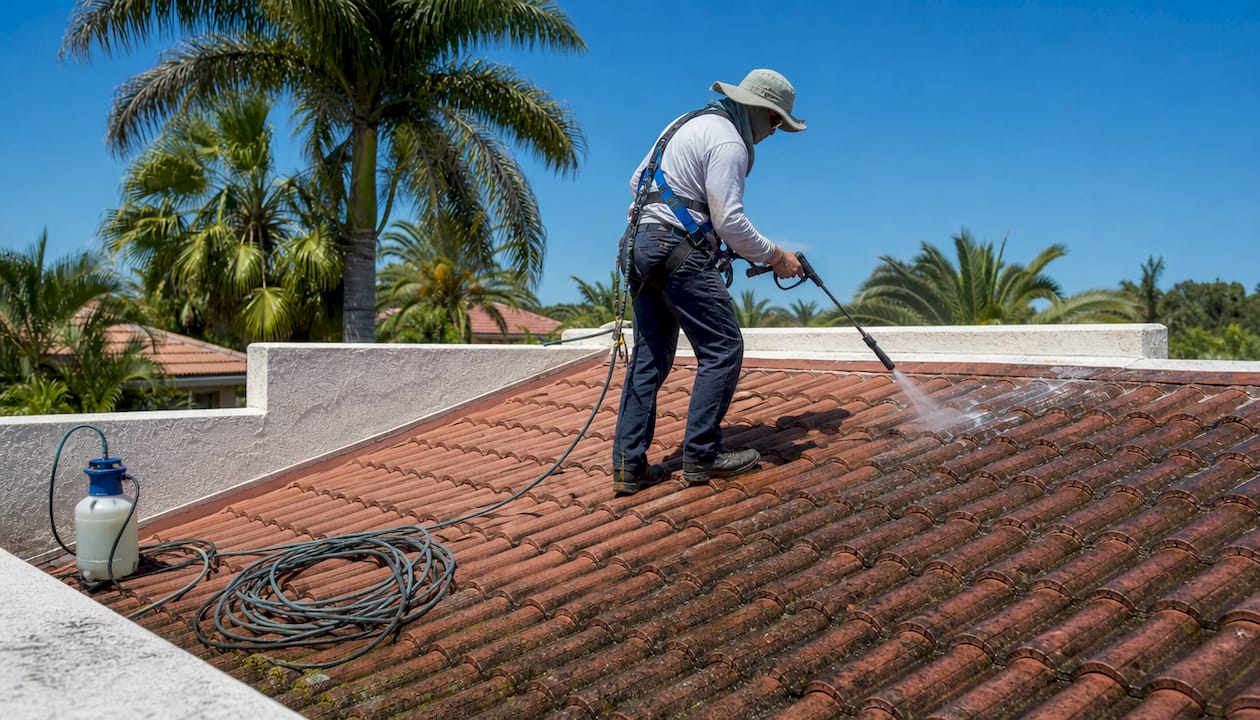
Roof surfaces, especially barrel tile and flat membrane roofs common in Miami-Dade and Broward, collect algae and organic debris rapidly. Pressure washing a tile roof causes cracking and granule loss. Soft washing with a low-pressure, biodegradable chemical solution removes black streaks and biological growth without structural damage. Annual cleaning is the minimum for most South Florida roofs.
3. Pool deck and hardscape pressure washing
Pool decks, paver walkways, and concrete common areas are high-traffic surfaces that accumulate algae and calcium deposits. These surfaces tolerate higher pressure than building facades, making commercial-grade pressure washing appropriate. Surface-specific intervals for pool decks run every 60–90 days in South Florida’s climate. Neglect creates slip-and-fall liability, which is a direct financial risk for the HOA.
4. Sidewalk and parking area cleaning
Sidewalks and parking areas are often overlooked in HOA cleaning budgets, but they are the first surfaces residents and visitors contact. Quarterly cleaning prevents organic buildup from becoming a permanent stain. Parking areas with oil deposits require a degreaser pre-treatment before pressure washing.
5. Window and glass facade cleaning
High-rise windows in Brickell, Aventura, and Fort Lauderdale accumulate salt spray, mineral deposits, and airborne pollution. Traditional window cleaning at height requires scaffolding or rope access, both of which involve permits, road closures, and elevated safety risk. Vistadronecleaning uses FAA Part 107-certified pilots and tethered Lucid Bots Sherpa drones to clean high-rise windows up to 200 feet without any rigging, completing most projects in 1–3 days at 30–60% lower cost than scaffold methods.
6. Solar panel cleaning
Rooftop solar arrays on HOA buildings lose efficiency when panels accumulate dust, bird droppings, and biological film. Vistadronecleaning’s drone solar panel cleaning uses pure de-ionized water with no chemicals, leaving panels streak-free and residue-free. Quarterly cleaning is the standard recommendation for South Florida arrays exposed to heavy pollen seasons in spring and fall.
7. Signage and entry feature cleaning
Community entrance signs, monument walls, and decorative entry features represent the HOA’s first impression. These surfaces collect road grime, algae, and hard water staining from irrigation overspray. Soft washing is appropriate for painted or coated signage. Quarterly cleaning aligns with pool deck cycles for scheduling efficiency.
8. Irrigation-adjacent surface cleaning
Irrigation systems in South Florida communities spray mineral-rich water onto sidewalks, building bases, and landscaping borders, leaving hard water stains and rust deposits. Cleaning crews must use acid-based treatments on these deposits before pressure washing. Scheduling cleaning after irrigation system audits prevents re-staining within weeks of service.
9. Parking garage and carport cleaning
Parking structures accumulate tire marks, oil stains, and biological growth on ramps and ceilings. These surfaces require commercial-grade hot water pressure washing with degreaser application. Annual cleaning is a minimum, with spot treatments quarterly in high-traffic areas.
10. Common area amenity cleaning
Outdoor gyms, BBQ areas, dog parks, and recreation courts are HOA amenities that require regular cleaning to meet health and safety standards. These surfaces vary widely in material, so vendors must assess each area individually. Monthly touch-up cleaning during peak usage months keeps these areas compliant and presentable.
How to select and evaluate exterior cleaning vendors for your HOA
Vendor selection is where most HOA boards make their costliest mistakes. Choosing the lowest bid without verifying insurance and equipment suitability is the fastest path to property damage and legal exposure.
Insurance is non-negotiable. Vendors must carry $1M–$2M in general liability insurance and full workers’ compensation coverage. The HOA should be named as an additional insured on the vendor’s certificate. Under-insured vendors transfer their financial risk directly to the association.
Contracts must be specific. Written agreements protect boards from liability and define exactly which surfaces are covered, what chemicals are used, who bears responsibility for damage, and how scheduling changes are handled. A contract that says “pressure wash building” without specifying method, pressure, and chemical disclosure is not a contract worth signing.
Require post-service photo documentation. Photo documentation standardizes proof of work and gives boards a defensible record when residents raise complaints or HOA violation notices arrive. Any vendor unwilling to provide this is a vendor worth skipping.
Get at least three bids. Standard practice for fiduciary due diligence requires multiple competitive bids. This is not just about price. It reveals how vendors communicate, how detailed their scopes are, and how they handle questions about insurance and methods.
Pro Tip: Ask every vendor to specify whether they use soft wash or high-pressure methods for each surface type on your property. A vendor who applies the same pressure to stucco walls as to concrete sidewalks does not understand surface-specific cleaning and will cause damage.
What is the optimal cleaning schedule for South Florida HOA surfaces?
Reactive cleaning costs more than scheduled maintenance. Deferred maintenance leads to higher restoration costs, and HOA violation notices typically arrive after 90 days of visible neglect. A proactive schedule prevents both.
Spring and fall cleaning cycles are the standard framework for South Florida HOAs. Spring cleaning addresses biological growth that accumulates through the wet season. Fall cleaning prepares surfaces before the dry season reduces natural rinsing from rainfall.
| Surface | Recommended Frequency | Method |
|---|---|---|
| Building facades | Semi-annually | Soft wash |
| Roofs | Annually | Soft wash |
| Pool decks | Every 60–90 days | Pressure wash |
| Sidewalks and walkways | Quarterly | Pressure wash |
| Windows and glass | Quarterly | Pure-water rinse |
| Solar panels | Quarterly | Pure-water rinse |
| Signage and entry features | Quarterly | Soft wash |
| Parking areas | Annually, spot quarterly | Hot water pressure wash |
Cleaning schedules should be integrated into the HOA’s reserve study. Regular exterior cleaning belongs in the annual operating budget as a capital reserve line item, not treated as a discretionary expense. Under Florida’s SB-4D requirements, building exteriors are now mandatory reserve items, which means boards that skip cleaning cycles are creating documented reserve deficiencies.
Common pitfalls HOA boards must avoid in exterior cleaning
Most exterior cleaning mistakes are avoidable. The damage they cause, to surfaces, budgets, and resident trust, is not.
- Using high pressure on the wrong surfaces. Excessive pressure washing voids paint warranties and causes micro-fractures in stucco that allow water intrusion. This turns a $2,000 cleaning job into a $20,000 repair.
- Skipping pilot projects. Committing a large contract to an unproven vendor based on price alone is a fiduciary risk. A single-building demonstration costs a fraction of a full contract and reveals everything about vendor quality.
- Ignoring irrigation and landscaping protection. Cleaning chemicals that contact irrigation heads or plant beds cause lasting damage. Vendors must cap heads and protect landscaping before any chemical application.
- Choosing the cheapest bid. Cheapest bids often produce hidden costs through substandard work, property damage, or insurance gaps that the HOA absorbs.
- Skipping resident communication. Cleaning operations that surprise residents with noise, water runoff, or chemical odors generate complaints and erode board trust.
“Boards that treat exterior cleaning as a discretionary line item rather than a compliance obligation are not saving money. They are accumulating deferred liability that compounds with every wet season.”
Key Takeaways
HOA building exterior cleaning in South Florida requires a surface-specific, scheduled maintenance program to protect property value, meet Florida’s legal requirements, and prevent costly deferred damage.
| Point | Details |
|---|---|
| Soft wash for facades and roofs | High pressure on stucco or tile voids warranties and causes structural damage. |
| Schedule by surface, not by budget | Pool decks need cleaning every 60–90 days; building facades need it semi-annually. |
| Insurance is mandatory | Require $1M–$2M liability coverage and name the HOA as additional insured. |
| Pilot projects reduce risk | Test vendors on one building before committing to a full-community contract. |
| Budget cleaning as a reserve item | Florida’s SB-4D makes exterior maintenance a mandatory capital reserve obligation. |
Why proactive scheduling beats reactive cleaning every time
I have worked with HOA boards across Miami-Dade and Broward long enough to recognize the pattern. A board defers the annual building wash to save $8,000. Eighteen months later, they are paying $35,000 to repaint a facade that mold has eaten through. The math is not complicated, but the pressure to cut line items in the short term is real, and it wins more often than it should.
The boards that manage their properties well share one habit: they treat the cleaning schedule as fixed, not flexible. They do not renegotiate it when the budget gets tight. They find savings elsewhere. The ones who treat cleaning as optional are the same boards dealing with violation notices, resident complaints, and emergency repair costs that dwarf what the cleaning would have cost.
Pilot projects are the single most underused tool in vendor management. I have seen boards sign multi-year contracts with vendors who looked great on paper and delivered mediocre results from day one. A paid demonstration on one building costs a few hundred dollars and tells you everything: how the crew communicates, how they protect landscaping, how the surfaces look when they are done, and how the vendor handles a callback when something is not right.
Drone-based cleaning technology has changed the calculus for high-rise HOAs specifically. The ability to clean a 20-story facade without scaffolding, permits, or road closures is not a novelty. It is a genuine operational advantage that reduces project timelines, eliminates permit costs, and keeps residents undisturbed. Boards that have not evaluated this option for their high-rise assets are leaving real savings on the table.
, Eliot
Vistadronecleaning’s approach to South Florida HOA exterior maintenance
South Florida HOA boards managing high-rise condominiums, multi-building communities, and rooftop solar arrays have a specific set of needs that standard pressure washing companies are not equipped to meet.
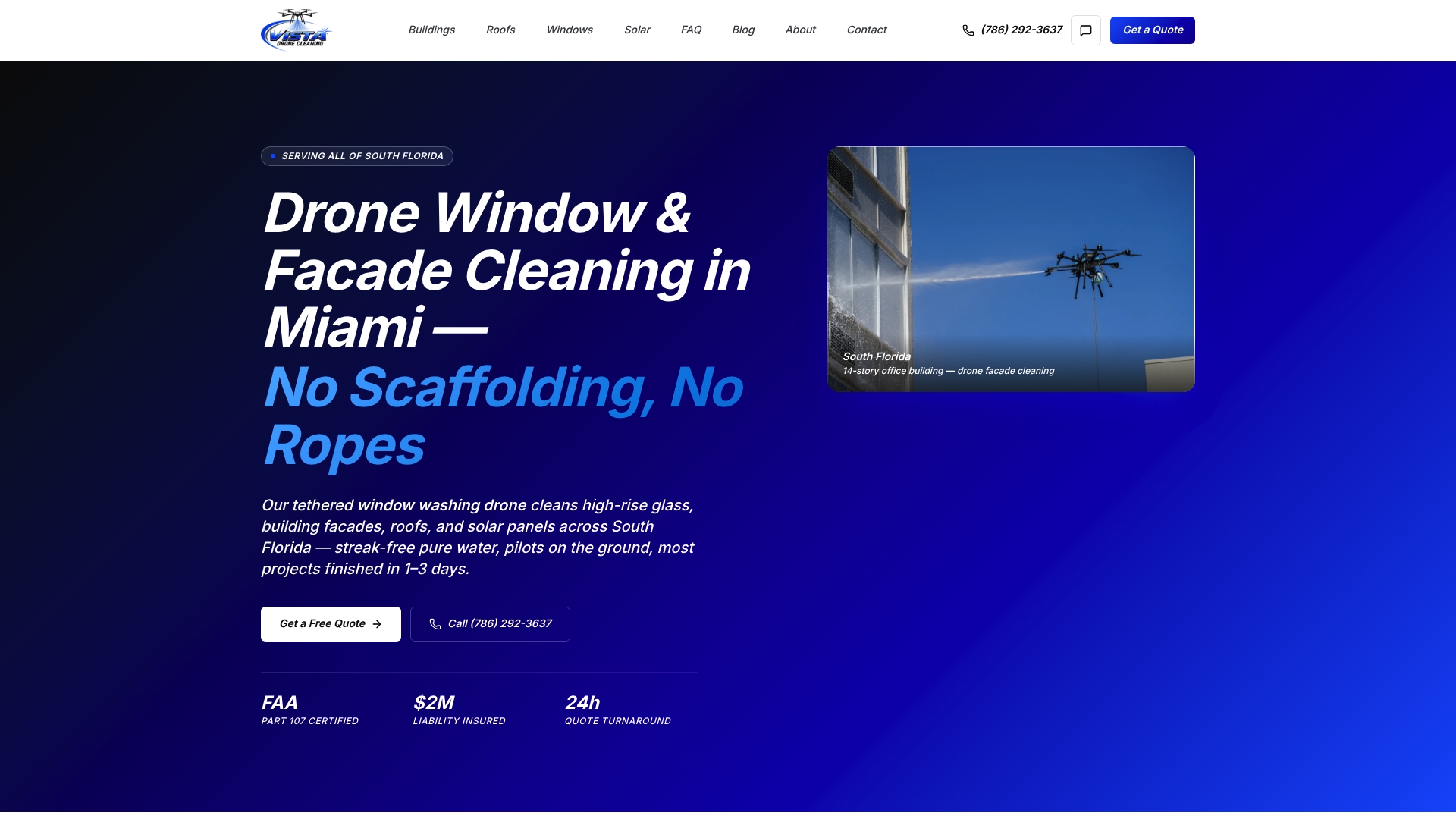
Vistadronecleaning serves Miami-Dade and Broward counties with FAA Part 107-certified drone crews operating Lucid Bots Sherpa tethered drones for facade and window cleaning on buildings up to 200 feet tall. No scaffolding, no permits, no road closures. The company also provides roof soft-wash cleaning and drone solar panel cleaning using pure de-ionized water with no bleach or harsh chemicals. With $2M in liability insurance and free quotes within 24 hours, Vistadronecleaning is built for HOA boards that need a compliant, efficient, and cost-effective exterior cleaning partner.
FAQ
What cleaning method is best for South Florida HOA building facades?
Soft washing is the correct method for stucco, EIFS, and painted concrete exteriors. It removes mold and algae at the root using low-pressure chemical application without damaging surfaces or voiding paint warranties.
How often should South Florida HOAs clean their building exteriors?
Building facades should be soft-washed semi-annually, pool decks every 60–90 days, and sidewalks quarterly. South Florida’s humidity and rainfall accelerate biological growth faster than in drier climates.
What insurance should an HOA require from exterior cleaning vendors?
Vendors must carry $1M–$2M in general liability insurance and full workers’ compensation coverage. The HOA should be named as an additional insured on the vendor’s certificate before any work begins.
Does Florida law require HOAs to maintain building exteriors?
Florida Statutes section 718.111 and SB-4D require condominiums three stories and taller to maintain structural integrity and fund capital reserves for building components. Non-compliance can result in fines up to $15,000.
Can drone cleaning replace scaffolding for high-rise HOA buildings?
Vistadronecleaning’s tethered drone system cleans high-rise facades and windows up to 200 feet without scaffolding, permits, or road closures, completing most projects in 1–3 days at significantly lower cost than traditional methods.