
What Is Soft Washing? a Property Manager's Guide
What Is Soft Washing? a Property Manager's Guide !
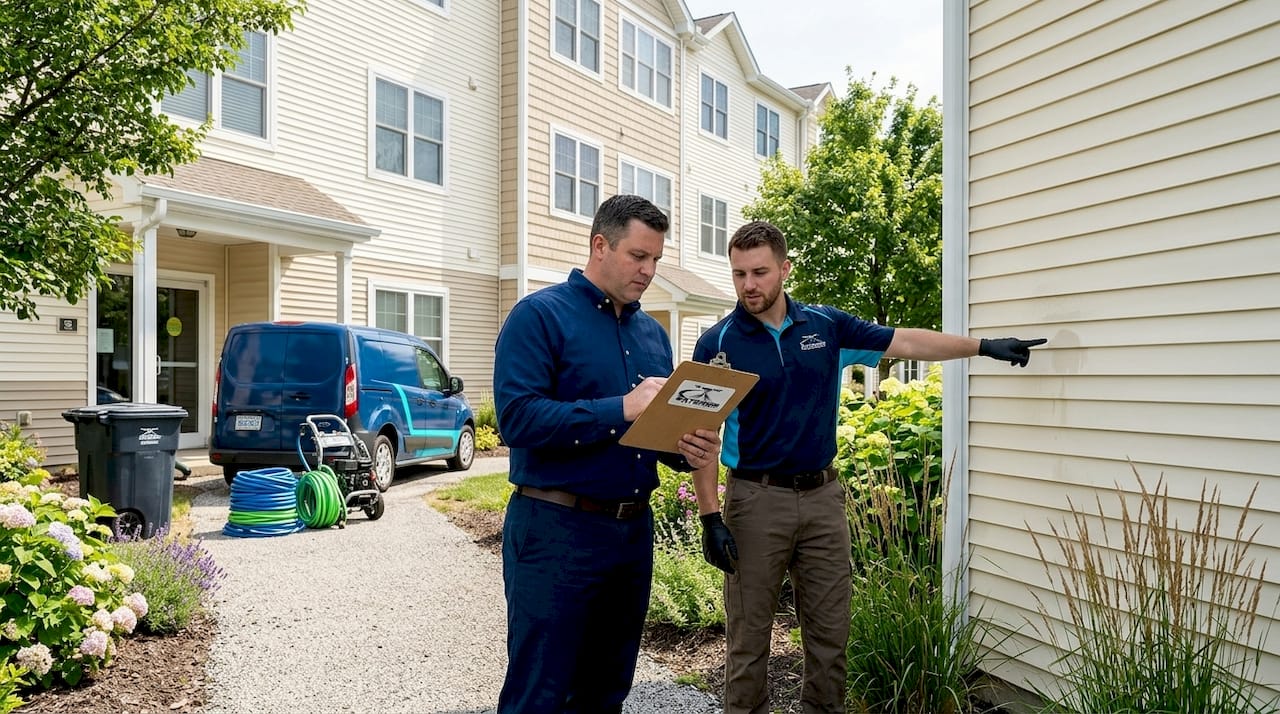
Soft washing is widely misunderstood, and those errors cost property owners money every year. It is not just pressure washing on a low setting. Soft washing is a chemistry-driven method using low-pressure delivery and professional-grade solutions to remove biological growth at the root. For those managing commercial buildings, condos, or high-rises with sensitive materials, soft washing is the standard for smart maintenance.
Table of Contents
- Key takeaways
- What soft washing actually is
- Why soft washing protects surfaces pressure washing cannot
- Practical application for property owners and managers
- Soft wash vs pressure wash: the technical breakdown
- My honest take on soft washing after years in this industry
- How Vista Drone Cleaning delivers soft washing at commercial scale
- FAQ
Key takeaways
| Point | Details |
|---|---|
| Chemistry does the work | Relies on sodium hypochlorite and surfactants, not water pressure, to remove mold, algae, and mildew. |
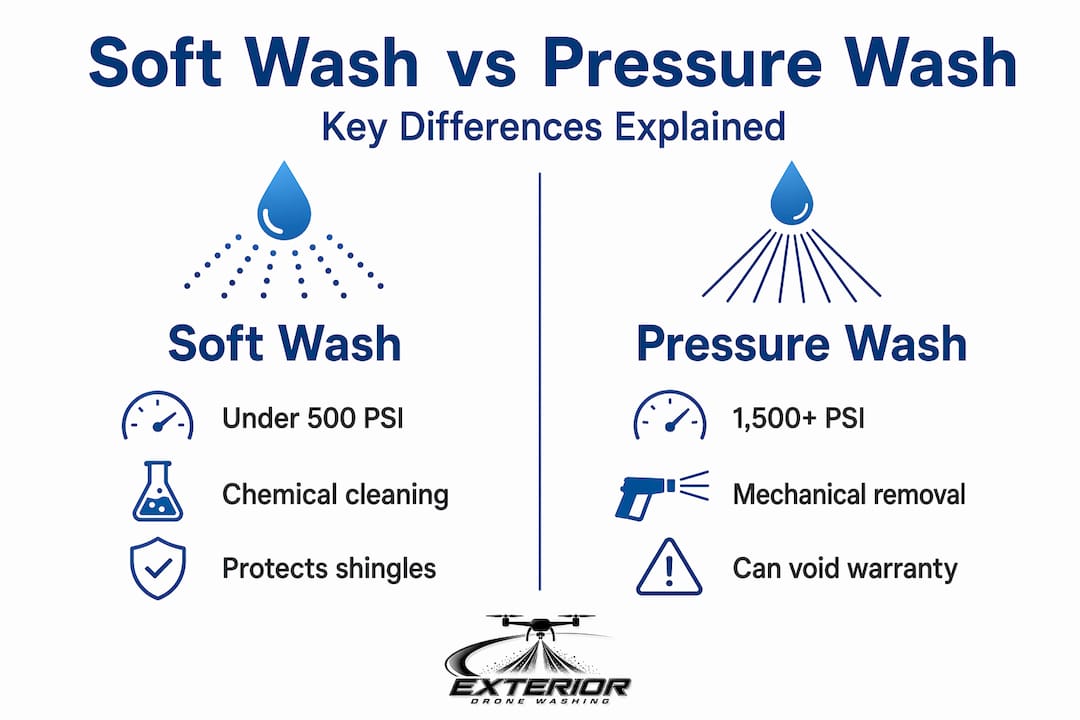
| Pressure stays below 500 PSI | Gentle enough to protect delicate surfaces while high-pressure exceeds 1,500 PSI. |
| Results last longer | Eliminating organic growth at the root keeps surfaces cleaner for a longer duration. |
| Warranties depend on it | Roofing manufacturers often void warranties if high-pressure washing is used. |
| Professional application matters | Proper dilution and dwell times are critical for success and safety. |
What soft washing actually is
Soft washing combines low water pressure with specialized chemical solutions. Operating under 500 PSI, the system won't strip paint or damage seals. The chemistry does the heavy lifting.
The solution typically contains sodium hypochlorite and surfactants. Surfactants reduce surface tension, allowing the mix to cling to vertical surfaces like stucco and siding. This allows the cleaning solutions to penetrate and remove organic growth at the cellular level.
The standard process:
- Solution is mixed in a dedicated soft wash system.
- Application occurs at 60 to 100 PSI.
- Solution dwells for 10 to 30 minutes to eliminate organisms.
- Low-pressure rinse removes dead biological matter and residue.
Dedicated soft wash pumps are essential. They allow operators to hit precise chemical concentrations and maintain steady low pressure, which a standard pressure washer cannot do reliably.
Pro Tip: Ask contractors if they use a purpose-built soft wash rig. Using a modified pressure washer is a red flag for residential-grade shortcuts.
Why soft washing protects surfaces pressure washing cannot
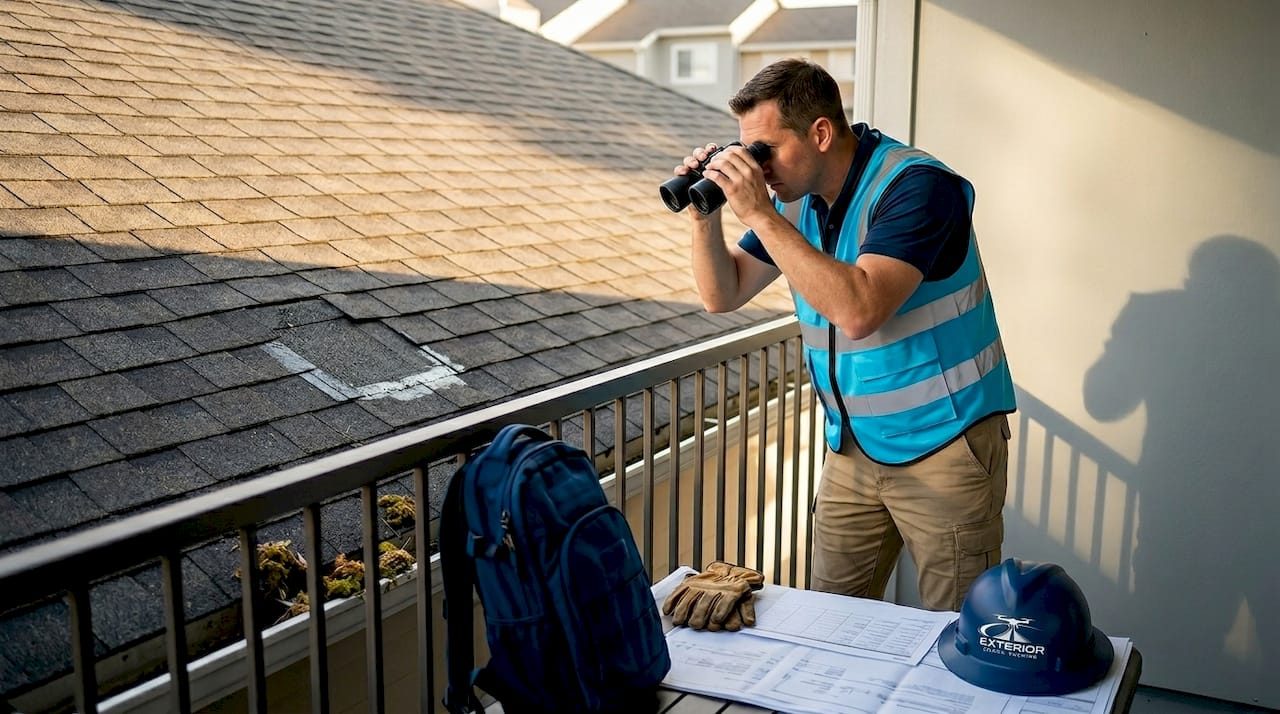
Roof shingles, vinyl siding, painted stucco, and EIFS are easily damaged by high pressure. Forceful water strips protective granules, coatings, and sealants. This leads to water infiltration and premature material failure.
Manufacturer warranties for asphalt shingles often void if high-pressure washing is performed. Soft washing is the industry-standard method for maintaining warranty compliance.
| Surface type | Soft washing | Pressure washing |
|---|---|---|
| Asphalt shingles | Recommended | Damage/Voids warranty |
| Vinyl siding | Recommended | Risk of cracking |
| Painted stucco | Recommended | Risk of stripping |
| EIFS / Synthetic | Recommended | Moisture infiltration |
| Concrete | Not ideal | Preferred method |
| Brick pavers | Situational | Standard choice |
Because soft washing kills the source of the stain, results last longer. Mechanical scrubbing leaves roots behind, leading to rapid regrowth. For soft washing on high-rises, this saves money by extending interval times between cleanings.
Practical application for property owners and managers
Managing soft washing requires oversight of chemical use and safety protocols.
Chemical concentrations by surface type
Roof cleaning requires 1% to 3% sodium hypochlorite to handle dense growth. Siding and painted surfaces usually need 0.5% to 1.5%. A professional contractor adjusts these ratios based on the specific surface and biological load.
Dwell time is non-negotiable
The 10 to 30-minute dwell window is the difference between a real clean and a superficial rinse. Rushing this step, or applying on hot surfaces that cause quick evaporation, results in a failed job. Verify how your contractor maintains dwell times in South Florida's heat.
Evaluating contractors: five questions worth asking
- Do you use a dedicated soft wash pump system?
- What chemical concentration is slated for each surface?
- How do you monitor dwell time?
- What are your PPE and site safety protocols?
- Do you provide before-and-after documentation?
Safety and chemical handling on site
Soft washing involves OSHA-regulated chemicals. Operators must use proper gloves, eye protection, and respiratory gear. They must also manage runoff to protect landscaping. Professionals neutralize or contain runoff before it leaves the work zone.
Soft wash vs pressure wash: the technical breakdown
The technical distinction is simple: soft washing uses chemistry at low pressure, while pressure washing uses force.
| Technical factor | Soft washing | Pressure washing |
|---|---|---|
| Operating pressure | Under 500 PSI | 1,500 to 4,000+ PSI |
| Cleaning mechanism | Sodium hypochlorite/Surfactants | Water velocity |
| Flow rate (GPM) | High flow for rinse | Lower flow, higher PSI |
| Dwell time | Yes, 10-30 minutes | No |
| Target surfaces | Delicate/Porous | Hard/Non-porous |
High flow rates at 60 to 100 PSI allow soft wash systems to cover large commercial facades quickly without the risk of concentrated force damage. For a full scope, view our building exterior cleaning guide.
My honest take on soft washing after years in this industry
I have seen property managers make the same expensive mistake repeatedly: using high pressure on a tile roof or vinyl facade. Soft washing is often the only correct choice for biological staining on sensitive exteriors.
Pressure washing algae off a shingle is a temporary fix. Without the chemistry to remove the organisms, the mold and algae return quickly. The best soft wash operators are technicians who understand chemical ratios first and equipment second. The pressure is just the delivery vehicle.
Consistent soft washing schedules extend the life of your asset. Clean exteriors prevent material degradation, helping you defer capital expenditures and maintain property value.
, Eliot
How Vista Drone Cleaning delivers soft washing at commercial scale
In South Florida, high-rise access is the biggest hurdle for soft washing. Traditional lifts and scaffolding are slow and expensive. Vista Drone Cleaning uses FAA-registered industrial drones to deploy high-flow soft-wash systems.
Our drones reach heights up to 200 feet, applying solution with precision and zero worker risk at height. Jobs that used to take weeks via rope access now take a single day. We provide commercial drone facade cleaning and commercial roof cleaning for hotels, condos, and office towers across Miami. If you need a scaleable solution for your property, call us for a direct quote.
FAQ
What is soft washing in simple terms?
A low-pressure cleaning method using specialized chemicals to remove mold, algae, and mildew. It relies on chemistry rather than water force.
How is soft washing different from pressure washing?
Soft washing stays under 500 PSI and uses cleaning solutions. Pressure washing uses 1,500+ PSI to blast contaminants away mechanically.
Does soft washing damage surfaces or landscaping?
Not when performed by professionals. Operators manage dilution and rinse landscaping to prevent damage to plants or residue on surfaces.
How long do soft washing results last?
Results typically last one to three years, as the process removes organic growth at the root.
Can soft washing void my roof warranty?
No, it is generally the only warranty-approved method. High-pressure washing is what typically voids shingle warranties.