Tethered Drone Soft Wash for South Florida Facades: Safe Algae Removal
Facilities-first comparison of algae removal for South Florida facades. Match methods to substrate, secure wastewater controls, and evaluate tethered...

For routine maintenance, use a low-pressure water wash or soft-wash with a non-leaching cleaning solution and a full rinse. For delicate or historic stone, start gentler: soaking, low-pressure water, steam, or laser ablation, and avoid aggressive pressure or chemistry. Heavy colonization calls for a prewet, cleaning solution, and soft-scrub sequence. Zero-runoff sites need vacuum recovery or no-runoff options like drone soft-wash. The decision rule is simple: match the method to the substrate and your wastewater controls, in that order.
TL; DR:
- Using a test patch first ensures the chosen cleaning method effectively removes biofilm without damaging delicate or historic substrates.
- Low-pressure water washing is suitable for most masonry and stucco but may require cleaning solution treatment for stubborn algae or biofilm.
- High-pressure washing is risky for porous or soft stone and should be reserved for dense concrete or sealed metal surfaces only after testing.
- Tethered drone soft-wash cleaning can efficiently reach tall facades up to 200 feet without scaffolding, suitable for buildings where access is limited or disruptive.
- Proper containment, PPE, and wastewater management are essential during cleaning to comply with environmental regulations and maintain safety standards.
Table of Contents
- Comparing algae removal methods for building facades
- Matching the removal method to your facade material
- Keeping crews, occupants, and stormwater safe during cleanup
- A field checklist for scoping and verifying the work
- When a tethered drone soft-wash makes sense for your building
- What actually decides hire versus in-house versus drone service
- Request a quote or site survey from Vista Drone Cleaning
- Sources
- FAQ
Comparing algae removal methods for building facades
Every method on a facility manager’s shortlist trades off effectiveness against substrate risk, water use, and downtime. Knowing where each one fits keeps you from over-treating a light bloom or under-treating a stubborn biofilm.

Manual brushing works on light surface algae and lichen on hardy substrates like brick or sealed concrete, but it is less effective against biofilm embedded in porous stone. It produces no wastewater to speak of, though loose debris should still be swept up rather than hosed into a drain.
Low-pressure water washing, generally under about 100 psi with a wide fan tip, is the starting point NPS Preservation Brief 1 recommends for most masonry and stucco. It handles fresh growth well and is gentle enough for painted surfaces and EIFS, though it may not fully clear an established biofilm on its own.
Soft-wash with a cleaning solution adds a chemical step, usually a diluted sodium hypochlorite or quaternary ammonium solution, applied at low pressure with a dwell time before rinsing. A controlled study on limestone found that prewetting plus a quaternary ammonium cleaning solution, with or without light scrubbing, produced some of the most durable reductions in biocolonization over about a year study on cleaning solution application methods. This method suits stucco, painted siding, and most masonry, but acid-sensitive stone and unsealed metal need testing first.
Pressure washing above soft-wash ranges removes algae fast but carries the highest substrate risk. Applied at the wrong angle or pressure, it can drive spores deeper into porous material or strip paint and mortar joints NPS Preservation Brief 1. Reserve it for dense concrete, sealed metal, and hardscape, never for soft stone or aging EIFS.
Vacuum blasting uses controlled abrasive impact and is a solid non-chemical option where runoff containment is difficult, though it needs skilled operators to avoid surface etching.
Laser ablation and steam are conservation-grade options with no chemical runoff at all. They have been used successfully on sensitive historic stone, including a National Park Service project that chose laser and steam specifically to protect marble and avoid contaminating nearby water laser and steam cleaning case studies.
Tethered drone soft-wash cleaning applies low-pressure, substrate-matched chemistry from a ground-controlled platform, reaching upper floors without scaffolding.
Before committing to any method beyond brushing or low-pressure rinsing, run a test patch:
- Choose a 3 to 5 square foot inconspicuous area representative of the worst fouling.
- Apply the proposed method and chemistry exactly as planned for full-scale work.
- Observe for 3 to 5 days for discoloration, etching, or streaking before approving the method.
- Document the patch with photos dated and labeled for the project file.
Matching the removal method to your facade material
The substrate decides what is safe long before cost or speed enters the conversation. Getting this wrong on stucco or historic stone can turn a routine clean into an expensive repair.
- Glass and curtain wall systems tolerate low-pressure rinsing and standard window-cleaning solutions well, but sealant joints around panels are vulnerable to high pressure and aggressive solvents, so keep pressure low near frames.
- Stucco and EIFS are porous and prone to trapping moisture, so low-pressure washing with a mild detergent or diluted cleaning solution is preferred, followed by a thorough rinse. High pressure can drive water behind the finish coat and cause long-term damage.
- Painted surfaces respond to the same low-pressure approach as stucco. Avoid pressure washing altogether if the paint is aging, since it can peel or blister the film.
- Concrete generally tolerates a broader pressure range than stucco or stone, but sealed or decorative finishes should still be tested first.
- Masonry and natural stone, especially historic material, call for the gentlest options first: soaking, low-pressure water, non-ionic detergents, or steam, per NPS Preservation Brief 1. Where chemical or abrasive methods are unacceptable, laser ablation is a documented conservation alternative NPS: Thomas Jefferson Memorial.
- Metal, including sun-shade louvers and railings, tolerates low-pressure washing but reacts badly to acidic cleaners, which can pit or discolor the finish; alkaline cleaners need full neutralization and rinsing afterward.
- Solar panels need pure-water rinsing with no abrasives or harsh chemistry, since scratched glass reduces energy output.
Every substrate decision should be backed by a documented test patch, photographed and dated, before full-scale work is approved.
Keeping crews, occupants, and stormwater safe during cleanup
Biological growth removal on a commercial building is as much a safety and compliance job as a cleaning one. EPA guidance on mold remediation lays out the baseline: limit routine cleaning solution use, address moisture sources first, and specify PPE and containment appropriate to the scope of work EPA mold remediation guidance.
Minimum PPE for biological cleanup typically includes gloves, eye protection, and an N95 respirator or better, with fall protection and anchor points required for any work at height. Containment and disposal controls to require in every spec:
- Drain covers and berms placed before work begins to block storm drain inlets.
- Containment pools or vacuum booms to capture washwater on hardscape and near landscaping.
- Discharge to the sanitary sewer only with written utility permission, never to a storm drain.
- Holding tanks or recycler units when sewer discharge is not permitted on site.
- A pre-clean check to locate every nearby drain, matching the approach in municipal mobile cleaning BMP guidance Mobile cleaning BMPs.
Phosphate-rich cleaners deserve a specific caution: incomplete rinsing can leave residue that fertilizes regrowth, undoing the job within weeks.
A field checklist for scoping and verifying the work
A repeatable protocol keeps a facade cleaning project defensible, whether you are managing an in-house crew or reviewing a contractor’s proposal.
- Inspect first. Walk the facade, identify moisture sources such as leaking gutters or irrigation overspray, and map affected areas with dated photos.
- Run a test patch. Use a 3 to 5 square foot area, apply the proposed method, and observe for 3 to 5 days against a simple acceptance standard: no discoloration, no etching, visible reduction in growth.
- Sequence the work. Start with dry removal of loose debris, then prewet the surface, apply cleaning solution if the test patch justified it, allow the labeled dwell time, soft-scrub any remaining biofilm, and rinse from bottom to top.
- Collect wastewater as it’s generated rather than after the fact, using the containment method matched to the site.
- Verify the result. Take matching after-photos from the same angles as the pre-inspection set, spot-check high-fouling areas, and log the work for warranty and municipal records.
- Schedule the next pass. Routine low-pressure rinsing on a maintenance cadence generally holds off regrowth better than coatings, which can trap moisture and make things worse if misapplied.
Rinsing from the bottom up reduces streaking and clears cleaning solution residue more completely than a top-down pass, especially when paired with a recovery vacuum on discharge-restricted sites.
Pro Tip: Keep every test-patch photo and acceptance note in the same project file as the final invoice. It is the fastest way to resolve a warranty dispute or a stormwater compliance question later.
When a tethered drone soft-wash makes sense for your building
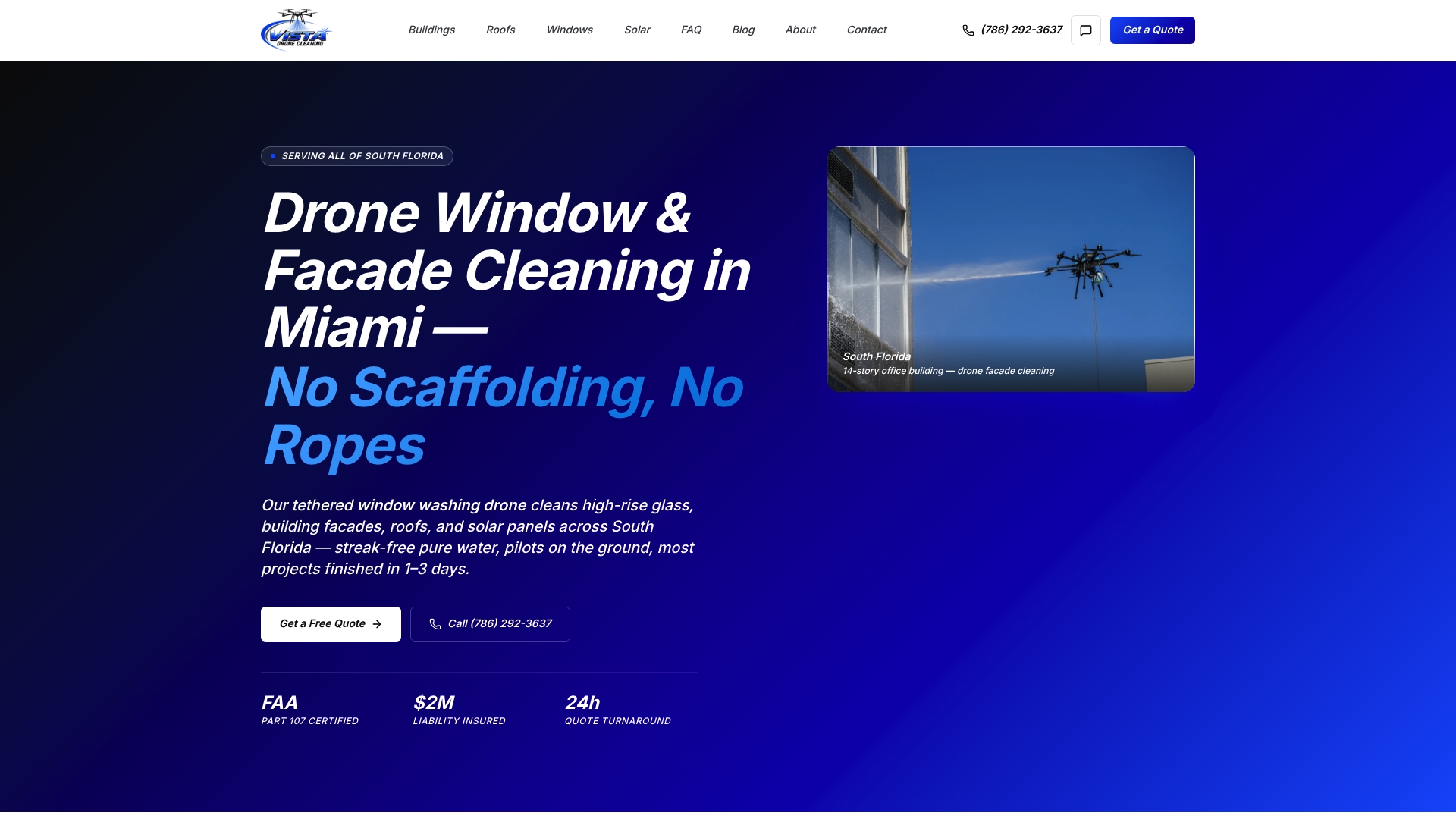
Tethered industrial drones let a certified pilot clean facades up to 200 feet tall from the ground, without scaffolding, boom lifts, or rope access crews on the wall. For a building where tenant disruption, mobilization time, or rigging permits are the real obstacle, that changes the calculation more than the cleaning chemistry does.
- Ground-based operation removes the days normally spent erecting and striking scaffolding.
- Soft-wash chemistry is matched to the substrate, the same rule that applies to any method on this page.
- Every job is documented with 4K before-and-after imagery for the property file.
- Historic or heritage stone still calls for conservation methods like steam or laser ablation, not soft-wash chemistry.
A company operating FAA Part 107-certified pilots cleans commercial properties across Miami-Dade and Broward counties, offering liability insurance and free quotes.
What actually decides hire versus in-house versus drone service
The factors that matter are proof, not price alone. I look for insurance documentation, a written wastewater plan, a completed test patch with photos, and references with before-and-after images from comparable buildings. Cost, disruption, and speed pull against each other: a crew on lifts might quote lower per square foot but take a week longer and require sidewalk closures. Before accepting a quote, ask for site photos, a statement of access constraints, and the exact wastewater handling method in writing.
, Eliot
Request a quote or site survey from Vista Drone Cleaning
If your facade needs anything beyond a routine rinse, Vista Drone Cleaning can survey the building without scaffolding or lift rental eating into your timeline. A free quote includes a site review, a project timeline estimate, and a reference to the 4K before-and-after documentation we provide on every job.
Send building photos, a measured height, and your preferred scheduling window, and get a proposal back for drone facade and building cleaning in Miami-Dade or Broward County.
Sources
This article draws on EPA mold remediation guidance, NPS conservation case studies, research on encapsulated cleaning solutions, and testing methodology from stone conservation studies. Property owners weighing insurance requirements before approving remediation work can also review this overview of mold liability coverage.
- EPA: Mold remediation in schools and commercial buildings (guidance)
- Laser and steam cleaning used for biofilm removal on historic stone (case studies)
- NPS: GAOA-funded cleaning and laser ablation at the Thomas Jefferson Memorial
- Study on cleaning solution application methods for reducing biocolonization on building stone (SI repository)
FAQ
Will pressure washing remove algae from a facade?
Pressure washing can remove surface algae, but high pressure risks driving contaminants deeper into porous substrates or damaging paint, stucco, and mortar joints. Starting at low pressure, generally under about 100 psi, and testing first is the safer approach recommended in NPS preservation guidance.
What are the main types of building facade materials?
Common commercial facade substrates include glass and curtain wall systems, stucco and EIFS, painted surfaces, concrete, masonry and natural stone, and metal panels or louvers. Each tolerates different pressure levels and chemistry, which is why substrate identification comes before method selection.
How can I remove algae from an exterior wall safely?
Start with the gentlest effective method: low-pressure water washing, then a soft-wash cleaning solution application with a full rinse if algae persists. A test patch on an inconspicuous area, observed for 3 to 5 days, confirms the method is safe for that specific substrate before full-scale work begins.
Do I need to contain washwater during facade cleaning?
Yes. Washwater should never be allowed to enter a storm drain, and containment methods like drain covers, berms, or vacuum booms are standard practice under municipal mobile cleaning best management practices. Discharge to a sanitary sewer requires written utility permission first.
How often should a commercial facade be cleaned to prevent algae regrowth?
There is no single universal interval, since regrowth speed depends on shade, humidity, and irrigation overspray, but routine low-pressure rinsing on a set schedule generally outperforms one-time deep cleaning at preventing colonization. Property managers in humid coastal climates often schedule inspections more frequently to catch early growth before it needs a stronger method.