What Does Awning Cleaning Involve? A South Florida Guide
Discover what awning cleaning involves in South Florida. Learn the essential steps to extend your awning's lifespan and protect your investment.
TL; DR:
- Proper awning cleaning involves dry brushing, using a pH-neutral soap, low-pressure rinsing, and full drying before retraction. Skipping drying or reusing harsh cleaning methods accelerates fabric damage and mildew growth, especially in South Florida’s humid environment. Regular cleaning every 2 to 3 months near salt air and organic debris prevents accelerated deterioration and preserves fabric coatings.
Awning cleaning is a multi-step maintenance procedure that includes dry brushing, gentle washing with a pH-neutral soap solution, low-pressure rinsing, and complete drying before retraction. Property managers who follow this process protect fabric coatings, prevent mold growth, and can extend awning lifespan by up to 30% through consistent dry maintenance alone. In South Florida’s combination of salt air, high humidity, and intense UV exposure, understanding what does awning cleaning involve is not optional. It is the difference between an awning that lasts a decade and one that fails in three years.
What does awning cleaning involve, step by step?
The awning cleaning process follows a fixed sequence. Skipping or reordering steps causes damage that no amount of scrubbing can fix later.
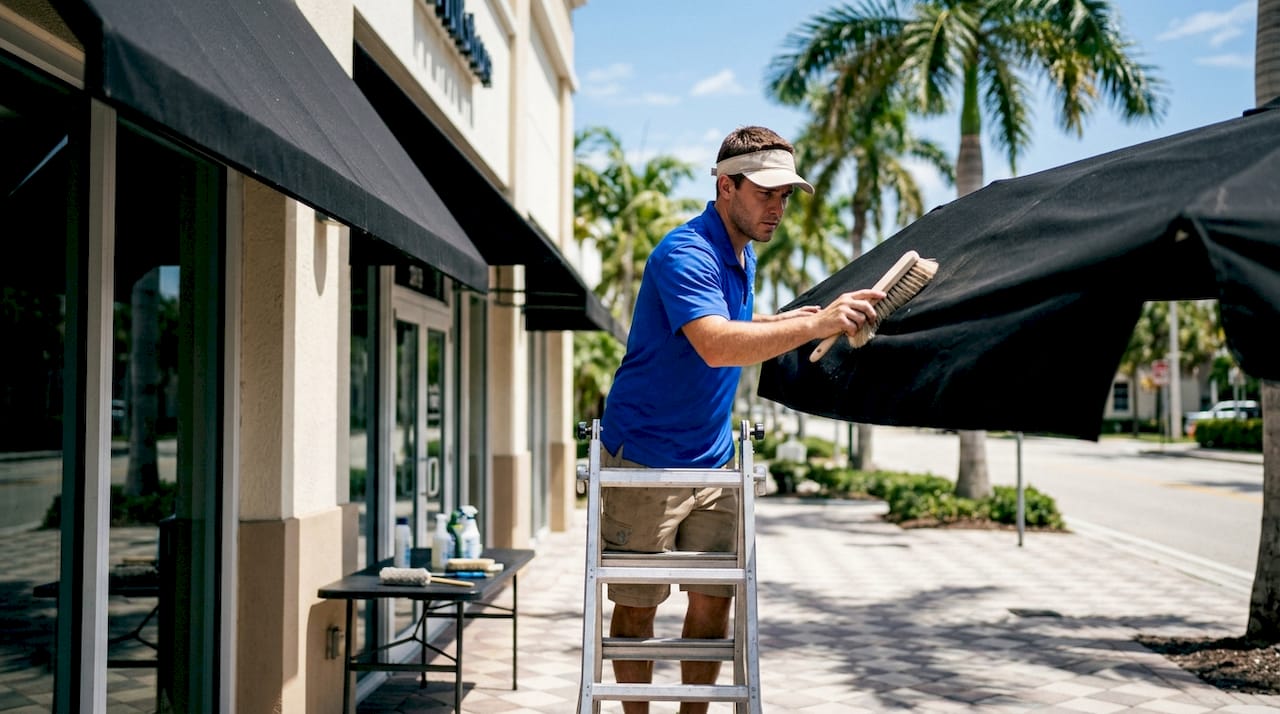
Step 1: Dry brush the surface first. Dry brushing removes loose grit before any water touches the fabric. Adding water to a grit-covered surface creates an abrasive slurry that acts like liquid sandpaper on fabric coatings and stitching. Use a soft-bristle brush and work from the top down, sweeping debris off the edges rather than pushing it toward seams.
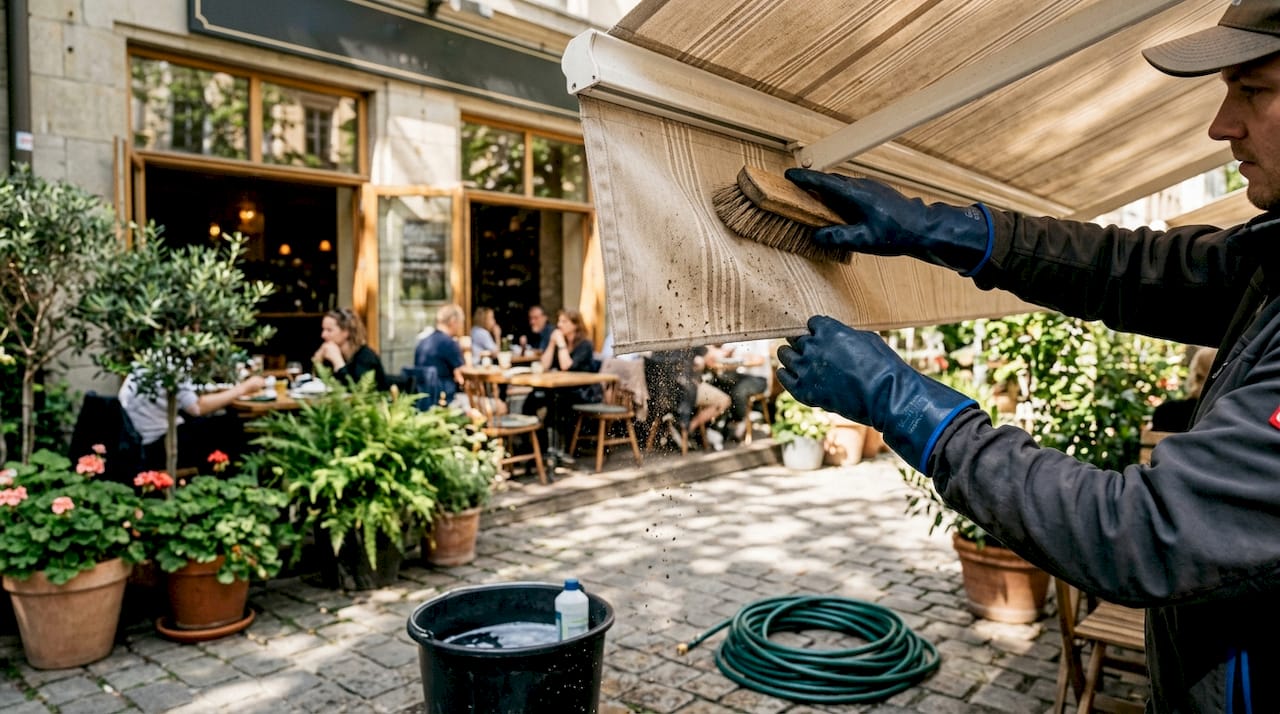
Step 2: Apply a mild, pH-neutral soap solution. Mix a small amount of gentle dish soap or a manufacturer-approved cleaner with lukewarm water. High concentrations of cleaning agents leave soap residue that attracts dirt faster than the original soiling did. Lower concentrations clean effectively without compromising the fabric’s protective finish.
Step 3: Scrub gently with a soft brush. Work the solution into the fabric using circular motions. Pay extra attention to seams, where mildew tends to anchor first in humid climates like Miami-Dade and Broward counties. Do not use stiff brushes or abrasive pads on acrylic or vinyl fabrics.
Step 4: Rinse with low-pressure water. A standard garden hose with a spray nozzle set to a wide fan pattern is the right tool here. Professional awning cleaning prohibits high-pressure washing because pressure washers force water into seams, causing delamination and mechanical damage to retractable hardware.
Step 5: Allow full air drying before retracting. This step is non-negotiable in South Florida. Retracting damp awnings traps moisture and creates the conditions for mold and mildew, which is the leading cause of premature awning failure. Leave the awning fully extended until the fabric is dry to the touch throughout.
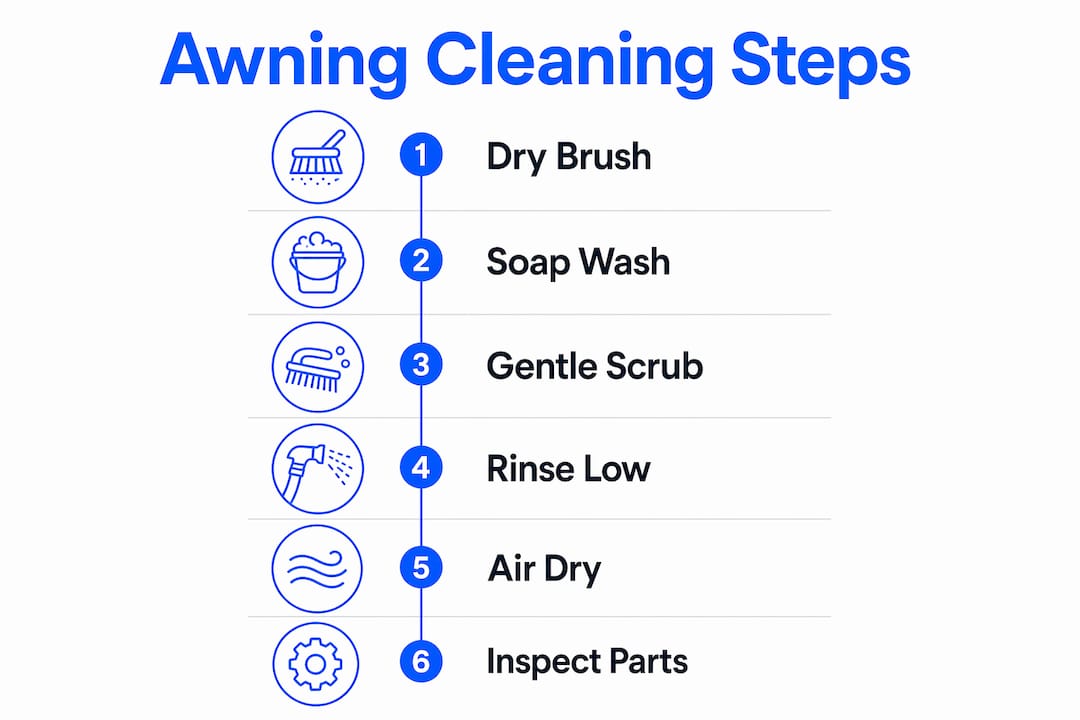
Step 6: Inspect mechanical components. After washing, inspect roller tubes and joints for trapped debris. Removing grit from mechanical housing after every cleaning cycle prevents corrosion and keeps retractable systems operating smoothly.
Pro Tip: Brush the awning dry after every rainstorm, not just during scheduled cleanings. South Florida rain carries salt and organic material that settles into fabric as the water evaporates.
How often should awnings be cleaned in South Florida?
South Florida’s environment accelerates fabric deterioration faster than most of the country. The baseline minimum for any awning is 1–2 cleanings per year, but that schedule does not hold in high-exposure conditions.
Properties near the water in areas like Miami Beach, Brickell, Fort Lauderdale, or Boca Raton deal with salt air that deposits corrosive particles on fabric daily. Properties surrounded by trees in neighborhoods like Coral Gables or Coconut Grove accumulate organic debris, pollen, and bird droppings that feed mildew colonies. For these locations, cleaning every 2–3 months is the standard that prevents accelerated fabric degradation.
Humidity compounds the problem. South Florida’s wet season runs from june through october, and sustained moisture levels above 70% create ideal conditions for mildew growth on any fabric that is not cleaned and dried regularly. Properties near Aventura, Hollywood, or Pompano Beach that face both salt air and heavy summer rainfall should treat quarterly cleaning as a minimum, not a recommendation.
Key factors that increase cleaning frequency in South Florida:
- Salt air exposure: Properties within one mile of the coast need cleaning every 6–8 weeks during peak humidity months.
- Tree canopy coverage: Heavy foliage drops organic material that feeds mold. Clean after major debris events, not just on a calendar schedule.
- Urban traffic corridors: Properties along I-95, US-1, or Brickell Avenue accumulate exhaust particulates that bond to fabric coatings.
- Rooftop HVAC exhaust: Awnings below mechanical equipment on commercial buildings in downtown Miami collect grease and particulate matter that standard brushing alone cannot remove.
Tracking cleaning intervals and environmental impacts as part of a property maintenance log helps you spot patterns before they become expensive repairs.
What common mistakes should be avoided during awning cleaning?
Most awning damage is self-inflicted. Property managers who inherit a cleaning routine from a previous team often repeat errors that compound over time.
The most damaging mistakes include:
- Using a pressure washer. This is the single most common error. Pressure washers damage fabric and seams by forcing water through stitching and behind hardware. Even a low-PSI setting on a pressure washer exceeds what awning fabric can tolerate safely.
- Applying bleach without limits. Bleach is sometimes necessary for localized mildew treatment on acrylic fabrics, but dwell time must stay under 15 minutes using a dilution of 1 cup bleach per gallon of water. Leaving bleach on longer strips the Durable Water Repellent coating and causes color fading.
- Retracting before full drying. This is the biggest post-clean error. Folding damp fabric against itself in a retractable housing creates a sealed, humid environment where mildew colonies establish within 24–48 hours.
- Over-lubricating mechanical joints. Excess lubricant on roller tubes and pivot points attracts grit and forms a paste that accelerates wear. Apply lubricant sparingly and wipe away any excess immediately.
- Skipping the dry brush step. Property managers who go straight to wet washing create the abrasive slurry effect described earlier. The dry brush step takes five minutes and prevents months of premature fabric wear.
Pro Tip: Review your exterior cleaning approach for awnings alongside your full building maintenance plan. Errors in one area often signal the same errors are happening elsewhere on the property.
What specialized considerations apply for different awning materials?
Awning fabric type determines which cleaning agents are safe and which will cause irreversible damage. The two most common commercial awning materials are acrylic and vinyl, and they require different approaches.
| Material | Safe cleaners | Avoid | Special notes |
|---|---|---|---|
| Solution-dyed acrylic | pH-neutral soap, diluted bleach for mildew only | Harsh detergents, acetone, petroleum solvents | Durable Water Repellent coating is vulnerable to strong chemicals |
| Vinyl or PVC | Mild dish soap, vinyl-specific cleaners | Abrasive scrubbers, solvent-based cleaners | Rinse thoroughly; vinyl holds soap residue longer than acrylic |
| Aluminum or metal frames | Mild soap, water | Acidic or alkaline cleaners | Inspect for rust at fasteners after every wash |
| Retractable fabric (any) | Same as fabric type above | Pressure washing, stiff brushes | Mechanical housing needs separate debris inspection post-wash |
Fabric coatings like Durable Water Repellent are the primary defense against water penetration and UV degradation. Harsh detergents strip these coatings in a single cleaning session. Once the coating is gone, the fabric absorbs water instead of shedding it, which accelerates mildew growth and structural breakdown.
Retractable awnings carry an additional layer of complexity. The mechanical housing collects debris during normal operation, and washing the fabric without cleaning the housing leaves grit in contact with moving parts. After every cleaning, open the housing cover and remove any accumulated debris with a dry brush before lubricating the roller mechanism.
Metal and aluminum awnings are more forgiving with cleaning agents but are vulnerable at fastener points. Salt air in coastal South Florida communities like Miami Beach and Coral Gables causes galvanic corrosion at steel fasteners embedded in aluminum frames. Inspect these points after every wash and treat any rust spots before they spread to the frame itself.
Property managers overseeing safe building washing across multiple surfaces should document the awning material type for each property and keep the appropriate cleaning agents on hand separately. Using the wrong product once can void a manufacturer warranty.
Key Takeaways
Proper awning cleaning requires dry brushing before any water contact, pH-neutral soap at low concentration, low-pressure rinsing, and complete drying before retraction to prevent mold and preserve fabric coatings.
| Point | Details |
|---|---|
| Dry brush first, always | Removing grit before water contact prevents abrasive slurry that damages fabric coatings and stitching. |
| Match cleaner to material | Acrylic and vinyl require different agents; harsh detergents strip Durable Water Repellent coatings permanently. |
| Never retract damp fabric | Trapped moisture in retractable housing creates mildew colonies within 24–48 hours in South Florida’s humidity. |
| Clean every 2–3 months near water | Coastal properties in Miami-Dade and Broward face salt air that accelerates fabric degradation beyond annual schedules. |
| Inspect mechanical parts post-wash | Clearing debris from roller tubes and joints after every cleaning prevents corrosion and mechanical failure. |
Why I think most property managers underestimate the drying step
After years of working around commercial properties across South Florida, the pattern I see most often is not the wrong soap or the wrong brush. It is the retracted awning. A property manager finishes a cleaning job, the fabric looks great, and the awning gets folded up before it is fully dry because the crew needs to move on to the next task.
Three weeks later, the fabric smells. Six months later, there are visible mildew stains that no amount of bleach will fully remove. A year later, the fabric is being replaced at a cost that dwarfs every cleaning budget the property had for the past five years. Routine care prevents exactly this outcome, but only if the drying step is treated as seriously as the washing step.
South Florida’s humidity makes this worse than anywhere else in the country. A damp awning in a dry climate might air out on its own. A damp awning in Brickell or Fort Lauderdale in july is a mildew incubator. The fix is simple: build drying time into the cleaning schedule. If the job starts at 8 a.m. the awning does not retract until after noon at the earliest. That is not extra time. That is the job.
The second thing I would push back on is the belief that stronger cleaners work better. Property owners who inherit a dirty awning often reach for industrial degreasers or undiluted bleach because they want results fast. Those products strip the Durable Water Repellent coating in one application. After that, the fabric absorbs water instead of shedding it, and every rainstorm becomes a mildew event. Gentle products applied consistently outperform aggressive products applied occasionally. That is not a theory. It is what the fabric shows you over time.
, Eliot
Vistadronecleaning’s approach to exterior maintenance in South Florida
Awning care is one piece of a larger exterior maintenance picture for commercial properties in Miami-Dade, Broward, and Palm Beach counties. Vistadronecleaning serves property managers across the region with low-pressure, ground-based cleaning methods that protect surfaces rather than damage them.
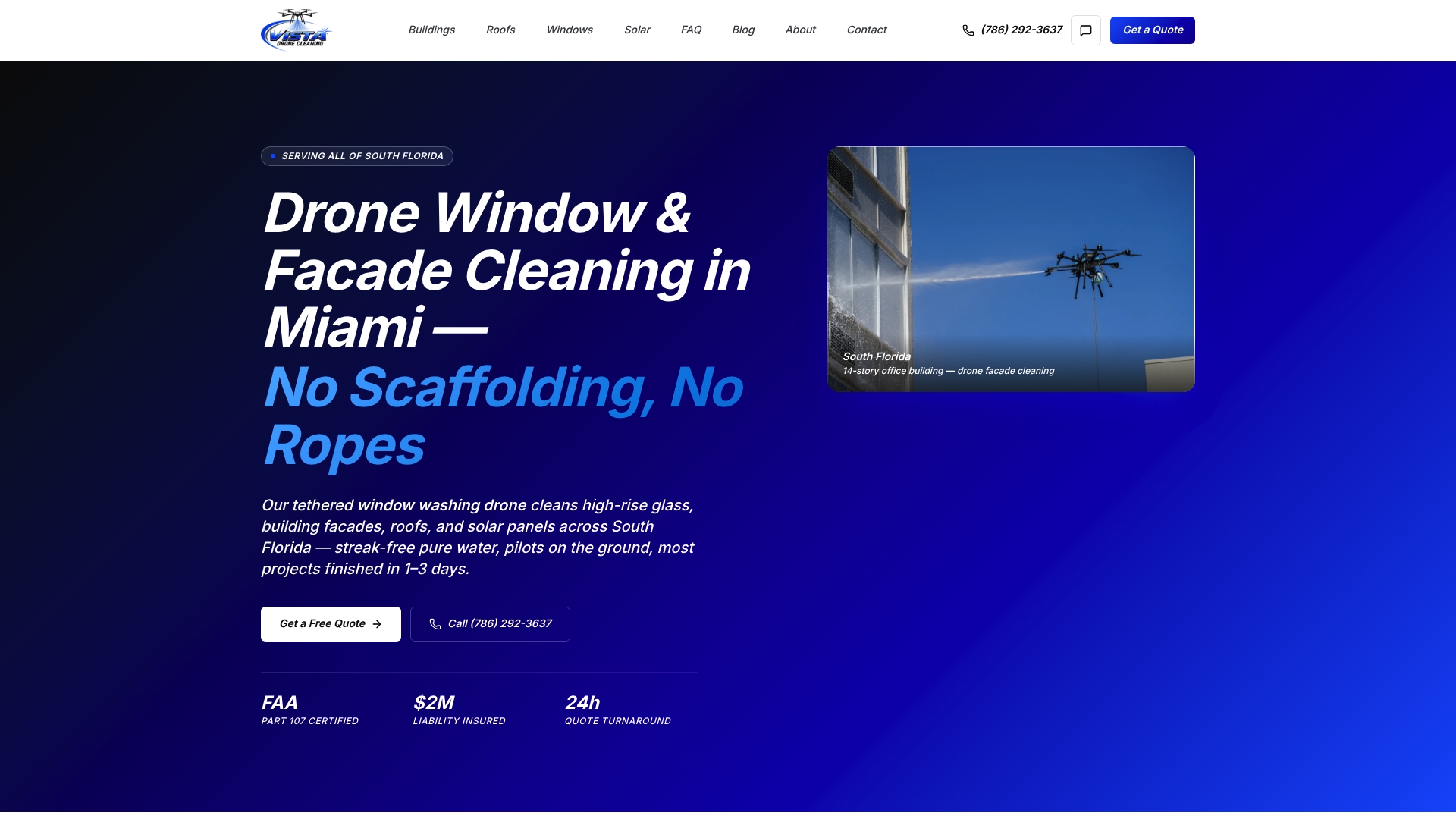
Using FAA Part 107-certified pilots and tethered industrial drones, Vistadronecleaning handles building facades, high-rise windows, roofs, and solar panels on commercial properties up to 200 feet tall without scaffolding, permits, or road closures. For property managers who want to understand how drone cleaning compares to traditional methods for their full exterior maintenance program, Vistadronecleaning provides free quotes within 24 hours. Contact the team to schedule a consultation for your South Florida property.
FAQ
What does the awning cleaning process involve at a basic level?
Awning cleaning involves dry brushing to remove loose debris, washing with a pH-neutral soap solution, rinsing with low-pressure water, and allowing the fabric to dry completely before retracting. Skipping any step, particularly the dry brush or the drying phase, causes fabric damage or mildew growth.
How often should commercial awnings be cleaned in Miami or Fort Lauderdale?
The minimum is 1–2 times per year, but coastal South Florida properties near salt air or heavy tree coverage require cleaning every 2–3 months. High-exposure environments accelerate fabric deterioration without that frequency.
Can you use a pressure washer on an awning?
No. Pressure washers force water into seams and behind hardware, causing fabric delamination and mechanical damage to retractable systems. A standard garden hose with a wide-fan nozzle is the correct tool.
What supplies do you need for awning cleaning?
You need a soft-bristle brush for dry brushing, a second soft brush for wet scrubbing, a pH-neutral soap or manufacturer-approved cleaner, a garden hose with an adjustable nozzle, and a clean towel for spot drying edges. Avoid abrasive pads, stiff brushes, and solvent-based cleaners on any fabric awning.
Why does complete drying matter so much before retracting an awning?
Retracting a damp awning seals moisture inside the housing, creating conditions where mildew establishes within 24–48 hours. In South Florida’s humidity, this is the leading cause of premature awning failure and the most common mistake property managers make after cleaning.