
Common High-Rise Cleaning Mistakes Property Managers Make
Discover the common high-rise cleaning mistakes property managers make. Learn to avoid costly errors and protect your building and budget.
TL; DR:
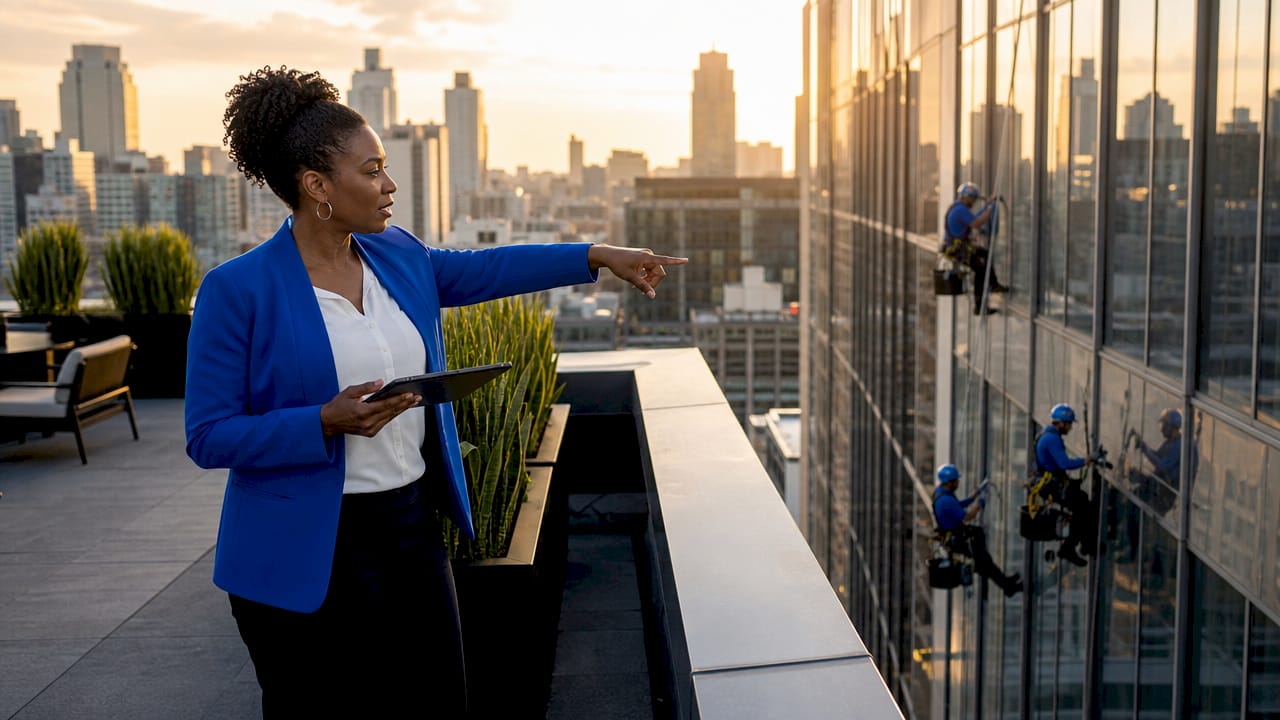
- Many high-rise cleaning mistakes in South Florida lead to increased costs, facade damage, and tenant complaints. Proper scheduling, water quality, safety protocols, and equipment matching are essential to effective and safe cleaning. Drones offer a safer, faster, and more cost-effective alternative to traditional methods in challenging coastal conditions.
Common high-rise cleaning mistakes are the leading cause of repeated maintenance costs, accelerated facade damage, and tenant complaints in South Florida commercial properties. Errors in scheduling, chemical use, water quality, and safety compliance turn what should be a routine exterior maintenance cycle into an expensive rework loop. Buildings in Miami-Dade and Broward counties face added pressure from salt air, humidity, and coastal wind patterns that punish every cleaning misstep harder than inland markets. Property managers, board members, and hospitality operators who understand these errors upfront protect both their buildings and their budgets.
1. Common high-rise cleaning mistakes: the top 10 to stop making now
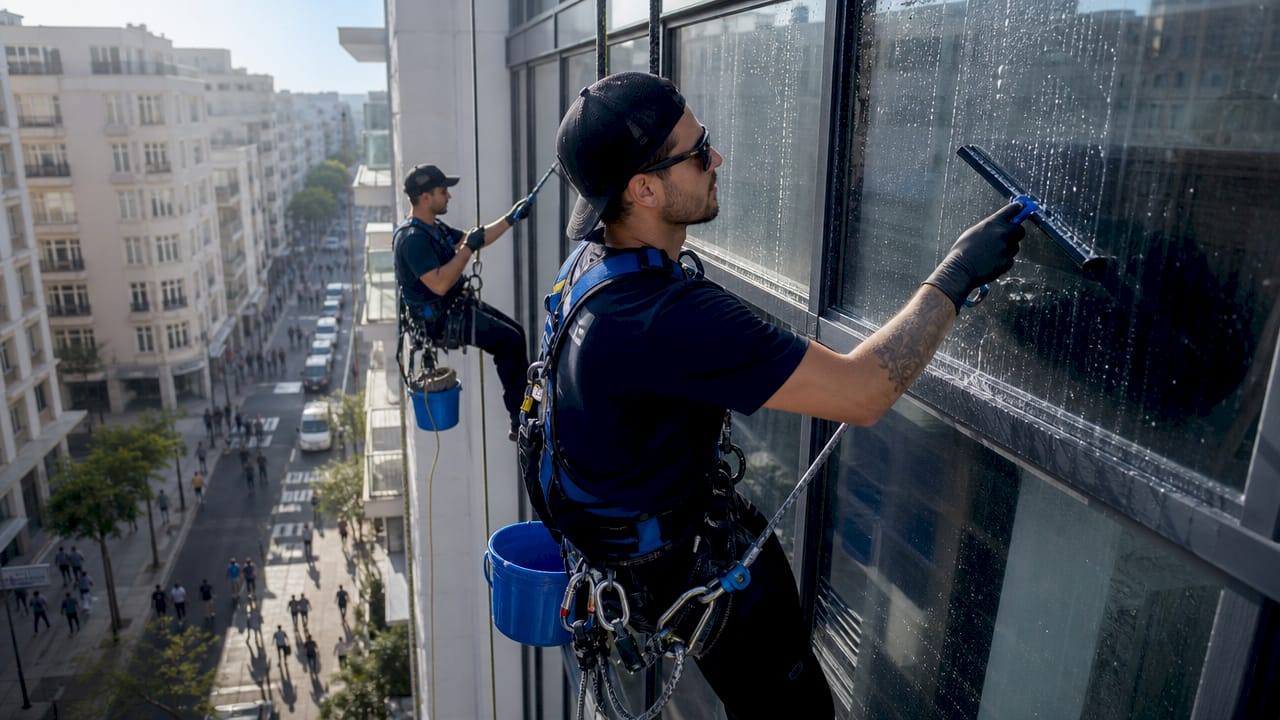
High-rise exterior maintenance, known in the industry as facade access cleaning, is a specialized discipline. Treating it like standard janitorial work is the root of most problems. The ten mistakes below account for the majority of rework calls, safety incidents, and premature glass degradation across South Florida towers.
2. Cleaning in direct sunlight
Cleaning in direct sunlight causes cleaning solution to evaporate before it can be rinsed, leaving stubborn streaks and residue baked onto the glass. In Miami, where sun intensity peaks between 10 a.m. and 3 p.m. year-round, this mistake is especially costly. Streaked glass requires a full second pass, doubling labor time and chemical use. Schedule exterior glass work in early morning or late afternoon to avoid this entirely.
3. Overusing or misusing cleaning chemicals
Excessive chemical concentration leaves sticky residues on glass and facade panels that attract dust and pollutants. The result is a building that looks dirtier within weeks of cleaning than it did before the crew arrived. The fix is straightforward: follow manufacturer dilution ratios exactly and rinse thoroughly with treated water. More product does not mean better results.
4. Skipping dry debris removal before wet washing
Failing to remove loose debris from window frames, tracks, sills, and facade recesses before applying water traps grime and redistributes it across the glass surface. This produces streaking that no squeegee technique can fully correct. The correct sequence is always dry first, wet second. Brush out frames, clear sill channels, and vacuum facade crevices before any water touches the surface.
Pro Tip: On South Florida towers with aluminum extrusion frames, salt deposits pack tightly into frame channels. A stiff nylon brush pass before wet washing removes the bulk of mineral buildup and cuts rinse time significantly.
5. Using untreated tap water
Water Total Dissolved Solids, or TDS, must read below 0 ppm for pure-water cleaning methods to work correctly. Miami-Dade tap water carries dissolved minerals that leave white spotting on glass, particularly on modern low-emissivity coated panels. Those spots are difficult to remove once they etch into the coating. Always test TDS on site before connecting a water-fed pole or rinse system, and use a reverse osmosis or deionization filter to bring levels down.
6. Ignoring OSHA safety protocols and site-specific risk assessments
High-rise cleaning requires strict OSHA compliance and site-specific risk assessments, not generic safety checklists borrowed from ground-level janitorial work. Anchor point inspections, harness load ratings, and equipment certifications must be verified before every job. Skipping these steps exposes property managers to liability and workers to serious injury. Florida’s Department of Business and Professional Regulation also sets state-level requirements that layer on top of federal OSHA standards.
7. Failing to inspect equipment before each use
Worn squeegee rubbers, frayed rope-access lines, and unchecked anchor bolts are among the most common equipment errors in high-rise window cleaning safety. A single degraded component can cause a fall or drop a tool onto pedestrians below. Equipment inspection is not a one-time event at the start of a contract. It must happen at the start of every shift, documented and signed off.
8. Ignoring South Florida’s micro-climate wind patterns
South Florida high-rises experience micro-climate wind tunnels that affect aerial equipment stability, drying times, and worker safety in ways that generic weather forecasts do not capture. A 12 mph reading at ground level can translate to 30+ mph gusts at the 30th floor of a Brickell tower. Cleaning plans must be built around floor-by-floor wind data, not a single weather app reading. Scheduling without this analysis leads to dangerous conditions and poor cleaning results.
9. Using the wrong tools for the building’s architecture
Overextended water-fed poles lose pressure and control above certain heights. Dirty or worn squeegee blades smear rather than clear. Specialized equipment like rope-access systems, building maintenance units, and industrial pressure washers exist because standard janitorial tools physically cannot perform at height. Matching the tool to the building’s height, facade material, and access points is a prerequisite, not an afterthought.
10. Poor scheduling that ignores tenant presence and noise limits
Scheduling issues that ignore tenant occupancy patterns and building noise restrictions increase disruption, generate complaints, and often force work into after-hours windows. After-hours and weekend cleaning carries a 15–20% cost premium due to extended shifts and coordination with security and HVAC teams. A well-coordinated schedule built around tenant hours, elevator access windows, and building management sign-off eliminates most of this waste.
11. Skipping regular maintenance cycles
Buildings in high-traffic or polluted South Florida zones need exterior cleaning 2–4 times per year to prevent mineral etching and glass degradation. Skipping cycles does not save money. It accelerates surface damage that costs far more to repair than the cleaning cycles themselves. A consistent maintenance schedule is the single most cost-effective decision a property manager can make for facade longevity.
Why these cleaning errors keep happening
Most high-rise cleaning errors trace back to a small set of root causes. Understanding them helps property managers break the cycle.
- Treating high-rise work like standard janitorial work. High-rise facade access cleaning requires specialized training, certified equipment, and regulatory knowledge that general cleaning staff do not have. The skill gap is significant and often invisible until something goes wrong.
- Misconceptions about chemical concentration. Crews frequently assume that stronger solutions clean better and faster. The opposite is true at height, where rinsing is harder and residue has nowhere to go.
- Limited roof access and architectural complexity. Many South Florida towers were designed with aesthetics in mind, not maintenance access. Irregular facades, recessed windows, and restricted roof zones force improvised approaches that produce inconsistent results.
- Weather variability and micro-climate blind spots. Property managers often schedule cleaning based on ground-level forecasts. South Florida’s coastal micro-climates make floor-specific wind and humidity data a necessity, not a luxury.
- Tenant management pressure. Noise restrictions, lobby access conflicts, and tenant complaints push cleaning work into inconvenient windows. Without a formal coordination protocol, scheduling becomes reactive rather than planned.
- Misunderstanding of equipment requirements. Water-fed poles, building maintenance units, and rope-access systems each have specific use cases. Deploying the wrong system for a building’s height or facade type produces poor results and safety risks.
How to avoid these mistakes and clean more effectively
The following practices address the most common errors directly. They apply to any South Florida high-rise, from a 10-story Coral Gables office building to a 40-story Brickell condominium tower.
- Schedule around the sun and wind. Work early morning or late afternoon to avoid direct sunlight. Build scheduling around floor-level wind data, not ground-level forecasts. South Florida’s micro-climate wind analysis should drive every cleaning plan.
- Test TDS before every job. On-site TDS testing takes under two minutes and prevents hours of spotting remediation. Use a reverse osmosis or deionization unit to bring water below 0 ppm before connecting any water-fed system.
- Follow a strict dry-then-wet sequence. Clear frames, sills, and facade recesses of dry debris before any water is applied. This single step eliminates the majority of post-cleaning streak complaints.
- Verify OSHA compliance and equipment certifications before each shift. Anchor points, harnesses, and mechanical equipment must be inspected and documented at the start of every workday. Florida regulations add state-level requirements on top of federal OSHA standards.
- Match equipment to the building. Use the right tools for high-rises based on height, facade material, and access constraints. A water-fed pole system that works on a 6-story building is not the right tool for a 30-story tower.
- Coordinate tightly with building management. Confirm elevator access, noise windows, lobby schedules, and tenant notification at least one week before work begins. This prevents the reactive scheduling that drives up costs.
- Consider drone-based cleaning for safer, faster access. Vistadronecleaning uses FAA Part 107-certified pilots and tethered Lucid Bots Sherpa drones to clean facades up to 200 feet without scaffolding, rope access, or road closures. Crews stay on the ground, eliminating fall risk entirely. Most projects in Miami-Dade and Broward complete in 1–3 days at 30–60% lower cost than traditional scaffold methods.
Pro Tip: For buildings with low-emissivity coated glass, always confirm the glass manufacturer’s approved cleaning agents before selecting a chemical. Some coatings void their warranty if cleaned with alkaline solutions above a specific pH.
What ignoring these mistakes actually costs you
The financial consequences of repeated cleaning errors compound quickly. A single streaked wash that requires a full re-clean doubles the labor cost of that cycle. Mineral spotting left untreated etches into low-emissivity glass coatings, and glass replacement on a high-rise panel runs into thousands of dollars per unit.
After-hours cleaning forced by poor scheduling carries a 15–20% cost premium per project. That premium adds up fast across a full-year maintenance contract for a 20-story building. Safety incidents create liability exposure that dwarfs any short-term savings from cutting corners on equipment inspection or OSHA compliance.
Tenant and guest impressions are a less visible but equally real cost. A visibly dirty or streaked facade on a Fort Lauderdale hotel or a Brickell office tower signals neglect. That perception affects occupancy rates, lease renewals, and brand reputation in ways that are difficult to quantify but easy to feel. A complete building cleaning checklist tailored to South Florida conditions helps property managers stay ahead of these costs before they accumulate.
Key Takeaways
Avoiding common high-rise cleaning mistakes requires correct sequencing, treated water, OSHA compliance, and scheduling built around South Florida’s micro-climate conditions.
| Point | Details |
|---|---|
| Clean at the right time | Schedule work in early morning or late afternoon to prevent sunlight-driven streaking. |
| Test and treat water | Bring TDS below 0 ppm before every job to prevent mineral spotting on coated glass. |
| Dry before wet | Remove debris from frames and recesses before applying water to eliminate streaking. |
| Verify safety compliance | Inspect equipment and confirm OSHA and Florida regulatory requirements before each shift. |
| Schedule proactively | Coordinate with building management at least one week out to avoid costly after-hours premiums. |
What South Florida’s coastal conditions taught me about high-rise cleaning
The mistakes I see most often in Miami-Dade and Broward are not the dramatic ones. They are the quiet, repeated errors that compound over months: a crew that always starts at 9 a.m. because that is when they arrive, water that never gets TDS-tested because the equipment is in the van and the job is already running late, frames that get skipped because they look clean from the ground.
South Florida punishes these habits faster than most markets. Salt air deposits on aluminum frames within days of cleaning. Humidity keeps surfaces damp longer, which means chemical residue sits and attracts more particulate. The wind at the 25th floor of an Aventura tower behaves nothing like the wind at street level, and crews who do not account for that are either producing poor results or working in genuinely dangerous conditions.
The property managers I have seen handle this well share one trait: they treat exterior cleaning as a scheduled asset maintenance program, not a reactive response to visible dirt. They set cleaning cycles based on building exposure and facade material, not on when a board member complains. They require documented equipment inspections and OSHA sign-offs as a condition of every contract. And increasingly, they are moving toward drone-based cleaning because it removes the most dangerous variable entirely: workers at height.
The technology is not a novelty at this point. It is a practical answer to a real operational problem in a market where labor costs, liability exposure, and building complexity make traditional methods increasingly hard to justify.
, Eliot
Vistadronecleaning’s approach to safer high-rise cleaning in South Florida
Property managers in Miami, Fort Lauderdale, and Boca Raton are choosing a different approach to exterior cleaning, one that eliminates the most common errors at the source.
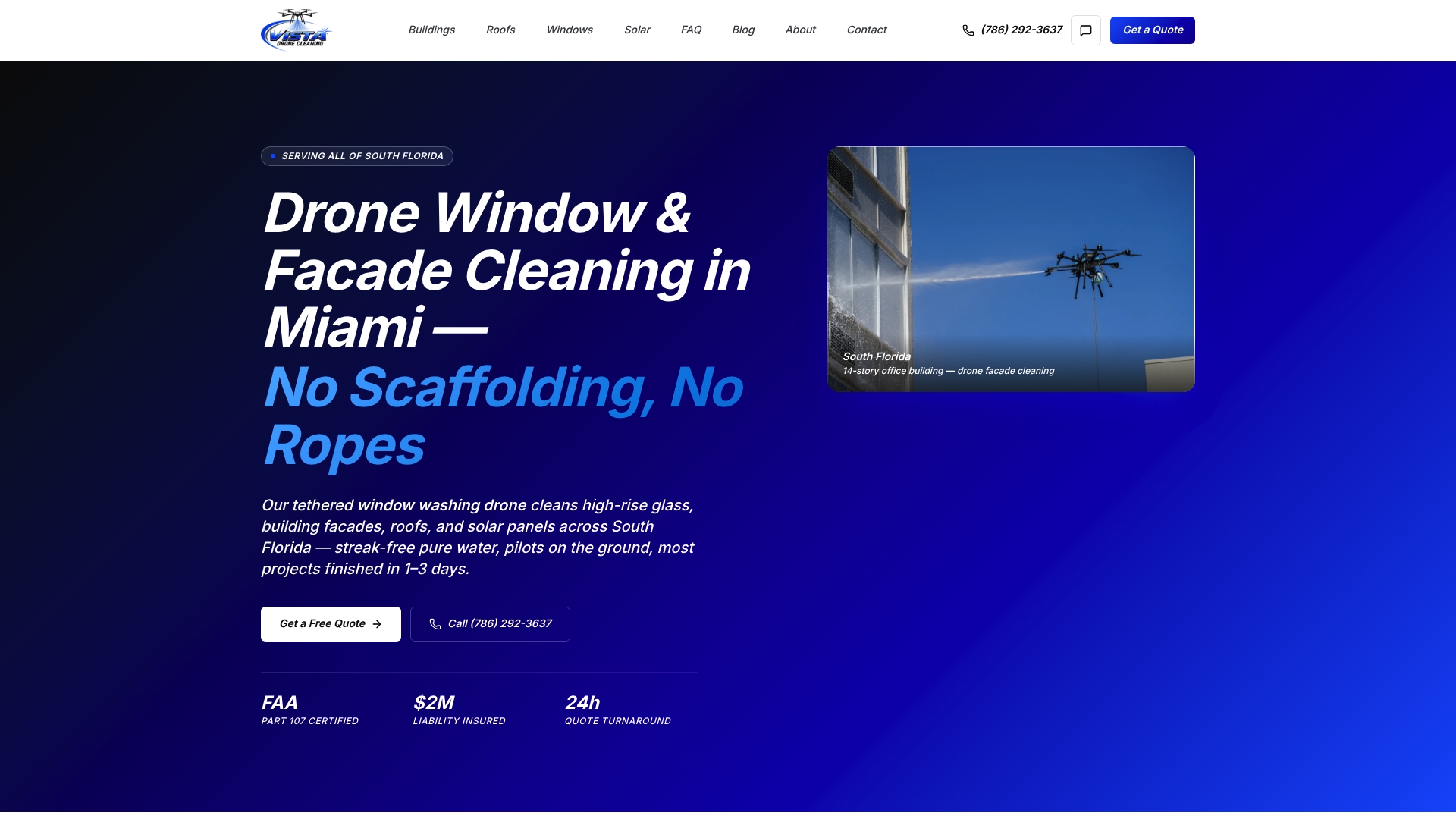
Vistadronecleaning deploys FAA Part 107-certified pilots and tethered Lucid Bots Sherpa drones to clean high-rise windows, facades, and roofs up to 200 feet tall without scaffolding, rope access, or road closures. The pure de-ionized water rinse system delivers streak-free results on every pass, with no chemical residue and no mineral spotting. Crews stay on the ground, which removes fall risk and eliminates OSHA compliance complexity for property managers. Most projects complete in 1–3 days. Compare the full breakdown of drone vs. traditional methods to see where the cost and safety differences land for your building. Free quotes are available within 24 hours.
FAQ
How often should high-rise windows be cleaned in South Florida?
High-rise windows in South Florida should be cleaned 2–4 times per year. Buildings near the coast or in high-traffic zones like Brickell or Fort Lauderdale Beach may need more frequent cycles to prevent mineral etching and salt buildup.
What causes streaks on high-rise windows after cleaning?
Streaks result from cleaning in direct sunlight, using untreated tap water with high TDS, or skipping dry debris removal before wet washing. Correcting the cleaning sequence and water quality eliminates most streak complaints.
Why is after-hours high-rise cleaning more expensive?
After-hours and weekend cleaning carries a 15–20% cost premium due to extended shifts and coordination requirements with security and HVAC teams. Proactive scheduling during business hours avoids this added cost.
What safety standards apply to high-rise window cleaning in Florida?
High-rise window cleaning in Florida must comply with federal OSHA standards and Florida Department of Business and Professional Regulation requirements. Site-specific risk assessments and certified equipment inspections are mandatory before each job.
Can drones clean high-rise windows effectively?
Yes. Tethered industrial drones like the Lucid Bots Sherpa deliver pure de-ionized water rinses on facades up to 200 feet with no scaffolding or rope access required. Vistadronecleaning completes most South Florida projects in 1–3 days at 30–60% lower cost than traditional scaffold methods.