
Mold vs Mildew on Exterior Surfaces: A Property Manager's Guide
Discover key differences between mold and mildew on exterior surfaces. Learn how to identify and manage them effectively for your property.

On exterior surfaces, mildew looks flat and powdery, usually white or gray, while mold is raised, fuzzy, or slimy and shows up in darker colors like black, green, or brown. If you’re not sure which you’re dealing with, treat it as mold until a bleach test proves otherwise.
Here’s how to act immediately:
- Bleach test first: Dab diluted bleach on the stain. If it lightens within two minutes, you’re looking at biological growth, not dirt or mineral deposits.
- Assess the size: A small patch on a non-porous surface is a reasonable DIY job. Anything larger, on porous substrates like stucco or wood, or on surfaces above ground level, warrants a professional.
- Check for penetration: Press gently on the siding. Soft or spongy material means the problem has gone deeper than the surface.
The EPA’s guidance on mold draws a clear line: mildew stays surface-level, while mold forms hyphae that can penetrate building materials. Cladosporium is one of the most common outdoor mold genera in humid climates like South Florida, and it thrives on shaded facades year-round.
Pro Tip: If you see dark streaking under gutters or near downspouts, that’s often algae, not mold. The bleach test distinguishes it, and the fix is similar either way.
For commercial facades in Miami-Dade, Broward, or Palm Beach counties, Vistadronecleaning handles large-scale or high-access exterior growth with FAA Part 107-certified drone soft-wash.
Key Takeaways
Mildew stays flat and surface-level while mold penetrates substrates, and the bleach test plus size and substrate assessment determine whether a DIY clean or professional soft-wash is the right call for South Florida commercial exteriors.
| Point | Details |
|---|---|
| Visual ID rule | Flat and powdery is mildew; raised, fuzzy, or slimy in dark colors is mold. |
| Bleach test | Biological stains lighten within minutes; dirt and mineral deposits do not react. |
| DIY threshold | Patches under one square foot on non-porous surfaces are DIY-appropriate; anything larger or on stucco, EIFS, or wood needs a professional. |
| Prevention priority | Gutters, irrigation, shade reduction, and annual cleaning schedules prevent regrowth better than repeated chemical treatments. |
| Vistadronecleaning | FAA Part 107-certified drone soft-wash for commercial facades in Miami-Dade, Broward, and Palm Beach counties, completing most projects in 1–3 days without scaffolding. |
Table of Contents
- What mold and mildew actually mean on a building exterior
- How to visually identify mold vs mildew on exterior surfaces
- Health and material risks: when to escalate beyond a surface clean
- Safe DIY steps for small exterior mildew or isolated mold patches
- Long-term prevention for South Florida exteriors
- When to hire a professional for exterior mold removal
- Timeline and cost expectations for DIY vs professional jobs
- Why substrate-matched soft-wash matters more than people think
- South Florida commercial properties: get a free exterior cleaning quote
- Sources
- FAQ
What mold and mildew actually mean on a building exterior
People use “mildew” and “mold” interchangeably, but the distinction matters for choosing the right response.
Mold is a broad kingdom of fungi. On building exteriors, mold forms multicellular filaments called hyphae that can push into porous substrates like wood, OSB, stucco, and EIFS. That penetration is what makes it a structural and health concern, not just a cosmetic one. Mildew, in the technical sense, refers to specific flat-growing fungi or plant pathogens that stay on the surface. In everyday building-care language, “mildew” is often applied to any light, surface-level biological stain, including early-stage mold or algae.
For cleaning decisions, the practical distinction is this: if the stain is flat, powdery, and wipes off easily, treat it as surface mildew. If it’s raised, fuzzy, slimy, or has been growing for weeks, treat it as mold.
CertainTeed’s building-care guidance reinforces this: the cleaning method you choose should match the growth type and the substrate, not just the color of the stain.
How to visually identify mold vs mildew on exterior surfaces
Color and texture are your fastest field cues, but location and substrate tell you how serious the problem is.
Texture and color at a glance:
- Mildew: flat, powdery, white or light gray, wipes off with a damp cloth
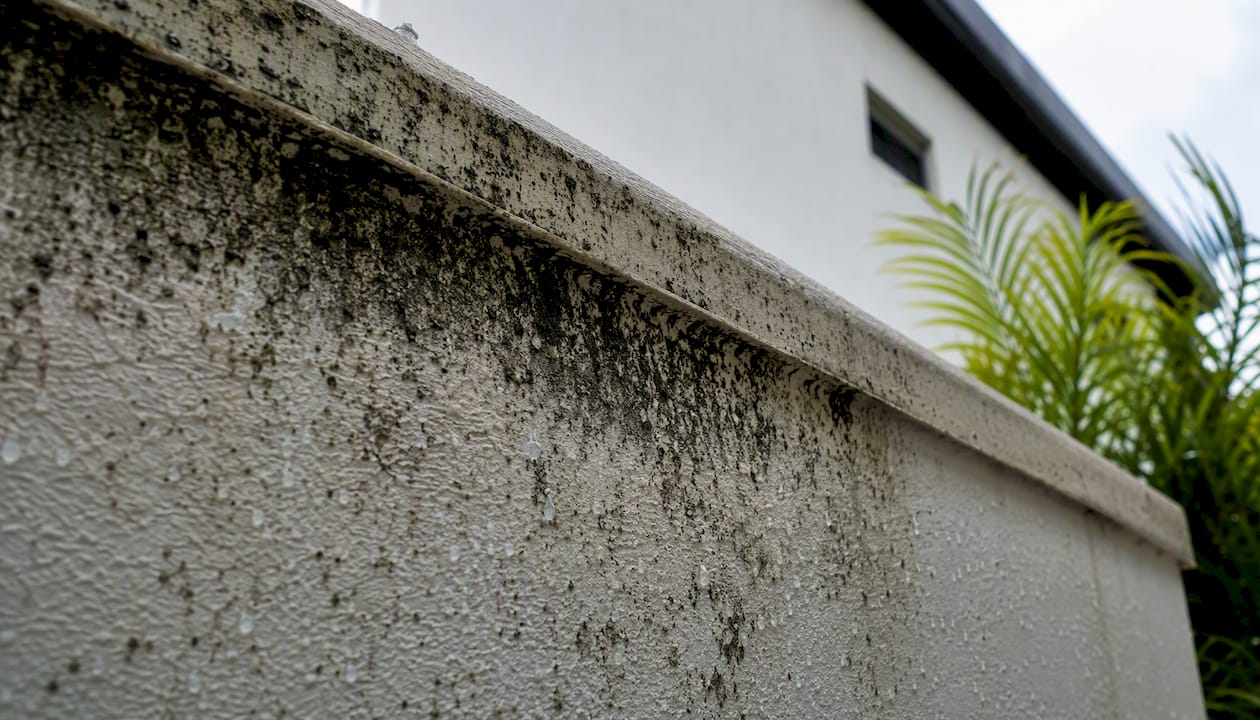
- Mold: raised, fuzzy or slimy, black, dark green, brown, or orange
- Algae: green or black streaking, often uniform, common under gutters and on north-facing walls
Dark streaking that runs vertically down a facade is frequently algae, not mold, though the environmental triggers overlap completely: shade, moisture, and organic debris.
Location clues: Growth under eaves, below gutters, or near landscaping splash zones points to moisture accumulation. Growth around wall penetrations like pipe boots, window frames, or AC lines suggests active water intrusion.
Material-specific risk:
| Surface | Typical growth | Penetration risk | DIY-friendly? |
|---|---|---|---|
| Vinyl siding | Surface mildew or algae | Low (mold may hide behind panels) | Yes, for surface stains |
| Wood / OSB | Mold, mildew | High | Small patches only |
| Stucco / EIFS | Mold, algae | High (traps moisture) | No: substrate risk |
| Metal / glass | Algae, surface mildew | Very low | Yes |
| Solar panels | Algae, dust-bound mildew | Very low | Soft-wash only |
On vinyl, the surface may look clean after a scrub while mold colonizes the sheathing behind it. On stucco and EIFS, moisture gets trapped in the finish layer, and aggressive cleaning can crack or delaminate the surface.
Health and material risks: when to escalate beyond a surface clean
Most exterior mold is a cosmetic and air-quality indicator, not an immediate health emergency. But certain signs mean the problem has crossed a threshold.
Escalate immediately if you observe any of these:
- Siding that feels soft or spongy when pressed
- A persistent musty odor inside rooms adjacent to the affected wall
- Staining that returns within weeks of cleaning
- Growth spreading across multiple square feet or around wall penetrations
- Visible wood rot or cracked caulk near the growth
Cladosporium and Alternaria, two of the most common outdoor mold genera in South Florida’s humid climate, can aggravate respiratory conditions in building occupants when spore counts are high. The EPA’s mold remediation guide for commercial buildings sets the baseline for when surface cleaning is insufficient and a formal remediation plan is required.
Repeated regrowth after cleaning is the clearest signal that the moisture source has not been addressed. Cleaning without fixing the source is a maintenance loop, not a solution.
Safe DIY steps for small exterior mildew or isolated mold patches
These steps apply to patches under one square foot on non-porous or low-risk surfaces like painted metal, glass, or vinyl. Stop and call a professional if the substrate is wood, stucco, EIFS, or if the area is above ground-floor reach.
- Test patch first. Apply diluted bleach to a small hidden area and wait five minutes. Check for color change or surface damage before treating the full area.
- Put on PPE. Gloves, safety glasses, and an N95 mask. Mold spores become airborne during scrubbing.
- Pre-wet the surface. Rinse with a garden hose at low pressure to prevent the cleaner from drying too fast and to protect nearby landscaping.
- Apply your cleaner. Clorox recommends a solution of 1/3 cup of Clorox™ Disinfecting Bleach per gallon of water for exterior mold and mildew stains. Oxygen bleach is a gentler alternative for painted or wood-adjacent surfaces.
- Let it dwell. Allow five to ten minutes of contact time. Do not let the solution dry on the surface.
- Rinse thoroughly. Use a garden hose or low-pressure rinse. Never use a high-pressure washer on EIFS, stucco, or aged paint. High pressure drives spores deeper into porous substrates and can crack finishes.
- Dispose of runoff responsibly. Direct wash water away from storm drains where possible, and avoid working on windy days when spores can drift.
Stop DIY and call a professional if: the patch is larger than one square foot, the substrate is porous, the area is above ground level, or the growth returns within a month of cleaning.
Pro Tip: Avoid working in direct midday sun. Heat causes bleach solutions to evaporate before the dwell time is complete, reducing effectiveness and increasing the risk of streaking.
Long-term prevention for South Florida exteriors
South Florida’s combination of high humidity, frequent afternoon storms, salt air, and year-round warmth creates near-perfect conditions for biological growth on building facades. One-off cleaning without addressing the environment behind it is a short-term fix.
Building diagnostics consistently show that stopping the environmental drivers (moisture, shade, and organic debris) is more effective long-term than relying on repeated chemical treatments. Inspectapedia, Algae & Mold Stains on Building Exteriors
Maintenance priorities for South Florida property managers:
- Clear gutters and downspouts at least twice a year. Overflowing gutters are the single most common cause of facade mold near rooflines.
- Trim trees and shrubs away from building walls. Shade and leaf debris accelerate biological growth on any substrate.
- Adjust irrigation heads so they don’t spray directly onto walls or siding.
- Check and clear AC condensation drain lines regularly. Overflow stains on stucco are a common mold starter.
- Schedule facade cleaning on a defined cadence, not reactively. Shaded facades in Miami-Dade and Broward typically need professional attention at least once a year.
For wood and porous finishes, mildew-resistant paints and penetrating sealers extend the interval between cleanings. On historic or specialty facades, confirm with the manufacturer before applying any coating, since some finishes trap moisture rather than repelling it.
When to hire a professional for exterior mold removal
Some situations are beyond what a property team should handle with a garden hose and a bucket.
Call a professional when:
- Growth covers more than 3–4 square feet of facade
- The stain has returned after two or more DIY cleaning attempts
- Mold is suspected behind siding or inside wall cavities
- The affected surface is above ground-floor reach
- The substrate is EIFS, stucco, or wood with any sign of softness
- You see wood rot, cracked caulk, or water staining near the growth
What professional cleaning does differently: A qualified contractor performs a pre-inspection for moisture intrusion, uses substrate-matched soft-wash chemistry that removes spores rather than just rinsing them off, and documents the work with before/after photography. For high-rise facades, drone soft-wash eliminates the need for scaffolding or boom lifts, which reduces cost and avoids road closures.
Vendor checklist for South Florida commercial properties:
- FAA Part 107 certification (required for drone operations)
- $2M liability insurance minimum
- References for similar facade types in Miami-Dade or Broward
- Before/after 4K documentation
- A proposed maintenance schedule, not just a one-time clean
Timeline and cost expectations for DIY vs professional jobs
Project scale drives both timeline and cost more than any other factor.
For large commercial facades in South Florida, drone soft-wash through Vistadronecleaning typically completes in 1–3 days without scaffolding, permits, or road closures. Cost factors include surface area, substrate sensitivity, building height, severity of penetration, and whether containment or follow-on repairs are needed.
Pro Tip: Schedule professional facade cleaning during South Florida’s drier months, roughly November through April, when lower humidity improves chemical dwell effectiveness and reduces the chance of immediate re-contamination.
Why substrate-matched soft-wash matters more than people think
Most property managers focus on the stain they can see. The substrate underneath is what actually determines whether the problem comes back in six weeks or stays gone for two years.
Pressure washing a stucco or EIFS facade feels thorough. It removes the visible growth fast. But high-pressure water on those surfaces can crack the finish layer, drive spores into the substrate, and create micro-channels where moisture collects. The stain returns faster than before, and now there’s surface damage on top of it.
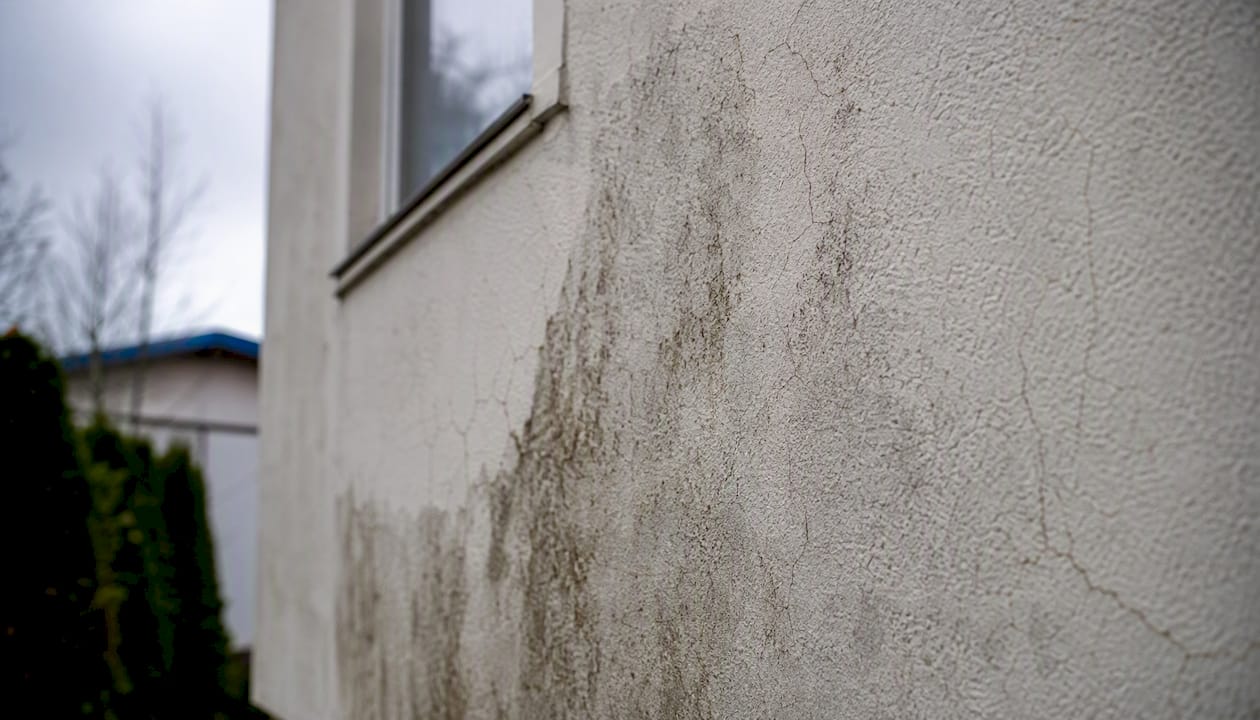
Vistadronecleaning’s approach for South Florida commercial exteriors is substrate-matched soft-wash: chemistry selected for the specific finish, applied at low pressure, with enough dwell time to remove spores rather than just displace them. On stucco, EIFS, and wood facades, that distinction is the difference between a clean that lasts and one that doesn’t. Salt air in coastal Miami-Dade and Broward accelerates biological growth and degrades surface coatings faster than inland climates, so the maintenance cadence here needs to be tighter than standard industry recommendations.
Exterior biological growth is a maintenance and asset-protection issue. A facade that looks clean signals to tenants, guests, and inspectors that the building is managed. One that doesn’t costs more to fix the longer it’s ignored.
South Florida commercial properties: get a free exterior cleaning quote

Vistadronecleaning serves commercial high-rises, condominiums, hotels, office towers, and retail centers across Miami-Dade, Broward, and Palm Beach counties. FAA Part 107-certified pilots operate tethered industrial drones to deliver substrate-matched soft-wash on facades, roofs, and solar arrays up to 200 feet tall, with no scaffolding, no road closures, and $2M liability insurance on every job. Every project includes 4K before/after documentation and a pure de-ionized water rinse for glass and solar panel surfaces.
Property managers, HOA boards, and facilities leads responsible for high-rise facade cleaning or roof soft-wash in South Florida can request a free quote with a 24-hour turnaround. Contact Vistadronecleaning at Vistadronecleaning to schedule a site review and get a fixed-price proposal for your property.
Sources
- What is the difference between mold and mildew?
- How to Clean Mold Stains & Mildew Stains Outside - Clorox
- Algae & Mold Stains on Building Exteriors
- Mold vs Mildew: When to Worry and When to Clean
FAQ
How do I know if it’s mildew or mold on my building exterior?
Mildew is flat, powdery, and usually white or gray; mold is raised, fuzzy or slimy, and darker in color. Apply diluted bleach to the stain: biological growth lightens within minutes, while dirt and mineral deposits do not react.
How do you get rid of mold and mildew on exterior surfaces?
For small patches on non-porous surfaces, pre-wet the area, apply a diluted bleach solution (1/3 cup bleach per gallon of water per Clorox’s guidance), allow five to ten minutes of dwell time, then rinse at low pressure. Never use high-pressure washing on stucco, EIFS, or wood.
What is the most common outdoor mold in South Florida?
Cladosporium and Alternaria are among the most common outdoor mold genera in humid climates like South Florida, thriving on shaded facades and organic debris year-round.
What is worse, mildew or mold?
Mold is the greater concern. Unlike surface-level mildew, mold can penetrate porous building materials like wood and stucco, potentially causing structural damage and elevated indoor spore counts if it migrates through wall assemblies.
Recommended
- Building Exterior Maintenance Checklist for Property Managers, Vista Drone Cleaning
- Why High-Rise Windows Streak After Rain: A Manager’s Guide
- Commercial Facade Restoration Cleaning: A Property Manager’s Guide, Vista Drone Cleaning
- Why Buildings Need Facade Maintenance: A Property Manager’s Guide, Vista Drone Cleaning