
When to DIY vs Hire Pros for South Florida Concrete Rust Removal
Learn safe, step by step concrete rust stain removal for South Florida: when DIY works, how to poultice vertical stains, and when to call a drone cleaning...
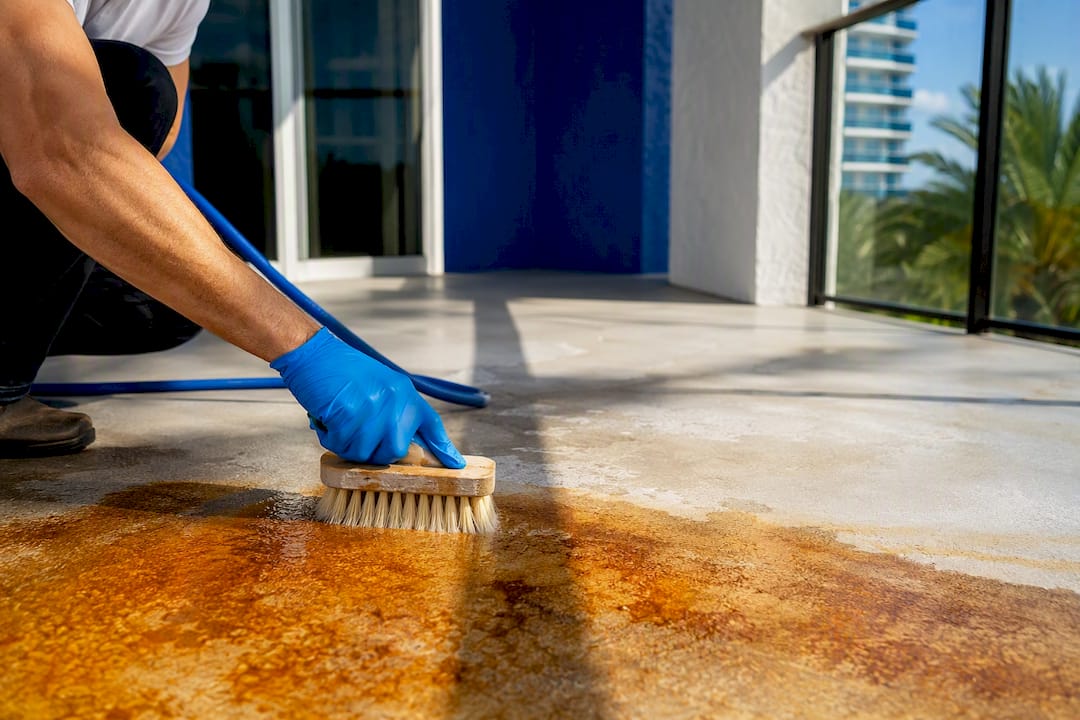
For many rust stains on concrete, an oxalic-acid based chelator applied with controlled dwell time and thorough neutralization can effectively remove discoloration. Household acids like vinegar only lift fresh surface marks. Vertical facades, embedded rebar stains, or rust that keeps returning after cleaning belong to a professional, particularly on South Florida high-rises where access and runoff control turn a simple stain into a liability problem.
TL; DR:
- Oxalic acid chelators are the most effective method for removing embedded rust stains on horizontal and vertical concrete surfaces, especially older or deep stains.
- Household acids like vinegar work only on fresh, surface-level stains and are ineffective once rust penetrates the concrete pores or on vertical facades.
- Proper safety precautions, including PPE and neutralization with baking soda, are essential when handling oxalic acid to prevent damage and health risks.
- Vertical stains often require poulticing for best results, which involves applying a thick paste and covering it to keep the chemistry in contact with the stain.
- For high-rise facades, drone-assisted chemical application provides faster, safer, and more contained rust removal than traditional scaffolding or rope access.
Table of Contents
- How Do You Choose the Right Rust Removal Method?
- What Do You Need Before Starting Rust Removal?
- How Do You Apply Oxalic Acid to Remove Rust From Concrete?
- Do Vinegar, WD-40, and Bar Keepers Friend Actually Remove Rust?
- How Does the Poultice Method Work for Vertical Stains?
- Why Do Rust Stains Keep Coming Back?
- When Should You Hire a Professional for Rust Removal on Facades?
- What the Rust Removal Industry Gets Wrong
- Get a Quote for Facade Rust Removal in South Florida
- Sources
- FAQ
How Do You Choose the Right Rust Removal Method?
Not every rust stain on a Fort Lauderdale patio or a Boca Raton parking structure needs the same fix. Stain age, depth, and the surface itself determine which method actually works, and picking wrong wastes a Saturday and sometimes damages the concrete.
Here’s how to size up what you’re dealing with before you buy anything:
- Light, surface-level stains (under a week old): Try dish soap and a stiff brush first, or straight white vinegar with a 10 to 15 minute dwell. Success odds are decent, maybe 50/50, since the iron hasn’t bonded deep into the pores yet.
- Moderate, aged stains (weeks to months old, horizontal surfaces): This is oxalic acid territory. Expect a moderate dwell time per pass and plan on multiple passes for full rust lift.
- Deep or embedded stains (rebar bleed-through, old sprinkler marks): A single application rarely finishes the job. Oxalic acid with repeat light passes, or a poultice if the stain sits on a vertical wall, is the realistic path.
- Vertical facades and building exteriors: Poulticing is close to mandatory here. Liquid chelators run downhill and streak before they finish working, which is exactly why high-rise and condo exteriors across Miami-Dade need contained application rather than a garden hose, and a prayer.
Household methods (vinegar, dish soap, lemon juice) are worth trying only when the stain is fresh and the surface is flat. On anything vertical, aged, or covering more than a patio-sized footprint, skip straight to a chelator or call a pro.
What Do You Need Before Starting Rust Removal?
Oxalic acid is not dangerous when handled correctly, but it’s not a product to mix casually either. A short prep list saves you a trip to urgent care and saves your concrete from etching.
PPE checklist:
- Chemical-resistant gloves (nitrile, not latex)
- Safety goggles, not just glasses
- A respirator or well-fitted dust mask if you’re mixing dry oxalic acid crystals, since the powder is an inhalation hazard
- Old clothes and closed-toe shoes; splashes bleach fabric fast
Before you touch the stain:
- Run a test patch in an inconspicuous corner and wait 24 hours to check for etching or discoloration
- Soak nearby grass, mulch beds, and planters with plain water, and cover anything you can’t move with plastic sheeting
- Mix acid into water, never water into acid, and always in a plastic bucket, never metal
Skip the wire brush. Steel bristles shed tiny metal fragments that embed in the concrete and oxidize into brand-new rust spots, undoing your work before it’s finished. A stiff nylon-bristle brush does the agitation job without leaving a souvenir behind. And resist reaching for the pressure washer as a first move. High pressure can drive iron particles deeper into the pores or etch the surface, according to guidance from Peppers Pressure Washing, so it belongs after chemical treatment, on a low-pressure setting, not before it.
Pro Tip: Keep a box of baking soda and a garden hose staged nearby before you mix anything. If acid splashes somewhere you didn’t intend, you want neutralizer within arm’s reach, not in the garage.
How Do You Apply Oxalic Acid to Remove Rust From Concrete?
This is the method most South Florida homeowners reach for first, and for good reason. Oxalic acid chelates the iron in rust, meaning it binds to the metal ions and pulls them out of the concrete’s pores rather than just bleaching the surface color. That’s why rinsing alone, even with a pressure washer, so often fails to fully clear a stain, according to research from Lawn Theory on how rust bonds electrochemically into porous surfaces.
Step 1: Pre-clean and dampen the surface. Sweep away debris and lightly wet the concrete with a hose. Damp concrete absorbs the acid solution more evenly than bone-dry concrete, which tends to soak it up unevenly around the stain edges.
Step 2: Mix the solution. Follow the product label first. As a general DIY reference point, a common mix ratio runs about one pound of oxalic acid crystals per gallon of warm water, based on practical guidance from Peppers Pressure Washing. Stir until fully dissolved. Never use hot water above what the label allows, since some formulations release fumes faster when overheated.
Step 3: Apply generously and keep it wet. Pour or brush the solution directly onto the stain, covering it completely. The acid needs to stay wet to keep working, so on a hot Miami afternoon you may need to reapply small amounts to prevent the solution from drying out mid-treatment.
Step 4: Monitor dwell time. Let it sit 15 to 30 minutes. Check every five minutes or so on darker or more porous concrete, since it can lighten unevenly if left too long.
Step 5: Agitate with a nylon brush. Scrub in a circular motion, working the solution into the stain rather than just across the surface.
Step 6: Rinse thoroughly. Flush the area with clean water at low pressure. Don’t let acid runoff sit in puddles or drain toward garden beds.
Step 7: Neutralize. Mix baking soda with water and apply it over the treated area, then rinse again. This step matters more than most DIYers realize. Residual acidity left in the concrete’s pores can cause flash rusting or continued surface etching days later if it isn’t fully neutralized.
Step 8: Reassess and repeat if needed. If the stain has lightened but not vanished, repeat the process rather than mixing a stronger batch. Crafting with Concrete notes that multiple light passes protect the surface far better than one aggressive treatment, which can etch or discolor the concrete permanently.
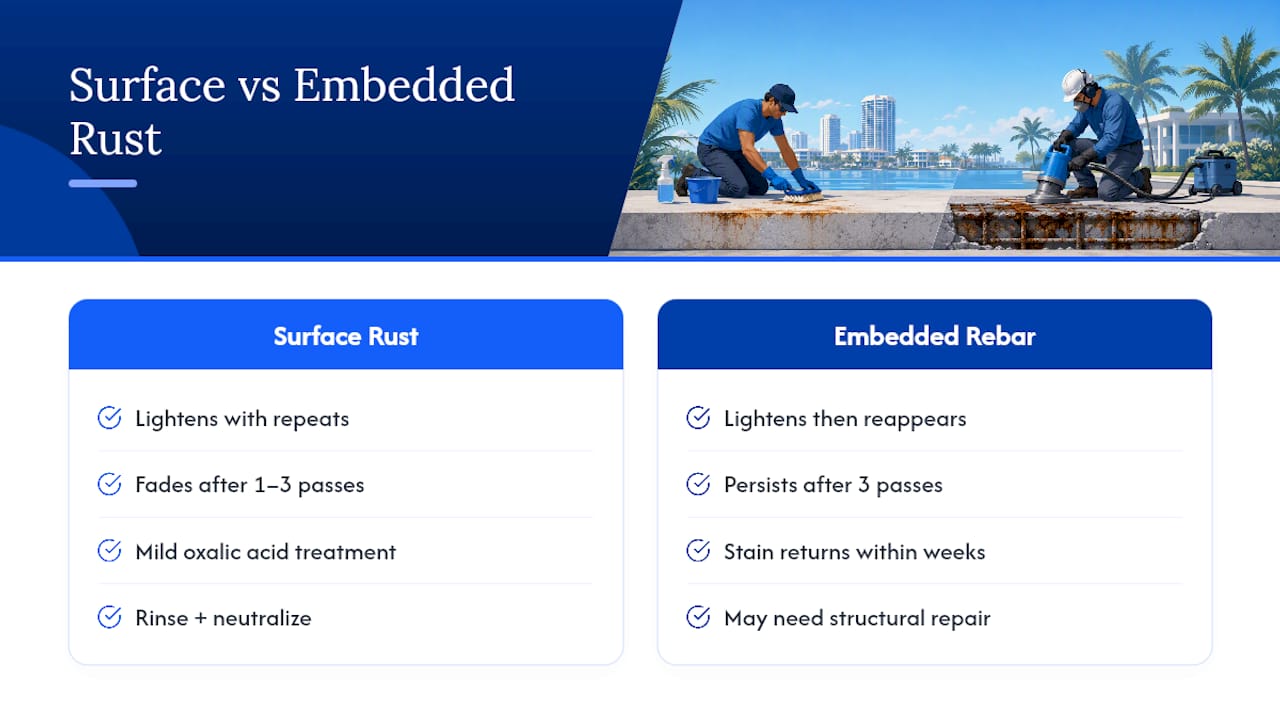
Most DIY treatments call for a 5 to 20 minute dwell window per pass followed by aggressive brush work, per Hunker’s breakdown of typical rust-removal timing. If you’ve run three full passes and the stain is still visibly present, or if the “stain” reappears within a few weeks, you’re likely dealing with embedded rebar corroding beneath the slab. That’s a structural question, not a cleaning one, and it needs a concrete specialist, not another bottle of acid.
Do Vinegar, WD-40, and Bar Keepers Friend Actually Remove Rust?
Search any South Florida homeowner forum and you’ll find strong opinions about vinegar, WD-40, and Bar Keepers Friend. All three have a place. None of them match oxalic acid on anything beyond a fresh, shallow stain.
- WD-40: It’s a lubricant and penetrant, not an acid, so it works by loosening rust particles rather than chemically dissolving them. Spray it on, let it sit 10 to 15 minutes, then scrub with a nylon brush. The catch is residue. WD-40 leaves an oily film that attracts dirt if you don’t follow up with dish soap and a hot water rinse, and results are noticeably less predictable than acid-based cleaners.
- White vinegar, lemon juice, vitamin C paste: These contain mild acids that can lift very fresh, thin rust marks, like a flowerpot ring that’s only been there a few days. Apply, let sit 15 minutes, scrub, rinse. They fall short on anything that’s had weeks to bond into the pores, because their acid concentration simply isn’t strong enough to chelate embedded iron. Community threads on Reddit’s r/Concrete are full of homeowners reporting mixed results with exactly these remedies, which tracks with how limited their chemistry really is.
- Bar Keepers Friend and retail oxalic cleaners: These do contain real oxalic acid, so they’re a genuine step up from vinegar. Bar Keepers Friend works well on smaller, moderate stains, countertops, small patio spots, garage floor marks. The limit is concentration. Retail formulations are diluted for general consumer safety, and they often can’t match the strength a professional-grade mix delivers on a stain that’s had months to set in.
What about Dawn dish soap? It degreases and lifts loose surface dirt, but it has no acid content, so it does nothing to the rust itself. Use it as a pre-clean step or a WD-40 residue remover, not a rust treatment.
How Does the Poultice Method Work for Vertical Stains?
Pour a liquid chelator on a vertical wall and gravity wins. It runs down the surface, streaks, and often leaves a worse-looking mark than the original stain, which is exactly why poulticing exists. A poultice holds the chemistry in direct contact with the stain long enough to work, instead of letting it drip away in the first sixty seconds.
- Mix the poultice. Combine an absorbent carrier, powdered talc, diatomaceous earth, or fuller’s earth, with your oxalic acid solution until it forms a thick, peanut-butter-like paste.
- Apply with a trowel or putty knife. Press it into the stain about a quarter inch thick, extending slightly past the visible stain edges.
- Cover to slow drying. Plastic sheeting taped over the poultice keeps it wet longer, giving the chelator more time to pull iron out of the pores instead of evaporating early.
- Let it dwell. Depending on stain depth, this can run anywhere from several hours to overnight, following the procedure outlined by the GSA’s historic preservation technical guide on iron rust poulticing.
- Scrape and extract. Once dry, scrape off the poultice, which pulls the dissolved iron out with it as it lifts away from the surface.
- Rinse and neutralize. Same baking-soda neutralization step as the flat-surface method, followed by a thorough low-pressure rinse.
The absorbent carrier is doing real work here. It keeps the chemistry from running downhill, which is what prevents the streaking that ruins so many DIY vertical attempts.
Pro Tip: If you’re working above head height, on scaffolding, or on a building facade taller than a single story, stop and call a professional. Poulticing a stain at ground level on a garden wall is a reasonable weekend project. Poulticing a stain forty feet up on a condo tower is a fall-risk and containment problem that DIY tools weren’t built to solve.
Why Do Rust Stains Keep Coming Back?
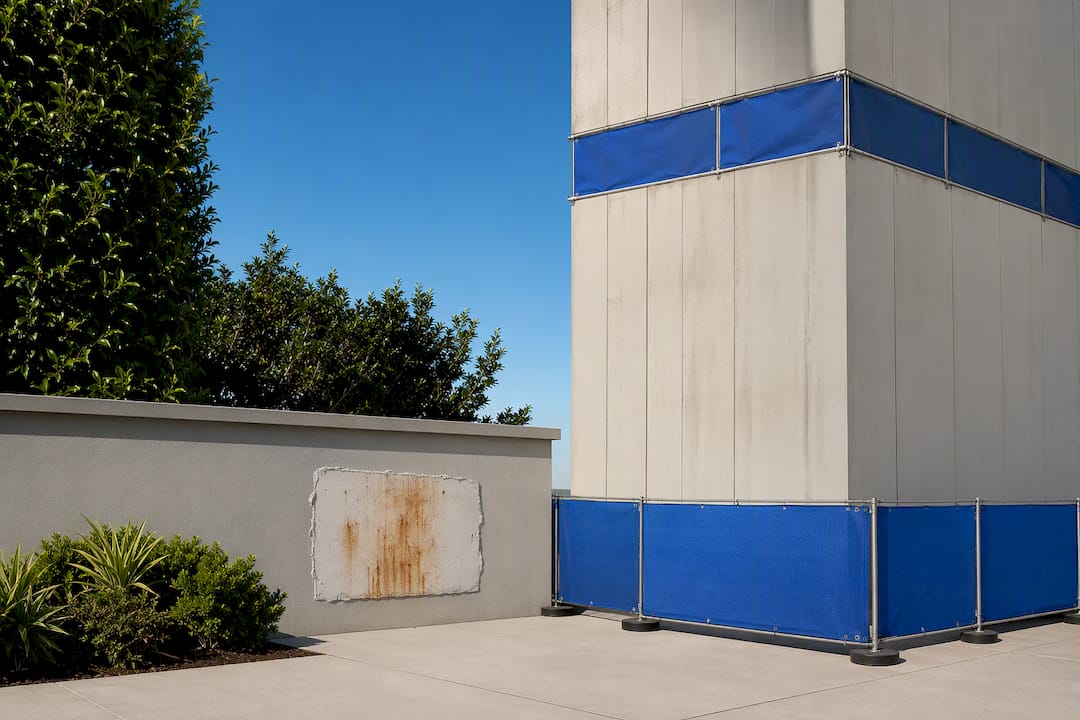
Removing a rust stain without fixing what caused it means you’ll be back out there with the same bucket in a few months. Reading the stain’s shape usually tells you exactly what’s producing it.
- A curved or fan-shaped stain almost always traces back to a sprinkler head throwing mineral-rich water across the same arc every cycle. Reposition or shield the head, or add a rust-sequestering agent to your irrigation line to bind the iron before it hits the concrete.
- A stain shaped like a small circle or square usually means metal furniture legs or a planter sitting directly on damp concrete. Rubber feet or a plastic barrier under the base solves this permanently.
- A stain spreading from a wall seam, expansion joint, or drain grate points to a corroding fixture nearby, a rusting bolt, an old drain cover, or flashing that needs replacing rather than cleaning.
- A stain that returns in the exact same spot after full removal, even with the visible source addressed, suggests the iron is coming from inside the slab, likely rebar corroding beneath the surface. That calls for a structural assessment, not another round of oxalic acid.
When Should You Hire a Professional for Rust Removal on Facades?
DIY methods work well up to a point, and that point is usually your own roofline. Once rust staining shows up on a building exterior above ground level, on a condo tower in Brickell or a retail center facade in Boca Raton, the job changes from a cleaning task into an access and containment problem.
Professional crews follow a protocol that mirrors the DIY steps but scales them safely:
- Test patch in an inconspicuous area to confirm the chemistry won’t discolor the specific concrete or stucco blend
- Match the chemical formula to the substrate and nearby landscaping, since phosphoric-based products are often gentler around plantings than straight oxalic acid
- Contain runoff so acid never reaches storm drains, landscaping, or pedestrian areas below
- Poultice and extract deep or embedded stains rather than relying on a single liquid application
- Neutralize fully and document results with before-and-after imagery
Vistadronecleaning approaches this differently than a scaffold crew or a rope-access technician would. FAA Part 107-certified pilots operate tethered industrial drones that deliver substrate-matched cleaning chemistry directly to a stained area without a lift, scaffolding, or road closure, while the crew stays safely on the ground the entire time.
Precise, drone-delivered chemistry means no worker dangling forty stories up with a garden sprayer, and no runoff drifting onto the sidewalk below.
Most facade projects finish in one to three days, backed by $2 million in liability insurance, which matters when you’re staining-removing on a property with tenants, pedestrians, and parked cars underneath the work zone.
What the Rust Removal Industry Gets Wrong
Most rust removal advice online treats every stain the same, hand you an oxalic acid recipe and call it done. That works fine for a driveway. It falls apart the moment the stain is fifteen stories up.
The bigger blind spot is prevention. Almost every guide leads with chemistry and buries the source diagnosis at the bottom, if it appears at all. But a stain that returns after a perfect cleaning job isn’t a cleaning failure. It’s a diagnosis failure. Fix the sprinkler head or the corroding bolt first, and the acid work you already did stays finished.
The other overlooked point is scale. A DIYer scrubbing a patio and a facility manager staring at rust streaks down a twelve-story parking structure are solving two different problems, even though the chemistry is nearly identical. What changes is access, runoff liability, and the cost of getting it wrong forty feet in the air. Homeowners should absolutely tackle the driveway themselves. Property managers looking at a building exterior should treat that height threshold as the real decision point, not the size of the stain.
, Eliot
Get a Quote for Facade Rust Removal in South Florida
Rust streaking down a parking garage wall or bleeding through stucco on a high-rise exterior isn’t a job for a bucket and a nylon brush from the ground. Vistadronecleaning is the alternative to scaffolding and rope-access crews for facade rust removal across South Florida, and the difference is straightforward: no lift rental, no permits, no road closure, and most projects wrap in one to three days at 30 to 60% less than traditional scaffold methods.

A site review starts the process. Pilots assess the stain pattern, test a small patch to confirm the right chemistry for your stucco, EIFS, or concrete substrate, then build a fixed-price proposal around your building’s actual condition, not a generic square-footage guess.
| Why Property Managers Choose Vistadronecleaning | What It Means |
|---|---|
| Tethered industrial drones | No scaffolding, lifts, or rope access required |
| FAA Part 107-certified pilots | Crews stay safely on the ground |
| $2M liability insurance | Coverage for occupied commercial properties |
| 1 to 3 day typical timelines | Minimal disruption to tenants and traffic |
Curious how the numbers actually compare to a traditional lift crew? The breakdown of drone cleaning versus traditional window cleaning walks through cost drivers side by side. Ready to see what a rust stain removal quote looks like for your property? Request a free quote and Vistadronecleaning will respond within 24 hours.
Sources
- How To Get Rid Of Rust Stains On Concrete With A Can Of WD-40: Hunker
- Rust stains on concrete: oxalic acid, chelators and safer methods, Crafting with Concrete
- How to Remove Rust Stains From Concrete (Oil Stains Too): Peppers Pressure Washing
FAQ
Will WD-40 remove rust from concrete?
Yes, for light to moderate surface rust, but it works as a penetrant rather than a chemical dissolver, so it’s less predictable than oxalic acid and typically leaves an oily residue that needs a dish soap follow-up rinse.
What is the best rust remover for concrete?
Oxalic acid based chelators are the most reliable general-purpose option because they bind to iron and pull it out of the concrete’s pores, rather than just bleaching the surface color.
Will Dawn dish soap remove rust from concrete?
No. Dawn has no acid content, so it can’t break down the iron bond causing the stain, though it’s useful for degreasing before treatment or removing oily WD-40 residue afterward.
Does white vinegar remove rust from concrete?
Only on very fresh, thin surface stains, since its mild acid content isn’t strong enough to chelate iron that’s had weeks or months to bond into the concrete’s pores.
How long should I let oxalic acid sit on a rust stain?
Plan on a 15 to 30 minute dwell time per pass, checking every few minutes on darker or more porous concrete, and expect to repeat the process two or three times for full removal rather than one aggressive application.