
Avoid Fall Citations in South Florida: When OSHA 1910 vs 1926 Applies
South Florida safety teams and property managers: learn when OSHA 1910 or 1926 applies, how the 4 ft vs 6 ft triggers differ, and practical steps to avoid...
Whether OSHA 1910 or 1926 governs a task depends entirely on what the work is, not where it happens or who is doing it, and both can apply on the same building at the same time. The single biggest operational difference is fall protection: general industry requires protection at 4 feet, while construction sets the trigger at 6 feet, with important exceptions for scaffolds, steel erection, and work above dangerous machinery. When the classification is unclear, OSHA’s own interpretation letters point toward applying whichever standard offers more protection.
TL; DR:
- Fall protection thresholds vary significantly: four feet in general industry, six feet in construction, with specific exceptions for scaffolds, steel erection, and work above machinery.
- OSHA classification depends on task scope, complexity, permanence, and frequency, often requiring documentation and applying the more protective standard when in doubt.
- Both standards can apply simultaneously on a site, with specific provisions taking precedence according to the activity, especially when work overlaps or involves multiple crews.
- Construction work generally mandates a competent person, shift inspections, and stricter documentation, while maintenance relies on general periodic inspections and less rigid oversight.
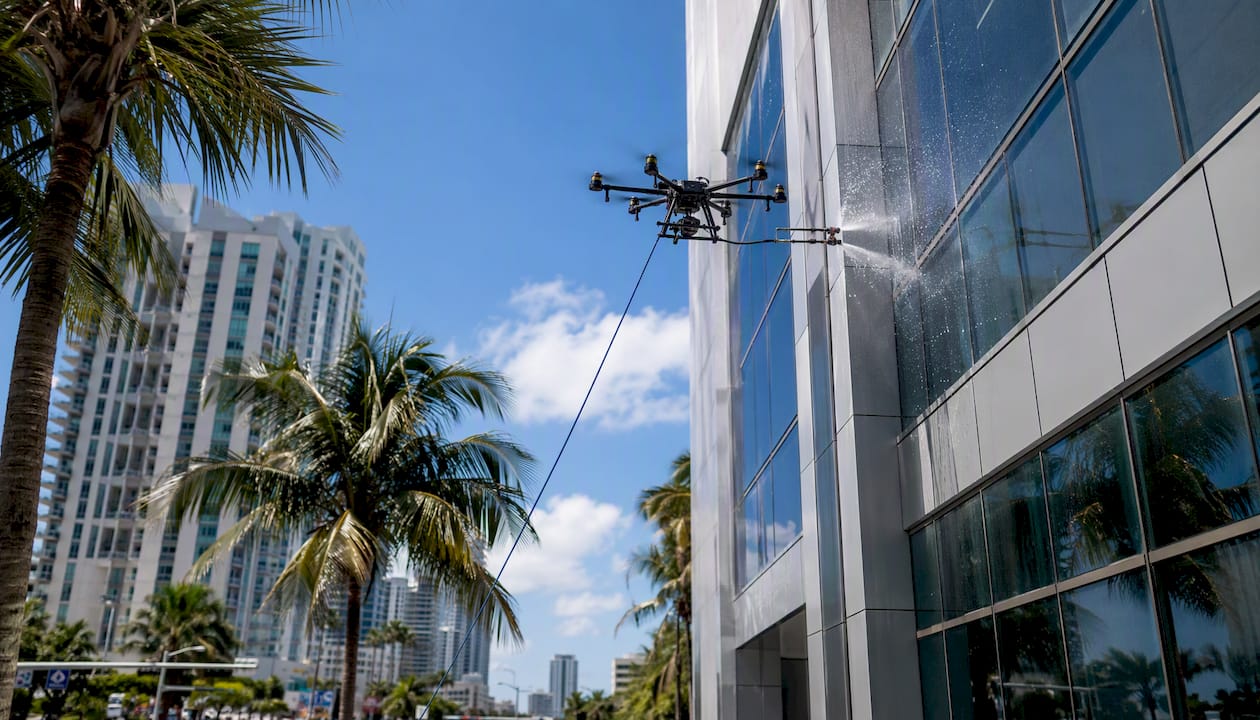
- Tethered drone cleaning from ground level offers a maintenance-class alternative reducing fall protection requirements and related compliance burdens.
Table of Contents
- OSHA 1910 vs 1926: Scope, Trigger Heights, and Overrides
- How to Decide: Construction or Maintenance?
- Concurrent Application: When Both Standards Apply at Once
- Training, Competent Persons, and Inspection Frequency
- Applying the Rules on South Florida High-Rises
- Compliance Checklist for Safety Teams
- Coordinating Maintenance and Construction Crews on Miami High-Rises
- Vista Drone Cleaning: Maintenance-Class Exterior Cleaning Without the Fall Exposure
- Primary Sources for OSHA 1910 and 1926 Compliance
- Sources
- FAQ
OSHA 1910 vs 1926: Scope, Trigger Heights, and Overrides
The core split is simple to state and easy to misapply: 29 CFR 1910 covers general industry, meaning routine operations, maintenance, and ongoing facility work, while 29 CFR 1926 covers construction, alteration, and repair activity. Both parts share a lot of DNA. Many 1910 provisions were folded directly into the construction standard through Appendix A to Part 1926, which lists general industry rules OSHA has incorporated into construction enforcement to keep the two frameworks from contradicting each other on shared issues.
Here’s where the fall protection triggers actually differ, along with the overrides that catch people off guard:
- General industry (1910.28): fall protection required at 4 feet or more above a lower level, and at any height above dangerous equipment.
- Construction (1926.501): fall protection required at 6-foot or more above a lower level, covering unprotected edges, holes, ramps, runways, and excavations.
- Scaffolds: a separate 10-foot trigger applies under construction scaffold rules, regardless of the general 6 foot threshold.
- Steel erection: the trigger rises again, to 15 feet, under the construction subpart specific to steel work.
- Fixed ladders over 24 feet: both standards require ladder safety systems or personal fall arrest, though the specific mechanics differ.
For safety teams triaging a work order, the takeaway is that “how high” is not one number. It changes based on the specific subpart governing the task, which is exactly why Appendix A matters. If a construction crew is performing an activity where OSHA has cross-referenced a 1910 provision, that provision applies as written rather than being reinvented under a separate construction rule.
How to Decide: Construction or Maintenance?
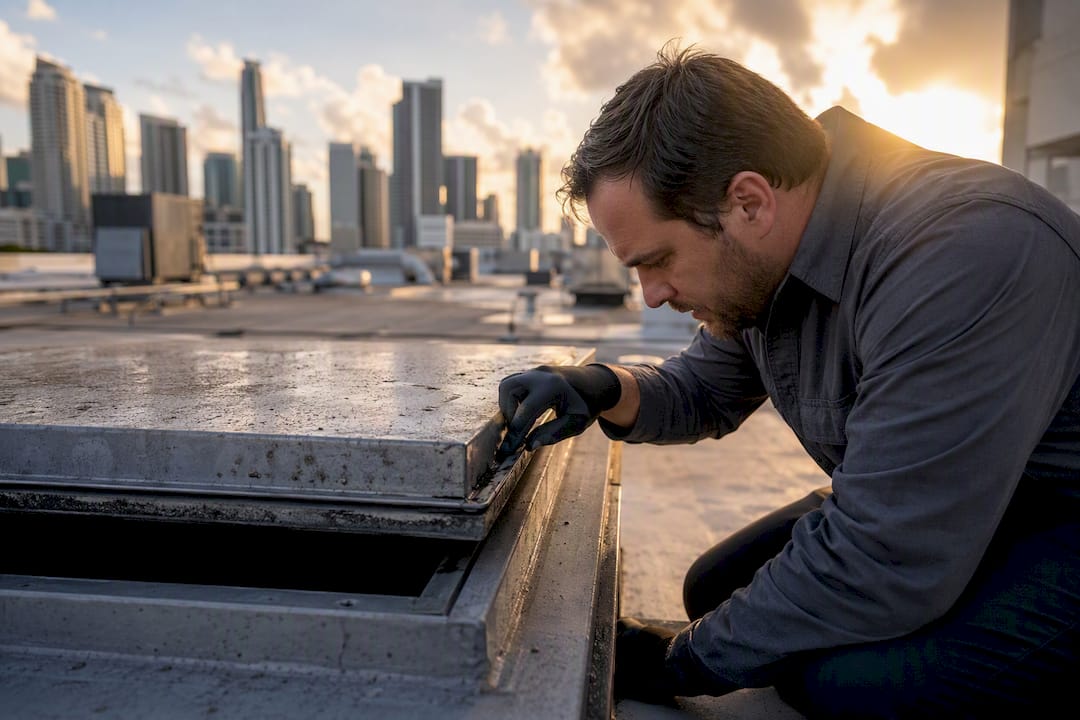
OSHA doesn’t hand safety professionals a checkbox. Under 29 CFR 1926.32(g), construction work means “construction, alteration, and/or repair, including painting and decorating.” Maintenance has no equally tight regulatory definition. Instead, OSHA and Review Commission decisions rely on a fact-specific test built around a handful of recurring factors.
The factors that actually drive classification:
- Scale and complexity. A one-person task with hand tools reads differently than a multi-week project with heavy equipment and multiple trades.
- One-for-one replacement vs. improvement. Swapping a broken panel for an identical one leans maintenance; upgrading to a different material or system leans construction.
- Permanence of the change. Work that alters the structure’s function, capacity, or design tends to fall under 1926.
- Frequency and scheduling. Routine, recurring tasks on a set schedule (monthly window cleaning, quarterly filter changes) point toward maintenance under 1910. One-off or irregular projects point toward construction.
These are the same factors OSHA has cited in interpretation letters addressing ambiguous construction vs. maintenance calls, and they show up again and again in enforcement decisions where scale, setting, and improvement status settled the question.
A workable decision flow: First, ask if the task is scheduled and recurring, or a discrete project. Second, ask if you’re replacing like-for-like or upgrading/altering. Third, check scale, is this a single technician or a multi-trade crew with heavy equipment? Fourth, if any answer points toward construction, default to 1926 unless a specific 1910 provision has been incorporated via Appendix A.
Pro Tip: When the answer genuinely could go either way, apply the more protective standard and write down why you made that call. A one-paragraph memo in your safety file showing you considered the 4 foot vs. 6 foot threshold and chose the stricter one is worth far more during an inspection than a verbal explanation after the fact.
Concurrent Application: When Both Standards Apply at Once
Specific provisions always control over general ones. That’s the precedence rule that resolves most conflicts, and it’s why Appendix A exists, so that where 1910 language has been formally pulled into 1926, employers aren’t left guessing which rulebook wins.
Concurrent application isn’t a rare edge case. It’s routine on any commercial property with both in-house staff and outside contractors:
- An in-house maintenance technician cleaning gutters and checking rooftop equipment operates under 1910, general industry rules for walking-working surfaces and fall protection.
- A contractor on the same roof replacing waterproofing membrane or structural flashing is very likely performing 1926 construction work, with different fall protection triggers and different competent-person requirements.
- Both workers can be on the same roof, on the same day, governed by different standards, and each employer is responsible for compliance under the standard that applies to their own crew’s activity.
- Where neither 1910 nor 1926 speaks directly to a hazard, OSHA can still cite an employer under the General Duty Clause, Section 5(a)(1), which requires a workplace free of recognized serious hazards even absent a specific standard.
This is also the scenario OSHA’s 1991 interpretation letter on operating plant services addresses directly: activities on the same site can trigger different standards depending on what each group of workers is actually doing, not the building’s overall purpose. Property managers who assume “it’s a maintenance building, so 1910 covers everything” are the ones who get surprised during a citation review.
Training, Competent Persons, and Inspection Frequency
This is where the paperwork gap between the two standards turns into real citation risk. Construction work under 1926 leans heavily on the competent person model, a designated individual capable of identifying hazards and authorized to take corrective action. For scaffolds specifically, 1926.451(f)(3) requires a competent person inspection before each work shift. General industry, by contrast, uses looser “periodic inspection” language under 1910, with frequency left to employer judgment based on actual conditions rather than a fixed shift-by-shift schedule.
Practical duties that follow from this split:
- Designate the competent person by name in any contractor agreement covering construction-class work, not just “a supervisor will be assigned.”
- Require pre-shift scaffold inspection logs when a task meets 1926 criteria, since OSHA auditors ask for these first.
- Keep 1910-covered maintenance inspection records too, even without a fixed frequency requirement, since “periodic” still means documented.
- Build pre-job briefs that state which standard governs the day’s work and who holds competent-person authority for it.
Pro Tip: Ask every outside contractor for their written method statement before the job starts, not after. A method statement that doesn’t name a competent person or specify inspection frequency is a red flag that the contractor hasn’t classified their own work correctly.
Applying the Rules on South Florida High-Rises
Picture a 20-story condo tower in Brickell. A crew rinsing salt residue off the glass curtain wall every quarter is performing maintenance, that’s 1910 territory, with fall protection required once workers are exposed at 4 feet. Now picture a crew removing and replacing failed EIFS panels after storm damage, which is a repair project altering the building envelope. That’s construction under 1926, with a 6 foot trigger, competent-person duties, and likely a permit.
The classification differences show up constantly in coastal properties:
- Routine window washing on a high-rise in Miami or Fort Lauderdale is maintenance-class work when it’s scheduled, recurring, and doesn’t alter the building. Controls should still include fall protection appropriate to the method and documented equipment inspections.
- Facade repair or major renovation, replacing stucco systems, structural sealant, or curtain wall components, usually crosses into construction, triggering competent-person requirements and stricter documentation.
- Methods that keep workers off the building entirely change the risk calculus. Tethered industrial drone cleaning operated by FAA Part 107 certified pilots, backed by $2 million in liability coverage, is a compliant option for maintenance-class exterior cleaning because it removes the elevated-worker exposure that drives most fall protection citations in the first place.
Compliance Checklist for Safety Teams
Before signing off on any elevated exterior work order, run through this list:
- Classify the activity first: routine/scheduled (1910) or alteration/repair (1926)?
- If ambiguous, apply the more protective standard and document your reasoning.
- Confirm a competent person is designated in writing for any 1926-covered scope.
- Keep inspection and training records on file, dated and signed, not just verbal confirmations.
- Require contractor method statements and current certificates of insurance before mobilization.
- When a scenario doesn’t fit cleanly, request a formal OSHA interpretation letter or loop in compliance counsel rather than guessing.
Coordinating Maintenance and Construction Crews on Miami High-Rises
Property managers rarely deal with one standard at a time. A recent facade project on a Miami high-rise involved in-house maintenance staff continuing routine window cleaning on lower floors while an outside contractor handled storm-damaged stucco repair higher up, two crews, two standards, one building. Coordinating that safely meant the contractor’s method statement had to name a competent person and match 1926 scaffold inspection requirements, while the maintenance schedule stayed under standard 1910 documentation.
We handle our side of that equation through FAA Part 107 certified piloting, fully insured operations, and written method statements shared directly with the property manager before any tethered drone leaves the ground. For property managers procuring exterior cleaning, the practical tip is this: ask any vendor which OSHA part their work falls under and get it in writing before the contract is signed, not after a complaint or inspection forces the question.
, Eliot
Vista Drone Cleaning: Maintenance-Class Exterior Cleaning Without the Fall Exposure
Vistadronecleaning gives South Florida property managers a way to handle recurring window, facade, roof, and solar cleaning without putting anyone on a rope, boom lift, or scaffold. Because our FAA Part 107 certified pilots operate tethered Lucid Bots Sherpa drones from the ground, most routine cleaning stays squarely in maintenance-class territory, avoiding the competent-person and shift-inspection overhead that construction-class work demands.

Most projects finish in one to three days at 30 to 60 percent lower cost than traditional scaffold or lift methods, using a streak-free pure de-ionized water rinse on glass, stucco, EIFS, concrete, metal, tile, and solar substrates. Every job is backed by $2 million in liability insurance and documented with before-and-after 4K footage for your compliance file. Vistadronecleaning serves commercial properties across Miami-Dade and Broward, including Miami, Brickell, Fort Lauderdale, and Boca Raton. If your building has recurring window, facade, roof, or solar panel cleaning needs, request a free quote and get a site review scheduled within 24 hours.
Primary Sources for OSHA 1910 and 1926 Compliance
For exact regulatory language rather than summaries, go straight to these:
- 29 CFR 1926.501 for the construction fall protection trigger and covered hazards.
- 29 CFR 1910.28 for the general industry fall protection trigger.
- 29 CFR 1926.32 for the formal definition of construction work.
- 1926 Appendix A for which 1910 provisions carry over into construction enforcement.
- OSHA’s 1991 interpretation letter on concurrent application to plant services, plus related interpretations on scaffold inspection frequency and how large-scale demolition or earthworks can trigger separate construction dust assessment requirements.
This article is general information, not a substitute for advice from a qualified lawyer. Consult a qualified legal professional about your own circumstances before acting on anything here.
FAQ
What Are the Most Common OSHA 1926 Violations?
Fall protection violations under 1926.501 consistently top OSHA’s construction citation list, often tied to unprotected edges, missing guardrails, or scaffold access issues rather than a total absence of any fall protection plan.
What Is OSHA 1926 For?
29 CFR 1926 governs construction, alteration, and repair work, covering hazards specific to building, demolition, and renovation activity, including fall protection at 6 feet, scaffolds, and steel erection.
Is There a PDF Version of the OSHA Fall Protection Standard 1926?
Yes. OSHA publishes the full text of 29 CFR 1926.501 on osha.gov, and the regulation is also available in the printable Code of Federal Regulations format through the Government Publishing Office.
Who Does OSHA 1910 Apply To?
29 CFR 1910 applies to general industry employers, meaning ongoing operations, maintenance, and facility work rather than construction, alteration, or repair activity, with fall protection required starting at 4 feet.
Can a Drone Cleaning Vendor Help Avoid OSHA Fall Protection Issues?
A vendor using tethered, ground-operated drones for routine window and facade cleaning, like Vistadronecleaning, removes the elevated-worker exposure that triggers most fall protection requirements under either standard.