Avoid a $20,000 Recoat: Remove Metal Roof Oxidation in South Florida
South Florida: Remove metal roof oxidation without stripping factory finishes or voiding warranties. Coating first soft wash, pure water rinse.
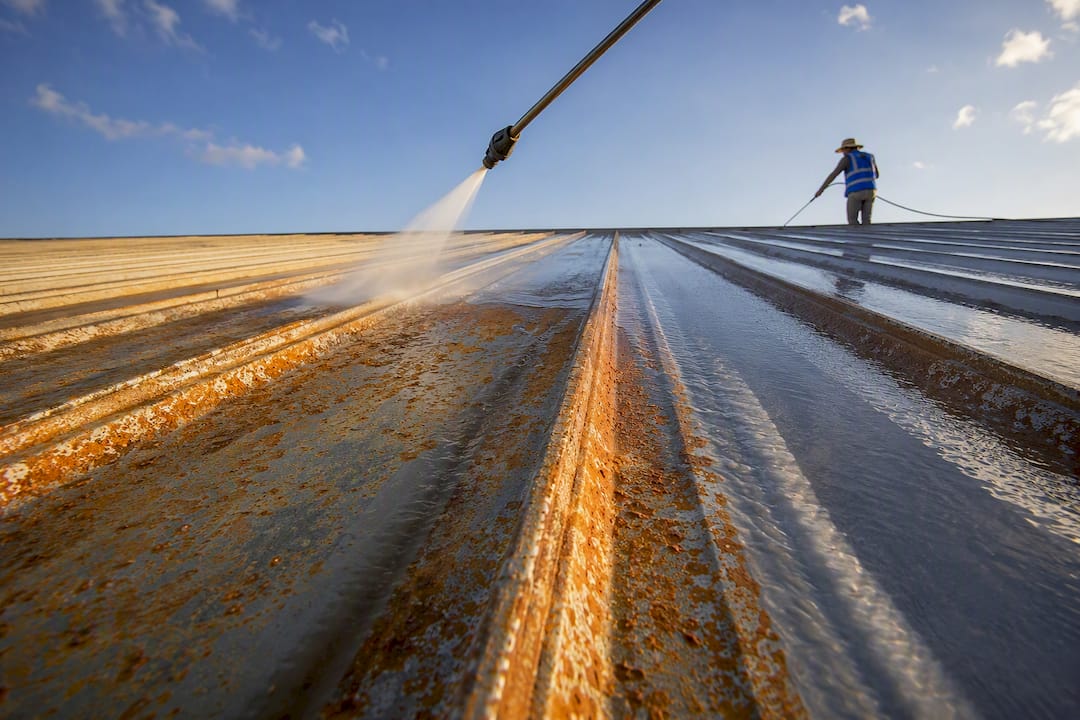
The safest metal roof oxidation removal method for most painted or coated panels is a low-pressure, chemical-driven soft-wash or a manufacturer-approved bleach-free alternative, followed by a full rinse. Skip the pressure washer, the steel wool, and the scouring powder on coated panels. If you’re dealing with a multi-story roof, heavy pitting, a coating with warranty terms, or any rooftop solar array, that’s a job for a licensed professional, not a weekend project.
TL; DR:
- Use a low-pressure, bleach-free chemical soft-wash with a full rinse for most coated metal roofs, avoiding pressure washing or abrasive tools to prevent coating damage.
- Proper inspection of the roof before cleaning should verify coating type, check for active rust, and plan runoff control to prevent environmental contamination.
- Mechanical scrubbing is only appropriate for uncoated, heavy-gauge steel surfaces, as it can damage factory coatings on protective panels.
- Active corrosion signs like rust-through or pitting require repair or panel replacement, not just cleaning, to prevent further structural damage.
- Professional drone-based cleaning is recommended for multi-story, steep, or solar-equipped roofs to reduce safety risks and ensure proper chemical application.
Table of Contents
- What to Check Before You Touch a Metal Roof With Oxidation
- How Do You Safely Clean Oxidation Off a Metal Roof?
- Which Coatings and Substrates Need Special Handling?
- Is It Oxidation, or Does the Roof Need Repair?
- When Should You DIY vs. Hire a Roof Cleaning Professional?
- How a Drone-Based Soft-Wash Actually Works on a Commercial Roof
- What This Guide Gets Right (and What Most Advice Skips)
- Get a Professional Roof Cleaning Quote in South Florida
- Sources
- FAQ
What to Check Before You Touch a Metal Roof With Oxidation
Before mixing a single gallon of cleaner, walk the roof (or have someone walk it for you) and answer four questions. Getting these wrong is how a $200 cleaning job turns into a $20,000 recoating bill.
- Chalking or rust? Rub a white cloth across the surface. A dusty residue means cosmetic chalking. Orange flakes or pitted texture mean active corrosion, a different problem entirely.
- What’s the substrate? PVDF/Kynar-coated panels, Galvalume, bare aluminum, copper, and uncoated steel all react differently to the same chemical. If you don’t know which one you have, check the original roofing invoice or manufacturer sticker before choosing a cleaner.
- PPE and fall protection. Harnesses, anchor points, non-slip footwear, and eye protection are non-negotiable on any pitched metal roof, even for a five-minute test patch.
- Runoff plan. Know where wash water drains before you start. Many South Florida municipalities restrict chemical runoff into storm drains that feed directly into canals and Biscayne Bay.
Pro Tip: Always test your cleaning solution on a hidden 2-by-2-foot patch, like a spot near a chimney flashing, and wait 24 hours. If you see streaking, fading, or a dull haze, that’s your warning sign, and it means the whole roof needs a different mix.
If you spot rust-through, loose fasteners, delaminating coating, or you simply can’t verify the coating type, stop and call a professional before applying anything.
How Do You Safely Clean Oxidation Off a Metal Roof?
Metal roof cleaning techniques split into two camps: chemical-driven soft-washing and, on rare occasions, localized mechanical work. Soft-wash should always be your default.
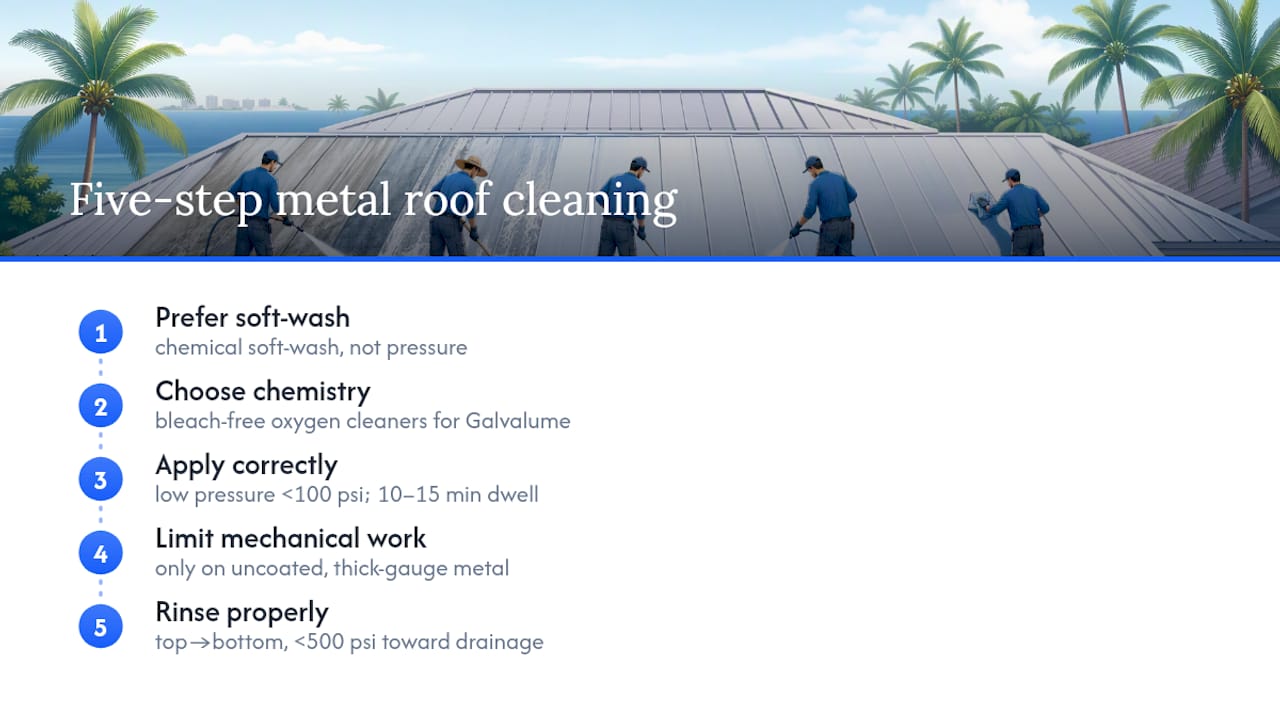
**1. Professional protocol consistently favors this chemical-driven soft-washing approach over pressure washing, because pressure alone can’t dissolve oxidation, it just spreads it around.
2. Consider bleach-free alternatives. Sodium percarbonate blends and proprietary oxygen-based cleaners are gentler options, and they matter most on Galvalume roofs. Some sources specifically warn against using sodium hypochlorite on Galvalume, since it can counteract the panel’s protective zinc-aluminum coating and cause permanent streaking that no amount of rinsing fixes. If you’re not sure what’s on your roof, a bleach-free product is the lower-risk starting point.
3. Apply with the right equipment. A pump-up garden sprayer works for spot treatments; a dedicated soft-wash rig with a low-pressure nozzle (under 100 psi at the tip) is better for full-roof coverage. Dwell time generally runs 10 to 15 minutes. Never let the solution dry on the panel, and never apply on a hot roof surface in direct Florida sun, since rapid evaporation concentrates the chemical and increases streak risk.
4. Reserve mechanical scrubbing for uncoated, thick-gauge metal only. A soft-bristle brush can help on bare steel or heavily oxidized uncoated surfaces, but abrasion on any factory-finished panel, PVDF, SMP, or painted steel, will dull or strip the coating. That damage often doesn’t show up immediately. It shows up months later as accelerated fading or chalking that spreads faster than the oxidation you started with.
5. Rinse thoroughly, working top to bottom. Rinse pressure should stay under 500 psi for chemical-driven cleaning, using a fan tip and consistent overlap to flush all residue and runoff toward controlled drainage points, not landscaping or storm drains.
Pro Tip: Rinse in the same direction as the panel seams and overlaps, never against them. Water forced against a seam can work its way under flashing and cause leaks that have nothing to do with the oxidation you were trying to fix.
Which Coatings and Substrates Need Special Handling?
Not every metal roof reacts the same way to the same bottle of cleaner, and this is where most DIY jobs go wrong.
- PVDF/Kynar coatings hold up well to properly diluted soft-wash chemistry but degrade with abrasive scrubbing or over-strength mixes.
- SMP-coated panels are more porous than PVDF and stain more easily, so they need gentler dilution and shorter dwell times.
- Galvalume is the most chemically sensitive substrate on this list. Aggressive sodium hypochlorite mixes can strip its protective layer and cause streaking that no rinse can undo.
- Aluminum and copper roofs generally tolerate mild cleaners but oxidize differently. Copper’s patina is often cosmetic and desirable, not a defect to remove.
- Bare or painted steel tolerates the widest range of methods but rusts fastest once any protective layer is compromised.
Manufacturer maintenance guidance typically specifies exact dilution ratios and pressure limits, and deviating from them can void a coating warranty entirely. Runoff control matters just as much: contain wash water, protect adjacent landscaping, and follow local disposal rules for chemical runoff, since Miami-Dade and Broward County stormwater systems drain directly into canals and coastal waters.
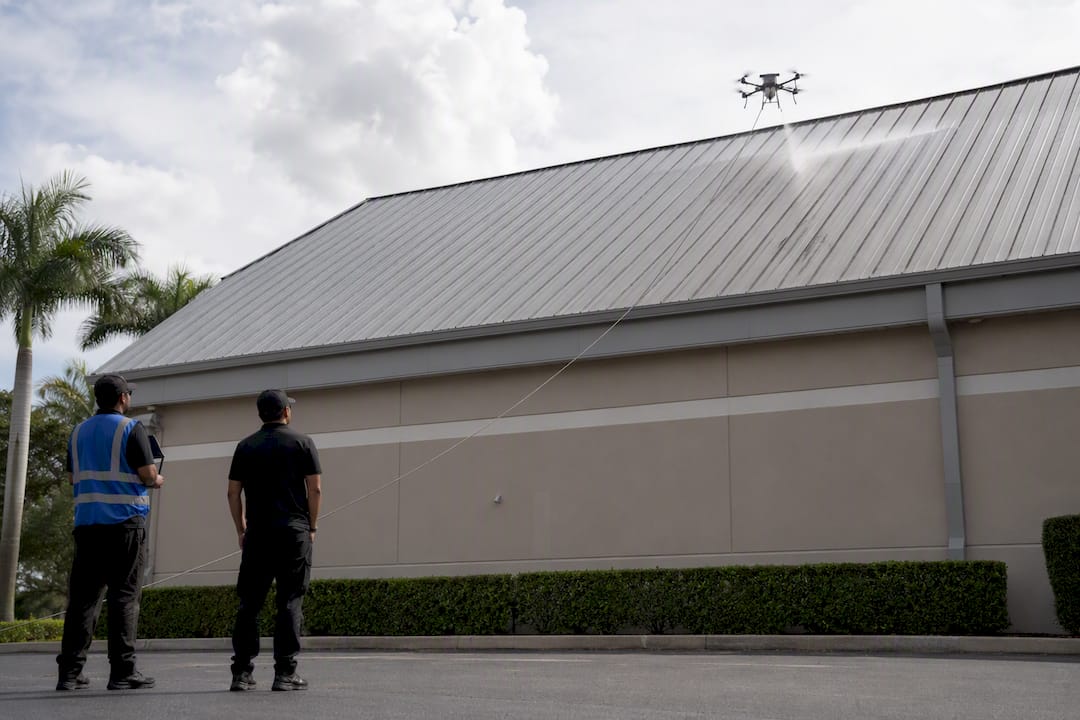
Working at height is the other half of this equation. Fall restraint systems are mandatory on any sloped or elevated roof, and this is precisely why tethered drone cleaning has gained traction commercially. Keeping crews on the ground while equipment does the elevated work removes the single biggest injury risk in the entire process.
Is It Oxidation, or Does the Roof Need Repair?
Cleaning fixes cosmetic chalking. It does not fix structural corrosion, and knowing the difference saves property owners from either wasting money on repeated cleanings or ignoring a roof that’s actively failing.
- Surface chalking looks dusty and dull but the metal underneath feels solid. Cleaning restores appearance and buys time.
- Active corrosion shows as flaking rust, visible pitting, or soft spots you can feel through a glove. Cleaning alone won’t stop this progression.
- Minor rust spots can sometimes be addressed with a wire brush on the loose material, a rust converter, a compatible primer, and a color-matched recoat, but painting over active rust without treating it first just traps moisture underneath.
- Pitting or rust-through at seams, fasteners, or panel edges usually means it’s time for panel replacement or a roof-over, not another round of cleaning.
Oxidation itself is a straightforward chemical reaction between metal, oxygen, and moisture, and properly maintained metal roofs can last 40 to 70 years. Neglecting coating failure and letting oxidation progress unchecked is what cuts that lifespan short.
When Should You DIY vs. Hire a Roof Cleaning Professional?
DIY is reasonable when the roof is low-slope, single-story, easily accessible, and showing only light chalking with no signs of active rust.
- Hire a professional when the roof is multi-story, steeply pitched, or holds a solar array. Complex drainage, warranty-sensitive coatings, and severe oxidation all raise the stakes past what a ladder and a garden sprayer can safely handle.
- Vet contractors on substrate experience first. Ask specifically whether they’ve cleaned your coating type (PVDF, Galvalume, SMP) and what dilution and rinse plan they use.
- Confirm insurance and get it in writing. Liability coverage protects your property if something goes wrong 40 feet in the air.
- Ask for before/after documentation and references from similar commercial or residential properties in your area.
- Understand what drives the quote. Roof size, pitch, oxidation severity, coating type, and access difficulty (parapet walls, HOA restrictions, occupied units below) all factor into pricing.
How a Drone-Based Soft-Wash Actually Works on a Commercial Roof
Oxidation removal can be done using substrate-matched soft-wash chemistry, applied at low pressure, followed by a pure de-ionized water rinse that leaves no mineral spotting behind. Before and after imagery documents the result on every job, which matters for HOA boards and property managers who need proof for ownership records or insurance files.
A key difference is where the crew stands. Tethered industrial drones for roof cleaning can be operated from the ground, on buildings up to 200 feet tall, without anyone walking a pitched, oxidized, potentially slippery metal surface.
Removing the crew from the roof can reduce insurance exposure and addresses a major safety risk in the entire cleaning process: a person balanced on wet, sloped metal at height.
Liability insurance is an important consideration on commercial properties where a single incident can halt operations for days.
What This Guide Gets Right (and What Most Advice Skips)
Most articles on cleaning metal roof oxidation treat it like a bigger version of washing a car: pick a cleaner, spray it, done. That framing misses the actual risk, which isn’t dirt. It’s coating failure that doesn’t show up until months later, long after the “successful” cleaning day.
The conventional wisdom oversells pressure and undersells chemistry. A pressure washer feels productive because you can watch grime disappear in real time. But pressure doesn’t dissolve oxidation, it abrades it, and abrasion on a factory-coated panel is exactly the mistake that turns a $300 cleaning into a full recoat. The soft-wash approach looks slower and less dramatic, and that’s precisely why it works.
What property owners should prioritize first isn’t the cleaner brand or the dilution ratio, it’s substrate identification. Every decision downstream, chemical choice, dilution strength, dwell time, rinse pressure, depends on knowing whether you’re working with PVDF, Galvalume, or bare steel. Skip that step and every other precaution in this guide is guesswork.
For anything above a single story, the calculus tips firmly toward professional help. Not because DIY soft-washing is impossible, but because the margin for error on a warranty-sensitive coating, forty feet in the air, is thinner than most owners assume.
, Eliot
Get a Professional Roof Cleaning Quote in South Florida
Professional services handle the jobs where DIY stops making sense: high-rises, condominiums, hotels, warehouses, and rooftop solar arrays across Miami-Dade and Broward counties.
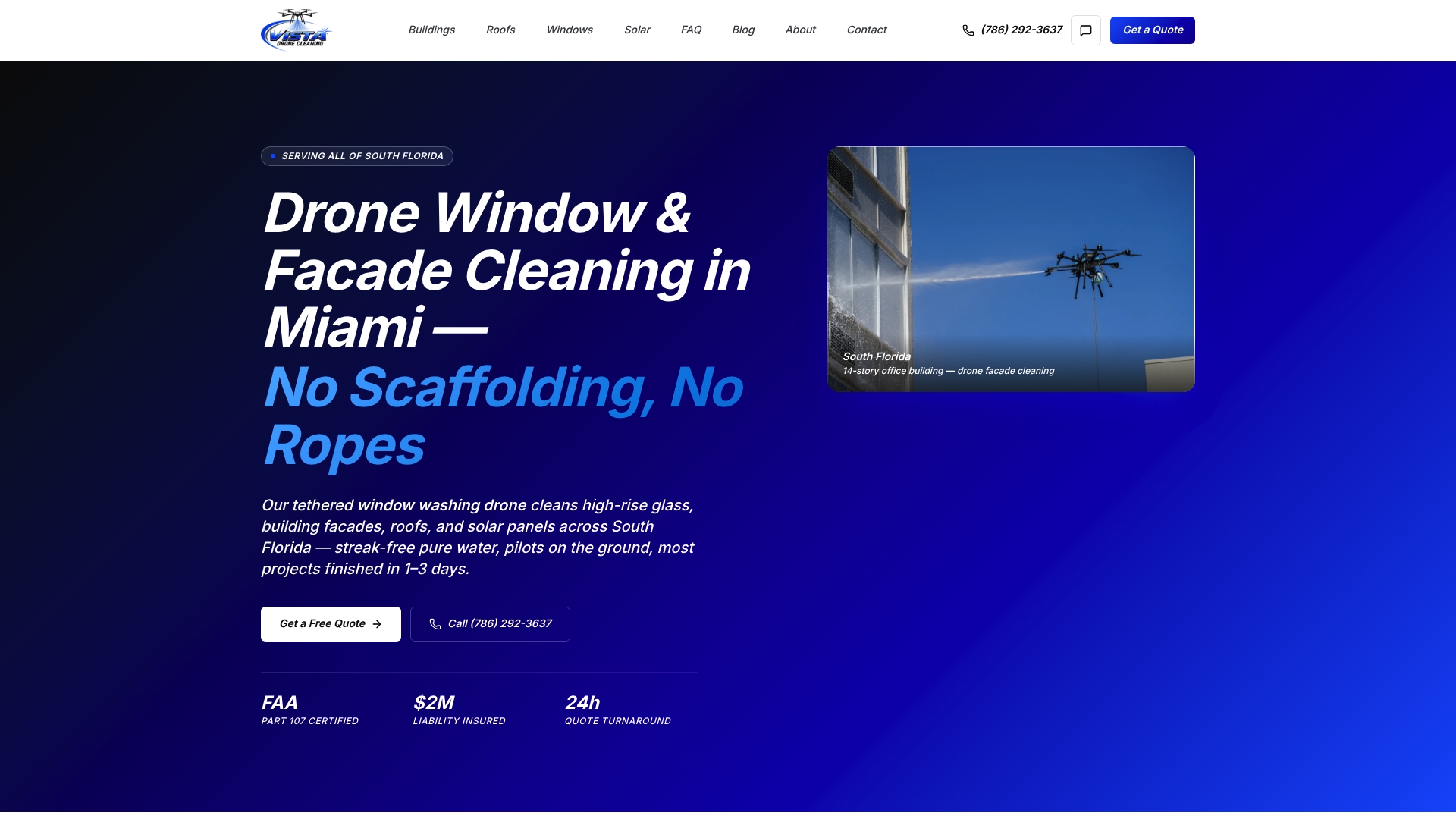
Jobs may finish with a pure de-ionized water rinse that leaves zero spotting on coated panels, with documentation provided through before-and-after imagery for property records. For roofs with existing solar arrays, a pure-water cleaning process can protect panel efficiency without introducing streaking chemicals near electrical components.
Request a free quote through the roof cleaning Miami service page, and expect a site review followed by a fixed-price proposal, with details on the job cost once a crew is scheduled.
Sources
- Metal roof cleaning: preventing oxidation, staining, and coating damage: National Roof Cleaning Authority
- How To Clean A Metal Roof, Start to Finish: Southeast Softwash
FAQ
What Is a Good Oxidation Remover for Metal Roofs?
A diluted sodium hypochlorite soft-wash solution with surfactant works on most coated panels, while sodium percarbonate or other bleach-free cleaners are safer choices for Galvalume and older painted finishes.
How Do You Make a Metal Roof Shine Again?
A proper soft-wash and thorough rinse restores most of the original color and reflectivity on chalked panels, though roofs with active rust or coating failure need repair or recoating before they’ll look new again.
Can You Clean Oxidation Off Metal?
Yes, surface oxidation (chalking) responds well to low-pressure chemical cleaning, but active rust and pitting are corrosion damage that cleaning alone cannot reverse.
Can Oxidized Metal Be Restored?
Cosmetic oxidation can be fully restored through soft-washing, while metal with active rust or pitting typically needs a rust converter, primer, and recoat, or panel replacement if corrosion has progressed to rust-through.