12 min read

Non-Disruptive Facade Washing for Hotel Guests: 2026 Guide

Discover how non-disruptive facade washing for hotel guests can enhance comfort and cleanliness in South Florida’s challenging climate.

Non-Disruptive Facade Washing for Hotel Guests: 2026 Guide


TL;DR:

  • Ground-based facade washing using drones, water-fed poles, and robots enables hotels to clean exteriors without disrupting guests. Proper scheduling, proactive guest communication, and thorough preparation prevent damage and complaints. Technology choices should match building design for optimal safety, efficiency, and guest experience.

Non-disruptive facade washing is the process of cleaning a hotel’s exterior using ground-based or low-exposure methods that keep guests comfortable, entrances clear, and operations running without interruption. For hotel operations managers in South Florida, this is not a luxury consideration. Miami-Dade and Broward hotels face salt air, humidity, and subtropical sun that accelerate facade soiling faster than nearly any other climate in the country. A dirty exterior signals neglect to arriving guests before they ever reach the front desk. The good news is that modern cleaning technology has made guest-friendly building wash a practical, affordable standard rather than an exception.

What are the main non-disruptive technologies for hotel facade washing?

The three primary technologies for quiet facade cleaning are tethered industrial drones, water-fed pole systems, and facade-cleaning robots. Each keeps workers on the ground and eliminates the scaffolding, boom lifts, and rope access that block entrances, require road closures, and alarm guests.

Worker cleaning hotel windows with water-fed pole system

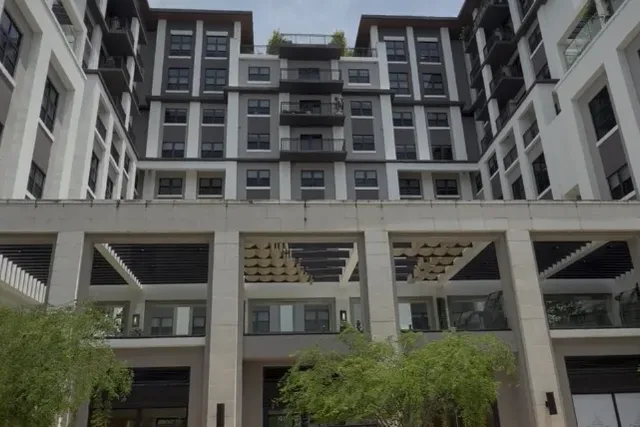
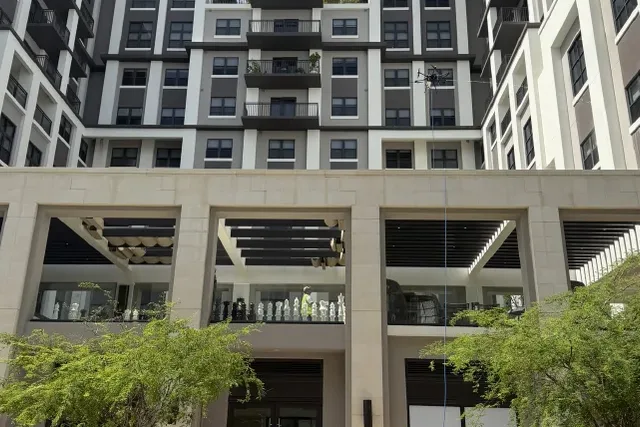
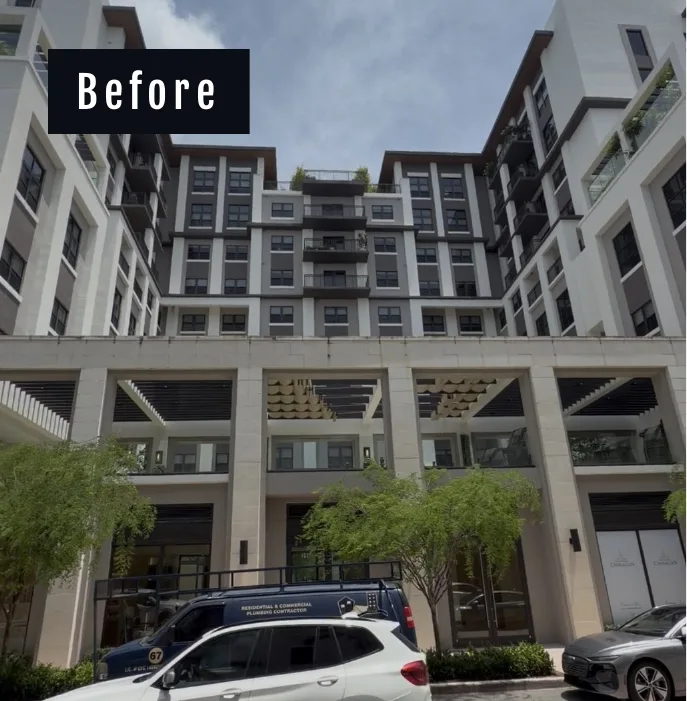
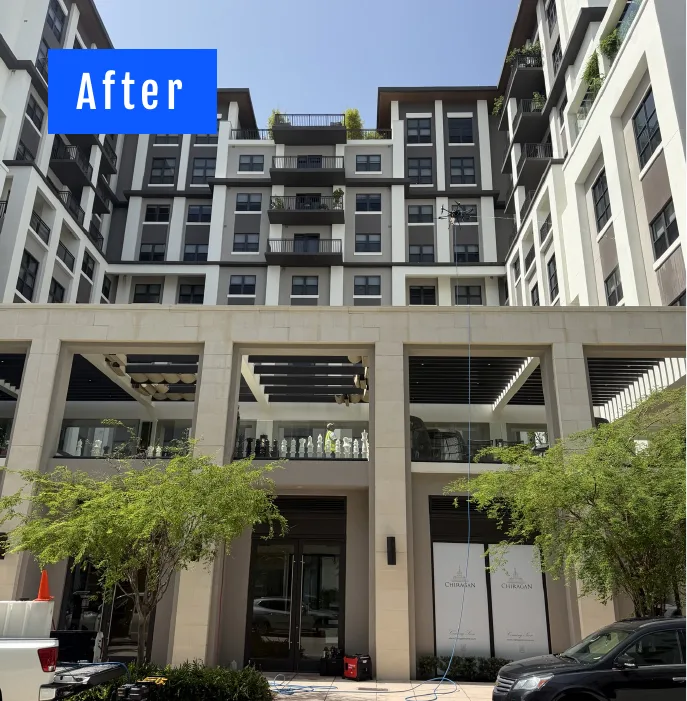
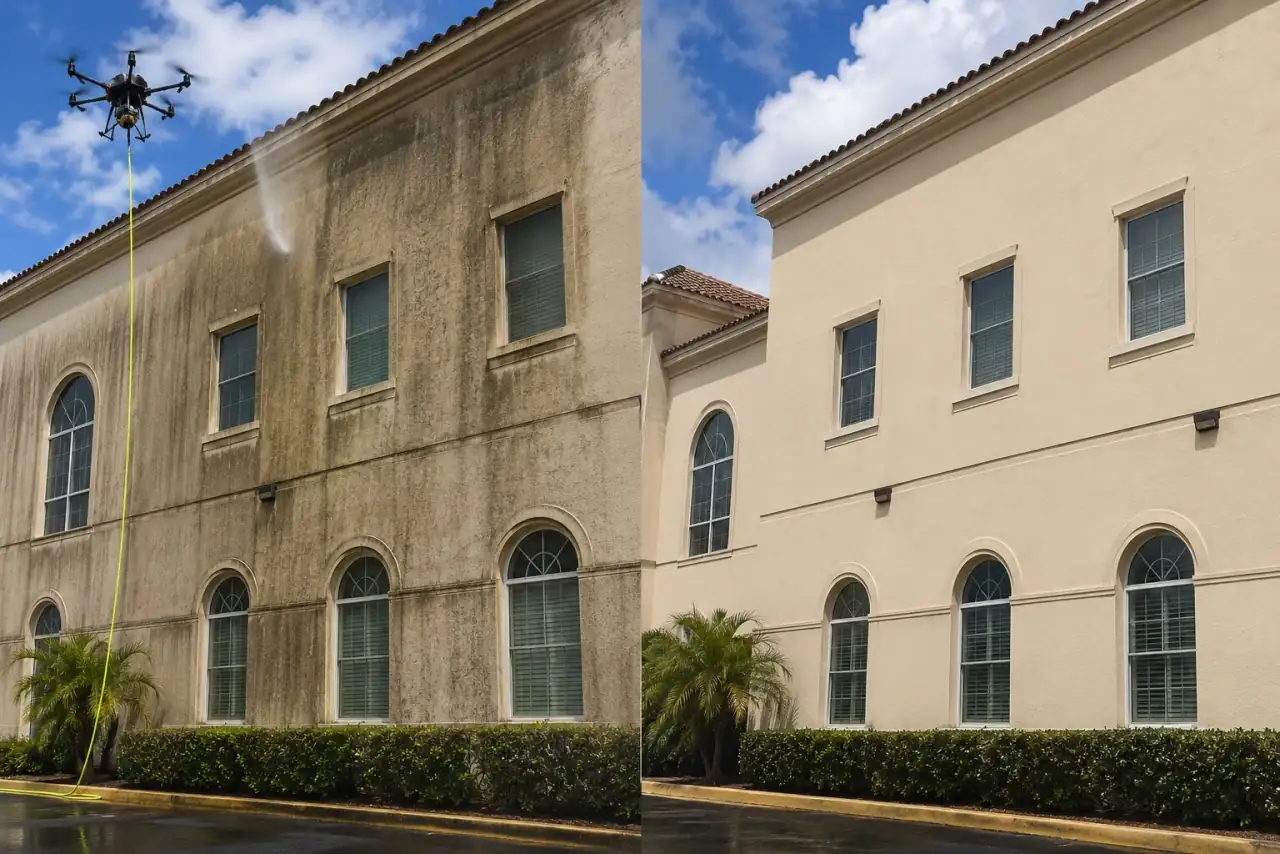
Tethered drones are the most versatile option for South Florida high-rises. Vistadronecleaning uses the Lucid Bots Sherpa, a tethered industrial drone operated by FAA Part 107-certified pilots, to clean facades up to 200+ feet tall. The drone delivers a pure de-ionized water rinse directly to the glass or cladding surface while the crew stays safely on the ground. Tethered drone systems eliminate the need for road closures, expensive permits, and the safety risks associated with rigging on high-rise structures.

Water-fed pole systems work well for mid-rise buildings up to roughly six stories. Operators extend telescoping carbon-fiber poles from the ground and push purified water through a brush head. The method is quiet, chemical-free, and leaves no residue. The limitation is height. For a 20-story Brickell hotel, water-fed poles simply cannot reach.

Facade-cleaning robots represent an emerging category. High-rise cleaning robots with dual active safety mechanisms achieve uniform cleaning with about 26% lower water use compared to manual methods. That efficiency matters in South Florida, where water conservation is a growing regulatory concern. Robots are best suited to flat, uniform glass curtain walls rather than textured stucco or EIFS cladding.

Technology Max height Noise level Road closure needed Best surface
Tethered drone 200+ feet Low No Glass, stucco, EIFS, metal panel
Water-fed pole ~60 feet Very low No Glass, smooth cladding
Facade robot High-rise Low No Flat glass curtain wall
Traditional scaffold Unlimited High Often Any
Boom lift ~150 feet Moderate Sometimes Any

Pro Tip: Ask your cleaning contractor whether their drone or pole system uses de-ionized water. Tap water leaves mineral deposits on glass that look worse than the original dirt, especially under South Florida’s intense sun.

Infographic outlining non-disruptive facade washing steps

The right technology choice depends on building profile, not just preference. Choosing an access method mismatched to your facade type is the primary cause of guest complaints and cleaning incidents, not operator error.

How can hotel operations managers plan facade washing to avoid guest disruption?

Scheduling is the single most controllable variable in a discreet washing service. The goal is to complete work during periods of lowest guest density and highest operational flexibility.

Scheduling best practices:

  1. Book facade cleaning during your lowest-occupancy window. For most South Florida hotels, that falls between late august and early october, before the winter season begins.
  2. Align cleaning days with checkout-heavy mornings. Fewer guests in rooms means fewer people disturbed by activity outside windows.
  3. Avoid cleaning during peak arrival hours, typically 2:00 PM to 6:00 PM, when guests are checking in and forming their first impressions.
  4. Schedule work to finish before 5:00 PM so crews are off-site before evening foot traffic peaks around the porte-cochere.
  5. Build a one-day weather buffer into the project timeline. South Florida afternoon storms can delay exterior work, and a rushed rescheduling creates more disruption than a planned pause.

Guest communication is equally important. Proactively communicating exterior cleaning schedules to guests during booking or confirmation emails lowers complaints by making guests feel informed rather than surprised. A single sentence in a pre-arrival email, such as “We will be refreshing our exterior on Tuesday morning,” sets expectations without alarming anyone.

Coordinate with your front desk team and reservations system before the project starts. Flag rooms on the cleaning-day elevation so agents can proactively offer those guests an alternative view or a small amenity. That small gesture converts a potential complaint into a positive touchpoint.

Pro Tip: Seal or temporarily shut down HVAC intakes on the cleaning-day elevation before work begins. HVAC intake contamination from cleaning runoff is a direct path to indoor air quality complaints and guest health concerns.

Step-by-step process for executing a guest-friendly building wash

A structured execution process prevents the two most common failures: chemical damage to the facade and unexpected guest disruption mid-project.

Pre-cleaning preparation

  1. Conduct a facade inspection. Walk the building perimeter and document existing cracks, staining, efflorescence, or damaged caulk. Photograph everything. This protects you if a guest or owner later claims cleaning caused damage.
  2. Run test panels. Test panels with biodegradable cleaners on an inconspicuous section confirm that your chosen chemistry will not stain or etch the surface. Never skip this step on natural stone, EIFS, or painted stucco.
  3. Seal HVAC intakes. Cover all exterior air intakes on the affected elevation with temporary foam or plastic sheeting. Notify your engineering team so they can monitor indoor air quality during the work.
  4. Brief the front desk. Share the cleaning schedule, the affected building elevations, and the contractor’s contact number. Give the front desk a script for responding to guest questions.

Cleaning execution

  1. Pre-wet the surface. Apply clean water to the facade before any cleaning solution. Pre-wetting prevents detergents from drying prematurely in direct sunlight, which is the leading cause of permanent chemical staining on South Florida facades.
  2. Apply cleaning solution in sections. Work top to bottom, section by section. Never allow solution to dwell longer than the manufacturer’s specified contact time. Chemical drying in direct sunlight causes permanent staining that is harder to remove than the original soiling.
  3. Rinse thoroughly. Use de-ionized or purified water for the final rinse to prevent mineral spotting on glass.

Post-cleaning quality check

  1. Inspect from multiple angles. Walk the perimeter and check from street level, upper floors, and across the pool deck if applicable. Streaks visible from the pool area are a common guest complaint that a ground-level inspection misses.
  2. Document results. Photograph the cleaned facade and log the date, contractor, chemicals used, and any areas requiring follow-up. This record supports warranty claims and future scheduling decisions.

Key quality indicators to monitor:

  • No streaking on glass panels or window frames
  • Uniform color across stucco or EIFS sections
  • No white efflorescence bloom on masonry within 48 hours of cleaning
  • No chemical odor detectable from guest rooms or common areas

For a detailed procedural framework, the step-by-step facade cleaning guide from Vistadronecleaning covers each phase with South Florida-specific considerations.

Common challenges and troubleshooting for hotel facade cleaning

Even well-planned projects hit obstacles. Knowing the most common failure points lets you respond quickly before a small issue becomes a guest complaint.

  • Unexpected weather delays. South Florida afternoon thunderstorms are predictable in their unpredictability. If wind exceeds safe drone operating limits or rain interrupts chemical application, stop work immediately. Partial application left on a facade overnight can cause uneven staining. Always have a clear stop-work protocol agreed with your contractor before the project starts.
  • Guest complaints mid-project. If a guest calls the front desk about noise or activity outside their window, respond within 10 minutes. Offer to move them to a room on the opposite elevation. Speed of response matters more than the resolution itself.
  • Chemical staining from improper application. This is the most costly mistake in facade cleaning. It happens when a contractor applies solution to a sun-baked surface without pre-wetting, or leaves solution on too long. Treating facade cleaning like architectural construction with test panels and environmentally friendly chemicals prevents this outcome.
  • Contractor non-compliance with safety standards. Require proof of insurance, FAA Part 107 certification if drones are used, and a written safety plan before any work begins. Vistadronecleaning carries $2M in liability insurance and operates under FAA Part 107 compliance on every project.
  • Inadequate documentation. Without before-and-after photos and a cleaning log, you have no baseline for the next cycle and no defense if a guest claims damage. Make documentation a contract requirement, not an afterthought.

The most expensive facade cleaning mistake a hotel operations manager can make is choosing the cheapest contractor without verifying their access method, insurance, and chemical protocol. A single chemical staining incident on a Boca Raton or Fort Lauderdale hotel facade can cost more to remediate than five years of properly executed cleaning contracts.

Pro Tip: For eco-friendly cleaning options that meet South Florida’s environmental standards, ask contractors specifically for biodegradable, phosphate-free solutions. These protect nearby landscaping and drainage systems while delivering results equal to conventional chemistry.

Key Takeaways

Non-disruptive facade washing for hotel guests succeeds when you combine the right ground-based technology with deliberate scheduling, proactive guest communication, and a documented execution process.

Point Details
Choose the right technology Match the cleaning method to your building height and facade material before booking any contractor.
Schedule around occupancy Plan cleaning during low-occupancy windows and avoid peak arrival hours to protect the guest experience.
Communicate proactively Notify guests of exterior cleaning in pre-arrival emails to prevent complaints before they start.
Protect HVAC and surfaces Seal air intakes and pre-wet the facade before applying any cleaning solution to prevent chemical damage.
Document every project Photograph before and after, log chemicals used, and require proof of insurance and certification from every contractor.

What I’ve learned from watching hotels get this wrong

Eliot’s perspective

After years of watching South Florida hotels cycle through facade cleaning contractors, the pattern I see most often is this: the decision gets made by procurement, not operations. A purchasing manager finds the lowest bid, the contract gets signed, and the operations team finds out two weeks before a crew shows up with a boom lift blocking the main entrance on a Saturday morning in december.

The hotels that handle this well do one thing differently. They treat facade cleaning as a guest experience decision first and a maintenance decision second. That reframe changes everything. It means the operations manager is in the room when the contractor is selected. It means the cleaning schedule gets cross-referenced with the reservations calendar. It means the front desk team gets a briefing, not a surprise.

The technology shift toward tethered drones and ground-based systems has genuinely changed what is possible. A drone facade cleaning project on a 15-story Aventura hotel can finish in two days without a single cone in the parking lot or a single guest complaint. That was not realistic five years ago with traditional access methods.

My honest recommendation: get a quote from a drone-based contractor before you assume scaffolding is the only option. The cost difference is real, the disruption difference is dramatic, and the guest experience outcome is not even close.

— Eliot

Vistadronecleaning serves South Florida hotels with ground-based facade cleaning

South Florida hotels from Brickell to Boca Raton have a specific problem: facades that need frequent cleaning due to salt air and humidity, and guests who cannot be disrupted while that cleaning happens. Vistadronecleaning was built to solve exactly that.

https://vistadronecleaning.com

Vistadronecleaning uses FAA Part 107-certified pilots and tethered Lucid Bots Sherpa drones to clean hotel facades, windows, and roofs up to 200+ feet tall, with crews staying on the ground the entire time. No scaffolding, no road closures, no blocked entrances. Most hotel projects finish in 1–3 days. See how drone cleaning compares to traditional methods in cost and guest disruption, then request a free quote within 24 hours.

FAQ

What is non-disruptive facade washing for hotels?

Non-disruptive facade washing uses ground-based methods like tethered drones or water-fed poles to clean hotel exteriors without scaffolding, road closures, or blocked entrances. The goal is to maintain the property’s appearance while keeping guests comfortable and operations running normally.

When is the best time to schedule hotel facade cleaning in South Florida?

The best window is late august through early october, during the low-occupancy period before the winter season. Scheduling on checkout-heavy mornings and avoiding peak arrival hours between 2:00 PM and 6:00 PM further reduces guest impact.

Do I need to notify guests before exterior facade cleaning?

Yes. Proactively notifying guests in pre-arrival confirmation emails significantly lowers complaints by setting expectations before guests arrive. A single sentence in the email is enough.

Can drone facade cleaning work on high-rise hotels?

Yes. Tethered industrial drones like the Lucid Bots Sherpa can clean facades on buildings over 200 feet tall without scaffolding or boom lifts. Vistadronecleaning operates this technology across Miami-Dade and Broward counties under FAA Part 107 certification.

How do I prevent chemical staining during hotel facade cleaning?

Pre-wet the surface before applying any cleaning solution, use biodegradable chemistry, and never allow solution to dwell beyond the specified contact time. Test panels on an inconspicuous section before full application confirm the chemistry is safe for your specific facade material.

Explore our services

Related drone cleaning services

#non-disruptive facade washing hotel guests#discreet washing services#hotel exterior maintenance#quiet facade cleaning#non-intrusive hotel facade#guest-friendly building wash
CallText Us