
Soft-Wash Roof Cleaning: What Property Owners Must Know
Discover what soft-wash roof cleaning is and how it protects your roof. Learn the benefits of this gentle method for your property today!
TL; DR:
- Soft-wash roof cleaning uses low-pressure chemicals to eliminate biological growth without damaging shingles. It targets root organisms, ensuring longer-lasting results that comply with manufacturer warranties. The method is essential for South Florida roofs due to the region’s humid climate and aggressive biological environment.
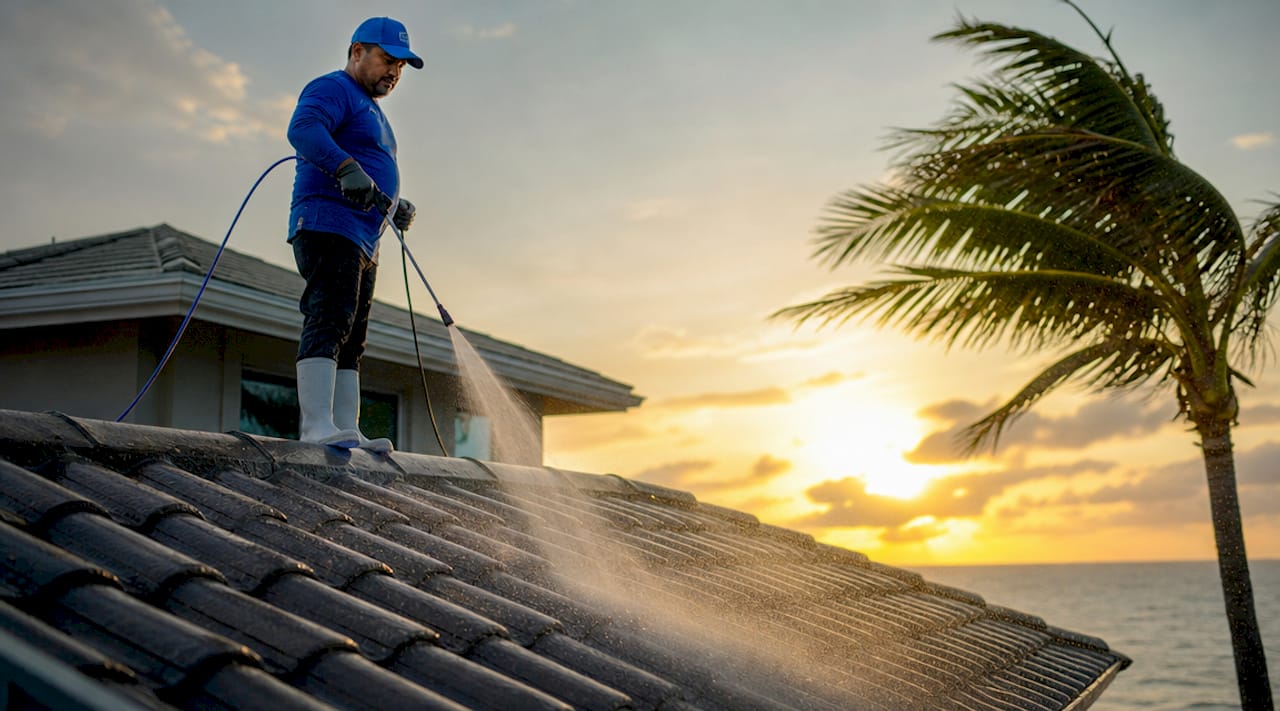
Soft-wash roof cleaning is defined as a low-pressure, chemistry-driven method that removes algae, moss, and biological stains from roofing surfaces without damaging shingles or voiding manufacturer warranties. The process uses water delivered at or below 100 PSI combined with sodium hypochlorite and surfactants to remove organisms at the cellular level. This approach aligns with ARMA and major shingle manufacturers including GAF, Owens Corning, and CertainTeed. For property managers and homeowners across Miami-Dade, Broward, and Palm Beach counties, understanding this method is the first step toward protecting one of your most expensive assets.
What is soft-wash roof cleaning and why does it work?
Soft washing is the industry-recognized term for non-pressure biological cleaning of roofing surfaces. The method works because it targets the root cause of roof staining rather than the stain itself. Dwell time and chemical concentration are the two variables that determine success, not water pressure.
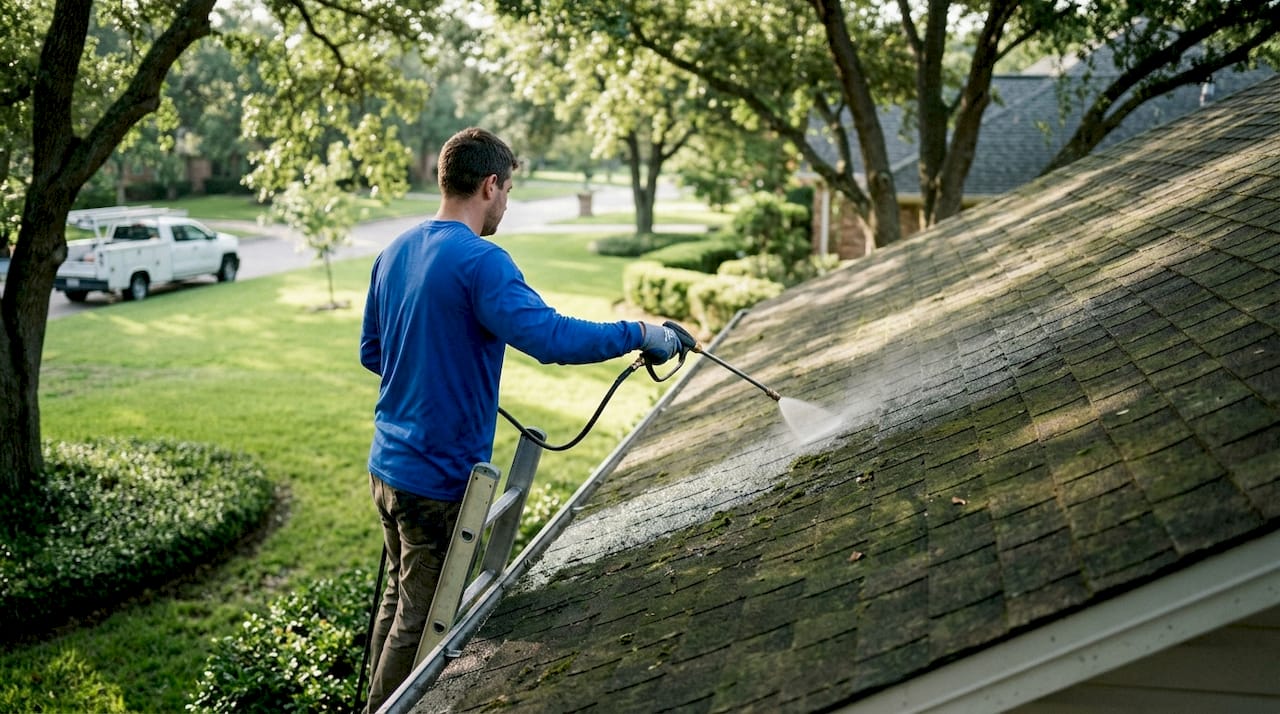
The primary active ingredient is sodium hypochlorite, applied at concentrations between 1% and 6% depending on how severe the biological growth is. Surfactants are added to help the solution cling to vertical and sloped surfaces long enough to work. The chemistry penetrates the cell walls of algae, moss, and lichen, removing the organisms completely rather than just washing away their visible surface layer.
This distinction matters because a roof that looks clean after pressure washing can still harbor living root systems beneath the shingle surface. Those organisms regrow quickly, often within months. Soft washing eliminates them entirely, which is why results last 4–6 years compared to the short-term visual fix that high-pressure methods provide.
Why is soft-wash roof cleaning essential for South Florida properties?
South Florida’s climate creates one of the most aggressive biological environments for roofing in the country. High humidity, year-round warmth, and frequent rain cycles in Miami-Dade, Broward, and Palm Beach counties produce ideal conditions for cyanobacteria, algae, and moss to thrive.
The most common culprit behind those dark black streaks on South Florida roofs is Gloeocapsa magma, a cyanobacteria that feeds on the limestone filler in asphalt shingles. Left untreated, this organism can shorten roof life by 5–10 years. That is not cosmetic damage. It is structural degradation that accelerates granule loss and reduces the shingle’s ability to reflect UV radiation.
Soft washing does not just clean a roof. It stops the biological process that is actively consuming the roofing material. In South Florida’s climate, that distinction separates a roof that lasts 25 years from one that fails at 15.
High-pressure washing removes the visible stain but leaves the root organisms alive. Those organisms regrow fast in South Florida’s humidity, meaning property managers who rely on pressure washing face recurring costs with no lasting result. Soft washing addresses the problem at its source.
The method also protects your investment in another critical way:
- Warranty compliance: ARMA and major shingle manufacturers specify that high-pressure washing voids warranties. Soft washing keeps you in compliance.
- Granule preservation: Pressure above 100 PSI strips granules from shingles. Granule loss accelerates UV damage and shortens roof lifespan.
- Reduced re-growth: Because soft washing removes organisms at the cellular level, biological regrowth is significantly slower than after pressure washing.
- Lower long-term cost: Fewer cleaning cycles over the life of the roof means lower total maintenance spending.
What does the soft-wash roof cleaning process actually involve?
A professional soft-wash service follows a structured sequence. Skipping any step reduces effectiveness and increases risk.
- Inspection and documentation. The technician assesses the roof’s condition, identifies the type and extent of biological growth, and checks for brittle or damaged shingles before any chemical is applied.
- Equipment setup. Genuine soft washing uses a 12-volt low-pressure pump system, not a pressure washer with a chemical injector. This keeps application pressure at or below 100 PSI throughout the job.
- Chemical mixing. Sodium hypochlorite is diluted to the appropriate concentration, typically 1%–6%, based on the biological load observed during inspection. Surfactants are blended in to improve adhesion on sloped surfaces.
- Application. The solution is applied evenly across the roof surface, working from the ridge down to the eaves to avoid streaking and ensure full coverage.
- Dwell time. The solution sits on the surface for 15–30 minutes. This is the phase where the chemistry does its work, penetrating and removing organisms at the cellular level.
- Rinse or no-rinse finish. Some professionals apply a low-pressure rinse after dwell time. Others use a no-rinse method, allowing natural rainfall to carry away residues over the following days. Both approaches are valid when executed correctly.
Pro Tip: If a contractor arrives with a gas-powered pressure washer and adds chemicals to the tank, that is not soft washing. Genuine soft washing requires a dedicated low-pressure pump system that never exceeds 100 PSI. Ask to see the equipment before work begins.
The no-rinse method deserves specific attention for South Florida property managers. Given the frequency of afternoon rain in Miami-Dade and Broward counties, rainfall typically handles residue removal within days. Many professional crews prefer this approach because it reduces runoff volume and allows the chemical solution to continue working through subsequent wet weather.
How does soft washing compare with other roof cleaning methods?
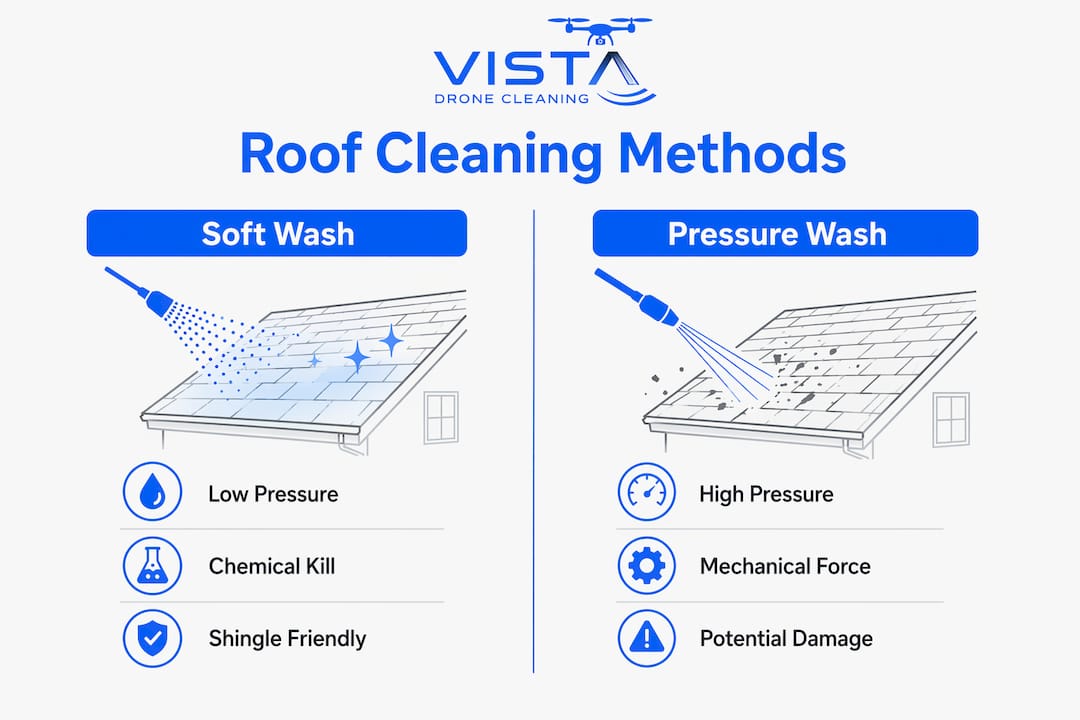
The three methods property managers encounter most often are soft washing, pressure washing, and chemical-only treatments. Each has a different risk profile, effectiveness level, and warranty impact.
| Method | Pressure Used | Chemical Application | Biological Kill | Warranty Impact |
|---|---|---|---|---|
| Soft washing | ≤100 PSI | Sodium hypochlorite + surfactants | Complete, at root level | Compliant with ARMA and major manufacturers |
| Pressure washing | 1,200–3,500 PSI | Minimal or none | Surface only, regrowth rapid | Voids most shingle warranties |
| Chemical-only treatment | None | Sodium hypochlorite applied without rinse | Complete over time | Generally compliant, slower visible results |
High-pressure washing is classified as abusive treatment by ARMA, not maintenance. The mechanical force strips granules, compresses shingle layers, and forces water under flashing. The visual result looks clean, but the underlying biology survives and the physical damage is permanent.
Chemical-only treatments without any rinse can work, but they require precise application and rely entirely on weathering for residue removal. They are appropriate in specific situations, such as very steep pitches where any foot traffic is dangerous, but they are slower to show visible results.
Soft washing sits in the middle. It combines the biological effectiveness of chemistry with a controlled low-pressure delivery system that causes no mechanical damage. ARMA designates soft washing as the preferred cleaning standard for asphalt shingle roofs. That designation carries real weight when a warranty claim is on the table.
How often should you schedule soft washing in South Florida?
South Florida’s climate compresses the maintenance timeline compared to cooler, drier regions. The recommended soft-wash frequency for most South Florida properties is every 12–24 months, though properties with heavy tree canopy or north-facing roof sections may need attention sooner.
Visual cues are the most reliable scheduling guide:
- Black streaks or dark discoloration indicate active Gloeocapsa magma growth and signal that treatment is overdue.
- Green patches or fuzzy growth point to moss or lichen, which anchor into shingles and cause physical lifting of granules.
- Persistent dark areas after rain suggest biological staining rather than simple dirt accumulation.
Property managers should also factor in roof age before scheduling any cleaning. Aging or brittle shingles can lose granules even during a properly executed soft wash, and foot traffic on a roof over 20 years old carries real mechanical damage risk. A qualified provider will assess the roof condition first and advise whether cleaning is appropriate or whether replacement is the better investment.
Pro Tip: Integrate soft-wash roof cleaning into your broader exterior maintenance schedule alongside low-pressure facade cleaning and solar panel washing. Bundling services reduces mobilization costs and keeps your entire building envelope in compliance with manufacturer guidelines.
When selecting a provider, confirm that they use dedicated low-pressure pump equipment, follow ARMA concentration guidelines, and carry adequate liability insurance. Proper chemical ratios and dwell times tailored to South Florida’s biological load are non-negotiable for results that last.
Key Takeaways
Soft-wash roof cleaning is the only method that removes biological growth at the root level while preserving shingle integrity, warranty compliance, and long-term roof lifespan.
| Point | Details |
|---|---|
| Chemistry over pressure | Sodium hypochlorite at 1%–6% concentration removes organisms; pressure at or below 100 PSI prevents shingle damage. |
| Warranty protection | ARMA and major manufacturers including GAF and Owens Corning require soft washing to keep shingle warranties valid. |
| South Florida frequency | Schedule soft washing every 12–24 months, or sooner when black streaks or moss appear on the roof surface. |
| Roof age matters | Assess shingle condition before cleaning; roofs over 20 years old may sustain damage from foot traffic alone. |
| Equipment defines the method | A 12-volt low-pressure pump system is required for genuine soft washing; a pressure washer with chemical additives is not the same. |
Why chemistry beats pressure every time
I have seen the aftermath of pressure washing jobs sold as “soft wash” more times than I can count on South Florida roofs. The contractor shows up with a gas-powered machine, dials the pressure down slightly, adds some bleach to the tank, and calls it done. The roof looks great for about four months. Then the black streaks come back, sometimes worse than before, because the root organisms were never killed.
The real lesson from working around South Florida roofing is that the biology here is relentless. Gloeocapsa magma thrives in this climate. Moss finds every north-facing surface it can. Lichen anchors so deeply into older shingles that improper removal tears the granule layer off with it. None of that responds to force. All of it responds to chemistry applied correctly and given time to work.
The no-rinse approach that many experienced crews use in Miami-Dade and Broward is a good example of this principle in action. Leaving the solution on the roof and letting afternoon rain do the rinsing over several days is not laziness. It extends the chemical contact time and produces better biological kill. Property managers who understand this stop asking “why didn’t they rinse it?” and start asking “did they use the right concentration?”
My honest recommendation: treat soft washing as a scheduled maintenance line item, not a reactive fix. A roof cleaning benefits mindset shifts the conversation from “the roof looks bad” to “the roof is protected.” That shift saves money and extends asset life.
, Eliot
Vistadronecleaning’s soft-wash roof services for South Florida
Vistadronecleaning delivers professional soft-wash roof cleaning across Miami-Dade, Broward, and Palm Beach counties using tethered industrial drones and FAA Part 107-certified pilots. The drone-assisted approach keeps crews on the ground, eliminating foot traffic on aging or delicate shingles entirely.
That ground-based model removes one of the biggest risk factors in roof cleaning: mechanical damage from walking on brittle surfaces. Vistadronecleaning applies ARMA-compliant sodium hypochlorite solutions at the correct concentrations for South Florida’s biological load, with $2M liability insurance on every job. Most projects across commercial high-rises, condominiums, hotels, and warehouses complete within 1–3 days. Request a free quote within 24 hours at vistadronecleaning.com.
FAQ
What is soft-wash roof cleaning in simple terms?
Soft-wash roof cleaning is a low-pressure cleaning method that uses sodium hypochlorite and surfactants to remove algae, moss, and biological stains on roofs at or below 100 PSI. It removes organisms at the root level without damaging shingles or voiding manufacturer warranties.
How long do soft-wash results last on a South Florida roof?
Results typically last 4–6 years, though South Florida’s high humidity and tropical climate may shorten that window for roofs with heavy shade or north-facing exposure.
Does soft washing damage asphalt shingles?
No. Soft washing keeps pressure at or below 100 PSI and relies on chemistry rather than mechanical force. ARMA and major shingle manufacturers including GAF, Owens Corning, and CertainTeed recognize it as the compliant cleaning method for asphalt shingles.
Is soft washing the same as pressure washing with low pressure?
No. Genuine soft washing uses a dedicated 12-volt low-pressure pump system, not a pressure washer with reduced settings. The equipment distinction matters because even “low” pressure washer settings can exceed safe thresholds for shingle surfaces.
How do I know when my roof needs soft washing?
Black streaks, green patches, or persistent dark discoloration after rain are the clearest signs. In South Florida, most roofs show visible biological growth within 4–6 years due to the region’s humidity and warm temperatures year-round.