
South Florida Owners: General Liability vs Umbrella for $1.8M Lawsuits
South Florida owners, vendors: when general liability falls short and a $2M umbrella matters. $1.8M claim examples and a renewal checklist.
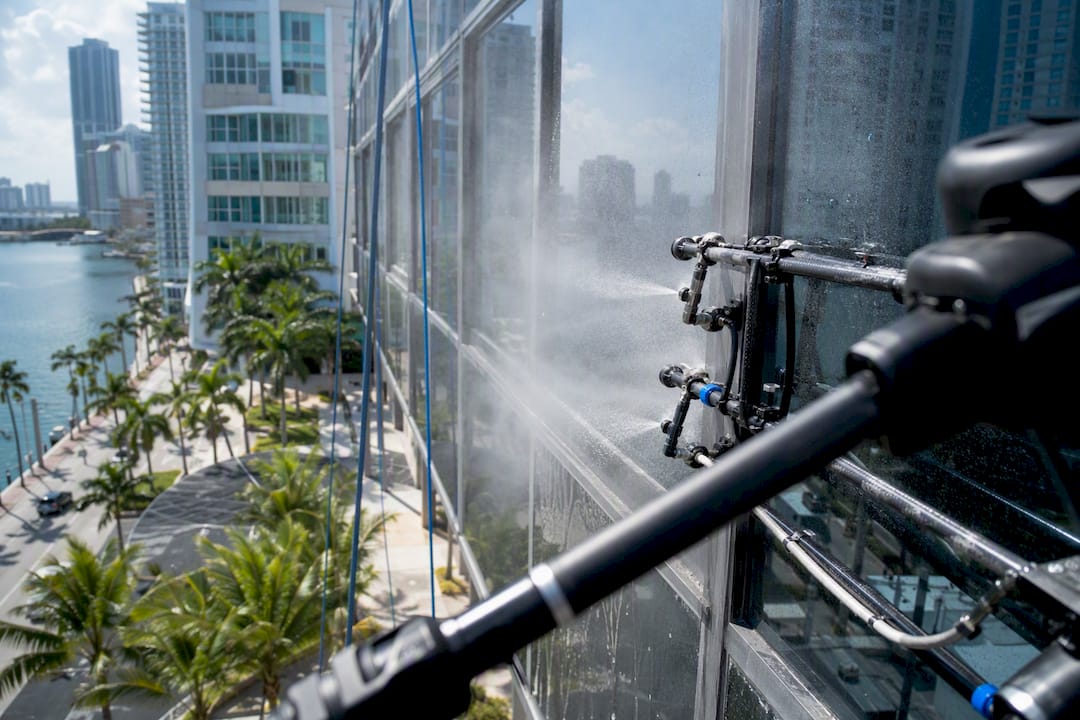
General liability insurance is the primary policy that pays for customer injuries, property damage, and advertising claims against your business, up to its stated limits. A commercial umbrella policy sits above it, adding extra limits that only pay once your underlying general liability, auto, or employers liability limits are exhausted. The practical rule: keep your general liability limits adequate for your risk, then add umbrella coverage if you carry real asset exposure, run vehicles, or face contract requirements demanding higher combined limits.
TL; DR:
- Umbrella coverage is necessary for businesses with significant assets, auto exposure, or contractual liability requirements exceeding standard general liability limits.
- It is reliant on scheduled minimum underlying limits and will not cover claims if primary policies lapse or do not meet the required minimums.
- The cost of a $1 million umbrella policy is generally low relative to the coverage and depends on claims history, industry, and exposure, especially in hurricane-prone Florida.
- Umbrella policies rarely provide coverage for professional errors, workers’ compensation, cyber incidents, or intentional acts, regardless of coverage size.
- In South Florida, especially for property managers and vendors, umbrella coverage is crucial due to higher litigation severity and storm-related claim risks.
Table of Contents
- General Liability vs. Umbrella: What Each One Actually Covers
- What Is Commercial Umbrella Insurance and How Does It Differ From General Liability?
- General Liability vs. Umbrella: The Practical Differences
- How Umbrella Coverage Attaches: Three Real-World Examples
- What Does Umbrella Insurance Cost, and What Drives the Price?
- Do You Need Umbrella Coverage? A Decision Checklist
- When South Florida Property Managers and Vendors Actually Need an Umbrella
- Why Vista Drone Cleaning Treats Insurance as a Selling Point, Not a Footnote
- A Broker’s Honest Take on Why Owners Get This Backwards
- Sources
- FAQ
General Liability vs. Umbrella: What Each One Actually Covers
General liability, formally called commercial general liability or CGL, is the policy that responds when someone outside your company gets hurt, their property gets damaged, or your marketing crosses a legal line. Insureon’s comparison of the two policy types breaks CGL into three core buckets: bodily injury and property damage to third parties, personal and advertising injury (think defamation or copyright missteps in your marketing), and products/completed operations, which covers harm caused by work you already finished.
Most small and mid-sized South Florida businesses buy CGL with per-occurrence and aggregate limits set at amounts that vary by insurer and risk profile. That structure matters more than owners realize. The per-occurrence number caps what the policy pays for any single incident. The aggregate caps the total payout across the entire policy year. File three separate $500,000 claims in one policy term and you could burn through your aggregate before renewal, leaving later claims uncovered no matter how small.
General liability has real limits, and knowing what falls outside them saves you from an ugly surprise mid-claim. It won’t touch:
- Professional liability or errors and omissions claims (a design mistake, bad advice, a missed deadline that costs a client money). That requires a professional liability policy, which is a different line entirely from general liability for small businesses.
- Workers’ compensation for employee injuries on the job.
- Cyber incidents, including data breaches or ransomware.
- Intentional acts committed by you or your employees.
- Damage to your own property or equipment, which falls under commercial property insurance instead.
South Florida adds its own pressure to this picture. Wet lobby floors after a summer downpour, storm debris in a parking lot, or a loose awning after a tropical storm warning all raise slip-and-fall exposure for property managers well above the national average. Hurricane season doesn’t just threaten buildings, it multiplies the number of ways a visitor, tenant, or contractor could get hurt on your property between June and November.
What Is Commercial Umbrella Insurance and How Does It Differ From General Liability?
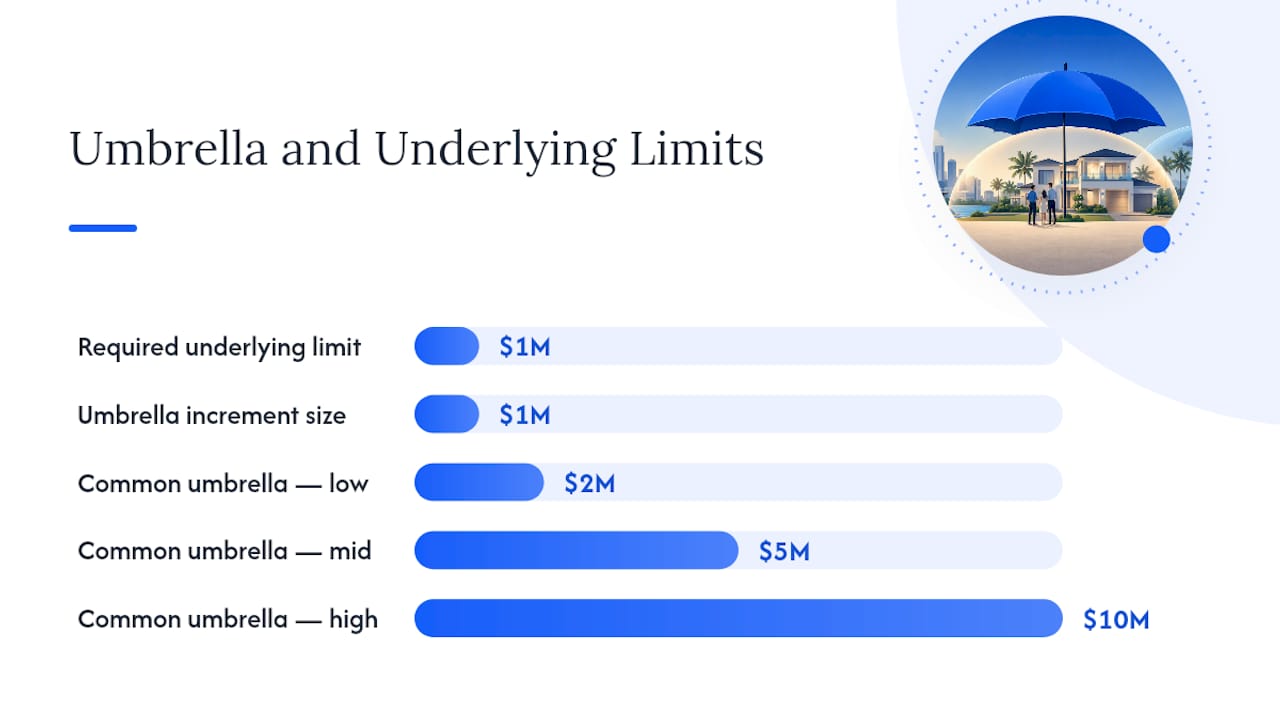
A commercial umbrella policy is extra liability protection layered on top of your existing policies, not a replacement for any of them. Insureon notes that umbrella coverage typically extends limits above general liability, commercial auto, and employers liability, and it’s usually sold in $1 million increments, so a business might carry a $2 million, $5 million, or even $10 million umbrella depending on its risk profile.
Here’s where the terminology gets confusing, and where a lot of business owners get burned. “Umbrella” and “excess liability” get used interchangeably, but they’re not identical products.
- Follow-form excess liability mirrors the terms, conditions, and exclusions of the underlying policy exactly. It simply adds limit on top. If your general liability policy excludes something, your follow-form excess policy excludes it too.
- True umbrella coverage can be broader. Berkley’s explainer on umbrella and excess liability points out that a genuine umbrella can extend beyond the underlying policy’s terms and, in specific circumstances, “drop down” to act as primary coverage, sometimes subject to a self-insured retention you pay out of pocket first.
That drop-down feature is the entire reason umbrella coverage has a reputation for punching above its price tag. If a claim falls into a gap the underlying policy doesn’t quite cover, but the umbrella’s own grant of coverage does, the umbrella can step in and pay directly rather than simply adding limit to an existing claim.
None of this works as a standalone purchase, though. Umbrella policies require scheduled minimum underlying limits, commonly $1 million on your general liability and commercial auto, and the umbrella won’t attach if those underlying limits lapse below the required schedule. Miss a renewal on your primary auto policy, and your umbrella may be worthless on exactly the day you need it. Some carriers add another wrinkle: they’ll only write the umbrella if they also write your underlying general liability and auto, which limits your flexibility to shop each policy separately. A broker who explains how umbrella policies coordinate with underlying coverage can walk you through exactly which carrier combinations work together before you sign anything.
General Liability vs. Umbrella: The Practical Differences
Think of it as two layers doing two different jobs, connected by one rule: the umbrella never pays until the layer beneath it is used up.
- Trigger point. General liability pays first, from dollar one up to its stated limit. Umbrella pays only after that limit, and any other scheduled underlying limit, is fully exhausted.
- Scope of protection. General liability covers a defined set of third-party injury, property damage, and advertising claims. Umbrella extends those same categories to a higher dollar limit, and in select cases with strong drop-down language, may respond to a gap the primary policy misses entirely.
- What stays uncovered regardless. Professional errors, workers’ compensation claims, cyberattacks, and intentional acts remain outside both policies. Buying a bigger umbrella doesn’t fix a coverage gap that neither policy was ever designed to fill.
- Contract compliance. Commercial leases, HOA management agreements, and vendor contracts across Miami-Dade and Broward increasingly specify combined liability limits of $2 million, $3 million, or higher. A property owner or general contractor rarely cares whether that limit comes from a bigger primary policy or a general liability plus umbrella combination, they just want the number met on the certificate of insurance.
A single lawsuit usually shows this flow in action rather than triggering both policies for unrelated reasons. A visitor slips, sues for $1.8 million, the general liability policy pays its $1 million limit, and the umbrella covers the remaining $800,000 under the same claim, same lawsuit, same insurer coordination behind the scenes.
How Umbrella Coverage Attaches: Three Real-World Examples
Underlying limits work like a schedule your umbrella carrier checks before paying a dime. Your policy lists exactly which primary policies qualify, their required minimum limits, and the umbrella won’t respond to any claim type that isn’t tied to one of those scheduled policies.
Here’s how that plays out with actual dollar figures:
- Scenario one: A tenant at a Fort Lauderdale retail plaza is injured in a fall caused by a cracked walkway after a summer storm. The judgment exceeds the general liability limit. The umbrella policy pays the remaining amount over that limit and remains available for future claims during the policy term.
- Scenario two: A commercial vendor’s box truck causes a multi-vehicle accident on I-95 near Boca Raton, resulting in a $3.2 million settlement. Commercial auto pays up to its limit, and the umbrella covers the remaining amount, assuming the umbrella limit is sufficient.
- Scenario three: A $2.5 million judgment follows a pool-area injury at a Palm Beach County condo association. General liability pays up to its limit, and the umbrella absorbs the remaining amount, leaving some unused umbrella capacity for the rest of the policy term.
Florida’s litigation environment makes these scenarios more common than owners expect. Higher slip-and-fall and hurricane-related litigation severity across Florida pushes brokers to recommend higher umbrella minimums for local property portfolios than they might suggest in other states. A jury award that would settle for $400,000 in a lower-litigation state can run well past $1 million in a South Florida courtroom, particularly for premises liability involving a fall, a pool, or storm debris.
Pro Tip: Ask your broker whether your umbrella schedule lists your commercial auto policy specifically. Business owners often assume auto is automatically covered, then discover during a claim that only general liability and employers liability were scheduled.
What Does Umbrella Insurance Cost, and What Drives the Price?
Umbrella premiums vary widely by industry, claims history, and exposure, but the pattern holds across most small businesses: adding umbrella limit costs far less per dollar of coverage than raising every underlying policy to match. MoneyGeek’s research on commercial umbrella pricing confirms that many small-business umbrellas are priced affordably relative to the protection they add, since the umbrella carrier is betting that most claims never reach that excess layer in the first place.
Underwriters price umbrella coverage by weighing several factors together, not any single number in isolation:
- Claims history over the past three to five years, including frequency, not just severity.
- NAICS or class code, since a roofing contractor and a retail boutique carry very different baseline risk.
- Payroll and gross receipts, which insurers use as a proxy for overall business size and exposure.
- Fleet exposure, meaning how many vehicles you operate and how far your drivers travel.
- Location risk, with Florida carrying a documented load for hurricane season and litigation trends that don’t apply the same way in lower-risk states.
Where umbrella earns its reputation for efficiency is the math against raising individual limits. Doubling every underlying policy’s limit separately typically costs more than adding a single umbrella layer that covers general liability, auto, and employers liability all at once. If a contract requires $3 million in combined limits and your general liability tops out at $1 million, a $2 million umbrella almost always beats renegotiating three separate primary policies to reach the same number.
Do You Need Umbrella Coverage? A Decision Checklist
Run through these five questions before your next renewal, and bring the answers to your broker rather than guessing at what you need.
- Do you own significant assets (real estate, equipment, vehicles) that a lawsuit could put at risk beyond your current general liability limit?
- Do your contracts require combined limits higher than your general liability alone provides, which is increasingly common on Miami-Dade and Broward commercial leases and vendor agreements?
- Do employees drive company vehicles or their own vehicles for business purposes, creating auto exposure that a single incident could push past standard limits?
- Does your property see heavy public foot traffic, such as a retail center, hotel lobby, or condo common area, where a single fall could generate a seven-figure claim?
- Have you had prior claims that came close to your current limits, even if they didn’t exceed them?
Once you’ve worked through the checklist, bring these exact questions to your broker:
- What’s the minimum underlying limit your umbrella schedule requires, and what happens if one lapses mid-term?
- Does this umbrella include drop-down language, and under what specific conditions does it apply?
- How does the policy define named insured versus additional insured, and does that match what my contracts require?
- Who controls the legal defense once a claim crosses into the umbrella layer, the primary carrier or the umbrella carrier?
- How quickly can you issue an updated certificate of insurance if a client requests higher limits mid-contract?
Pro Tip: Watch for a gap between what your certificate of insurance shows and what your umbrella schedule actually requires. A COI can list $2 million in combined limits while the umbrella itself won’t attach because the underlying auto policy dropped below its required minimum, a mismatch that only surfaces after a claim, when it’s too late to fix.
When South Florida Property Managers and Vendors Actually Need an Umbrella
Property managers across Miami-Dade, Broward, and Palm Beach counties run into umbrella-relevant situations more often than they expect, and rarely because of one dramatic event.
- Storm-related slip-and-fall claims are the most common trigger. A cracked walkway, standing water in a garage, or debris left after a tropical storm warning creates exactly the kind of premises liability claim that can exceed a $1 million general liability limit, particularly given Florida’s litigation severity for these cases.
- Commercial exterior vendors, including drone-based building cleaning services, carry hired and non-owned auto exposure, completed-operations risk after a job wraps, and equipment-related liability that property owners increasingly want backed by higher combined limits before signing a contract.
- Bidding requirements on larger commercial properties in Brickell, Fort Lauderdale, and Boca Raton now routinely specify $2 million to $5 million in combined general liability and umbrella coverage as a condition of the bid, a threshold that’s becoming standard rather than exceptional on high-rise and hospitality contracts.
For property managers weighing vendor bids, combined limits driven by contract and lender requirements often decide which vendor gets the job before price ever enters the conversation. A vendor with a $1 million general liability policy and no umbrella can lose a bid to a competitor offering identical service at a higher combined limit, regardless of quote.
Why Vista Drone Cleaning Treats Insurance as a Selling Point, Not a Footnote
We carry $2 million in liability insurance and FAA Part 107 certification on every drone cleaning project across South Florida, and we lead with those numbers because property managers ask for them before they ask about pricing. On high-rise contracts in Miami-Dade and Broward, a certificate of insurance that meets or beats the combined limits a lender or association requires can be the difference between winning a bid and losing one to a lower-insured competitor. If you’re vetting a vendor for facade, window, roof, or solar cleaning, our contractor insurance checklist for South Florida property managers walks through exactly what to request on a COI before work begins.
A Broker’s Honest Take on Why Owners Get This Backwards
Most small business owners treat umbrella insurance as an upsell they’ll consider “once the business grows, ” and that instinct is exactly backwards. The businesses with the least cash cushion are the ones who can least afford a $1.8 million judgment to land entirely inside a $1 million general liability gap. Umbrella coverage isn’t a luxury tier reserved for large corporations. It’s often the cheapest per-dollar liability protection a business can buy, precisely because the underlying policy absorbs most claims before the umbrella ever gets touched.
The bigger mistake I see isn’t skipping umbrella coverage entirely, it’s buying it and assuming the job is done. An umbrella with a lapsed underlying auto policy is a false sense of security dressed up as a certificate of insurance. If you take one thing from this article, verify that your umbrella schedule matches your actual underlying policies, every renewal, not just the year you bought it.
South Florida’s litigation climate and storm exposure make this less theoretical here than in most states. A slip on a wet lobby floor during hurricane season shouldn’t be the moment you discover your combined limits don’t actually combine the way your certificate implied.
, Eliot
Sources
The carrier and broker explainers below cover the policy mechanics, pricing signals, and Florida-specific context referenced throughout this guide.
- General Liability vs. Umbrella Liability Insurance | Insureon
- Umbrella and Excess Liability | Berkley
- Commercial umbrella insurance provides extra liability protection when lawsuits exceed your primary business insurance limits | MoneyGeek
- Umbrella insurance for property managers in Florida | Dareable
FAQ
How much does a $1 million umbrella policy cost?
Pricing varies by industry, claims history, and exposure, but commercial umbrella premiums are often low relative to the coverage added because most claims never reach the excess layer. Get a quote based on your specific class code and payroll rather than relying on a flat estimate.
Is umbrella insurance better than forming an LLC?
They solve different problems and aren’t substitutes for each other. An LLC can limit personal liability for business debts and lawsuits against the entity, while umbrella insurance pays for actual third-party injury and property damage claims that exceed your general liability limits, regardless of your business structure.
What are the disadvantages of an umbrella policy?
Umbrella coverage won’t pay if your scheduled underlying policy limits lapse below the required minimum, and it doesn’t cover excluded categories like professional errors, workers’ compensation, or intentional acts. It also requires maintaining specific underlying policies, which adds a coordination step most owners underestimate.
Does general liability cover the same things as umbrella insurance?
No. General liability is primary coverage that pays first, up to its own limit, for third-party injury, property damage, and advertising claims. Umbrella only pays after that primary limit is exhausted, and typically extends the same categories to a higher combined limit.
When should a South Florida business add umbrella coverage to its general liability?
Add umbrella when contracts require combined limits above your general liability alone, when employees drive for work, when your property sees heavy public foot traffic, or when Florida’s litigation severity for slip-and-fall and storm-related claims puts your typical exposure near your current limit.