Save 30–60% With Tethered Drone Stucco Cleaning in South Florida
Tethered drones perform soft-wash on South Florida high-rise stucco, cut costs 30–60%, meet FAA Part 107 rules, and provide 4K before-and-after documentation.
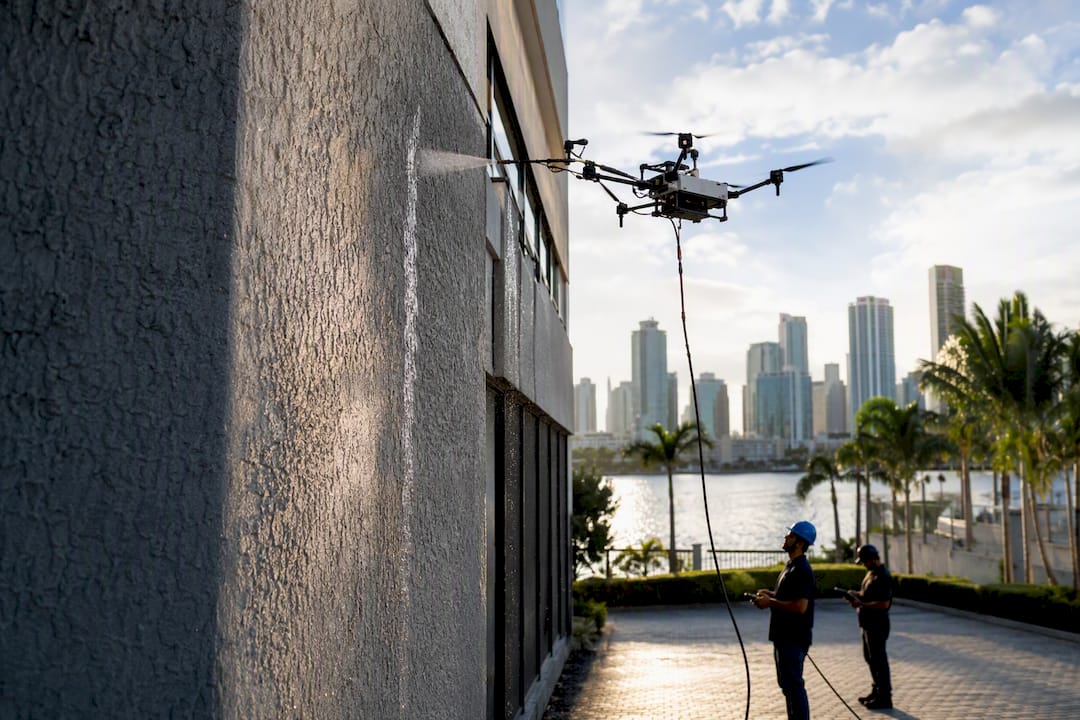
For commercial high-rise stucco in South Florida, the fastest, safest, and most cost-effective method is a tethered industrial drone performing substrate-matched soft-wash with a pure de-ionized rinse. There’s no scaffolding to erect, no boom lift blocking the entrance, and no crew dangling on ropes over Brickell Avenue. Done right, it’s backed by FAA Part 107-certified pilots, $2M liability coverage, and 4K before-and-after documentation that gives HOA boards a real paper trail.
TL; DR:
- Most South Florida buildings should schedule stucco cleaning every six to eighteen months due to humidity and salt air exposure.
- Drone soft-wash cleaning with a tethered system offers faster, safer, and water-efficient results compared to traditional scaffolding or lift methods.
- Proper preflight procedures, FAA compliance, and documented before-and-after images are crucial for effective and legal drone-based stucco cleaning.
- Cleaning is most effective for algae, efflorescence, and grime, but damaged or cracked EIFS and delaminating stucco require separate repairs.
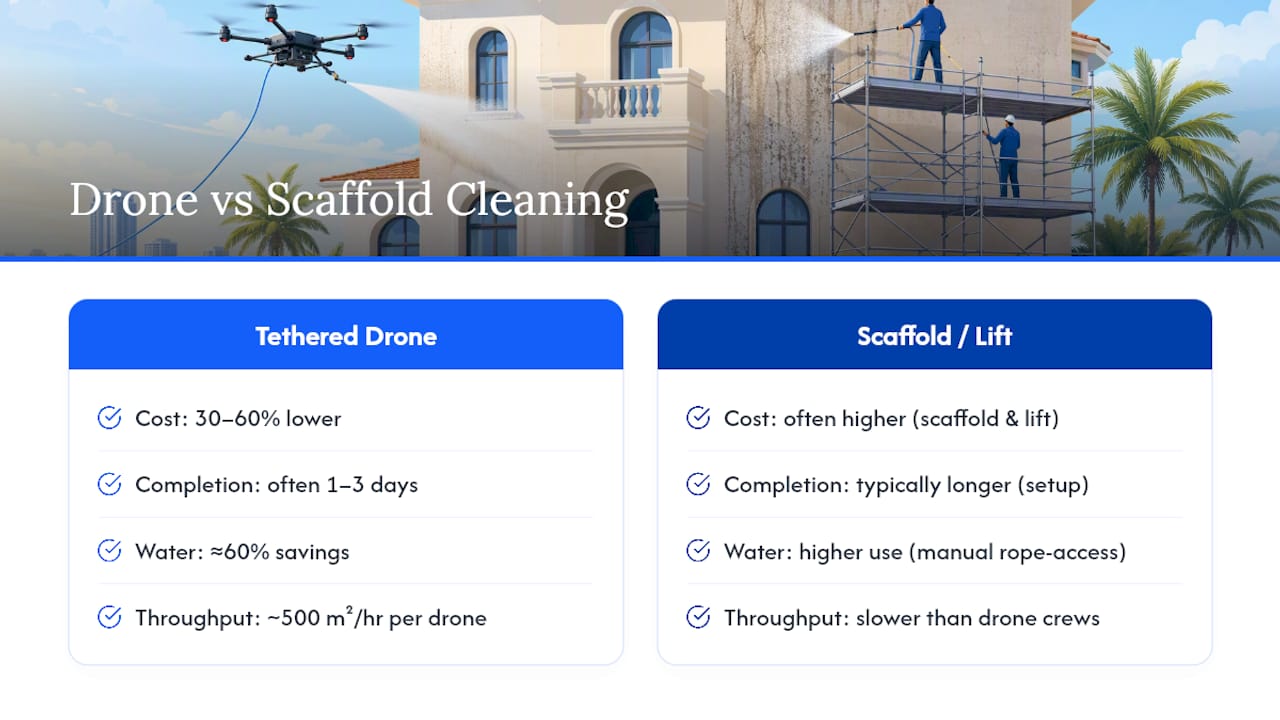
- Cost savings of 30% to 60% are typical when using tethered drones, especially for buildings that avoid rental and labor costs of traditional access.
Table of Contents
- What Are Drone-Based Stucco Cleaning Methods?
- Pre-Clean Safety Checklist for FAA-Compliant Drone Operations
- The Step-by-Step Drone Stucco Cleaning Process
- What Does Drone Stucco Cleaning Cost and How Long Does It Take?
- How Often Should Commercial Stucco Be Cleaned in South Florida?
- Why Property Managers Overrate Pressure and Underrate Documentation
- Get a Free Drone Stucco Cleaning Quote in South Florida
- Sources
- FAQ
What Are Drone-Based Stucco Cleaning Methods?
Tethered drone soft-wash uses an industrial platform, anchored by a physical tether for stability and a continuous water supply, to apply low-pressure cleaning solution across a stucco or EIFS (Exterior Insulation and Finish System) facade, then rinse it with pure de-ionized water. The tether isn’t just a safety line. It also feeds fluid and regulates pressure, which is why tethered systems produce more consistent results than handheld pressure washing on a lift.
This approach fits a specific set of problems, not every stucco issue on the building. It works well for:
- Green and black algae streaking on north-facing or shaded elevations
- Efflorescence, the white mineral bloom that shows up on stucco near the coastline
- General atmospheric grime, salt spray residue, and pollen buildup
- Mildew staining around window returns and parapet caps
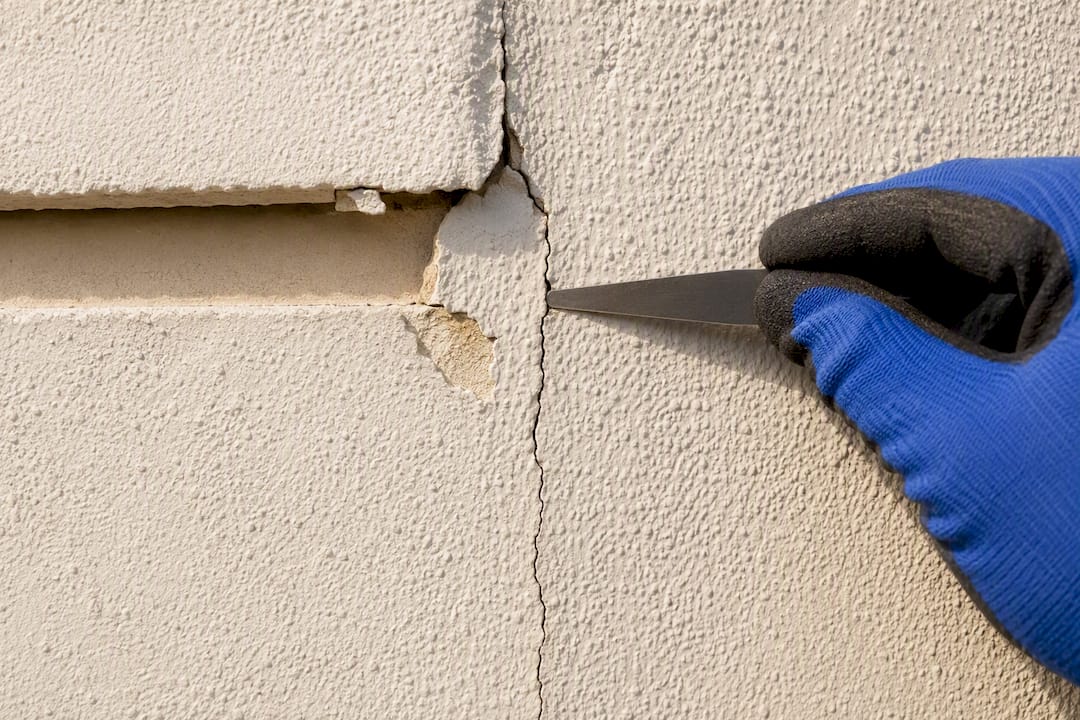
Where it doesn’t belong: cracked or delaminating EIFS, stucco with exposed lath, or any section where water intrusion is already suspected. Pressure that’s fine for cured, sound stucco can force moisture behind a compromised EIFS panel. That’s a repair problem, not a cleaning one, and a competent operator should flag it during the survey rather than clean over it. Chemistry matters too. Synthetic stucco (EIFS) and traditional three-coat stucco don’t react to detergents the same way, so substrate-matched cleaning has to account for the finish coat, not just the visible stain.
Pre-Clean Safety Checklist for FAA-Compliant Drone Operations
Before any tethered drone gets airborne over a Fort Lauderdale office tower or a Boca Raton condo association, a property manager should confirm the operator has actually covered the basics. FAA exemption filings for building inspection and cleaning work consistently list the same non-negotiables: permission from the property owner or controller for every flight, a qualified pilot in command, and a documented preflight inspection.
Here’s what to verify before signing off on the work order:
- Written permission on file. The FAA’s exemption conditions require operator permission from whoever controls the property, not a verbal go-ahead.
- Certified Part 107 pilot plus a visual observer. One person flies, one person watches for obstacles, tenants, and traffic below.
- Preflight inspection completed and logged. Battery health, tether integrity, nozzle function, and airframe condition all get checked before the drone leaves the ground.
- Weather minimums confirmed. AC 107-2 sets visibility and cloud-clearance limits that South Florida’s afternoon storm pattern makes especially relevant from June through September.
- Exclusion zone marked on the ground. Cones, tape, or a staffed perimeter keep pedestrians and parked vehicles clear of the work area.
- Tenant and parking notifications sent. Building management should notify residents or office tenants at least 24 hours ahead.
- Abort criteria defined. Wind gusts, sudden rain, or a tether anomaly should trigger an immediate stop, not a “let’s finish this pass” judgment call.
Pro Tip: Ask any prospective vendor for their Plan of Activities and proof of Part 107 certification before the quote, not after the contract. If they hesitate, that’s your answer.
The Step-by-Step Drone Stucco Cleaning Process
A typical job starts well before the drone leaves its case. The crew walks the property and photographs every elevation, noting stucco type, existing cracks, staining patterns, and any EIFS sections that need extra caution.
Setup comes next: anchoring the tether, connecting the fluid line or onboard reservoir, and running a nozzle check to confirm even spray coverage. From there, the actual cleaning follows a set sequence:
- Stand-off distance and pressure are dialed in for the specific substrate, lower for EIFS, slightly higher for cured traditional stucco
- Detergent mix is applied in overlapping passes, working from the top of the elevation down
- Dwell time allows the soft-wash solution to break down algae and staining without needing abrasive pressure
- A pure de-ionized water rinse follows, which prevents the mineral spotting you’d get from South Florida’s hard tap water
Every job wraps with a post-clean walk-through and 4K imagery matched against the pre-clean photos, giving the building’s facade cleaning file a documented before-and-after record rather than a verbal “looks good.”
What Does Drone Stucco Cleaning Cost and How Long Does It Take?
Most high-rise stucco cleaning projects in Miami-Dade and Broward wrap in one to three days, depending on facade area and how much surface prep the stucco needs. A 15-story condo tower with straightforward algae staining moves faster than a hotel facade with heavy efflorescence around every balcony line.
Tethered drone systems report throughput of roughly 500 square meters per hour per drone, with water savings near 60% compared to manual rope-access cleaning. That efficiency is the main reason drone projects finish faster and use less water than crews on ropes or lifts.
Price depends on four things: total facade square footage, how much staining or prep work is involved, whether any EIFS sections need special handling, and how detailed the documentation package needs to be for the HOA board or insurance file. Buildings that skip scaffolding and lift rental altogether typically see the biggest savings, since that equipment often costs more than the cleaning labor itself.
There’s a quieter ROI driver too. Detailed condition imagery from a drone cleaning pass doubles as a documented maintenance record, which matters when a board is trying to justify a capital reserve line item or file an insurance claim after storm damage.
How Often Should Commercial Stucco Be Cleaned in South Florida?
South Florida’s humidity and salt air push algae and staining back onto stucco faster than in drier climates, so a six-to-eighteen-month cleaning cycle is a reasonable planning window. Buildings within a few blocks of the ocean, like oceanfront properties in Hollywood or Delray Beach, tend to need the shorter end of that range; inland office parks in Plantation or Coral Springs can often stretch closer to eighteen months.
Keep a simple record for every cleaning cycle:
- Facade area cleaned and specific elevations covered
- Cleaning solution and dilution used
- Weather conditions on the day of service
- 4K before-and-after images
- Any defects noticed during the walk-through (hairline cracks, soft spots, discoloration that didn’t lift)
Pro Tip: If a section of stucco doesn’t respond to a standard soft-wash pass, don’t authorize a second, harder pass. Stains that won’t lift after proper dwell time and rinse usually mean the substrate is compromised underneath, not that it needs more pressure.
That last point is the real trigger for escalation. Delamination, loose EIFS panels, or cracks that seem to widen after cleaning belong to a facade restoration specialist, not another cleaning cycle. A property maintenance checklist built around these inspection triggers keeps a board from confusing a cosmetic problem with a structural one.
Why Property Managers Overrate Pressure and Underrate Documentation
Everyone asks about pressure settings. Almost nobody asks about the photo record. That’s backwards, and it’s the biggest miscalibration I see in how buildings approach stucco maintenance.
The cleaning itself, done with a tethered drone and de-ionized water, is close to a solved problem at this point. What separates a good outcome from a mediocre one is what happens before and after: whether the crew actually surveyed the facade for EIFS weak points, and whether the building walked away with a documented record instead of a memory. Operating across Miami-Dade and Broward has shown one thing over and over. Buildings that keep a consistent 4K image record catch stucco problems while they’re still cosmetic. Buildings that don’t tend to discover them during a much more expensive repair estimate.
None of this replaces sound judgment on-site. A drone can’t decide whether a hairline crack is cosmetic or structural. A trained operator has to make that call, in real time, on every job.
, Eliot
Get a Free Drone Stucco Cleaning Quote in South Florida
Vista Drone Cleaning is the alternative to scaffolding and boom lifts for stucco and EIFS facades across Miami-Dade, Broward, and Palm Beach counties, no rigging, no road closures, and no crews working at height, at a cost that typically runs 30% to 60% lower than traditional access methods.

Every project runs on FAA Part 107-certified pilots operating tethered industrial drone platforms, with a pure de-ionized water rinse for streak-free results. Quotes come back within 24 hours.
To get a fast, accurate quote, have three things ready: the building’s approximate height, a few photos of the facade (including any visible staining or cracking), and your preferred service window. From there, compare the numbers directly against traditional scaffolding and lift pricing or reach out through the EIFS cleaning page if synthetic stucco is the primary concern. Either way, the next step is simple: request the quote and get a date on the calendar before algae season sets back in.
Sources
Property managers who want to verify the regulatory claims in this guide can start with the FAA’s own materials. The FAA’s building inspection exemption docket spells out operator responsibilities, preflight requirements, and the property-owner permission condition referenced throughout the safety checklist above. FAA Advisory Circular AC 107-2 covers the operating limitations, including visibility and cloud clearance, that any Part 107 pilot has to respect.
For the operational side, a tethered drone facade cleaning case study lays out the throughput and water-savings figures cited in the cost section. A broader industry piece on drone cleaning for high-rise maintenance covers the documentation and disruption-reduction benefits that matter most to HOA boards weighing their options. Readers building their own operations manual may also find value in Dronable’s operations tooling for structuring preflight and reporting workflows.
- FAA grant of exemption (building inspection): docket materials
- FAA Advisory Circular AC 107-2 (guidance for Part 107 operations)
- Drone facade cleaning: tethered high-pressure case study and performance summary
- High-rise maintenance: Is drone cleaning the future for your facility?
FAQ
What Is the Best Method for Cleaning High-Rise Stucco?
Tethered industrial drone soft-wash with a pure de-ionized water rinse is the leading method for commercial high-rise stucco, since it avoids scaffolding, reduces water use by roughly 60% compared to manual methods, and produces streak-free results.
Is Drone Cleaning Safe for EIFS (Synthetic Stucco)?
Yes, when the operator uses substrate-matched pressure and detergent settings, but any EIFS section with visible cracking, delamination, or suspected water intrusion should be inspected by a restoration specialist before cleaning.
How Often Should Commercial Stucco Be Cleaned in South Florida?
Most South Florida buildings benefit from a cleaning cycle every six to eighteen months, with oceanfront properties typically needing the shorter end of that range due to salt air and humidity.
Do Drone Cleaning Operators Need FAA Certification?
Yes, commercial drone facade cleaning requires an FAA Part 107-certified remote pilot, and FAA exemption materials also require documented preflight inspections and written permission from the property owner for each job.
How Long Does a Commercial Stucco Cleaning Project Take?
Most high-rise stucco cleaning projects finish in one to three days, depending on facade square footage, the amount of staining or efflorescence present, and how much documentation the property requests.