
Building Maintenance with Drones Explained for Managers
Discover how building maintenance with drones explained transforms inspections. Save time, reduce costs, and enhance safety with advanced technology!
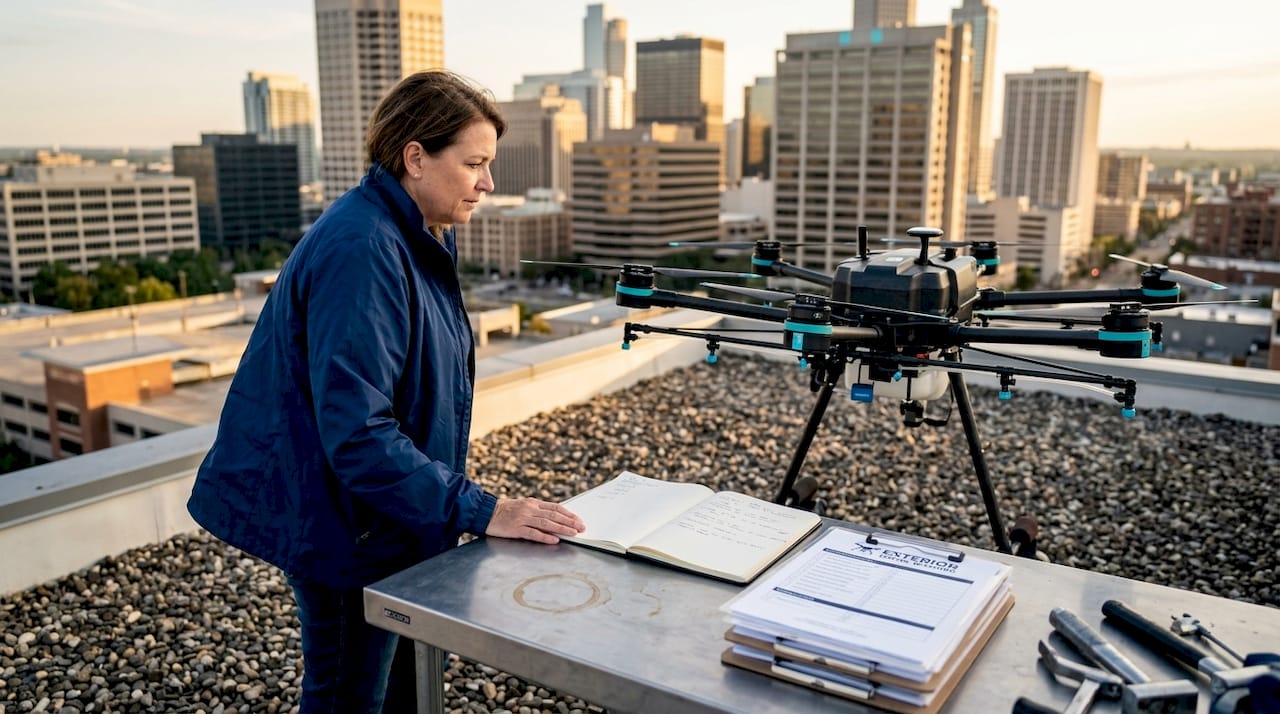
Most property managers default to scaffolding, rope access, or aerial lifts for facade or roof surveys. These methods are expensive, slow, and put workers at height. Drones provide high-resolution visual data, thermal readings, and 3D models of your building envelope in hours rather than days. This guide covers how professional inspections are conducted, the sensors required, compliance rules, and a cost comparison against traditional methods.
Table of Contents
- Key takeaways
- How drones are used in building maintenance
- The drone inspection workflow step by step
- Sensors and technologies in drone building inspections
- Cost and time comparison: drones vs. traditional methods
- Regulatory requirements and scheduling best practices
- My take on where drone adoption actually stands
- How Vista Drone Cleaning supports your building program
- FAQ
Key takeaways
| Point | Details |
|---|---|
| Eliminate high-risk access | Drones capture data without scaffolding or rope crews, removing fall hazards. |
| Thermal data matters | Combining RGB and thermal cameras identifies defects more accurately than visual checks alone. |
| Compliance is mandatory | Commercial pilots must have FAA Part 107 certification and LAANC authorization. |
| Lower mobilization costs | Drone roof inspections cost $2,500 to $8,000+, far below scaffolding mobilization fees. |
| Predictive maintenance | Scheduled annual inspections help spot deterioration early and prevent emergency repairs. |
How drones are used in building maintenance
Certified pilots deploy commercial drones for recurring maintenance tasks that were previously dangerous or cost-prohibitive. Common applications for commercial properties include:
- Facade inspections: Documenting cracks, spalling, and sealant failures across curtain walls and stucco without tenant disruptions.
- Roof surveys: Identifying ponding water, membrane tears, and clogged drains across flat roofs in one flight.
- Solar panel assessments: Pinpointing underperforming cells and hotspots via thermal cameras.
- HVAC monitoring: Checking rooftop equipment for corrosion and debris between service visits.
- Parking decks: Identifying concrete delamination on elevated structures where lifts are difficult to position.
A professional drone building inspection provides more than raw footage. Pilots capture overlapping images for photogrammetry, record radiometric thermal data, and produce 3D point clouds. A two-hour flight over a 20-story tower yields georeferenced imagery and defect maps that engineering teams can use for months.
Drones for maintenance also lower your liability. No worker is suspended on a swing stage, which translates to fewer incident reports and predictable project timelines.
The drone inspection workflow step by step
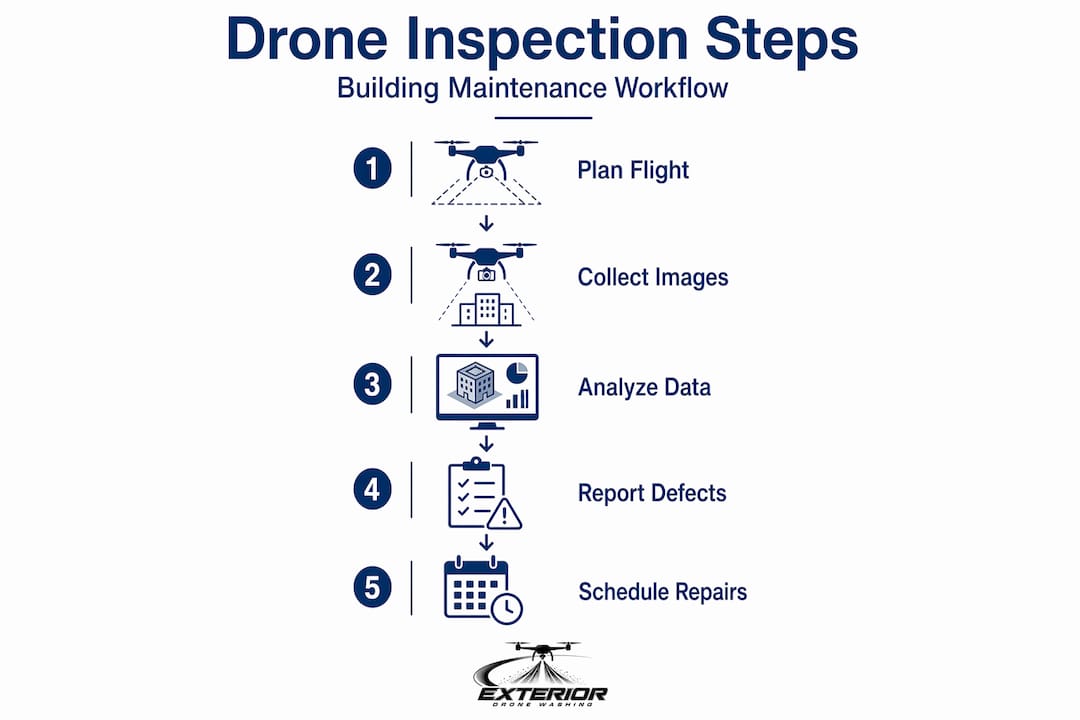
Professional drone inspections follow a three-phase process:
-
Pre-flight and compliance: The operator confirms FAA Part 107 licensing and drone registration. They secure LAANC airspace authorization up to 72 hours in advance and evaluate weather windows to ensure high-quality thermal data.
-
Mission execution: The pilot programs a flight path based on building geometry. An RGB camera captures visual documentation, while a thermal sensor identifies moisture or energy loss. Commercial drone maintenance flights for mid-size buildings usually finish in under an hour.
-
Data delivery: Software processes raw images into orthomosaics, 3D models, and defect maps. Thermal data is converted into radiometric overlays showing temperature differentials across the surface.
Deliverables usually include a georeferenced orthomosaic, a thermal report, and an annotated defect spreadsheet. This documentation supports warranty claims and capital planning better than a simple PDF of photos.
Pro Tip: Request data in radiometric GeoTIFF format. This preserves raw temperature values, allowing engineers to re-analyze thermal data without a new flight.
Sensors and technologies in drone building inspections
The sensor package determines which defects you can find. Here is the standard breakdown:
| Sensor type | Best use case | Key limitation |
|---|---|---|
| RGB camera | Visual documentation, cracks, facade surveys | No subsurface moisture detection |
| Thermal (radiometric) | Moisture leaks, insulation gaps, energy loss | Requires specific weather timing |
| LiDAR | 3D modeling, digital twins, structural geometry | Higher cost and slower processing |
| Multispectral | Solar panel performance, vegetation health | Specialized applications only |
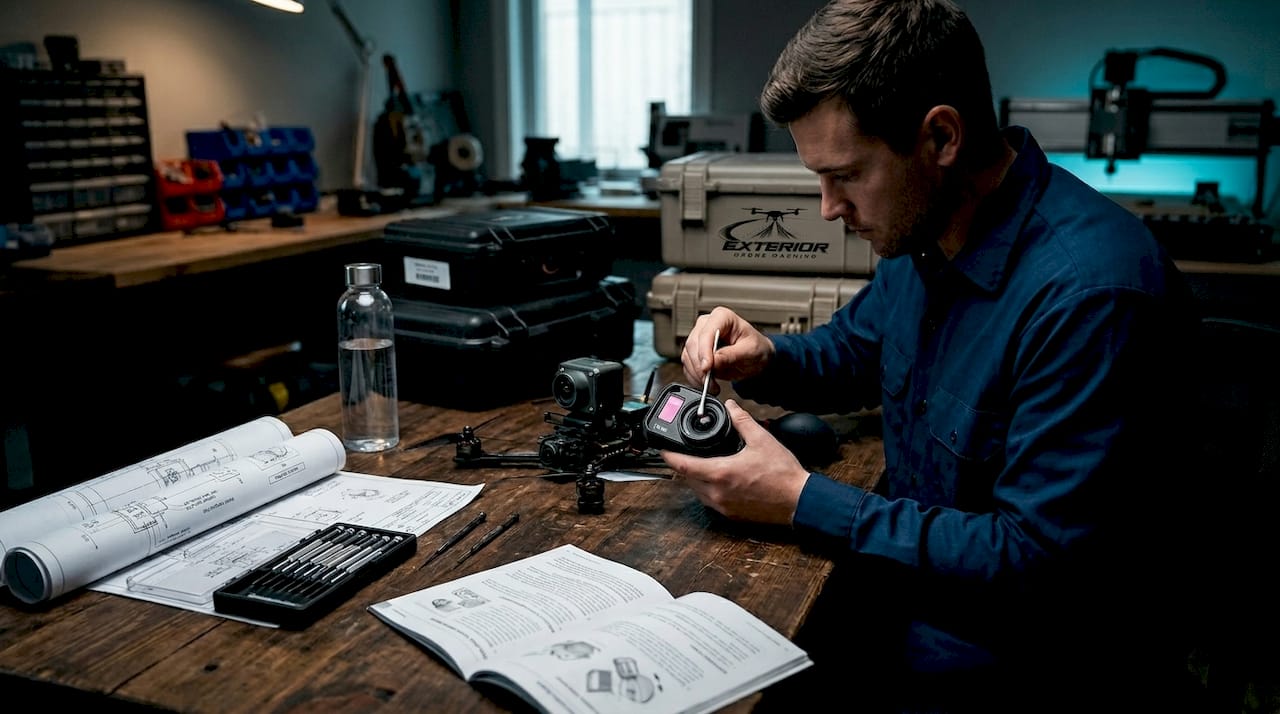
RGB cameras are the baseline for documenting building conditions. Thermal cameras identify moisture infiltration or insulation failure by detecting radiometric temperature differentials. For best results, thermal flights happen in the early morning or after sunset to avoid solar loading.
Thermal anomaly interpretation requires aligning thermal data with RGB imagery to confirm a hotspot is a real defect rather than a reflection. LiDAR generates millimeter-accurate 3D point clouds for digital twins and BIM integration.
Pro Tip: A dual-sensor rig (RGB and thermal) covers 90% of maintenance needs. Reserve LiDAR for structural monitoring or BIM requirements.
Cost and time comparison: drones vs. traditional methods
The financial advantage of commercial drone roof inspections is clear. Costs range from $2,500 to $8,000, while scaffolding mobilization for a mid-rise can exceed $15,000 to $50,000 before labor begins.
Time savings for occupied buildings are significant:
- A drone 15-story facade flight takes 2 to 4 hours.
- Scaffolding installation takes 2 to 3 days and blocks walkways.
- Rope access takes 1 to 2 days with multiple techs.
- Drone reports are delivered within 24 to 48 hours.
Drones also eliminate "hidden" costs like sidewalk closure permits, traffic disruption, and tenant complaints. Removing workers from height drastically reduces your liability profile.
Pro Tip: Catching a failing joint early costs $500 in repairs; discovering it through water damage years later can cost $50,000.
Regulatory requirements and scheduling best practices
Professional programs require strict compliance:
- FAA Part 107: Pilots must have this license. The exam is $175, with mandatory recurrent training every 24 months.
- LAANC: Authorization is required for properties in controlled airspace near airports.
- Insurance: Operators should carry $1 million+ in aerial-specific general liability insurance.
- Scheduling: Coordinate flights for low-traffic periods. Early morning is ideal for thermal sensors.
Use a tiered schedule: a full visual and thermal inspection every year, a visual check every six months, and post-storm assessments. Regular inspection programs help justify capital budgets by providing a year-over-year condition database.
Pro Tip: Integrate drone data directly into your CMMS. Georeferenced defect reports can automatically generate maintenance tickets.
My take on where drone adoption actually stands
The technology is reliable, but execution varies by vendor. A common mistake is treating inspections as one-time events. One flight is a snapshot; three flights over two years provide trend data. That evidence is what gets restoration budgets approved by ownership groups.
Choosing the cheapest proposal often means losing thermal imaging. You might save money on the flight only to miss moisture leaks that cause expensive damage later. Furthermore, drone data is a screening tool, not a total substitute for physical verification. A good vendor flags anomalies and recommends a physical probe or sample for confirmation.
In South Florida's urban markets, regulatory planning is slow. Building LAANC and tenant notifications into your cycle prevents delays. A professional drone program pays for itself through avoided emergency repairs and more accurate contractor bids.
, Eliot
How Vista Drone Cleaning supports your building program
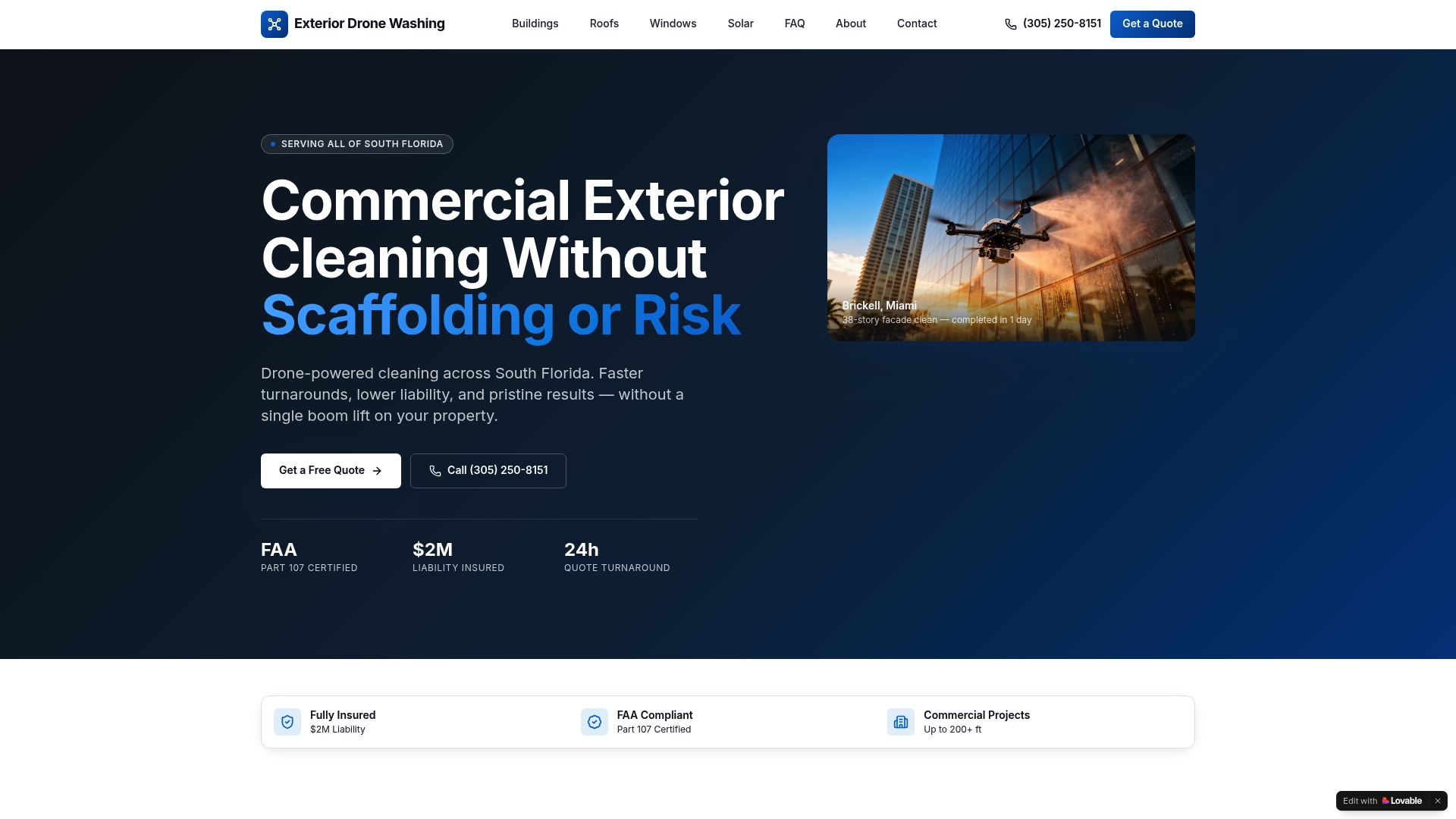
Vista Drone Cleaning uses FAA-registered industrial drones with high-pressure soft-wash systems and de-ionized water to clean and document facades, roofs, and windows up to 200 feet tall. We eliminate the need for scaffolding, lifts, and sidewalk closures.
As a commercial exterior cleaning specialist in South Florida, we provide before-and-after visual documentation with every project. For office towers, hotels, and high-rise condos in Miami, we complete work in one day that traditional crews take five days to finish. Check our drone cleaning pricing page and contact us for a site assessment.
FAQ
What is building maintenance with drones in practice?
It involves using FAA-registered drones to inspect facades, roofs, and equipment, gathering visual and thermal data without using scaffolding or rope crews.
How accurate are drone building inspections?
They are highly reliable for detecting surface defects and moisture anomalies when using RGB and thermal sensors, though major defects should be verified physically.
How much does a commercial drone building inspection cost?
Commercial inspections typically range from $2,500 to $8,000, which is significantly lower than the cost of scaffolding mobilization.
Do drone operators need special certification for building inspections?
Yes. Commercial pilots must hold an FAA Part 107 license and complete recurrent training every 24 months.
How often should a commercial property schedule drone inspections?
Standard schedules include an annual full thermal/visual inspection, a semi-annual visual check, and follow-ups after major storms.